Everyone tells you to fix the latch. The nurse on the ward says it, your mother says it, the video you watched at 3 a.m. says it. What almost nobody does is show you, slowly, what a deep latch is, how it should feel, and what to change when it goes wrong. So you are left feeding through a wince, with no clear picture of what right looks like.
Let me give you that picture. In my lactation sessions, the latch is the single thing we spend the most time on, because it sits underneath almost everything else: comfort, milk transfer, supply, and whether a mother carries on breastfeeding at all. A deep latch is a learnable skill, not a talent some mothers happen to have. Once you can see it and feel it, you can repeat it.
What this post covers:
- What a deep latch is, and why it is comfortable when a shallow one is not
- The signs of a deep latch you can see and feel
- How to spot a shallow latch early
- How to get a deep latch, step by step, including the breast sandwich
- The common things that get in the way, including tongue-tie
- When to ask for hands-on help
What a Deep Latch Is
The word latch makes it sound like the baby clips onto the nipple, and that picture is the root of most of the trouble. A baby does not feed on the nipple; the nipple is only the delivery point. What a baby needs in their mouth is a large mouthful of breast, with the nipple drawn right to the back, near where the hard palate gives way to the soft palate. Back there, the nipple is safe from being pressed against anything hard, so it is not pinched, rubbed, or compressed with every suck.
Inside that mouthful, the baby’s tongue does the real work. It extends forward over the lower gum, cups under the breast, and moves in a wave that draws milk out gently. For the tongue to reach and cup like that, the baby has to take in enough breast tissue, not just the tip. This is why depth matters: a deep latch puts the nipple out of harm’s way and lets the tongue work, while a shallow one traps the nipple at the front where the gums and hard palate compress it.
That single fact explains why a good latch is comfortable and a poor one hurts. The pain is usually information: it most often means the baby is too far forward on the nipple, and bringing them deeper onto the breast is what relieves it. It is rarely a sign that your nipples are simply too sensitive.
What a Deep Latch Looks and Feels Like
You can read a latch from the outside, and you can feel it from the inside. Both matter, because a latch that looks acceptable but feels like pinching still needs adjusting.
What you can see:
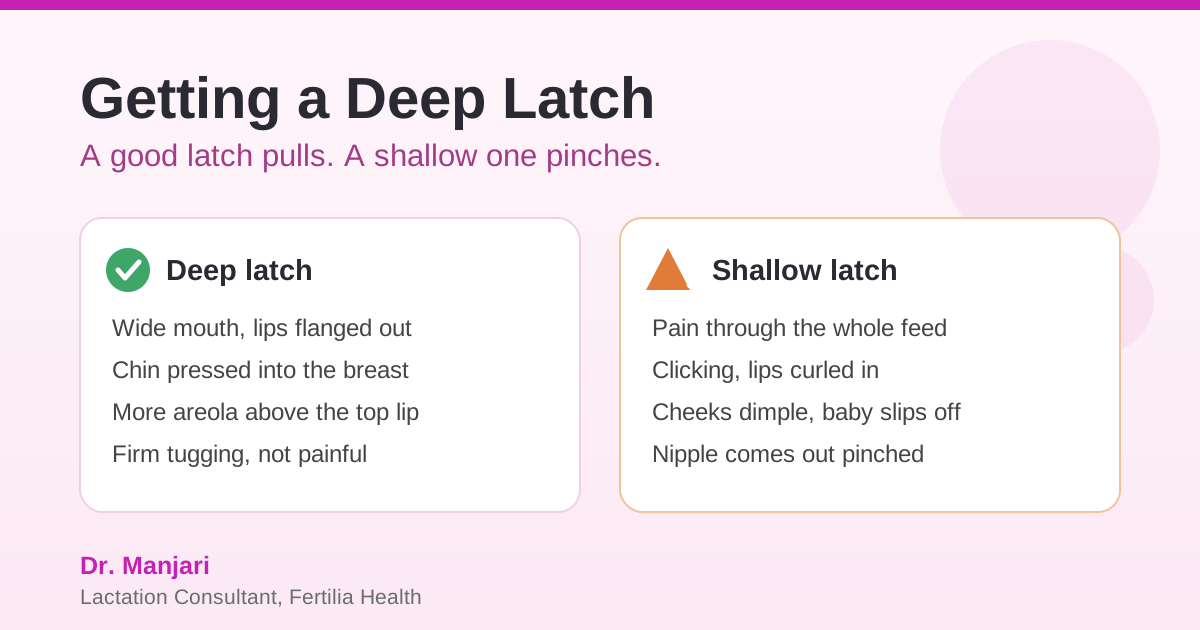
- A wide-open mouth, opened like a big yawn before the baby goes on, not a small purse
- Lips flanged outward, turned out like a fish, both the top and bottom lip, not tucked in
- The chin pressed firmly into the breast, with the nose free or only lightly touching
- More areola visible above the top lip than below it. This off-centre, asymmetric look is the signature of a deep latch, because the baby’s lower jaw has taken the larger share of breast
- Rounded, full cheeks while sucking, not hollowed or dimpling inward
- A steady rhythm of suck, swallow, breathe once your milk lets down, with a soft “kah” of swallowing you can hear or see at the throat
What you should feel:
- A firm tugging or drawing sensation, deep and rhythmic
- Possibly some tenderness in the first ten to twenty seconds as the breast draws in, which then settles
- No pinching, biting, or sharp pain that continues through the feed
The clearest internal test is simple. A deep latch feels like a strong pull. A shallow latch feels like a pinch. If what you feel is closer to pinching or stinging and it does not ease within the first few seconds, the latch is asking to be redone.
How to Spot a Shallow Latch
A shallow latch is the most common cause of sore nipples, and the most fixable, so it is worth knowing its tells. (For the full picture of feeding pain and nipple damage, see our guide to breastfeeding pain and nipple soreness.)
The signs of a shallow latch:
- Pain that lasts the whole feed, not just the first few seconds
- A clicking or smacking sound, which means the baby is losing the seal and letting in air
- Lips curled inward rather than flanged out, especially the lower lip
- Cheeks dimpling or sucking in with each suck, instead of staying rounded
- The nipple comes out misshapen at the end of the feed: flattened, creased, wedge-shaped, or pinched like a new lipstick, sometimes with a white line across the tip
- The baby slips off and re-latches repeatedly, or feeds for a very long time and still seems unsettled
If you recognise several of these, you have not done anything wrong. A newborn and a new mother are both learning a skill neither has done before, and the fix is technique that improves with a few good repetitions.
How to Get a Deep Latch, Step by Step
Here is the sequence I teach. Work through it unhurried. It is better to take the baby off and start again than to settle for a latch that pinches.
1. Get comfortable first. Support your back, bring the baby up to breast height with a pillow or folded cotton blanket, and turn them fully on their side so they are tummy-to-tummy with you, ear, shoulder and hip in a line. A good latch is much harder from an awkward position. If you are unsure which hold suits you, our breastfeeding positions guide walks through five.
2. Line up nose-to-nipple, not mouth-to-nipple. This is the step most often missed. Point your nipple at the baby’s nose, not the centre of the mouth. This makes them tip their head back to reach it, which opens the mouth wider and aims the nipple up toward the roof of the mouth, exactly where you want it to land.
3. Wait for the wide gape. Brush your nipple down from their nose across the upper lip to trigger the rooting reflex and a big, yawn-like opening. Do not rush it. The moment to act is when the mouth is at its widest, not half-open.
4. Bring the baby on chin-first. When the mouth is wide, bring the baby to you in one smooth movement, leading with the chin so the lower jaw lands well below the nipple and takes a big scoop of the lower breast. Bring the baby to the breast; do not push your breast or the back of their head. The chin plants into the breast and the nose comes free.
5. Use the breast sandwich for a deeper latch. If your baby still takes too little, shape the breast to match how the mouth opens. Cup it with your fingers well behind the areola and compress it into an oval that lines up with the mouth, like flattening an idli to fit. As the baby opens, roll the nipple in last so the lower lip seats first and far back. Lactation consultants call this the flipple, and it consistently buys a centimetre of extra depth.
6. Check, and redo if it pinches. Run through the visible signs above, then notice the feeling. If it still pinches after the first several seconds, slide a clean finger into the corner of the mouth to break the suction, take the baby off, and start again from the gape. A latch that was painful all week often becomes comfortable within a few days of practising this sequence.
Struggling to get the latch to feel right, or feeding through pain you cannot place? This is exactly what a lactation session is for, and most latch problems improve quickly with a pair of experienced eyes. Message Dr. Suganya’s team at Fertilia on WhatsApp and we can work through latch and positioning together over a video call.
What Gets in the Way of a Deep Latch
When the technique is right and the latch is still shallow, there is usually a specific obstacle. Most have a straightforward answer.
- An awkward position. If your body is straining or the baby is angled away from you, depth is almost impossible. Sorting the hold often sorts the latch. The positions guide covers the holds that give you the most control, including after a C-section.
- A firm, engorged breast. Around day 3 to 5, when your milk comes in, a hard, full areola is difficult for a baby to draw in. Soften it first: a warm compress for a minute, then gentle hand expression or pressing inward around the areola until it gives, so the baby has something soft to take in.
- A sleepy baby. A baby who is drifting off will only nibble at the front. A little skin-to-skin, undressing them to the nappy, or a nappy change to rouse them often brings back the strong, wide latch.
- Flat or inverted nipples. These make the first attachment harder, not impossible. The breast sandwich helps, and a lactation consultant can show you a couple of techniques in one session, so this is worth asking about from day one.
- A tongue that cannot move freely. When the latch keeps coming out shallow despite good technique, it is worth checking how the baby’s tongue moves.
A Word on Tongue-Tie
Tongue-tie, or ankyloglossia, is when the small strip of tissue under the tongue, the frenulum, is tight or short enough to limit how far the tongue can lift and extend. If the tongue cannot reach forward over the lower gum and cup the breast, the baby may compensate with a shallow, gummy latch that hurts and transfers milk poorly.
A few things are worth holding in mind, because tongue-tie has become a topic where it is easy to over-worry. Reported rates vary widely, roughly 1.5 to 16 percent of babies in different studies, partly because there is no single agreed way to measure it. Crucially, not every tongue-tie causes a problem, and not every one needs a procedure. Many babies with a visible tie feed perfectly well. What matters is how the tongue functions and whether feeding is affected, not how the frenulum looks.
When tongue-tie is interfering, the usual first step is hands-on lactation support to improve positioning and latch, which resolves a good number of cases on its own. If real difficulty continues, a frenotomy, a quick release of the frenulum, can help symptomatic babies, and it is best done by an experienced provider after a proper feeding assessment rather than pre-emptively. The evidence here is mixed, which is why this is a decision to make together with your paediatrician and lactation consultant, looking at your baby and your feeding, not from a photo or a worry online.
When to Ask for Hands-On Help
Reach out sooner rather than later if:
- Feeding is painful at every feed despite working through the latch steps
- Your nipples are cracked, bleeding, or coming out badly misshapen
- Your baby is feeding very frequently but seems unsatisfied, or is not having enough wet nappies and steady weight gain (our milk supply guide covers the signs of enough milk)
- You suspect a tongue-tie, or have flat or inverted nipples
- The latch looks right but still does not feel right after a week of trying
None of these mean you have failed. A single session with someone watching a full feed will usually move you further than another week of guessing, and early help is often the difference between a short wobble and a long struggle. For the wider picture of these early weeks, our postpartum recovery program brings feeding, nutrition, and your own healing together.
Frequently Asked Questions
What does a good latch feel like? A deep, comfortable latch feels like a firm, rhythmic tugging, sometimes with a little tenderness in the first ten to twenty seconds that then settles. It should not pinch, sting, or bite throughout the feed. The simplest internal test is pull versus pinch: a deep latch pulls, a shallow latch pinches. Ongoing pain is a signal to take the baby off and re-latch deeper.
How do I fix a shallow latch? Break the suction with a clean finger in the corner of the baby’s mouth, take them off, and start again. Line the baby up nose-to-nipple so they tip their head back, wait for a wide-open mouth, then bring them on chin-first so the lower jaw takes a big mouthful of breast. Shaping the breast into an oval (the breast sandwich) helps the baby take more. Redo it as many times as you need; each attempt teaches you both.
Why does my baby keep slipping off the breast? Repeated slipping usually points to a shallow latch, a position where the baby is not well supported, or a fast or slow milk flow. Check that the baby is tummy-to-tummy with you and brought on with a wide gape and the chin leading. If slipping continues alongside clicking or pain, a lactation review can check positioning and tongue movement.
Does a deep latch hurt? No. A correct deep latch is comfortable, beyond perhaps a few seconds of tenderness as the breast draws in. Some sensitivity in the first days as your nipples adjust is common, but pain that lasts the whole feed or leaves the nipple creased and flattened means the latch is too shallow and needs correcting, not enduring.
How do I know if my baby has a tongue-tie? Tongue-tie is suspected when the latch stays shallow and painful despite good technique, the baby cannot extend the tongue past the lower gum, the tongue looks heart-shaped when they cry, or feeds are long and ineffective. Not every tie causes trouble, so what matters is how the tongue functions and whether feeding is affected. A paediatrician and lactation consultant can assess this together.
What is the breast sandwich or flipple technique? It is a way of shaping the breast to help the baby take more of it. You cup the breast well behind the areola, compress it into an oval that matches how the mouth opens, then roll the nipple in last so the lower lip seats first and far back. It often adds the extra depth that turns a pinching latch into a comfortable one, especially with flat nipples or a small mouth.
My nipple looks pinched or lipstick-shaped after feeds. What does that mean? A nipple that comes out flattened, creased, wedged, or lipstick-shaped, sometimes with a white line across the tip, is the classic sign of being compressed against the baby’s hard palate, which happens with a shallow latch. Bringing the baby on deeper, so the nipple sits further back in the mouth, almost always resolves it.
A deep latch is the quiet foundation under comfortable feeding, good milk transfer, and a supply that holds. It is also a skill, which means it can be learned and, on a hard day, relearned. Line the baby up nose-to-nipple, wait for the wide mouth, bring them in chin-first and deep, and let the difference between a pull and a pinch tell you when you have it.
Feeding through pain, or not sure your baby is latching deeply enough? Message Dr. Suganya’s team at Fertilia on WhatsApp. We offer lactation support over video call and can watch a full feed with you, sort the latch, and build a plan that fits your baby.
Written by Dr. Manjari, MBBS, a lactation professional at Fertilia Health who has supported 10,000+ breastfeeding mothers. This guide is general information and does not replace an individual assessment of you and your baby. For the wider picture of recovery in these weeks, see our postpartum recovery guide.