It is 2 a.m. Your baby has fed, fallen asleep, and woken twenty minutes later rooting for more. Your breast feels soft and empty. A small, cold thought arrives: what if I am not making enough? By morning you have read ten articles, each suggesting a different food or supplement, and the worry has only grown.
I sit with this worry every week. It is one of the most common reasons mothers reach out, and it is also one of the most misread. Here is the reassuring part: for the large majority of mothers, supply is not the problem it feels like at 2 a.m. And for the smaller number whose supply is genuinely low, the most effective fix is rarely a special food. It is understanding how milk is made and giving your body the right signal.
What this post covers:
- How milk supply actually works (it is simpler, and more in your control, than it sounds)
- How to tell whether your supply is genuinely low or only feels low
- The real causes of low supply
- The proven ways to build supply, in order of what works most
- Where foods, herbs, and medicines fit, honestly
- When to reach out for hands-on help
How Milk Supply Works
For the first two to three days after birth, your milk is driven by hormones. This is why colostrum comes in whether or not the baby feeds much. But after that, supply switches over to a local, demand-led system, and this is the part every mother deserves to understand.
Once lactation is established, your breasts make milk in response to how often and how completely they are emptied. When milk is removed, the breast gets the signal to make more. When milk sits in a full breast, a feedback substance in the milk tells the breast to slow down. Supply rises to meet demand and falls when demand drops. Your body is constantly adjusting to what your baby (or your pump) asks of it.
For more on this, read our guide on Pumping & Storing Breast Milk. This single fact reframes almost everything. A breast that feels soft is not an empty factory. It is often a well-regulated one. And the way to make more milk is not to rest the breast and let it fill, it is to remove milk more often, because removal is the demand your body responds to.
Is Your Supply Genuinely Low?
Before changing anything, the first question is whether supply is actually low. Far more often, it only feels that way. These normal moments get misread as low supply every day:
- Your breasts stop feeling full and firm around weeks 3 to 6. This is your supply regulating to match your baby, not drying up.
- Your baby feeds very frequently in the evenings, pulling on and off. This is cluster feeding, a normal newborn pattern, not proof of an empty breast. (More on this in our guide to why a newborn cluster-feeds.)
- Your baby feeds again soon after a feed, or during a growth spurt. Frequent feeding is how a baby orders more milk for next week.
- You pump and get very little. A pump is far less efficient than a baby and is a poor measure of your true supply.
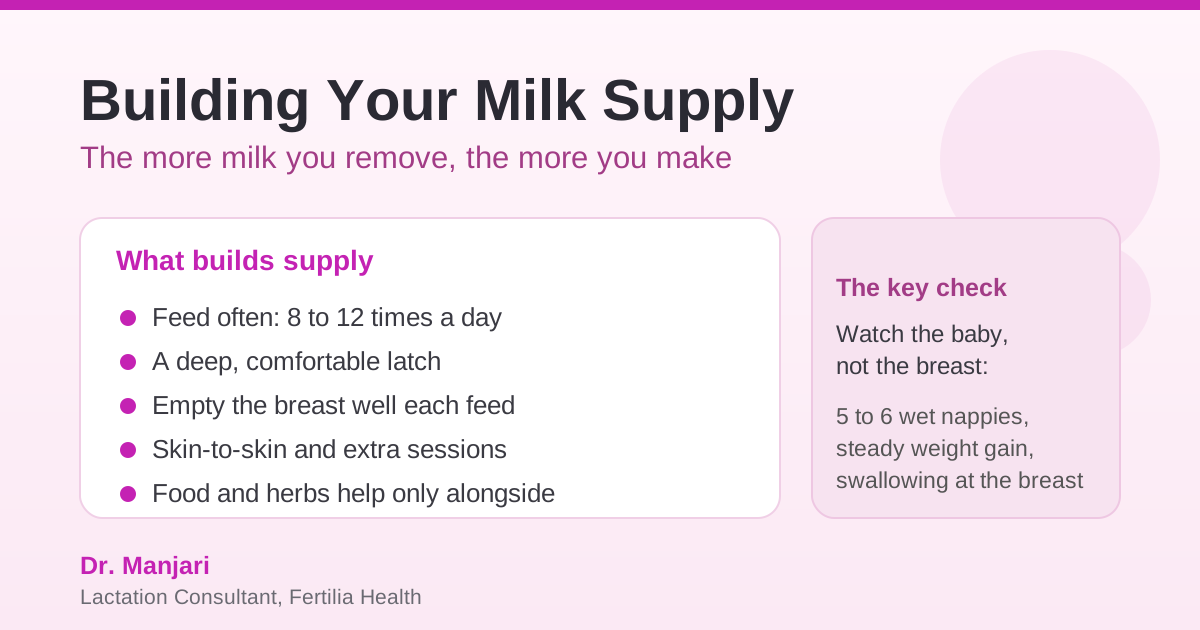
So how do you know your baby is getting enough? Watch the baby, not the breast. The reliable signs are at the other end:
| Reassuring sign | What to look for |
|---|---|
| Wet nappies | At least 5 to 6 heavy, pale-urine nappies a day from day 5 |
| Stools | 3 or more soft, yellow, seedy stools a day in the early weeks |
| Weight | Back to birth weight by about 2 weeks, then steady gain |
| At the breast | Rhythmic sucking with audible swallowing, content after most feeds |
If your baby is meeting these, your supply is almost certainly fine, whatever the breast feels like. If your baby is not meeting these, that is the signal to act, and to get help early.
The Real Causes of Low Supply
When supply is genuinely low, there is usually a reason, and most reasons can be worked on:
- A shallow latch. If the baby is not deeply attached, milk is not removed well, and poor removal means a falling supply. This is the most common and most fixable cause. Our breastfeeding positions guide covers a deep latch step by step.
- Feeds that are too spaced out or timed by the clock. A newborn needs roughly 8 to 12 feeds in 24 hours. Long stretches between feeds, or strict schedules, lower the demand signal.
- Early or unnecessary top-ups. Every bottle of formula given replaces a feed at the breast, which lowers the removal signal, which lowers supply, which leads to more top-ups. It is a loop worth breaking early, with guidance.
- A sleepy or unwell baby who does not feed effectively, including in the early days of jaundice (see our guide to newborn jaundice).
- Medical factors: an underactive thyroid, retained placenta fragments, significant postpartum bleeding, PCOS, or previous breast surgery can all affect supply. These are worth checking with your doctor when the usual steps are not enough.
Not sure whether your supply is low, or how to fix a painful or shallow latch? This is exactly what lactation support is for. Message Dr. Suganya’s team at Fertilia on WhatsApp, and we can work through latch, feeding pattern, and a plan over a video call.
How to Build Your Supply (In Order of What Works)
If your baby genuinely needs more, here is where to put your energy, strongest lever first. Notice that the most powerful tools cost nothing.
1. Remove milk more often and more completely. This is the foundation, and nothing else comes close. Feed on demand, aim for 8 to 12 times in 24 hours including at least once overnight when prolactin is highest, and let the baby finish the first breast before offering the second so they reach the richer hindmilk.
2. Fix the latch. A deep latch is what makes all that feeding actually remove milk. If feeding hurts, or you hear clicking, or the baby slips off, the latch needs attention. Pain is a sign, not something to endure, and our guide to nipple pain and latch explains how to correct it.
3. Use breast compression and switch nursing. Gently compressing the breast during a feed keeps milk flowing and the baby actively swallowing. Switching back and forth between breasts a few times in a feed keeps the baby drinking and adds demand.
4. Add skin-to-skin and extra sessions. Skin-to-skin contact supports the hormones of milk production. An extra feed or a short pumping session after a feed adds demand, and your body answers it over the next few days.
5. If you are pumping, pump effectively. For mothers separated from their baby or building a supply, a good double electric pump used at least 8 times in 24 hours, with breast massage and hands-on technique, works far better than a longer single pump. Power pumping (cluster pumping for an hour once a day) can add a useful demand signal.
6. Look after yourself. Rest where you can, eat enough, and keep a water bottle wherever you feed. You do not need to eat special foods or drink litres of milk to make milk, but a depleted, exhausted body does make supply harder.
The thread running through all of this is the same: supply follows demand. Give the breast the signal to make more, consistently, for a few days, and it usually responds.
Where Foods, Herbs, and Medicines Fit
In Indian homes, low supply is often met first with food: methi (fenugreek), shatavari, jeera, garlic, oats, gond, and warm milky drinks. These are nourishing, comforting, and part of a caring postpartum tradition, and there is no reason to give them up. For the dietary side in detail, our nutrition team’s guide to foods that increase breast milk covers them well.
What the evidence asks us to be clear about is this. Galactagogues, whether foods, herbs, or medicines, have weak and mixed scientific support. The Academy of Breastfeeding Medicine, which sets the international standard, reviewed the research and found the evidence limited and of low quality, and it does not recommend reaching for a specific herb or drug before the basics are in place. Fenugreek and shatavari studies are small and inconclusive. They may help some mothers a little; they will not rescue a supply when milk is not being removed often and well.
Among medicines, domperidone has the most research behind it and can produce a modest increase, particularly for mothers of premature babies who are pumping. But it is a prescription decision that belongs with your doctor, who will weigh your heart health and other medicines first. It is never a first step, and it is not something to source or self-dose.
The order of priority, then, is clear: remove milk often and well, fix the latch, get hands-on help if needed, and treat foods and herbs as a pleasant support rather than the main event.
When to Reach Out for Help
Please get help sooner rather than later if:
- Your baby is having fewer than 6 wet nappies a day after day 5
- Your baby is not back to birth weight by 2 weeks, or is losing weight
- Your baby seems persistently sleepy, hard to rouse, or is feeding very weakly
- Feeding is painful at every feed despite trying to adjust the latch
- You feel you are falling into a top-up loop and want to protect breastfeeding
None of these mean you have failed. They mean a pair of experienced hands and eyes will get you further, faster, than another night of worry. Early support is the difference between a wobble and a long struggle.
Frequently Asked Questions
How do I know if my breast milk supply is actually low? Watch the baby, not the breast. Steady weight gain, at least 5 to 6 heavy wet nappies a day from day 5, regular soft yellow stools in the early weeks, and audible swallowing at the breast are the reliable signs of enough milk. A soft breast, a fussy evening, or a small pump output are not signs of low supply.
How quickly can I increase my milk supply? Because supply follows demand, most mothers who increase effective milk removal see a difference within 3 to 7 days of consistent, frequent feeding with a good latch. Building supply is a few days of steady signalling, not an overnight switch.
Do fenugreek (methi) and shatavari really increase milk? The evidence is weak and mixed. They may help some mothers modestly, but no food or herb works without frequent, effective milk removal. Enjoy them as part of nourishing postpartum food, not as a substitute for feeding often and fixing the latch.
Should I take domperidone to increase supply? Only if your doctor prescribes it. Domperidone has the most evidence among galactagogues and can give a modest boost, especially for mothers pumping for a premature baby, but it is a medical decision that depends on your heart health and other medicines. It is never a first step or something to self-prescribe.
Will pumping after feeds increase my supply? It can. An extra short pumping session after a feed adds demand, and your body responds over the next few days. Effective removal, whether by baby or a good pump used often, is what drives supply up.
My breasts feel soft and empty. Has my milk dried up? Almost certainly not. Around weeks 3 to 6, breasts stop feeling full as supply settles to match your baby. A soft breast that still feeds a content, growing baby with plenty of wet nappies is a well-regulated breast, not an empty one.
Does giving formula top-ups reduce my supply? Each top-up replaces milk removal at the breast, which lowers the demand signal and, over time, the supply. Sometimes top-ups are medically needed, but when the goal is to protect or build supply, they are best used with a clear plan and lactation guidance so breastfeeding is not quietly displaced.
Milk supply can feel like the most mysterious, least controllable part of new motherhood. It is actually one of the more responsive systems in the body: it answers demand, reliably, when you understand what it is listening for. Feed often, latch deep, ask for help early, and let the foods and herbs be the comfort rather than the cure.
Struggling with supply, latch, or the worry that your baby is not getting enough? Message Dr. Suganya’s team at Fertilia on WhatsApp. We offer lactation support over video call and can build a plan that fits your baby and your day.
Written by Dr. Manjari, MBBS, a lactation professional at Fertilia Health who has supported 10,000+ breastfeeding mothers. This guide is general information and does not replace an individual assessment of you and your baby. For the wider picture of recovery in these weeks, see our postpartum recovery guide.