You put your phone in the fridge. You walk into a room and cannot remember why. You forget the word for an everyday object mid-sentence, or you re-read the same line of a message five times. You used to be organised, and now you feel scattered in a way that is unfamiliar and, if you are honest, a little unsettling.
New mothers describe this to me constantly. Many of them laugh it off as “baby brain” or “mom brain.” Some call it momnesia. A few worry that something is genuinely wrong with them, or that they are somehow not coping.
Here is what I want you to know first: baby brain is real, it is well studied, and it is not a sign that you are failing or losing your mind. It has clear causes, most of which improve with time and support. Let me explain what is happening and what actually helps.
Baby Brain Is Real, and Science Backs It Up
For years, “baby brain” was treated as a joke or dismissed as a myth. The research says otherwise.
Studies that test memory and thinking find that women in pregnancy and the early postpartum period score measurably lower, on average, on certain memory and executive-function tasks than women who are not pregnant (Davies et al., Medical Journal of Australia 2018). And a landmark brain-imaging study found that pregnancy is associated with changes in the structure of specific brain regions involved in social understanding, changes that lasted for at least two years and appeared to help mothers respond to their babies (Hoekzema et al., Nature Neuroscience 2017).
That last point matters. The brain is not being damaged. It is being remodelled. Some researchers describe it as the brain becoming more specialised, sharpening the circuits that help you read and respond to your baby, sometimes at the temporary expense of the circuits that remember where you left your keys.
So when you feel foggy, you are not broken. Your brain is doing exactly what a new mother’s brain does.
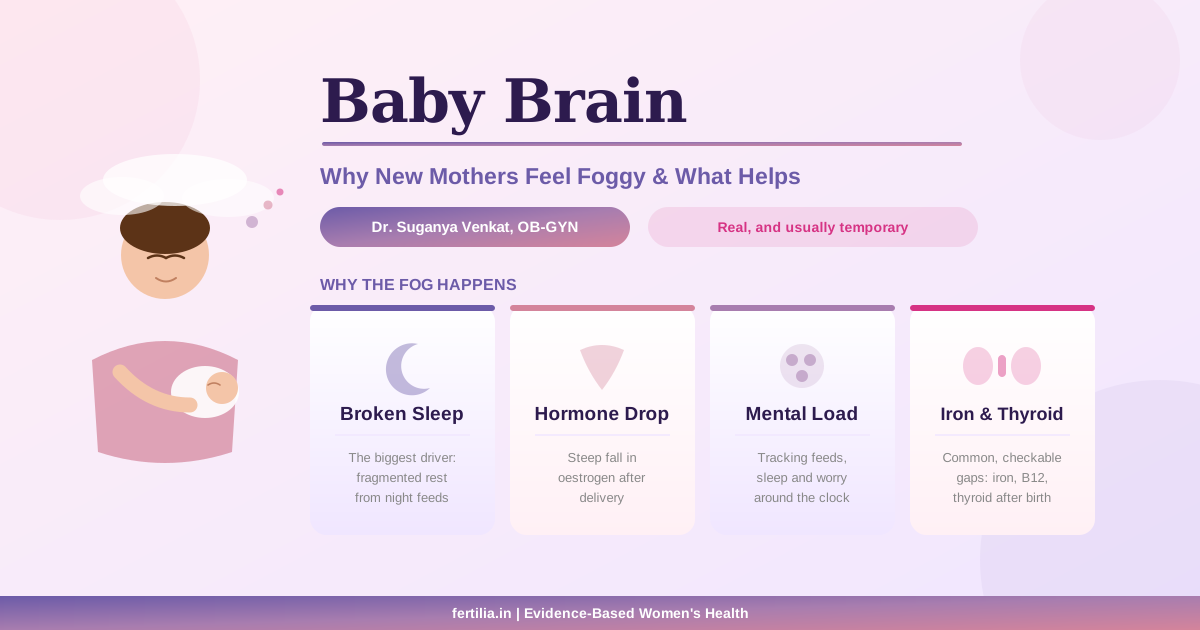
Why New Mothers Feel Foggy: The Real Causes
1. Broken sleep (the biggest driver by far)
If there is one cause to name above all others, it is sleep. Not the total number of hours, but how fragmented they are. Waking every two to three hours to feed shatters the deep, continuous sleep your brain needs to consolidate memory, restore attention, and find words quickly.
Fragmented sleep alone produces exactly the symptoms of baby brain: forgetfulness, slow recall, and difficulty concentrating. This is why the fog is usually worst in the newborn weeks and eases as your baby begins to sleep for longer stretches.
2. The hormonal drop after delivery
In pregnancy, oestrogen and progesterone rise to very high levels. Within days of delivery, they fall steeply. These hormones influence mood, memory, and mental clarity, and this sudden recalibration contributes to the foggy, tearful, off-balance feeling of the early postpartum weeks. Your body is adjusting to an enormous hormonal shift in a very short time.
3. The mental load of a newborn
A new baby is a full-time cognitive job. You are tracking feeds, nappies, sleep windows, appointments, and a hundred small worries, often while running on very little rest. That constant background monitoring uses up mental bandwidth, leaving less available for the everyday things you used to do on autopilot. It can feel like memory loss when it is really overload. Our piece on burnout and the mental load speaks to how heavy this invisible work is.
4. Nutrient gaps and thyroid changes
Pregnancy and delivery draw heavily on your iron and B12 stores, and blood loss at birth adds to this. Iron-deficiency anaemia and vitamin B12 deficiency both cause fog and fatigue, and both are common and correctable after delivery. See vitamin B12 deficiency in women for the signs.
Postpartum thyroiditis, an inflammation of the thyroid, affects around 5 to 10 percent of women in the year after birth and can cause brain fog, fatigue, and low mood. It is easily tested with a thyroid panel and is very treatable.
Feeling Foggy and Not Sure What Is Normal?
The early months are demanding, and it is not always easy to tell everyday baby brain from something worth checking. A short conversation can help you sort out what is simply new-mother fog and what deserves a test.
When Does Baby Brain Go Away?
For most women, the worst of the fog lifts as sleep becomes more consolidated, usually over the first several months as your baby starts sleeping longer at night. It rarely disappears overnight. It fades gradually, as your rest improves and your hormones settle.
The brain changes from pregnancy itself can last longer, up to a couple of years, but they do not keep you feeling foggy for that whole time. Most mothers feel meaningfully clearer well before then, once the acute sleep deprivation of the newborn phase is behind them.
If your fog is not improving as your baby sleeps better, or if it is getting worse, that is worth looking into rather than waiting it out.
What Helps While Your Brain Recalibrates
You cannot switch off a newborn’s night feeds, but you can reduce the load on a tired brain and support your recovery.
Protect sleep wherever you can
- Sleep when the baby sleeps is a cliche because it works. Even a short daytime nap helps chip away at the sleep debt driving your fog.
- Share the night load if at all possible. A partner or family member taking one feed or settling, or taking the baby for the early morning stretch, can give you one longer block of sleep, which matters more than the total.
- If you are breastfeeding and exhausted, expressing milk so someone else can give a feed is a reasonable option; see how to increase breast milk supply if supply is a worry.
Lean on external memory, not willpower
Do not try to hold everything in your head right now. Offload it:
- Keep one notes app or one notebook for everything: feeds, appointments, questions for the doctor, the thing you must not forget.
- Set phone reminders and alarms freely. This is not a weakness, it is smart use of a tired brain.
- Put keys, phone, and wallet in one fixed spot by the door.
Eat and hydrate to steady your energy
Running on chai and whatever you can grab one-handed worsens fog. Aim for regular meals with protein (dal, egg, curd, paneer, sprouts), slow carbohydrates like ragi and millets, and plenty of water, especially if you are breastfeeding. Steady blood sugar means steadier concentration. Our postpartum diet guide has simple, practical ideas.
Get the correctable things checked
Ask your doctor for a serum ferritin (iron stores), vitamin B12, vitamin D, and a thyroid panel at your postpartum check. If any are low, correcting them can noticeably clear the fog. This is especially worth doing if you had heavy bleeding at delivery.
Be gentle with yourself
Foggy days are part of this season, not a verdict on the mother you are. Lowering the bar on non-essential tasks, accepting help, and forgiving yourself the forgotten thing all reduce the stress that makes fog worse.
When Baby Brain Is Something More
Baby brain is common and usually benign. But please speak to a doctor if you notice:
- Persistent low mood, tearfulness, loss of interest, or feeling disconnected from your baby. Brain fog is a common part of postpartum depression and postpartum anxiety, both of which are common and very treatable. See postpartum depression: signs, support and recovery and postpartum anxiety.
- Fog that is worsening rather than easing as your sleep improves.
- Signs of a thyroid problem or anaemia: weight changes, cold intolerance, hair loss, palpitations, breathlessness, or extreme fatigue alongside the fog.
- Any frightening thoughts, confusion, or feeling detached from reality. This is uncommon but needs prompt medical attention, so reach out to a doctor straight away.
Asking for help here is not an overreaction. It is exactly the right thing to do, and these conditions respond well to treatment.
For a broader sense of what to watch for in the early weeks, our guide to postpartum warning signs covers the symptoms never to ignore.
You Do Not Have to Navigate the Fourth Trimester Alone
The postpartum period asks a great deal of you, and foggy, forgetful days are part of it for most mothers. If yours is not lifting, or if it comes with low mood or exhaustion that worries you, our team at Fertilia can help you understand what is normal, what to test, and how to feel like yourself again.
Frequently Asked Questions
Is baby brain (mom brain) real?
Yes. It is not a myth or an excuse. Studies show measurable, if modest, dips in certain memory and executive-function tasks during pregnancy and the early postpartum period, and brain imaging shows real structural changes during pregnancy. The everyday forgetfulness mothers feel is driven mainly by fragmented sleep, the steep hormonal drop after delivery, and the huge new mental load of caring for a newborn.
How long does baby brain last?
For most women, the heaviest fog eases over the first several months as the baby begins to sleep for longer stretches and your own sleep becomes more consolidated. Some pregnancy-related brain changes can last a year or two, though they do not keep you feeling foggy for that long; most mothers feel clear-headed again well before then. If your fog is not improving as your sleep improves, it is worth getting checked.
Is baby brain the same as postpartum depression?
No, though they can overlap. Baby brain is mainly forgetfulness and difficulty concentrating, driven by sleep loss and hormonal change. Postpartum depression involves persistent low mood, loss of interest, tearfulness, and sometimes feeling disconnected from your baby, and brain fog can be part of it. If low mood, hopelessness, or anxiety is present alongside the fog, please speak to a doctor, because postpartum depression and anxiety are common and very treatable.
Can breastfeeding make baby brain worse?
Not directly, but the broken sleep that comes with frequent night feeds is the main driver of fog, and breastfeeding mothers often carry more of the night waking. Sharing feeds where possible (including expressed milk), staying well hydrated, and eating regular balanced meals all help. Breastfeeding itself is not harming your memory.
What can I do today to feel less foggy?
Reduce what your tired brain has to hold. Write everything down in one place, set phone reminders, and keep keys and phone in one fixed spot. Grab any nap you can, share a night feed if someone can help, and eat a proper meal with protein rather than running on chai and biscuits. These small changes ease the load while your sleep and hormones recover.
Should I get any tests for postpartum brain fog?
If your fog is heavy, not improving, or comes with fatigue and low mood, ask your doctor for a serum ferritin, vitamin B12, vitamin D, and a thyroid panel. Iron-deficiency anaemia, B12 deficiency, and postpartum thyroiditis are all common after delivery, all cause fog, and all are treatable once identified. This is especially worth doing if you had significant blood loss at birth.
Will my memory ever go back to normal?
For the vast majority of women, yes. As sleep consolidates and hormones settle, the fog lifts and mental sharpness returns. The lasting brain changes from pregnancy are best understood as your brain adapting to motherhood, not as permanent impairment. If you feel your memory is not recovering over the months after birth, a check-up can rule out the treatable causes.
Dr. Suganya Venkat is an OB-GYN with 15+ years of clinical experience. DNB OB-GYN (GKNM, Coimbatore) · MD Pathology (CMC Vellore) · MBBS with 5 Gold Medals (SRMC). She founded Fertilia to provide holistic, evidence-based care for fertility, PCOS, pregnancy, and postpartum recovery.
Related Reading
- Postpartum Depression: Signs, Support & Recovery, when the fog comes with low mood and how to get help
- Postpartum Anxiety: Signs, Causes & How to Get Support, the worry and racing thoughts that can accompany the newborn weeks
- Newborn Care: The First 30 Days, a practical guide to the demanding early weeks
- Postpartum Warning Signs: When to Call the Doctor, the symptoms in the fourth trimester never to ignore