There is a particular silence in the room when the baby is placed on the weighing scale. Everyone leans in. The number is read out, compared to last week, compared to the cousin’s baby, compared to what someone remembers being “normal.” And whatever the number is, a new parent’s first instinct is to wonder whether it is enough.
I weigh babies for a living, and I want to take some of the charge out of that moment. A newborn’s weight is one of the most useful things we track, but it is also one of the most misunderstood. The single number on the scale matters far less than the trend over time, and a baby can sit on a lower line of the chart and be perfectly healthy. This guide explains what normal weight gain actually looks like in the first weeks, how growth charts and percentiles really work, and when a weight pattern is worth a closer look.
What this post covers:
- The normal pattern: why babies lose weight first, then gain
- How much weight a baby is expected to gain, week by week
- How growth charts and percentiles work, and what they do not mean
- What “my baby is not gaining weight” usually comes down to
- When a weight pattern needs a doctor, and how weight is best measured
The Normal Pattern: Lose First, Then Gain
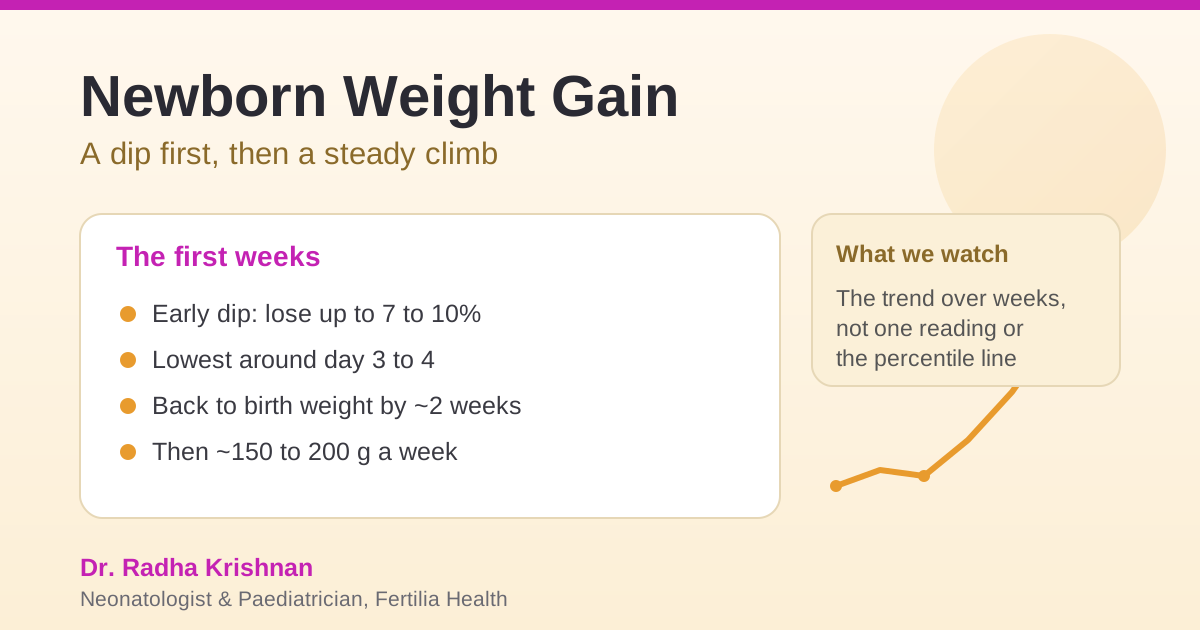
Almost every newborn loses a little weight in the first few days, and this is expected, not a problem. Babies are born with extra fluid, they pass meconium and urine, and in the first days the milk supply is still building, so a small dip is normal. Most babies lose up to about 7 to 10 percent of their birth weight, reach the lowest point around day 3 or 4, and then start climbing.
From there, a healthy baby is usually back to birth weight by about two weeks, and sometimes up to three. This is the first real milestone we look for. A baby who has regained birth weight by the two-week check, and is feeding and filling nappies well, is almost always a baby who is doing well.
So if your baby weighs a little less at day three than at birth, that is the pattern working as it should, not a sign you are doing something wrong. The question is not whether the baby dipped, but whether the baby has started to climb back.
How Much Weight a Baby Should Gain
Once the early dip is over, babies gain quite fast in the first few months, then naturally slow down. These are average guides, not targets to hit exactly:
| Age | Typical weight gain |
|---|---|
| 0 to 3 months | About 20 to 30 g a day, or roughly 150 to 200 g a week |
| 3 to 6 months | About 100 to 150 g a week |
| 6 to 12 months | About 70 to 90 g a week |
A useful rough landmark: most babies double their birth weight by around 5 to 6 months and treble it by about a year. Premature babies and small babies follow their own pace and are tracked against an adjusted age, so do not compare them to a term baby’s chart.
Two honest caveats. First, weight does not go up in a tidy straight line. A baby may gain well one week and little the next, especially around growth spurts, minor illnesses, or teething later on. Second, the day-to-day number is noisy: a full bladder, a recent feed, or a different scale can shift it by 100 grams. This is exactly why we read the trend across weeks, not a single weighing.
How Growth Charts and Percentiles Work
This is the part that causes the most needless worry, so it is worth getting right.
When your baby is weighed, the number is plotted on a growth chart, a set of curved lines built from how thousands of healthy babies grow. In India, the Indian Academy of Pediatrics recommends the World Health Organization (WHO) growth standards for children under five years, and the revised IAP charts for older children (IAP Growth Charts Committee, Indian Pediatrics, 2015, PMID 25638185). The WHO Child Growth Standards (2006) are based on healthy, breastfed babies across six countries, including India, and are the right reference for your baby.
Each curved line is a percentile. If your baby is on the 25th percentile for weight, it means that out of 100 healthy babies of the same age and sex, about 25 weigh less and 75 weigh more. Here is the key idea: there is no good or bad percentile. A baby on the 10th line is not less healthy than a baby on the 90th. Babies, like adults, come in different sizes. A petite, thriving baby may sit happily on the 15th percentile for life.
What we actually watch is whether your baby is following their own curve. A baby who tracks steadily along the 25th line, week after week, is growing beautifully. The pattern that prompts a closer look is a baby who drops across the bands over time, for example sliding from the 50th toward the 15th over a few weeks. That change in direction, not the line itself, is the signal. So when someone tells you a percentile as if it were a school mark, you can gently set that aside. The chart is about your baby’s own trajectory.
Worried your baby is not feeding enough to gain well? Feeding is the most common reason for slow weight gain, and it is very fixable. Our lactation team can help you work through latch, supply, and feeding pattern over a video call. Message Dr. Suganya’s team at Fertilia on WhatsApp. For weighing and a hands-on growth check, your paediatrician in person is the right place, and we will always point you there.
“My Baby Is Not Gaining Weight”
When a baby genuinely is not gaining as expected, doctors call it faltering growth (the older term was failure to thrive, which sounds far more frightening than it usually is). It simply means weight gain is slower than expected and needs a look at why. In the great majority of cases, especially in the early weeks, the reason is not enough milk getting in, and that is very workable.
The common, fixable causes:
- A latch or feeding problem. If the baby is not attaching deeply, milk transfer suffers even when supply is fine. Our guide to getting a deep latch covers this.
- Feeds too spaced out, or a sleepy baby who is not feeding often enough. Newborns need 8 to 12 feeds in 24 hours.
- A genuine low supply. If you are worried about supply specifically, our milk supply guide explains how to tell real low supply from the much more common feeling of it, and how to build it.
- Tongue-tie that is interfering with feeding, which a lactation consultant and paediatrician can assess together.
Less commonly, slow gain points to a medical reason: significant reflux, an infection, a heart condition, or a problem absorbing nutrients. These are the minority, and they are exactly what your paediatrician checks for with an examination when the feeding side has been addressed and weight is still not moving. The point of naming them is not to alarm you, but to explain why a persistent weight problem deserves a proper review rather than guesswork at home.
Whatever the cause, the approach is steady and reassuring: confirm the weight on a reliable scale, look closely at how feeding is going, support and increase milk intake, and re-weigh after a set interval to see the trend respond. Most babies turn the corner once feeding is sorted.
When to Get Your Baby Weighed and Reviewed
Routine weight checks happen at your immunisation visits and well-baby visits, and that schedule is enough for most babies. Bring weight forward and speak to your paediatrician if:
- Your baby has lost more than 10 percent of birth weight, or is still losing after day 4 or 5
- Your baby is not back to birth weight by three weeks
- Weight is dropping across the chart’s bands over successive weighings
- There are fewer than 6 heavy wet nappies a day after day 5, or stools have become infrequent and the baby seems unsettled (output is a good real-time clue, as we cover in the first 30 days guide)
- Your baby is very sleepy, feeding weakly, or hard to rouse for feeds
A note on how to weigh, because the method causes a lot of false alarms. Weigh on the same scale, with the baby undressed and without a nappy, and no more than once a week in the early weeks unless your doctor has asked for closer monitoring. Daily home weighing tends to capture noise, not growth, and turns a normal wobble into a worry. Trust the weekly trend.
For your own recovery and the wider first-weeks picture, our postpartum recovery guide and postpartum care program sit alongside this one.
Frequently Asked Questions
How much weight should a newborn gain per week? In the first three months, a healthy baby gains roughly 150 to 200 grams a week, or about 20 to 30 grams a day, after the normal early dip. The pace slows over the year. Weight does not rise in a straight line, so a steady trend across several weeks matters far more than any single weighing.
Is it normal for a newborn to lose weight after birth? Yes. Most newborns lose up to about 7 to 10 percent of their birth weight in the first few days, reach the lowest point around day 3 or 4, and are back to birth weight by around two weeks. A small early dip is expected and is not a sign of a feeding failure. The thing to watch is that the baby then starts gaining.
What does my baby’s percentile mean? A percentile compares your baby to other healthy babies of the same age and sex. The 25th percentile means about a quarter weigh less and three-quarters weigh more. No percentile is good or bad; babies come in different sizes. What matters is whether your baby follows their own curve over time, not which line they sit on. A steady drop across the bands is what prompts a review.
Which growth chart is used for babies in India? For children under five, the Indian Academy of Pediatrics recommends the WHO growth standards (2006), which are based on healthy breastfed babies from six countries including India. The revised IAP charts (2015) are used from 5 to 18 years. Your paediatrician will plot weight, length, and head circumference on these.
My baby is not gaining weight. What should I do? First, do not panic, as the most common reason is simply not enough milk getting in, which is very fixable. Have the weight confirmed on a reliable scale, look closely at latch and feeding frequency with lactation support, work on increasing intake, and re-weigh after the interval your doctor suggests. If weight still does not move once feeding is sorted, your paediatrician will examine for less common medical causes.
How often should I weigh my baby at home? No more than once a week in the early weeks, on the same scale, with the baby undressed. Daily weighing mostly captures the noise of a full bladder or a recent feed and creates worry without information. Routine checks at immunisation and well-baby visits are enough for most babies; weigh more often only if your paediatrician advises it.
Does formula make babies gain faster than breast milk? Formula-fed and breastfed babies often grow at slightly different rates, and breastfed babies sometimes gain a little more slowly after the first few months, which is normal and healthy. The WHO standards are built on breastfed babies for exactly this reason. Whichever way you feed, the same principle holds: steady growth along the baby’s own curve is what we want to see.
A newborn’s weight is a story told over weeks, not a verdict delivered on a single scale. Most babies dip a little, climb back by two weeks, and then settle onto their own curve and follow it faithfully. Watch the trend, count the nappies, feed often and well, and let your paediatrician’s weighing and examination do the rest. The number on any given day is rarely the thing that matters.
Worried about your baby’s weight or whether feeding is going well? Message Dr. Suganya’s team at Fertilia on WhatsApp for lactation support over video call. For weighing and your baby’s medical care, your paediatrician in person is the right first call, and we will always guide you there when that is what your baby needs.
Medically reviewed and written by Dr. Radha Krishnan, Neonatologist & Paediatrician. This guide is general information for Indian families and does not replace an in-person assessment of your baby. Weight and growth are best monitored by your own paediatrician.