You wake for a feed and one part of your breast feels hot, hard, and painful. By afternoon, you may feel achy or shivery. It is easy to assume that every case is already an infection and that you must pump the breast empty. Current guidance gives us a more useful picture.
Mastitis is a spectrum of inflammation in a lactating breast. It can begin with swollen, narrowed ducts and progress to inflammatory mastitis. Some cases then become bacterial mastitis and need antibiotics. This distinction matters because early inflammation often settles with cold, rest, normal responsive feeding, and less stimulation. Repeated pumping and forceful massage can make the swelling worse.
I’m Dr. Suganya Venkat, an OB-GYN with more than 15 years of clinical experience. This guide will help you recognise the pattern, care for the breast without injuring it, and know when you need a doctor nearby rather than another home remedy.
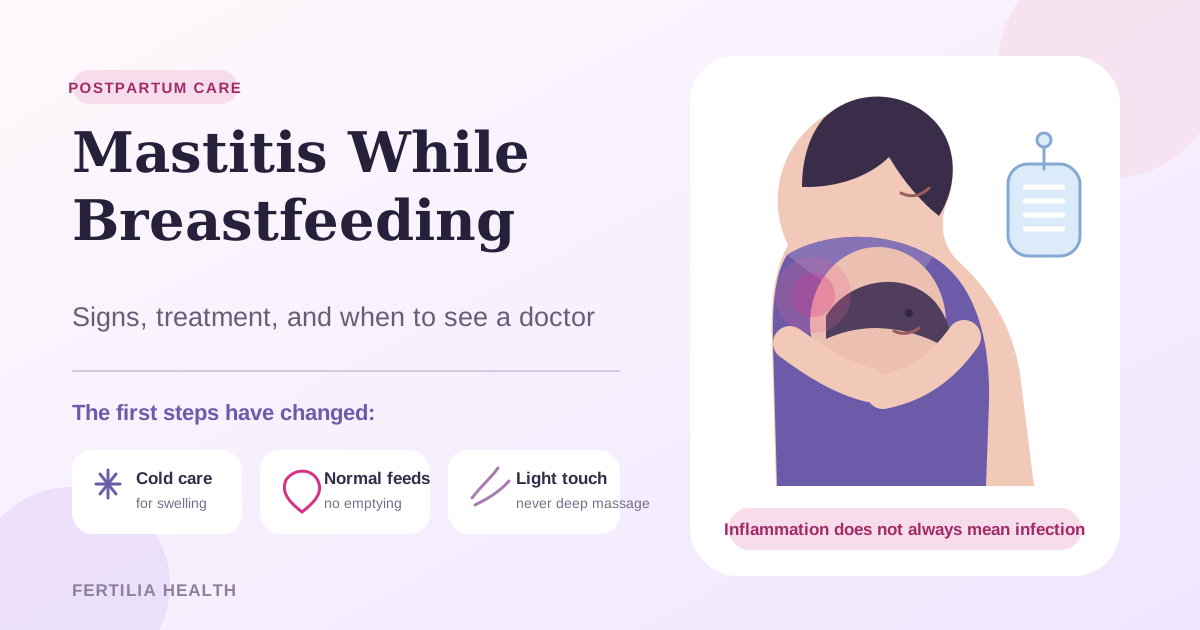
For now: continue usual responsive feeding, use cold for comfort, and avoid extra pumping or deep massage. Seek medical assessment if symptoms worsen or have not improved after 12 to 24 hours of home care. If you are confused, struggling to breathe, or becoming severely unwell, seek emergency care now; the urgent-care section below explains what to look for.
Mastitis Symptoms to Look For
Mastitis usually affects one breast, and symptoms can develop quickly. You may notice:
- a painful, swollen, warm area in one part of the breast
- a firm or wedge-shaped area
- a patch of redness or a darker colour change
- burning breast pain during a feed or between feeds
- body aches, chills, fever, or a flu-like unwell feeling
- tiredness that feels more intense than ordinary interrupted sleep
Redness can be difficult to see on brown skin. Compare both breasts in good light and pay attention to new warmth, swelling, tenderness, or a patch that looks darker than the surrounding skin. The NHS mastitis guide describes this same symptom pattern and advises medical review when it does not improve after 12 to 24 hours of home care.
Is It Engorgement, Ductal Narrowing, or Mastitis?
These conditions overlap, but the pattern gives useful clues.
| Pattern | What you may notice | What it usually means |
|---|---|---|
| Engorgement | Both breasts feel full, firm, and uncomfortable, often when milk first comes in | General swelling and increased milk volume |
| Ductal narrowing, often called a blocked duct | One tender, firm area with mild colour change, but no fever or flu-like symptoms | Local inflammation and microscopic narrowing, not a large plug that must be squeezed out |
| Inflammatory mastitis | A painful, increasingly swollen and red or darkened area, with possible fever, chills, fast pulse, or body aches | A stronger inflammatory response that can occur without bacterial infection |
| Bacterial mastitis | The breast inflammation keeps worsening, spreads, or fails to improve, with persistent systemic symptoms | A bacterial infection is more likely and antibiotics may be needed |
| Abscess | A persistent or enlarging mass, sometimes with a softer fluid-filled centre; fever may continue, settle, or return | A collection of infected fluid that needs examination, ultrasound, and drainage |
Plain fullness in both breasts, especially in the first postpartum week, is more consistent with engorgement than mastitis. Use the current mastitis steps below if symptoms affect one area or you also have fever, chills, or body aches.
The wording “blocked duct” can make you picture a piece of solid milk that needs to be forced through. The Academy of Breastfeeding Medicine’s 2022 mastitis protocol explains that the problem is usually inflammation and microscopic narrowing within an interlacing duct system. Squeezing hard enough to chase a supposed plug can injure the tissue around it (Mitchell KB et al., Breastfeeding Medicine, 2022, PMID 35576513).
What to Do in the First 12 to 24 Hours
If you are otherwise stable and the symptoms have just begun, use a low-trauma plan while arranging help if the pattern worsens.
1. Continue normal, responsive breastfeeding
Feed your baby according to their usual cues. Milk from a breast with bacterial mastitis is safe for your baby, and sudden weaning can add more breast fullness. There is usually no need to pump and discard the milk.
Normal feeding does not mean repeatedly offering only the affected breast or trying to empty it after every feed. Milk production responds to removal. Extra pumping can drive oversupply, which adds pressure and inflammation. If your baby is feeding normally, let that be the main milk removal.
If the affected breast is so swollen that your baby cannot latch or no milk will flow, do not keep forcing attempts. Feed from the other breast and hand-express only a small amount from the sore side for comfort. Return to normal feeding on that side as the swelling settles. If latch has been difficult before this episode, use our deep-latch guide and arrange a feeding assessment.
2. Use cold for pain and swelling
Place a cold pack wrapped in a thin cotton cloth on the sore area for about 10 minutes at a time. Cold reduces swelling and can make feeding more comfortable. A brief warm shower may feel soothing for some women, but prolonged or repeated heat can increase blood flow and swelling. Stop if warmth makes the throbbing or redness worse.
3. Rest, drink normally, and use a supportive bra
Rest as much as your household allows. Ask someone else to take over meals, washing, and non-feeding baby care for the day. Drink to thirst and keep water beside the place where you feed. Wear a comfortable, supportive bra that does not dig into the sore area.
Paracetamol or ibuprofen can reduce pain and fever for many breastfeeding women, but suitability depends on your allergies, medical history, and other medicines. Follow the packet directions and check with your doctor or pharmacist if you are uncertain. Do not take leftover antibiotics or somebody else’s prescription.
4. Keep touch light
A gentle sweep over the skin toward the armpit or collarbone may feel comfortable. Do not knead a lump, press knuckles into the breast, use a vibrating massager, or ask someone to apply deep pressure. The ABM protocol links deep massage with more swelling, small-vessel injury, and progression to an inflamed tissue mass or abscess.
Avoid castor oil packs, Epsom salt or saline soaks, and attempts to open a nipple bleb with a needle. These can damage already inflamed skin and tissue.
If you are stable but unsure whether this is engorgement, inflammation, or an infection, message Dr. Suganya Venkat on WhatsApp. Fertilia consultations are online by video call. If you are becoming very unwell or need a breast examination, go to a local doctor or hospital rather than waiting for an online reply.
When Antibiotics Are Needed
Antibiotics treat bacterial mastitis. They do not treat swelling that is inflammatory but not bacterial, and using them unnecessarily can disrupt the milk microbiome and contribute to antibiotic resistance.
A clinician should assess you if systemic symptoms such as fever or a fast pulse persist beyond 24 hours, if the red or painful area continues to spread, or if the breast is not responding to the conservative steps above. The NHS uses an earlier safety-net of review when symptoms have not improved after 12 to 24 hours. You do not need to prove that an infection is present before asking for help.
Your doctor will choose an antibiotic based on your examination, medicine allergies, local resistance patterns, and whether this has happened before. Finish the prescribed course unless the treating clinician changes it. If you are not improving after 48 hours of first-line treatment, the ABM protocol advises considering a milk culture for resistant or less common bacteria. Recurrent episodes may also need culture and a review of feeding and pumping patterns.
Most women can keep breastfeeding while taking an antibiotic chosen for lactational mastitis. Tell the prescriber your baby’s age, whether the baby was premature, and any known health conditions so the medicine can be selected appropriately.
When a Breast Lump Needs Ultrasound or Drainage
A tender area can remain firm for a while as inflammation resolves. It needs in-person review when it is enlarging, becoming more defined, feels fluid-filled, or is not settling with treatment. A breast ultrasound helps assess the lump: it may be a phlegmon (an inflamed tissue mass), an abscess (infected fluid), or a galactocele (a milk-filled cyst).
An abscess cannot be cured by massage or antibiotics alone. The infected fluid needs drainage, usually with image-guided aspiration or a small drain, plus antibiotics when indicated. Breastfeeding can usually continue after drainage with guidance from the treating team.
Repeated inflammation in exactly the same place also deserves examination and imaging. Do not assume every recurring lump is another blocked duct.
When to Seek Urgent Local Care
Arrange same-day in-person medical assessment if:
- fever, chills, a fast pulse, or flu-like symptoms persist for 12 to 24 hours
- breast pain, swelling, or colour change is worsening rather than easing
- redness or darkening is spreading across the breast
- you feel a growing or persistent mass
- symptoms have not improved within 48 hours of starting antibiotics
If mastitis has recurred but you are now recovering and otherwise well, arrange a prompt appointment to review the pattern. Recurrence alone does not mean you need emergency care; a currently worsening episode needs assessment as above.
Go to the nearest emergency department now if you are confused, have slurred speech, are breathing very fast or struggling to breathe, have blue, pale, grey, or blotchy skin or lips, or are passing very little urine. These are possible sepsis signs listed in the NHS sepsis guidance. Do not wait for a video consultation or WhatsApp response in that situation.
How to Reduce the Chance of Another Episode
Once the acute pain is settling, look for the reason the breast became overstimulated or feeding became difficult.
- Feed responsively rather than adding extra sessions to chase an empty feeling.
- If you pump because you are separated from your baby, aim to replace the amount the baby drinks rather than emptying the breast repeatedly.
- Check flange fit and reduce suction if pumping hurts or leaves swelling around the nipple.
- Avoid abrupt changes in feeding frequency. If you are dropping a feed, do it gradually.
- Address a persistent shallow latch or poor milk transfer. Our breastfeeding positions guide shows options that can reduce strain, while a live feeding assessment can identify what a diagram cannot.
- Review recurrent episodes with a doctor rather than repeating leftover antibiotics.
If pumping is part of your routine, our pumping guide shows how the flange should fit and what to check when pumping hurts. Those fit checks can reduce avoidable nipple and breast trauma.
Mastitis is not a sign that you are unclean or that your milk is bad. Routine sterilisation of every household item is not a treatment. Wash your hands before expressing and clean pump parts according to the manufacturer’s instructions.
Fertilia’s Postpartum Recovery program includes online lactation support with Dr. Manjari, a Lactation Professional, alongside medical oversight from Dr. Suganya. You can also download our free breastfeeding guide for latch, positioning, expressing, and everyday feeding care.
Frequently Asked Questions
Can I breastfeed my baby if I have mastitis?
Yes. The ABM protocol recommends continuing normal responsive feeding; milk from a breast with bacterial mastitis is safe for the baby. If swelling prevents latch or milk flow, follow the temporary adjustments in the feeding section above.
How can I tell inflammatory mastitis from bacterial mastitis?
Inflammatory mastitis can cause breast redness, swelling, pain, fever, and chills even when there is no bacterial infection. Bacterial mastitis becomes more likely when the inflamed area keeps worsening or spreading, systemic symptoms persist beyond 24 hours, or symptoms do not respond to conservative care. A clinician makes the decision from the full pattern, not from fever alone.
Should I massage a blocked milk duct?
Do not use deep massage or try to squeeze out a plug. What feels like a blocked duct is usually inflamed, narrowed tissue. Force can worsen swelling and cause tissue injury. Use cold, normal feeding, and only very light touch over the skin.
Should I pump until the breast is empty?
No. A breast is never literally empty, and extra removal signals it to make more milk. Pump only when it replaces a feed or when you need a small amount for comfort. Repeated pumping to empty can maintain oversupply and worsen inflammation.
How quickly should mastitis improve?
Recovery varies. Seek medical assessment if symptoms have not improved after 12 to 24 hours of home care, or sooner if worsening. This is a review threshold, not a promise that symptoms will resolve by then. If there is no improvement after 48 hours of antibiotic treatment, contact the prescriber for reassessment and possible milk culture.
Does every fever with breast pain need antibiotics?
No. Inflammation alone can produce fever and chills. Antibiotics are for bacterial mastitis, so the symptom pattern and its response over the first day matter. Persistent or worsening systemic symptoms need clinician assessment rather than automatic self-treatment or prolonged waiting at home.
Can mastitis turn into a breast abscess?
An abscess is a possible complication. An enlarging or persistent mass, a fluid-filled feeling, or symptoms that settle and then return should be examined. Ultrasound can identify a collection that needs drainage.
Need help sorting out a stable breastfeeding problem after urgent causes have been excluded? WhatsApp Dr. Suganya’s team for an online video consultation. For severe illness, sepsis signs, rapidly worsening symptoms, or a breast lump that needs examination, seek local in-person care first.
Sources checked
- Mitchell KB et al. Academy of Breastfeeding Medicine Clinical Protocol #36: The Mastitis Spectrum, Revised 2022. Breastfeeding Medicine. 2022. PMID 35576513.
- NHS. Mastitis and Sepsis. Checked 13 September 2026.
This article provides general education and cannot examine a painful breast or diagnose infection online. A local clinician should assess persistent, worsening, or severe symptoms.