Somewhere between the stitches, the sore breasts, and a baby who has just discovered that nights exist, many women notice a new discomfort sitting quietly under all of it: a swelling near the anus that stings, throbs, or bleeds a little when they use the toilet. It often gets mentioned last, if it gets mentioned at all, because it feels like one complaint too many for a body that is already asking a lot of attention.
Hemorrhoids after delivery are extremely common, whether the birth was vaginal or by C-section, and they are rarely a sign that anything went wrong. This post explains why they appear or worsen after delivery, how to tell them apart from your stitches, which treatments are safe while breastfeeding, and when it is worth calling your doctor.
What this post covers:
- Why hemorrhoids are so common in the days after delivery
- How to tell a hemorrhoid apart from a perineal tear or episiotomy stitches
- Safe topical treatments and stool-softening steps while breastfeeding
- When to contact your doctor
Why Hemorrhoids Are So Common After Delivery
Hemorrhoids are swollen, engorged veins in and around the anal canal. Everyone has vascular cushions in this area as a normal part of anatomy; a hemorrhoid is what happens when the veins within them become distended and inflamed. After delivery, two separate pressures usually converge on the same set of veins at the same time.
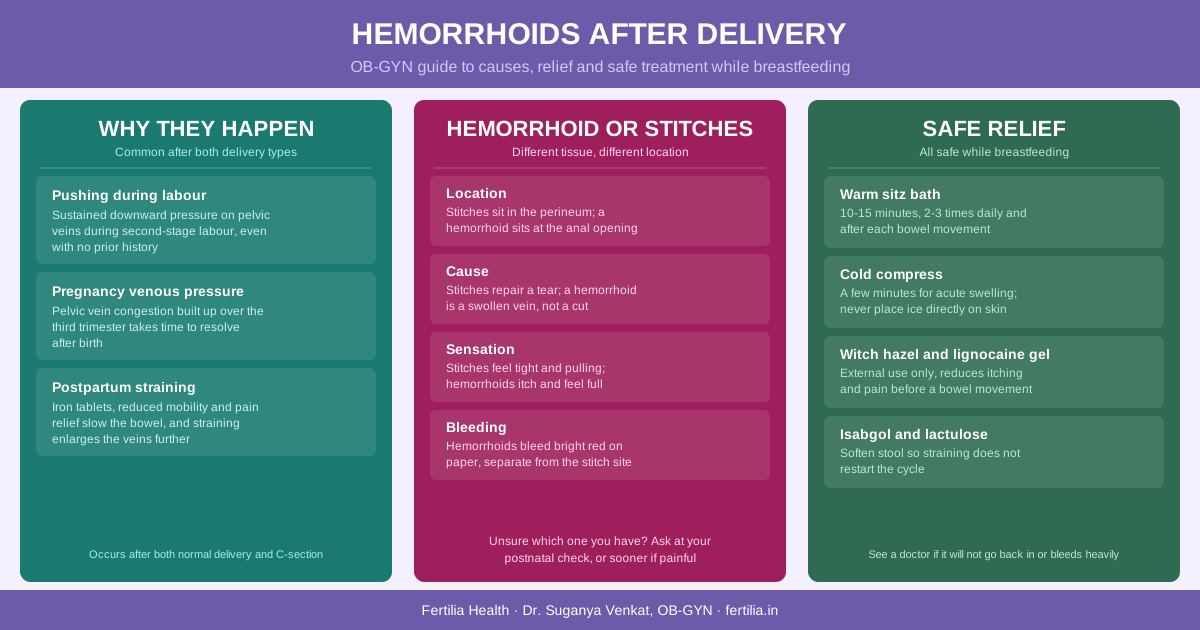
Pushing during second-stage labour
The pushing phase of a vaginal delivery generates intense, sustained downward pressure through the pelvis. That pressure bears directly on the same veins that form hemorrhoids. Many women who had no hemorrhoids at all during pregnancy develop them for the first time during the pushing stage of labour, simply from the mechanical force involved. Assisted deliveries (forceps or vacuum) and a longer second stage are both associated with a higher chance of this happening.
Pregnancy-related venous pressure that has not yet resolved
If hemorrhoids were already present in the third trimester, delivery does not switch that mechanism off immediately. The pelvic veins take time to return to their pre-pregnancy state, and in the first days after birth the same venous congestion that built up over the third trimester is often still present, sometimes worsened by the pushing itself.
Constipation and straining in the postpartum period
Iron supplements, reduced mobility, opioid pain relief after a C-section, and fear of straining near a perineal repair all slow the bowels down in the first week after delivery. Hard, difficult-to-pass stool means more straining, and straining is the direct mechanical trigger that enlarges hemorrhoidal veins further. This is why hemorrhoids and constipation are so often discussed together: treating one usually helps the other. For the full picture on what causes postpartum constipation and how to manage it safely, see Constipation After Delivery: Causes & Safe Relief.
Together, these three factors explain why a hemorrhoid can appear in a woman who never had one before, and why an existing one can flare noticeably worse in the first week after birth.
Hemorrhoids vs. Stitches: How to Tell Them Apart
This is one of the most common points of confusion in the first week after a vaginal delivery, and it matters because the two are managed differently.
Location. A perineal tear or episiotomy is repaired with stitches in the perineum, the area of tissue between the vaginal opening and the anus. A hemorrhoid sits at or just inside the anal opening itself, a few centimetres further back. If you gently look with a mirror (or ask your partner to), stitches are visible as a repair line closer to the vagina; a hemorrhoid appears as a soft, rounded swelling right at the anal rim.
Cause. Stitches close a cut or tear that happened during delivery of the baby’s head. A hemorrhoid is a pre-existing vein that has become swollen; it was not cut or torn, and there is nothing to “heal shut” in the surgical sense.
Sensation. Perineal stitches typically cause a pulling, tight, or raw sensation that is worst when sitting directly on the area or moving suddenly. Hemorrhoids more often cause itching, a sense of fullness or a lump, and pain specifically around passing a bowel movement.
Bleeding pattern. Both can bleed. Stitches occasionally ooze a small amount, particularly in the first few days. Hemorrhoids classically cause bright red blood seen on the toilet paper or dripping into the bowl after a bowel movement, separate from the stitched area.
If you are not sure which one you are dealing with, that uncertainty alone is a reasonable reason to ask at your postnatal check, or sooner if either is causing significant pain. For the details on stitch care and healing timelines specifically, see Perineal Tear Degrees: What 1st, 2nd, 3rd & 4th Mean.
If you are not sure whether what you are feeling is a hemorrhoid, a stitch complication, or something else, WhatsApp Dr. Suganya Venkat for a quick online consultation rather than guessing.
Safe Treatment While Breastfeeding
The approach has two parts: calm the swollen vein directly, and stop the cycle of straining that keeps re-triggering it. All of the following are safe while breastfeeding.
Warm sitz baths. Sit in a few centimetres of warm (not hot) water for 10 to 15 minutes, two to three times a day and after each bowel movement. A basin, a sitz bath tray that fits over the toilet seat, or an ordinary bathtub all work. This is consistently the single most effective first step and is safe after both normal delivery and C-section.
Cold compress. For acute swelling or throbbing, wrap a few ice cubes in a clean cloth and hold it against the area for a few minutes at a time. Never place ice directly on the skin. Alternating a cold compress with a warm sitz bath later in the day helps some women more than either alone.
Witch hazel pads. A plant-based astringent available at pharmacies. Applied externally on clean cotton pads, it reduces itching and irritation. It does not need to be washed off before feeding your baby and is not used internally.
Topical lignocaine gel. A local anaesthetic gel (such as 2% Xylocaine gel) applied externally before a bowel movement reduces the pain of passing stool. It is not absorbed into breast milk in any meaningful amount at the small external doses used here.
Isabgol (psyllium husk) and lactulose. Neither treats the hemorrhoid directly, but both are essential to stopping straining from happening again. Isabgol is a bulk-forming fibre: a teaspoon in a full glass of water, once or twice a day, with plenty of extra fluid. Lactulose (Duphalac, Looz) is an osmotic laxative that is not absorbed into the bloodstream and is considered safe while breastfeeding. Both are covered in more depth, including dosing and timing, in Constipation After Delivery: Causes & Safe Relief, which this post deliberately does not repeat in full.
What to avoid doing. Prolonged sitting on the toilet (reading or scrolling on your phone while seated) increases downward pressure on the veins. Straining, even briefly, undoes the benefit of a softened stool. Vigorous wiping or scrubbing after a bowel movement irritates the area further; pat gently instead, or use a peri bottle of warm water.
When to Contact Your Doctor
Most postpartum hemorrhoids improve steadily over one to two weeks with the steps above and resolve within four to six weeks as pelvic venous pressure normalises and bowel habits settle. Contact your doctor if:
- A hemorrhoid has prolapsed (come out through the anal opening) and will not go back in on its own, even gently
- Pain is constant and throbbing, rather than only occurring around a bowel movement, which can suggest a thrombosed hemorrhoid (a clot within the vein)
- Bleeding is more than a few streaks on the toilet paper, appears in the toilet bowl itself, or continues beyond a few days
- You notice fever, spreading redness, or pus, which can indicate infection
- Symptoms are not improving after two weeks of consistent sitz baths and stool softening
Any of these warrants a same-day or next-day review rather than waiting it out. For the broader list of postpartum symptoms that need prompt medical attention, see 10 Postpartum Warning Signs to Never Ignore, and for the full week-by-week recovery picture after either type of delivery, Post Delivery Care: Day 1 to Week 6 Guide for Indian Mothers.
Terms in Hindi and Tamil
| What women search | Hindi | Tamil (Roman transliteration) |
|---|---|---|
| Hemorrhoids / piles | Bawaseer (बवासीर) | Moolam / mula noi |
| Hemorrhoids after delivery | delivery ke baad bawaseer | prasavam pinbu moolam |
| Swelling near anus | gudh dwar mein sujan | asana vaayil veekam |
Devanagari and Tamil native scripts are pending Dr. Suganya’s sign-off on the exact clinical phrasing; the Roman transliteration above captures the majority of search volume.
Frequently Asked Questions
How long do hemorrhoids last after delivery?
Most hemorrhoids that appear or worsen around delivery improve steadily within one to two weeks and resolve fully within four to six weeks, as the pelvic veins return to their pre-pregnancy state and bowel movements become easier to pass. Hemorrhoids that were already significant in the third trimester can take toward the longer end of that range.
Is it normal to get hemorrhoids after a normal delivery even if I never had them in pregnancy?
Yes, this is common. The pushing phase of vaginal delivery places direct, sustained pressure on the same veins that form hemorrhoids, and a longer or more difficult second stage increases the chance of this. It does not mean anything went wrong during your delivery.
Can I get hemorrhoids after a C-section too?
Yes, though slightly less often than after a vaginal delivery, since there is no pushing phase to add direct pressure. Hemorrhoids after a C-section usually come from pregnancy-related venous pressure that had not fully resolved, combined with postpartum constipation from opioid pain relief and reduced mobility.
How do I know if it’s a hemorrhoid or my stitches?
Location is the clearest sign: stitches from a perineal tear or episiotomy sit in the perineum, between the vaginal opening and the anus; a hemorrhoid sits right at the anal opening itself, a few centimetres further back. Hemorrhoids also tend to itch and swell, while stitches tend to feel tight, pulling, or raw. If you are genuinely unsure, ask at your postnatal check rather than guessing.
Is it safe to use hemorrhoid cream while breastfeeding?
Warm sitz baths, witch hazel pads, and topical lignocaine gel applied externally are all considered safe while breastfeeding, since the amounts absorbed are minimal. Always check the specific product with your doctor or pharmacist if it contains a steroid component, as some combination creams do, and are best used for a limited number of days rather than continuously.
delivery ke baad bawaseer ka ilaj kya hai? (What is the treatment for hemorrhoids after delivery?)
Warm sitz baths for 10 to 15 minutes, two to three times a day, are the most effective first step. Add isabgol or lactulose to soften stool so you do not need to strain, and use witch hazel or lignocaine gel externally for itching and pain. Most cases improve within one to two weeks with this approach.
When should I worry about hemorrhoids after delivery?
See your doctor if a hemorrhoid will not go back in on its own, if the pain is constant rather than tied to bowel movements, if bleeding is more than a few streaks or continues beyond a few days, or if there is fever or spreading redness. These need a clinical assessment rather than continued home treatment.
A Note from Dr. Suganya Venkat
I’m Dr. Suganya Venkat, and in fifteen years as an OB-GYN, hemorrhoids after delivery are one of the complaints I hear about the least at the actual postnatal visit and the most over WhatsApp, usually a few days after a woman has already been managing it quietly on her own. It is genuinely common, it is not a sign of a complication, and it responds well to a few simple, safe steps started early rather than waited out.
If you are dealing with this alongside stitches, constipation, or breastfeeding and want a plan specific to your situation, you can WhatsApp me directly for an online consultation at Fertilia.
For a complete postpartum recovery plan covering constipation, stitches, and the first six weeks after delivery, access the Postpartum Recovery Guide or message us on WhatsApp to get started.