Many women leave hospital prepared for sore stitches, tender breasts, and disrupted sleep. Few are told about what often arrives on day two or three: no urge to go to the toilet, or an urge they are afraid to act on, followed by days of discomfort nobody warned them about.
Constipation after delivery is one of the most common postpartum complaints and one of the least discussed, and it often travels with haemorrhoids after delivery. Many women do not bring it up at their first check-up because it feels embarrassing to mention alongside everything else. In fifteen years of postnatal check-ups it has been one of the commonest first-week complaints I hear about, usually peaking around day three to five, and almost always only once I ask directly.
This post explains why constipation after delivery is so common, what is safe to eat and drink, which laxatives are suitable (including while breastfeeding), what is different after a C-section, and when to contact your doctor.
Why Constipation Happens After Delivery
Several things change at once during and after delivery that slow down the bowels. Understanding the cause helps you address it directly rather than waiting and hoping it resolves on its own.
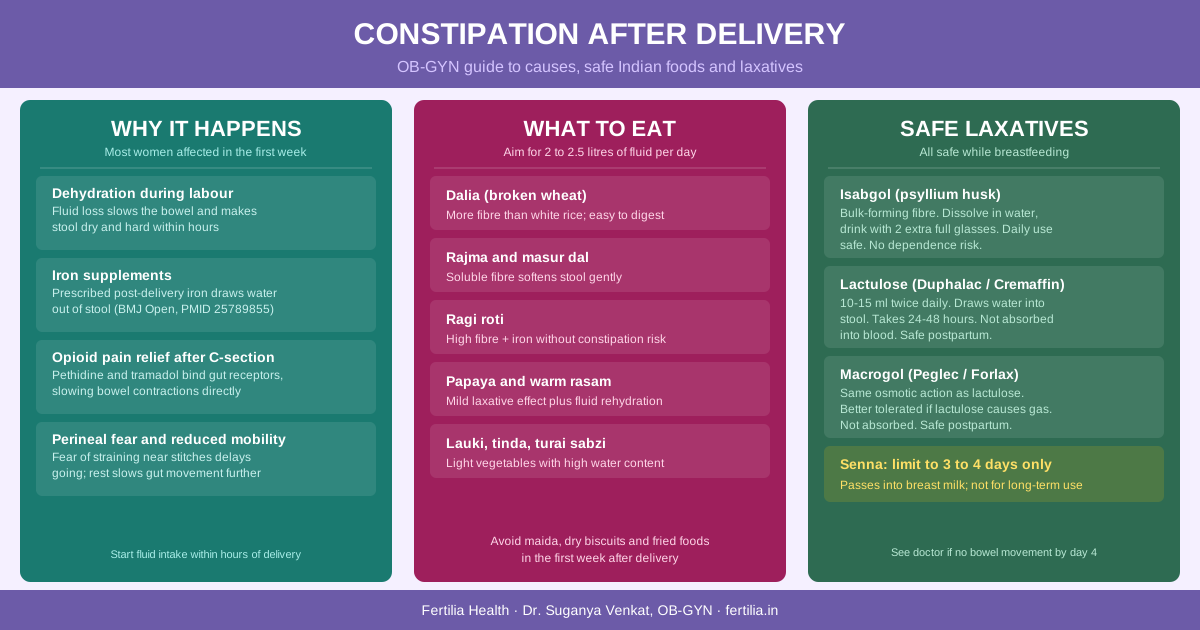
Dehydration during labour
Labour is physically demanding and women often restrict fluid intake or lose significant amounts through sweat and exertion. Dehydration slows every part of digestion. The bowel absorbs more water from stool when your overall fluid level is low, making it dry, hard, and difficult to pass. Rebuilding fluid intake in the first 24 to 48 hours after delivery is one of the most effective early interventions for the bowels.
Iron supplements prescribed after delivery
Most women in India are prescribed oral iron after delivery to replace blood lost during birth. Iron is necessary and should not be stopped without medical advice. However, oral iron supplements cause gastrointestinal side effects, including constipation and hard stools, in a meaningful proportion of people who take them. A systematic review and meta-analysis of 43 trials covering 6,831 adults (Tolkien Z et al., PLoS ONE 2015;10(2):e0117383, PMID 25700159) found that ferrous sulphate roughly doubled the odds of gastrointestinal side effects compared with placebo (odds ratio 2.32). Starting a stool softener alongside your iron is a sensible and very common practice.
Opioid pain relief after C-section
Pethidine, tramadol, and related medications are frequently given for pain after a C-section. Opioids bind to receptors in the gut wall (mu-opioid receptors) and slow the muscular contractions that normally move stool through the bowel. This is a direct pharmacological effect, not a coincidence. Women who have had a C-section with opioid pain relief usually experience more severe and longer-lasting constipation than those who delivered vaginally without opioids.
Perineal fear
If you have stitches from a tear or episiotomy, or even just general perineal tenderness from a normal delivery, the fear of straining near the repair area is real and understandable. This creates a cycle: the longer you delay, the harder and drier the stool becomes, the more straining the first bowel movement actually requires, and the more uncomfortable it becomes. Softening the stool early breaks this cycle before it becomes distressing.
Reduced mobility
Physical movement stimulates bowel motility. After delivery, especially after a C-section, you spend far more time resting in bed than usual. Even short, slow walks around the ward or room make a meaningful difference to how quickly bowel function returns to normal.
What to Eat in the First Week After Delivery
Food and fluid form the foundation. The goal is to soften stool from the inside, reducing or removing the need to strain.
Fluid intake: the most important change
Aim for at least 2 to 2.5 litres of fluid per day. If you are breastfeeding, your total fluid needs are higher. Water, coconut water, nimbu pani, warm rasam, and light dal soups all count toward your total. A simple guide: pale yellow urine means your intake is adequate; dark yellow or minimal urination means you need more.
Fibre-rich Indian foods that help
These are practical additions to the typical first-week postpartum diet:
- Dalia (broken wheat): More fibre than white rice and soft enough to eat comfortably in the first days after delivery. Dalia khichdi with a thin dal is a gentle and effective breakfast.
- Rajma and masur dal: The soluble fibre in legumes softens stool gently without causing the gas that raw vegetables sometimes produce. Masur dal is particularly easy on digestion.
- Ragi roti: Higher in fibre than wheat, and provides iron without the constipation side effect of tablets.
- Lauki, tinda, and turai sabzi: Light vegetables with high water content, easy on the digestive system, and a source of gentle bulk.
- Papaya: A well-tolerated fruit with a mild natural laxative effect when eaten regularly. One or two slices at breakfast or as a snack is enough.
- Warm rasam or dal soups: Provide fluid and electrolytes alongside gentle digestive stimulation.
For a full two-week postpartum eating plan, see the after delivery food guide for Indian mothers.
What to reduce in the first week
Maida-based foods (white bread, biscuits, mathri, toast) are low in fibre and worsen constipation. Fried foods slow digestion further. Large amounts of banana can worsen constipation in some women. Packaged dry snacks sold as energy foods for new mothers, the dry-fruit bars and maida rusks that arrive as gifts, are low in both fibre and water and tend to make the first two weeks worse, however well-intentioned they are.
If constipation is making your early recovery uncomfortable and you are not sure what is safe to take alongside your current medications, WhatsApp Dr. Suganya Venkat for a quick online consultation.
Safe Laxatives and Stool Softeners After Delivery
For many women, dietary changes alone are not enough in the first few days, especially after a C-section or when taking iron supplements. The following options are safe to use, including while breastfeeding.
Isabgol (psyllium husk)
A bulk-forming fibre available at every pharmacy and most grocery stores in India. Dissolve one or two teaspoons in a large glass of water and drink it immediately, followed by another full glass. Isabgol increases stool volume and softens it by absorbing water in the bowel. It is safe while breastfeeding and does not cause dependence. It requires adequate fluid intake to work: without enough water, it can cause bloating rather than relief.
Lactulose
An osmotic laxative. Lactulose is a sugar that is not absorbed by the intestine. It draws water into the bowel by osmosis, softening stool and making it easier to pass. Because it is not absorbed into the bloodstream, essentially none reaches breast milk. Lactulose is considered safe in the postpartum period and while breastfeeding. Common brand names in India include Duphalac and Looz. One thing worth knowing, because the names get mixed up constantly: Cremaffin is not lactulose. The Cremaffin range is based on liquid paraffin with milk of magnesia (and, in Cremaffin Plus, sodium picosulfate). Liquid paraffin is a different drug class and is not the one to reach for here, so check the label rather than the shelf position. The usual starting dose of lactulose is 10 to 15 ml twice daily, adjusted based on response. It takes 24 to 48 hours to work, so starting it on day one or two after delivery (rather than waiting until you are very uncomfortable) gives better results.
Macrogol (polyethylene glycol)
Another osmotic laxative that works by the same mechanism as lactulose. Macrogol is not absorbed systemically and is safe while breastfeeding. It is available in India as Peglec and Forlax. Some women find macrogol better tolerated than lactulose if lactulose causes bloating. It also takes 24 to 48 hours to produce an effect.
Glycerine suppositories
Sold over the counter at most pharmacies as adult glycerine suppositories (3 g), either generically as Glycerin Suppositories IP or under brand names such as Hallens and Eleesa. Ask for glycerine by name: Dulcolax and Dulcoflex suppositories are not glycerine. In India both contain bisacodyl 10 mg, a stimulant laxative, which is a different drug with a different safety profile, so check the pack for the word glycerin before you buy. Glycerine suppositories work locally in the rectum by drawing water into the stool and are not absorbed. They are appropriate when you have not had a bowel movement for 3 to 4 days and need a result within the hour; they typically work within 15 to 30 minutes. Safe after both normal delivery and C-section, and safe while breastfeeding.
What to use cautiously
Stimulant laxatives containing senna (brand names include Senokot, Pursennid, and certain combination products) are not the first choice in the postpartum period, but they are not dangerous either. Sennosides are poorly absorbed, only trace amounts reach breast milk, and the Drugs and Lactation Database (LactMed, NBK501349) concludes that usual doses are acceptable while breastfeeding, with several controlled postpartum studies finding no increase in loose stools in breastfed infants. The reason to prefer lactulose or macrogol is simpler: they work by softening rather than by stimulating a bowel that is already cramping, and they can be continued for as long as the iron tablets are, whereas senna is best kept to a few days.
After a C-Section: What Is Different
C-section recovery adds specific challenges to the constipation picture.
Bowel function often returns more slowly. The combination of abdominal surgery, opioid pain relief, and reduced mobility means 3 to 4 days before the first bowel movement is expected and not a complication.
Gas comes before stool. After abdominal surgery, the bowel is temporarily suppressed. Gas builds up and moves before solid waste does. The return of bowel sounds and the first passage of gas are the signs doctors look for to confirm the gut is waking up. Walking as soon as you are medically cleared (usually within 12 to 24 hours of surgery) is the most effective early step for moving gas along.
Your first bowel movement after a C-section is not the threat to your wound that it feels like. A softened stool needs very little straining, and that level of effort does not put a properly closed abdominal wound at risk. The fear is understandable, but starting lactulose on the day of surgery or the morning after means you are unlikely to reach that anxious point.
For the full week-by-week physical recovery plan, see the C-section recovery guide.
When to Contact Your Doctor
Most postpartum constipation resolves within one to two weeks with dietary measures and a short course of lactulose or macrogol. Contact your doctor or hospital if:
- You have had no bowel movement by the 4th day after delivery
- You have significant abdominal pain, bloating, or vomiting alongside constipation
- You notice more than a small amount of bright red blood in your stool (a few streaks from a haemorrhoid are common, but persistent or significant bleeding needs assessment)
- Constipation continues beyond two weeks despite the measures above
- You develop a fever alongside constipation (this warrants same-day assessment)
For the full list of postpartum symptoms that need medical attention, see: 10 Postpartum Warning Signs to Never Ignore.
A Note from Dr. Suganya Venkat
I’m Dr. Suganya Venkat, and in fifteen years as an OB-GYN I’ve seen women sit through their entire postnatal check-up without mentioning that they haven’t had a bowel movement in four days. They are managing breastfeeding, recovery from surgery or a tear, a new baby, and severe sleep deprivation, and the constipation feels like one complaint too many to raise.
It is not. Constipation after delivery causes real discomfort, adds to anxiety around the perineum, and in some cases delays recovery from haemorrhoids or a repair. Starting lactulose or isabgol from day one, alongside adequate fluids and the foods above, is a low-risk step with meaningful benefit. You do not need to earn a laxative by suffering for several days first.
If you would like individual guidance on managing postpartum constipation alongside iron supplementation, breastfeeding, or C-section recovery, you can WhatsApp me directly for an online consultation at Fertilia.
Terms in Hindi and Tamil
Postpartum constipation gets searched in native terms and code-mixed queries. The table below captures the most common ones:
| What women search | Hindi | Tamil (Roman transliteration) |
|---|---|---|
| Constipation after delivery | prasav ke baad kabj | prasavam pinbu malach-chikkal |
| Hard stool | sakht potty / tight latrine | katina malam |
| Stool softener | potty soft karne ki dawai | malam mrudhuvakka marundhu |
| No BM after C-section | C-section ke baad potty nahi aana | C-section pinbu malam illaamai |
The phrases are given the way they are typed into a search box, in Roman letters, because that is how most women look them up.
Frequently Asked Questions
How many days after delivery is it normal not to have a bowel movement?
Most women have their first bowel movement within 2 to 3 days of a normal delivery and 3 to 4 days after a C-section. Day 4 without any bowel movement is the point at which you should contact your doctor or the hospital where you delivered. It is not a sign of a serious problem, but a gentle osmotic laxative like lactulose can be added or the dose adjusted at this point.
Is straining after stitches safe?
The fear of straining near perineal stitches is one of the main reasons women delay their first post-delivery bowel movement, and the delay makes the problem worse. The answer is not to avoid going, but to soften the stool so that straining is not needed. A properly softened stool does not put meaningful pressure on a sutured perineum. Starting isabgol or lactulose from day one, alongside adequate fluids, makes the first bowel movement much less frightening.
Why do iron tablets prescribed after delivery cause constipation?
Oral iron in the doses prescribed postpartum (often 100 to 200 mg elemental iron per day) is a well-documented cause of constipation. The mechanism is not fully understood. Iron that is not absorbed in the small intestine passes into the large bowel, where it is thought to irritate the gut lining and alter the gut bacteria, which slows transit and leaves the stool harder. Taking iron with food reduces this side effect slightly. Using lactulose or macrogol alongside iron is safe and sensible. Do not stop your iron without your doctor’s guidance, as correcting anaemia after delivery is important for recovery and energy levels.
Which laxative is safe while breastfeeding?
Lactulose and macrogol are both considered safe while breastfeeding. Neither is absorbed into the bloodstream in meaningful amounts, so neither reaches breast milk. Isabgol (psyllium husk) is also safe. Glycerine suppositories are safe for short-term use. Senna-based stimulant laxatives are also acceptable at usual doses while breastfeeding according to LactMed, but they are best kept to a few days: lactulose and macrogol are gentler on a postpartum bowel and can be continued alongside iron for as long as needed. And if you buy a suppository, ask for glycerine by name; Dulcolax and Dulcoflex suppositories are bisacodyl, not glycerine.
prasav ke baad kabj mein kya karna chahiye? (What should I do for constipation after delivery?)
Start with fluids: aim for 2 to 2.5 litres per day, more if breastfeeding. Add dalia for breakfast, rajma or masur dal at meals, and papaya as a snack. If there is no improvement by the second day after delivery, start lactulose syrup (10 ml twice daily) from a pharmacy. If you reach 4 days without a bowel movement, contact your doctor for an assessment.
Is it safe to take lactulose after a C-section?
Yes. Lactulose is routinely prescribed in Indian hospitals after C-section for exactly this situation. It softens stool without requiring straining, which is also gentler on an abdominal wound. Starting it on the first or second day after surgery rather than waiting until you are already in discomfort gives better results. It takes 24 to 48 hours to work.
Will postpartum constipation go away on its own?
For most women, yes: bowel movements normalise within one to two weeks as fluid intake improves, mobility increases, iron doses are adjusted, and opioid effects wear off. However, severe constipation extending beyond 4 days, significant pain, or symptoms alongside constipation (fever, blood in stool, abdominal distension) need medical assessment. Using dietary measures and a short course of lactulose proactively usually prevents it from reaching that point.
For a personalised postpartum recovery plan that includes nutritional support for constipation, anaemia, and breastfeeding, access the Postpartum Diet Guide or WhatsApp Dr. Suganya Venkat for an online consultation at Fertilia.