You are home from hospital. The discharge summary sits on the table, and somewhere in the medical language is a line: “second-degree perineal laceration, repaired.” Or perhaps it says “third degree.” You know stitches were placed. Beyond that, the words do not explain much.
This post is specifically for that moment. Not about how to care for your stitches day to day (that is covered in our companion guide on stitches after normal delivery). This is about what each degree actually means: which tissue is involved, how each is repaired, and what your recovery timeline reasonably looks like based on your grade.
What the Perineum Is
The perineum is the area of tissue between the vaginal opening and the anus. It is made up of layers. On the outside is skin. Below that is connective tissue and then muscle. Deeper still sits the anal sphincter complex, which controls bowel function. A perineal tear is classified by how deeply it travels through these layers.
Why Tears Happen
As your baby’s head descends through the birth canal, the perineal tissue stretches rapidly. In most vaginal deliveries, some degree of stretch injury occurs. Research estimates that approximately 85% of women who deliver vaginally experience some perineal trauma, with the majority needing suturing (Sleep, Grant, Garcia et al., British Medical Journal, 1984, PMID 6432201). Factors that increase the likelihood of a deeper tear include a first vaginal delivery, a larger baby, a back-to-back (occiput posterior) fetal position, an instrumental delivery with forceps or vacuum, and a prolonged second stage of labour.
First-Degree Tear: Skin Only
A first-degree tear involves only the perineal skin and the surface lining of the vaginal opening. The underlying muscle layers are not affected.
Many first-degree tears do not require suturing at all. The edges are so superficial that they heal well on their own within ten to fourteen days with standard wound hygiene: keeping the area clean, allowing air circulation, and avoiding prolonged pressure from sitting. Where suturing is done, it is typically one or two absorbable stitches that dissolve within a few weeks.
Pain with a first-degree tear is usually mild to moderate and responds well to paracetamol (Crocin or Dolo, safe for breastfeeding) in the first few days. Sitting on a soft cushion or an inflatable ring can ease discomfort during those early days.
Second-Degree Tear: Into the Muscle
A second-degree tear extends through the perineal skin and into the perineal body muscles, specifically the bulbocavernosus and the transverse perineal muscles. It does not reach the anal sphincter.
Second-degree tears are the most common grade requiring suturing, and this is also the grade most associated with episiotomies. An episiotomy, which is a surgical incision made by the doctor just before delivery, passes through the same tissue layers as a second-degree tear and is managed the same way clinically.
Repair is done in two layers: the muscular layer first, then the skin. Absorbable sutures are used throughout, which means no removal is needed. The repair typically happens in the delivery room shortly after delivery.
Healing takes four to six weeks for the muscle layer to regain adequate strength. The area will feel sore and tender for the first two weeks in particular. Full tissue remodelling takes several months, even though the external wound closes much sooner. For a detailed, day-by-day care guide covering this stage, see our stitches after normal delivery guide.
Pain with a second-degree tear is moderate and responds well to paracetamol, sitz baths, and ice packs in the first 48 hours.
Questions about your recovery after delivery? Dr. Suganya Venkat offers video consultations pan-India. Send a WhatsApp message to +91 99402 70499 and she will be in touch.
Third-Degree Tear: When the Sphincter Is Involved
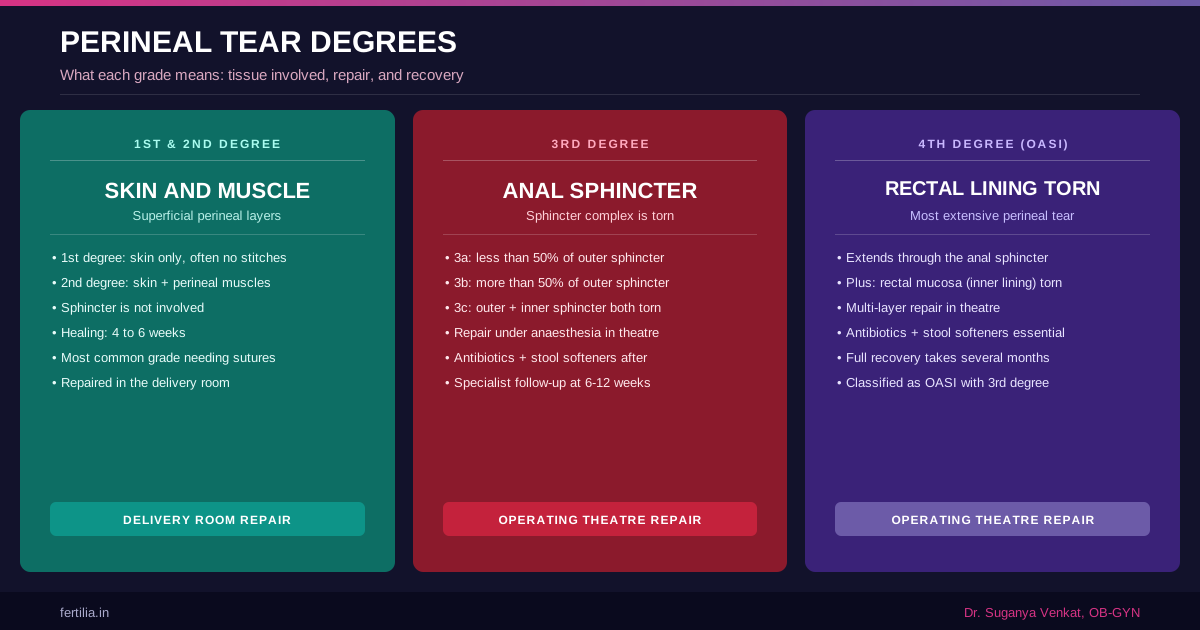
A third-degree tear extends through the perineal skin and muscles and into the anal sphincter complex. This is the threshold that separates a tear that heals with standard postnatal care from one that requires more specialised repair and follow-up.
The anal sphincter is not a single structure. It has two components: an outer (external) sphincter that you can voluntarily control, and an inner (internal) sphincter that works automatically. Third-degree tears are subclassified based on how much sphincter is involved, and this subclassification matters for both the repair and the recovery:
Grade 3a: less than half of the external anal sphincter (EAS) is torn
Grade 3b: more than half of the EAS is torn
Grade 3c: both the external and the internal anal sphincter are torn
A 3a tear, where less than half the external sphincter is involved, typically heals very well with a careful repair. A 3c tear, involving the internal sphincter, requires more precise technique during the operation and a more attentive recovery period, though outcomes are still good when care is done properly.
What happens in the delivery room and beyond
A third-degree tear is repaired in the operating theatre rather than the delivery room, because theatre provides the lighting, positioning, instruments, and anaesthesia (spinal, epidural, or general) needed for a precise repair. The operation typically takes 30 to 60 minutes depending on the extent of the injury.
After repair, standard management includes:
- A short course of antibiotics to reduce infection risk (usually metronidazole plus a broad-spectrum antibiotic such as co-amoxiclav)
- Stool softeners (lactulose or ispaghula husk, called Isabgol in Indian pharmacies) to prevent straining, which places direct tension on the sphincter repair
- Pelvic floor physiotherapy referral
- A follow-up appointment, ideally at a urogynaecology or colorectal clinic, at six to twelve weeks
Third-degree tears are not common. Published studies report rates of approximately 1 to 3% of vaginal deliveries, with higher rates seen in instrumental deliveries, first-time mothers, larger babies, and back-to-back positions (Fernando RJ, Sultan AH et al., RCOG Green-top Guideline No. 29, 2013).
Fourth-Degree Tear: Through to the Rectal Lining
A fourth-degree tear extends through everything involved in a third-degree tear, and also tears through the rectal mucosa: the inner lining of the rectum. This is the most extensive grade of perineal injury, and it is considerably less common than third-degree tears.
Repair is always done in the operating theatre under regional or general anaesthesia. The layers are repaired from the inside out: the rectal mucosa first, then the sphincter complex, then the muscle and skin. Post-operative management follows the same protocol as a severe third-degree tear: antibiotics, stool softeners, physiotherapy referral, and specialist follow-up.
Recovery from a fourth-degree repair takes longer than a second-degree tear. The six-to-twelve week functional recovery timeline for the sphincter applies, and full tissue strength develops over several months. Some women notice temporary changes to bowel function during this healing period. These changes almost always improve with time and physiotherapy.
Third and fourth-degree tears are grouped together under the clinical term OASI: Obstetric Anal Sphincter Injuries. If your discharge summary uses this abbreviation, it means you had either a third or a fourth-degree tear.
Recovery by Degree: A Comparison
| Degree | Tissue involved | Where repair happens | Acute soreness | Key aftercare priorities |
|---|---|---|---|---|
| First | Skin only | Delivery room or none | 1-2 weeks | Hygiene, air, paracetamol |
| Second | Skin + perineal muscles | Delivery room | 2-4 weeks | Sitz baths, ice, paracetamol, pelvic floor exercises from week 3-4 |
| Third | Skin + muscle + anal sphincter | Operating theatre | 4-8 weeks | Stool softeners, antibiotics, specialist review, physio |
| Fourth | All of above + rectal mucosa | Operating theatre | 6-12 weeks | Same as above, additional time for mucosal healing |
Regarding sex after delivery: the standard recommendation is at least six weeks after any degree of tear before resuming intercourse, and often longer after a third or fourth-degree tear. Our post on sex after delivery explains why these timelines exist and what to expect.
Regarding pelvic floor exercises: after a first or second-degree tear, gentle Kegel exercises can usually begin at three to four weeks. After a third or fourth-degree tear, wait until a physiotherapist assesses you at the six-week review before beginning pelvic floor work.
Practical Adjustments for Indian Households
A few situations specific to Indian households are worth addressing directly.
Squat toilets: for a first or second-degree tear, most women manage a squat toilet comfortably by three to four weeks, once the acute phase has passed. After a third or fourth-degree tear, avoid squatting on the toilet for at least six to eight weeks. The squatting position places direct downward force on the repaired sphincter and can stress the suture line. A Western-style commode, or a squat converter (available inexpensively in most hardware shops across India), is the safer option during recovery.
Traditional postpartum foods: the standard Indian postpartum diet, including dal ka pani, soft khichdi, dahi, ajwain water, and gond ke laddoo, is generally supportive of healing: it is warm, easy to digest, and protein-rich. For third and fourth-degree tears specifically, keeping stools soft and easy to pass is the single most important dietary priority. Well-cooked vegetables, fruit, rajma, chana, and adequate water intake all help. Dry foods, constipating foods, or not drinking enough water during recovery are worth being careful about.
Sitz baths: warm water sitz baths twice daily are helpful and soothing for first and second-degree tears. Some families add turmeric or neem leaves. For third and fourth-degree tears, stick with plain warm water for the first two to three weeks until the repair has had a chance to stabilise.
When to Contact Your Doctor
After any degree of tear, contact your doctor if you notice:
- Pain that is increasing rather than gradually improving after the first 48 to 72 hours
- The wound edges pulling apart or opening
- Discharge that is coloured, has a strong smell, or is increasing
- Fever above 38°C
- Difficulty passing urine
- After a third or fourth-degree tear: any difficulty controlling wind or stools, or any leakage
Full guidance on what to watch for in the early postnatal period is in our postpartum warning signs guide.
On Long-Term Recovery After a Third or Fourth-Degree Tear
I’m Dr. Suganya Venkat, and the question I hear most often at the six-week postnatal check from women who had a third-degree tear is: “Will I have problems with my bowels permanently?”
For most women, the answer is no. With a well-executed repair and appropriate aftercare, the majority of women with a third-degree tear recover good continence function. A proportion of women do experience some temporary change to bowel function in the months after delivery, most commonly with wind rather than stool, and most of these symptoms improve significantly over time and with pelvic floor physiotherapy. A 3a or 3b tear that has been properly repaired, followed by stool softeners, physiotherapy, and the specialist review appointment, carries a good long-term prognosis (Sultan AH et al., New England Journal of Medicine, 1993, PMID 8247054).
If you have ongoing concerns during recovery, Fertilia’s video consultations are available pan-India. Reach us via WhatsApp at +91 99402 70499.
Terms in Hindi
Some women search for information about perineal tears using Hindi or code-mixed terms. Here are the corresponding expressions:
| English | Hindi (Roman transliteration) |
|---|---|
| Perineal tear | Prasav ke baad perineum ka phatna |
| Second-degree tear | Doosre darje ka phatao |
| Third-degree tear | Teesre darje ka phatao |
| Anal sphincter | Anal sphincter / gudha ki maansapeshi |
| Stool softener | Stool naram karne ki dawa |
| Obstetric anal sphincter injury | Prasav-sambandhi anal sphincter chot (OASI) |
Native Devanagari script for these terms is flagged for Dr. Suganya’s verification and will be added at the next review.
Frequently Asked Questions
What is a second-degree tear after delivery?
A second-degree tear involves the perineal skin and the layer of muscles beneath (specifically the bulbocavernosus and transverse perineal muscles). It does not involve the anal sphincter. Second-degree tears are the most common type needing suturing after a vaginal delivery. Healing takes four to six weeks for the acute soreness to resolve, though full tissue remodelling continues for several months.
Is a third-degree tear serious?
A third-degree tear is more significant than a first or second-degree tear because it involves the anal sphincter. It requires repair in an operating theatre under anaesthesia, followed by antibiotics, stool softeners, and specialist follow-up. With a proper repair and good aftercare, most women recover well and do not have permanent bowel control problems.
How long does a third-degree tear take to heal?
The tear is repaired in theatre on the same day it occurs. Acute soreness and tenderness typically improve over four to eight weeks. Full functional recovery, including comfortable bowel function and the ability to return to light activity, usually takes six to twelve weeks. Complete tissue strength develops over several months.
Can I sit normally after a third-degree tear?
Yes, but it takes time. For the first one to two weeks, sitting directly on a hard surface is very uncomfortable. A soft cushion or an inflatable ring cushion helps considerably. Most women find sitting significantly more comfortable by three to four weeks. Squatting should be avoided for six to eight weeks after a third or fourth-degree tear.
What does OASI mean on my discharge summary?
OASI stands for Obstetric Anal Sphincter Injury. It is the collective term for third and fourth-degree perineal tears, because both involve some damage to the anal sphincter. If your discharge summary says OASI, it means you had either a third or a fourth-degree tear. Your paperwork should specify the subtype (3a, 3b, 3c, or fourth degree). If it does not, your postnatal follow-up appointment is the right time to ask.
What is the difference between an episiotomy and a perineal tear?
An episiotomy is a deliberate surgical cut made by the doctor just before delivery to create more space or reduce the risk of a severe tear in a specific clinical situation. A perineal tear is an unplanned split that happens as the baby’s head emerges. In terms of the tissue affected, an episiotomy passes through the same layers as a second-degree tear and is managed and healed the same way. Current evidence supports restricting episiotomy to situations where it is clinically indicated, not performing it routinely (Carroli and Mignini, Cochrane Database of Systematic Reviews, 2009).
My discharge says fourth-degree tear. Is that different from third-degree care?
The care protocol is the same (antibiotics, stool softeners, physiotherapy, specialist follow-up), but a fourth-degree tear extends beyond the sphincter into the rectal mucosa, so the repair is more complex and the recovery timeline is typically longer. Your surgical team will have repaired the rectal lining during the operation. The aftercare priorities of keeping stools soft and attending the six-to-twelve week specialist review are especially important after a fourth-degree tear.
For day-to-day care during recovery, the stitches after normal delivery guide has a full week-by-week care plan. For the wider picture of what the postnatal period involves, our postpartum recovery guide for Indian mothers covers everything from lochia to the six-week check. You can also read about recognising what is normal versus what needs attention in our postpartum bleeding and lochia guide.
A printable nutrition and recovery plan for the postnatal period is available free: Postpartum Diet and Recovery Guide.
If something about your recovery does not feel right, or if you have questions you could not get answered at discharge, reaching out is simple: +91 99402 70499 on WhatsApp, and Dr. Suganya Venkat will be in touch.