Most women who reach the point of discussing excision surgery have already tried the medical route: pain-relief tablets that stopped helping, hormonal treatment that controlled symptoms for a while and then didn’t, or months of “let’s watch it” before the pain or the fertility question forced a different conversation. By the time surgery comes up, the word itself is often the most frightening part, more than the procedure it actually describes.
This post explains what excision surgery for endometriosis really involves: what “excision” means as distinct from the more limited “ablation” some clinics still offer, who is typically advised to have it, what the day of surgery looks like, a realistic recovery timeline, and what excision does and doesn’t change about your fertility. I am Dr. Suganya Venkat, an OB-GYN with over fifteen years of clinical experience, and this is one of the more common surgical conversations that comes up in Fertilia’s online consultations, usually after a woman has already been living with the disease for years.
Here is what this post covers:
- What excision surgery actually does, and how it differs from ablation
- Who this is typically recommended for
- What the day of surgery looks like
- A realistic recovery timeline
- What excision means for your fertility
- The honest risks, stated plainly
- What happens if surgery finds more than the scans showed
Excision vs Ablation: Two Different Operations
Both procedures are done laparoscopically, through small keyhole incisions, under general anaesthesia. Beyond that, they are not the same operation, and the difference matters for your outcome.
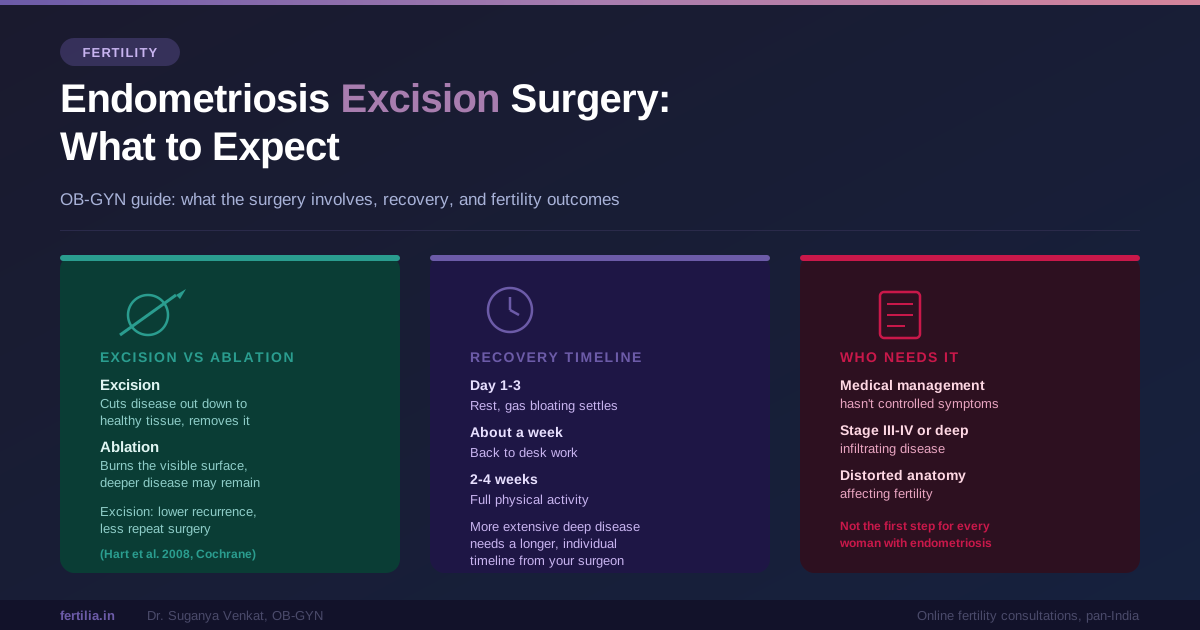
Ablation (also called fulguration or coagulation) uses heat, usually from electrocautery or a laser, to burn the surface of a visible endometriosis implant or the wall of a chocolate cyst. It destroys tissue at the surface but does not remove it. Deeper disease underneath the surface can be left behind, because the surgeon is treating what is visible, not what is present.
Excision cuts the endometriotic tissue out, down to healthy tissue underneath, and removes it from the body entirely. For an ovarian endometrioma, this means the surgeon carefully separates the cyst wall from the surrounding healthy ovarian tissue and lifts it out intact, rather than draining it and burning the lining. For implants elsewhere in the pelvis, it means cutting around and beneath the visible lesion so the diseased tissue comes out, not just its surface.
The Cochrane review most often cited on this question (Hart RJ et al., Cochrane Database of Systematic Reviews, 2008, PMID 18425908) compared the two approaches for ovarian endometriomas specifically and found excision associated with a lower recurrence rate of the endometrioma itself, less recurrence of pain symptoms (period pain, pain with intercourse, and pelvic pain outside your period), less need for repeat surgery, and, in women who had documented difficulty conceiving beforehand, a higher rate of spontaneous pregnancy afterward compared to ablation. This is the evidence base behind why excision is generally the preferred approach when the disease and the surgical skill available support it.
Ablation still has a place. For very small, superficial implants, or in centres where excision expertise for deep disease isn’t available, ablation can be a reasonable option. The point isn’t that ablation is wrong, it’s that the two words describe different operations with different evidence behind them, and it’s worth asking your surgeon directly which one they plan to do and why.
For the specific case of a chocolate cyst on the ovary, the chocolate cyst and fertility guide covers the reserve-related tradeoffs of any surgery on the ovary in more depth.
Who Excision Surgery Is Recommended For
Excision is not the first step for every woman with endometriosis. It’s typically recommended when:
Medical management hasn’t worked. Hormonal treatment (combined pills, progestins, or GnRH-based options) and pain medication are usually tried first. When pain persists despite an adequate trial of these, or symptoms return quickly whenever medication stops, surgery moves up the list. The period pain and endometriosis guide covers how that medical trial usually works before surgery becomes the conversation.
Disease is moderate to severe on staging, or deeply infiltrating. Endometriosis is staged I to IV using the American Society for Reproductive Medicine’s revised classification (Fertility and Sterility, 1997, PMID 9130884), based on the extent, depth, and location of disease found at surgery, not on how much pain a woman reports. Stage III-IV disease, and deep infiltrating endometriosis (disease that has grown more than 5mm beneath the peritoneal surface, sometimes involving the bowel, bladder, or the tissue between the vagina and rectum), are the settings where excision’s more thorough removal matters most.
Imaging suggests distorted pelvic anatomy affecting fertility. If an ultrasound or MRI shows an endometrioma, suspected adhesions tethering the ovary or tube, or disease affecting the tubes, and a woman is actively trying to conceive, surgery is sometimes recommended to restore the anatomy before continuing to try naturally or before IVF.
A chocolate cyst is large, growing, or causing pain. Not every endometrioma needs surgery. The chocolate cyst guide covers when watchful waiting is the more appropriate choice instead.
If none of these apply to you, that’s a legitimate reason to continue with medical management rather than surgery. Surgery being available doesn’t make it automatically the right next step, and a gynaecologist recommending continued medication instead is not a doctor missing something. Both paths are valid, and the right one depends on your specific disease, your symptoms, and your fertility timeline.
What the Day of Surgery Looks Like
Excision surgery for endometriosis is done laparoscopically in the vast majority of cases, even for moderately extensive disease. Open surgery (laparotomy) is now reserved for the rare situations where the disease is too extensive or too close to the bowel for a keyhole approach to be safe.
Before surgery: You’ll be under general anaesthesia for the full procedure. Most straightforward cases are done as day-care surgery or with a single overnight stay; more extensive deep disease involving other organs may need a longer admission with the relevant specialists (a colorectal surgeon, for instance, if bowel involvement is suspected) on standby.
During surgery: The surgeon makes a small incision at the navel for the laparoscope (camera) and one to three additional small incisions, usually 5-10mm, for the instruments. The pelvis is inspected systematically. Visible implants, adhesions, and any endometriomas are identified and excised. If a chocolate cyst is present, the cyst wall is carefully separated from the healthy ovarian tissue and removed intact where possible. If adhesions are binding the ovary to the pelvic wall or kinking the fallopian tube, these are released (adhesiolysis).
After surgery: You’ll be moved to recovery once the anaesthesia wears off, typically going home the same day or the next morning depending on the extent of the procedure.
Recovery Timeline
Recovery from laparoscopic excision is generally faster than from open surgery, but it takes longer than a purely diagnostic laparoscopy because more tissue has actually been removed and the operative sites need to heal.
Day 1-3: Rest at home. Expect bloating from residual gas used to create working space during surgery, this is usually the main source of discomfort rather than the incision sites themselves. Mild shoulder-tip pain from the same gas is common and settles faster with gentle walking.
About a week: Most women return to desk work within roughly a week, though this depends on how extensive the surgery was. More extensive excision, particularly involving bowel-adjacent disease, needs a longer, individualised recovery window your surgeon will guide you through.
Two to four weeks: Full physical activity, including exercise and heavier lifting, is generally resumed in this window, again depending on the extent of what was done.
Trying to conceive after surgery: For most women who had excision without extensive bowel or bladder involvement, there’s no fixed waiting period once your surgeon confirms healing is on track, often around 4-6 weeks. If the surgery was more extensive, your surgical team will give you a specific timeline based on what was actually done.
For a comparison with a more limited diagnostic procedure, the diagnostic laparoscopy guide walks through recovery when no treatment is done at the same sitting.
What Excision Means for Your Fertility
This is where the evidence needs to be stated carefully, because it differs by starting point.
For Stage I-II (mild) endometriosis, the randomised evidence supports a real, if modest, benefit: the Canadian Collaborative Group on Endometriosis trial (Marcoux et al., New England Journal of Medicine, 1997) found natural pregnancy rates of 31% in the surgically treated group versus 18% with diagnostic laparoscopy alone. This is covered in more depth in the endometriosis and fertility overview.
For an ovarian endometrioma specifically, excision carries a fertility tradeoff worth understanding before surgery, not after: removing the cyst wall also removes some of the healthy ovarian cortex attached to it, which lowers AMH (a marker of ovarian reserve) afterward. This is covered in detail in the chocolate cyst guide, including when the reserve cost is worth it and when watchful waiting makes more sense.
For more extensive Stage III-IV disease or deep infiltrating endometriosis, excision’s main fertility value is restoring distorted anatomy, releasing tubes and ovaries from adhesions, so that either natural conception or an IVF cycle has a clearer anatomical path to work with. The endometriosis without IVF guide walks through how stage affects this decision in more detail.
What excision does not do is guarantee pregnancy. It removes disease and, where relevant, restores anatomy. Whether that translates into a pregnancy still depends on your age, ovarian reserve, tubal status, and your partner’s fertility factors, the same variables that matter for any woman trying to conceive.
The Honest Risks
Every surgery carries risk, and endometriosis excision is no exception. Stated plainly, not to alarm you but so you can ask informed questions:
Standard laparoscopic risks apply to any keyhole surgery: bleeding, infection, and rare injury to nearby structures during entry or dissection.
Adhesion formation can occur as part of the body’s normal healing response to any pelvic surgery, including this one. It’s an inherent tradeoff of operating in the pelvis, not a sign that something went wrong.
Bowel or bladder injury is a specific, low-probability risk that rises with the depth and location of disease, particularly when endometriosis has infiltrated near the bowel wall or the ureters. This is precisely why deep infiltrating endometriosis is best handled by a surgical team experienced with this specific disease, sometimes including a colorectal surgeon or urologist working alongside your gynaecologist, rather than by a single-surgeon approach used for more limited disease.
Reduced ovarian reserve, specifically when an endometrioma is excised, as covered above.
None of these risks are a reason to avoid necessary surgery when it’s genuinely indicated. They are a reason to have this surgery done by a surgeon and, for deep disease, a team with real experience in excisional technique for endometriosis, and to ask directly about their approach before you consent.
When Surgery Finds More Than the Scans Suggested
This happens, and it’s worth knowing about in advance so it doesn’t feel like a surprise if it does. Ultrasound and MRI are good at detecting endometriomas and can suggest deep disease, but they don’t always capture the full extent of superficial implants or adhesions scattered through the pelvis. Endometriosis is formally staged at surgery, not on imaging, precisely because the surgeon’s direct view is more accurate than any scan.
If your surgeon finds more extensive disease than expected once they’re operating, this is thorough surgical care working as intended, not a mistake anyone made beforehand. In practice, this sometimes means the operation takes longer than planned, or that a more extensive excision (or, for very complex bowel-involving disease, a staged approach with a specialist team) is the safer path than pushing through a single procedure. Discuss this possibility with your surgeon beforehand, including how they’d handle a finding more extensive than imaging suggested, so you know what to expect either way.
Frequently Asked Questions
What is the difference between excision and ablation surgery for endometriosis?
Excision cuts out the endometriotic tissue down to healthy tissue and removes it from the body. Ablation burns the visible surface of the tissue without removing it. For ovarian endometriomas specifically, the Cochrane review on this comparison (Hart et al., 2008, PMID 18425908) found excision associated with lower recurrence of the cyst and of pain symptoms, and a higher spontaneous pregnancy rate in women with prior subfertility, compared to ablation.
How long does recovery from endometriosis excision surgery take?
Most women return to desk work in about a week and resume full physical activity within two to four weeks, though this depends heavily on how extensive the surgery was. Deep disease involving the bowel or bladder area needs a longer, individualised recovery your surgical team will guide you through.
Will excision surgery for endometriosis improve my chances of getting pregnant?
For Stage I-II disease, randomised evidence shows a real improvement in natural pregnancy rates after surgery compared to no treatment. For an ovarian endometrioma, excision carries a fertility tradeoff, it can lower ovarian reserve on that side while also removing the cyst. For more extensive disease, the fertility benefit comes mainly from restoring distorted pelvic anatomy. It is not a guarantee of pregnancy in any of these situations.
Is excision surgery for endometriosis always laparoscopic?
Almost always, yes. Open surgery is now reserved for the rare cases where disease is too extensive or too close to critical structures for a keyhole approach to be done safely.
What are the risks of endometriosis excision surgery?
Standard laparoscopic risks (bleeding, infection), adhesion formation as part of normal healing, a low-probability risk of bowel or bladder injury that rises with the depth of disease, and, when an endometrioma is excised, reduced ovarian reserve on the affected side. Deep infiltrating disease is best handled by a surgical team experienced specifically with excisional technique.
What happens if the surgeon finds more disease than the scan showed?
This is common, because endometriosis is formally staged during surgery, not on imaging. It usually means the surgeon adapts the plan in real time, sometimes taking longer or, for complex bowel-involving disease, working with a specialist team. It reflects thorough surgical care, not something missed beforehand.
Do I need excision surgery, or can I keep managing endometriosis with medication?
If pain is reasonably controlled on medication or hormonal treatment and you’re not currently trying to conceive, continuing medical management without surgery is often entirely appropriate. Surgery is generally considered when medical management hasn’t controlled symptoms, when disease is moderate-severe or deeply infiltrating, or when distorted anatomy from the disease is affecting fertility.
If you’ve been advised excision surgery for endometriosis, or you’re trying to understand whether it’s the right next step for you, you can talk it through with Dr. Suganya Venkat over a video consultation at Fertilia. Fertilia’s fertility program works alongside your operating gynaecologist, never in place of their surgical judgment, to help you plan what comes before and after surgery with your specific fertility goals in view.