She has been managing. That is the word she uses when I ask how things have been. Not struggling, not unwell, just managing. She gets the children to school. She answers her emails. She keeps the household running. She has not cried in front of anyone, and so she has not called it depression.
I am a psychiatrist at Fertilia, and this is one of the most common presentations I see. Depression in women does not always look like the inability to get out of bed. More often it looks like a woman who is functioning, technically, but from whom the colour has drained. She is present for everyone else. She is rarely present for herself. She cannot remember the last time she felt genuinely well.
This post is about that kind of depression: general, all-month, not tied to the premenstrual window or the postpartum period. It is about how depression shows up in women, why it is more common than most people realise, and when the right move is to speak to someone rather than continue managing.
What depression feels like
Depression is not simply sadness. It is something more pervasive, and in some women it does not involve sadness at all.
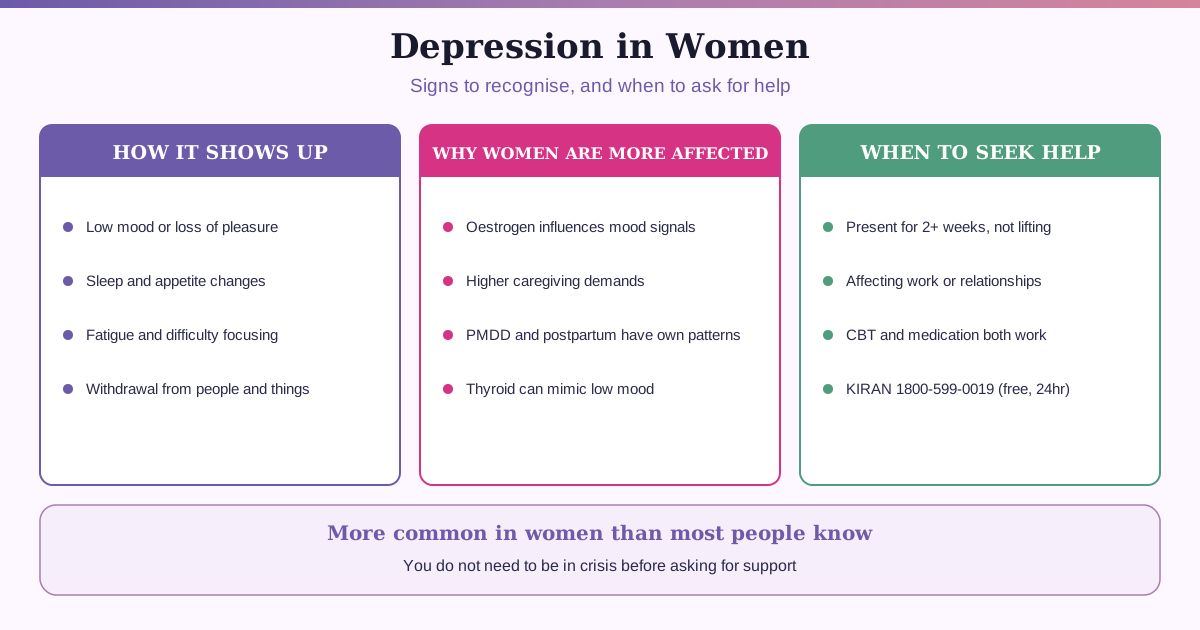
The two core features of a depressive episode, according to the criteria clinicians use, are low mood and loss of interest or pleasure in things that used to matter. At least one of these must be present for two weeks or longer, along with a cluster of other changes. But the way these show up in day-to-day life is far subtler than clinical language suggests.
For more on this, read our guide on Coping After Pregnancy Loss. What women often describe is a flattening. Music sounds the same as noise. Food has no particular taste. A plan that would once have excited her now feels like a weight. She participates, but from a slight distance, as if she is watching herself from outside.
The other symptoms that typically accompany this include:
Sleep changes. Either sleeping far more than usual and still waking exhausted, or lying awake for hours without being able to settle. Both patterns are common, and both cause a tiredness that does not lift with rest.
Appetite and weight changes. A loss of interest in food, or conversely, a pull toward eating that she cannot easily explain. A noticeable weight change over a few weeks.
For more on this, read our guide on Body Image After Pregnancy or Weight Change. Fatigue that is disproportionate. A level of tiredness that makes even small tasks feel effortful in a way that does not match the amount of physical activity she is doing.
Difficulty concentrating. Reading a page and retaining none of it. Losing track of conversations. Forgetting things she would normally hold without effort.
Feelings of worthlessness or excessive guilt. A critical inner voice that evaluates everything she does and finds it lacking. A persistent sense that she is letting people down, or that she is a burden, even when no one has said anything of the kind.
Withdrawal. Declining invitations. Shorter phone calls. The effort of social interaction feeling like more than she has available.
Physical symptoms without a clear cause. Headaches, joint pain, digestive complaints, chronic back pain. Depression has a physical dimension that is often investigated and treated separately before the underlying cause is identified.
And in some cases, thoughts about not wanting to be here, ranging from passive (“I would not mind if I did not wake up tomorrow”) to more active. This end of the spectrum is always worth discussing with a clinician directly and promptly.
Not every woman has all of these. Some have many. The diagnostic threshold is five or more symptoms for at least two weeks, with at least one being low mood or loss of interest, and with the pattern causing significant disruption to daily life. But the point is not to count symptoms against a list. The point is whether something has changed, and whether that change has lasted long enough that it is worth addressing.
Why depression is more common in women
Globally, depression affects more women than men, and by a meaningful margin: it is consistently reported as roughly twice as common in women as in men. The GBD 2019 Mental Disorders study (GBD 2019 Mental Disorders Collaborators, Lancet Psychiatry, 2022, PMID 35026139) ranks depressive disorders among the leading causes of disability worldwide.
In India, the NIMHANS National Mental Health Survey (2015-16) estimated a lifetime prevalence of any mental disorder of about 13.7%, roughly one in seven adults, and documented a wide treatment gap. Many do not seek treatment, often because they attribute their symptoms to personal weakness, or because managing others’ needs leaves no space for attending to their own.
There are multiple reasons the rates in women are higher.
Hormonal fluctuations. Oestrogen and progesterone both influence serotonin and dopamine signalling, the same neurotransmitter systems that depression disrupts. Points of rapid hormonal change, the premenstrual window, the postpartum period, the perimenopausal transition, carry elevated depression risk. Chronic low-grade hormonal imbalance (including thyroid dysfunction) can also contribute to sustained low mood.
Greater exposure to adverse experiences. Depression rates are higher in populations with greater exposure to interpersonal stress, caregiving demands, financial dependence, and the specific stressors that fall disproportionately on women. These are structural realities, not character flaws.
Socialization around emotional suppression. Many women have learned that distress is something to contain, manage quietly, and not impose on others. This means depression is often noticed late, and help is sought later than it might otherwise be.
Recognising these patterns matters because they reframe the experience. Depression is not a sign of personal weakness. It is a medical condition with identifiable causes, and it responds to treatment.
The hormonal overlaps: ruling out a cyclical cause
Before assuming that depression is general, it is worth checking whether it has a timing pattern.
Premenstrual depression: If low mood and hopelessness arrive reliably in the two weeks before your period, particularly in the final five to seven days, and lift within a day or two of bleeding starting, the diagnosis is more likely premenstrual dysphoric disorder (PMDD) than major depression. Our post PMDD or Depression? Why Timing Tells Them Apart explains the tracking approach and what the distinction means for treatment. PMDD has its own specific management pathway and responds differently from general depression.
For more on what the premenstrual emotional window looks like, Premenstrual Depression and Dark Thoughts: What Helps covers the specific patterns and self-management approaches that work for this phase.
Postpartum depression: Low mood or loss of interest that began or significantly worsened after delivery, persisting beyond the first two to three weeks, is postpartum depression. This is distinct from “baby blues,” which resolve within ten days without treatment. Our guide to postpartum depression covers the signs, why it happens, and what support looks like. Postpartum depression is not a character failing. It is a medical condition with a clear biological basis and effective treatment.
Perimenopause: For women in their early-to-mid forties, fluctuating oestrogen during the perimenopausal transition can produce low mood and loss of motivation that feels new and out of proportion to circumstances. This is worth distinguishing from general depression because the hormonal context is relevant to the treatment approach. Menolia’s guide to menopause and depression covers that pathway in detail.
Thyroid dysfunction: Hypothyroidism mimics depression closely. Fatigue, low mood, difficulty concentrating, slowed thinking, weight gain, and withdrawn affect are core features of both. If you are experiencing these symptoms, especially if they came on relatively suddenly or alongside weight changes or cold intolerance, thyroid function is worth checking before anything else. A simple TSH is the starting point. Our guide to thyroid and hormonal health covers this overlap.
The clearest distinguishing question: Is the low mood present throughout the month, at a roughly consistent level, without a clear cyclical or hormonal trigger? If yes, it is more likely to be general depression rather than a hormonally-driven pattern.
What helps before you speak to someone
For mild depression, and for mild periods within a fluctuating picture, several evidence-based approaches can meaningfully reduce the severity of symptoms. These are a genuine starting point, not a way to avoid professional support.
Regular movement. A consistent walking routine, even twenty to thirty minutes four or five times a week, has measurable antidepressant effects. The mechanism involves reduced inflammation, endorphin release, and the normalisation of sleep architecture. This is not about weight or fitness. It is about neurochemistry. It also provides a reliable reason to leave the house, which becomes harder when depression is present.
Sleep regularity. Disrupted sleep both causes and worsens depression. A consistent wake time (even on weekends, even after a bad night) is the single most stabilising change you can make to sleep architecture. Going to bed at different times each night keeps the body clock unstable, which keeps mood unstable.
Reducing isolation. Depression pulls toward withdrawal, and withdrawal deepens depression. Even small, structured contact, a weekly call with a person you feel easy with, a short walk with a neighbour, matters more than most people expect. You do not need to talk about how you are feeling. Just being with another person interrupts the isolation loop.
Reducing stimulants. Chai and filter coffee are part of daily life, but caffeine amplifies the anxiety that often co-occurs with depression and can worsen sleep at the doses many Indian women drink.
India’s food connection. Ragi, rajma, chana, dahi, methi, and dark leafy greens are all part of the diet many women in Tamil Nadu and across India already eat. These are not prescriptive treatments, but maintaining a regular eating rhythm and not skipping meals keeps blood sugar stable, which directly influences mood. Skipping meals to manage weight while already depressed tends to make both worse.
Honest conversation. Not every woman with depression is ready to see a clinician. A first step can be telling one trusted person what has actually been happening. Not performing wellness, not reassuring them, but saying that things have been harder than she has shown. This alone reduces the cognitive load of managing the discrepancy between inner state and presented face.
These approaches help. They are not always enough. Depression, particularly moderate or severe depression, changes the brain’s capacity to use these tools. If you have been trying to feel better for months and are not, that is important information.
If you are not sure whether what you are experiencing is depression, or you have been managing on your own for a long time without real improvement, a conversation is a practical next step.
Speak to Dr. Sandhiya on WhatsApp to book a ₹399 online consultation by video call, pan-India. You do not need to be in crisis. You just need to have noticed that something has changed.
When self-help is not enough, and what treatment looks like
There are clear signals that depression has moved beyond what lifestyle changes alone can address.
If your symptoms have been present for more than two weeks and are interfering with your ability to work, care for your family, or function in basic daily activities, that is beyond mild. If you are withdrawing from relationships in a way you would not choose under other circumstances. If your sense of worth has become consistently negative, with a critical internal voice you cannot quiet. And if you are having thoughts of not wanting to be here, at any level of intensity, please speak to a clinician directly rather than waiting.
What does a consultation actually involve?
The first appointment is a conversation. I ask about symptoms: when they started, what was happening in your life at the time, whether there is any cyclical pattern, what your sleep and appetite are like, what your history of mood has been. I ask about physical health to rule out thyroid and other contributors. I ask about your life circumstances, not to judge them, but because context shapes the approach. Nothing is invasive.
Cognitive Behavioural Therapy (CBT) is one of the best-evidenced psychotherapies for depression. A comprehensive review of meta-analyses found strong support for CBT across a range of conditions, including depression and anxiety disorders (Hofmann, Asnaani, Vonk, Sawyer, and Fang, 2012, Cognitive Therapy and Research, PMID 23459093). CBT works by restructuring the thought patterns that sustain depression: the self-critical voice, the interpretation of situations as confirmation of worthlessness, the behavioural withdrawal that deepens low mood. The changes it produces tend to be durable because the skills are internalized, not dependent on an external agent.
Antidepressants are effective, particularly for moderate-to-severe depression, or when depression makes it difficult to engage meaningfully with therapy alone. A large network meta-analysis of 21 antidepressant drugs in adults with major depression confirmed that all approved agents are more effective than placebo, with meaningful differences in tolerability across the options (Cipriani and colleagues, 2018, The Lancet, PMID 29477251). SSRIs are the most commonly prescribed first-line treatment. They usually take four to six weeks to reach their full effect, though some improvement can appear earlier, and the right choice depends on your specific symptom pattern and history.
Medication and therapy together typically produce better outcomes than either alone for moderate-to-severe depression. Any medication decision is made collaboratively, with a clear explanation of how the medication works, what to expect in the first weeks, and how to monitor the response.
For more on finding the right kind of professional support, Psychiatrist, Psychologist, Counsellor: Who to See in India explains the differences clearly: who can prescribe, who focuses on therapy, and what to expect from each.
Online consultations are available by video call, across India. There is no need to travel.
KIRAN: free, immediate support
If things feel overwhelming right now, the KIRAN Mental Health Helpline is a free, 24-hour government-run service available across India. The number is 1800-599-0019. It costs nothing to call from any phone in India, at any hour, and the line is staffed in multiple languages including Tamil and Hindi.
KIRAN is a useful first call if you are not sure whether what you are experiencing is serious, or if you want to speak to someone while you are deciding whether to seek a formal consultation.
FAQ
Is feeling sad the same as depression?
Sadness is a normal human emotion. It arrives in response to loss or difficulty and tends to ease as circumstances shift. Depression is different in two ways: it persists beyond the situation that may have triggered it, and it affects a much broader range of functioning, including energy, sleep, appetite, concentration, and the capacity to feel pleasure. If what you are experiencing has lasted more than two weeks and is not lifting even when circumstances improve, it is worth taking seriously rather than waiting it out.
Can depression cause physical symptoms?
Yes, and this is one of the most commonly missed aspects. Many women with depression present first with physical complaints: persistent headaches, joint pain, chronic back pain, digestive problems, unexplained fatigue. These symptoms are real and not imagined. Depression changes pain processing and inflammatory signalling in the body. Often the physical symptoms get investigated and treated individually before anyone considers the underlying mood condition. If you have had physical symptoms investigated without a clear cause being found, and your mood has also changed, it is worth raising both together.
How is general depression different from PMDD or postpartum depression?
The key distinction is timing and context. PMDD is specifically cyclical, worsening in the two weeks before a period and resolving within a day or two of bleeding starting. Postpartum depression begins or significantly worsens after childbirth and is tied to that specific hormonal and life transition. General depression does not follow a hormonal cycle. It is present across the full month at a roughly consistent level, and it is not explained by a recent delivery or a premenstrual window. Our guide PMDD or Depression? Why Timing Tells Them Apart explains the tracking method that makes this distinction clear.
Will I need to take antidepressants forever?
Not necessarily. The duration of antidepressant treatment depends on the number of episodes and the severity of the depression. A first episode of moderate depression typically involves six to twelve months of treatment after symptoms resolve, then a gradual taper. Women who have had multiple episodes may benefit from longer maintenance. This is always a decision made with your psychiatrist, taking into account your individual history and circumstances. Many women take antidepressants for a defined period, stabilise, and are able to come off them.
Udaasi aur depression mein kya fark hai?
Udaasi (sadness) aur depression mein ek important fark hai. Udaasi ek feeling hai jo kisi wajah se aati hai, jaise kisi cheez ka nuksaan, aur waqt ke saath kam hoti hai. Depression ek alag cheez hai: yeh kaafi time tak bani rehti hai (do hafte ya zyaada), bina kisi khas wajah ke bhi, aur isme sleep, bhook, urja, dhyan, aur khud ko le kar feelings bhi badal jaati hain. Agar aap kaafi time se thaka-hua, udaas, aur pehle wali cheezein enjoy nahi kar pa rahi hain, toh yeh sirf mood nahi ho sakta. (Sadness arrives with a reason and eases with time. Depression persists across weeks without necessarily lifting, and it changes sleep, appetite, energy, and sense of self alongside mood. If this description fits what you have been experiencing, it is worth speaking to someone.)
Does depression affect fertility or hormonal health?
Chronic depression activates the HPA axis and sustains elevated cortisol, which can suppress the HPG axis governing ovulation and menstrual regularity. This is one of the mechanisms through which significant mood disturbance can affect cycle regularity. Depression is also associated with reduced motivation to engage with self-care, nutritional changes, and disrupted sleep, all of which influence hormonal health. For women who are trying to conceive, addressing depression is part of the overall picture, not a separate concern. Our guide on Trying to Conceive and Mental Health covers this connection in more detail.
When should I see a psychiatrist rather than trying to manage alone?
A few clear markers: symptoms that have lasted more than two weeks and are affecting your work, relationships, or ability to do ordinary things; a level of fatigue or withdrawal that you would not choose under different circumstances; a consistently critical or hopeless internal voice that you cannot quiet; thoughts of not wanting to be here at any level of intensity. You do not need to be at the most severe end to ask for help. Consulting a psychiatrist is a medical decision, not a measure of how much you have failed. The earlier depression is addressed, the more straightforward the recovery tends to be.
If something in this post describes what you have been carrying, a conversation is a reasonable next step.
I am a psychiatrist at Fertilia and I offer online consultations by video call across India. You do not need to prepare anything in advance. You can describe what has been happening in your own words, and we will go from there.
WhatsApp us to book a ₹399 consultation. No need to travel, no waiting room.
For related reading, see Anxiety in Women: When It’s More Than Everyday Stress, which covers the anxiety that often accompanies depression.