She tells me she has stopped looking in mirrors. Not entirely, but she turns her face away from the bathroom one in the morning, and she avoids the full-length one in the bedroom. She still goes out, still manages the household, still shows up for her family. But when she describes how she feels in her own body since her delivery eight months ago, the word she uses is “disconnected.”
Another woman comes to speak with me some months after a significant weight gain: a difficult year, a thyroid diagnosis, compounded by grief and the kind of stress that settles in the body before you have named it. She has not been in a photograph in two years. She steps out of them quietly, declines, or turns her face.
A third: she spent years working toward a weight goal. She reached it. She waited for peace to arrive. It has not. The critical voice simply shifted its focus to what remains.
Body image concerns are among the most quietly common things I see in my practice as a psychiatrist. They rarely arrive labeled as a clinical problem. They come as “I am just not a photo person,” or “I do not want to make a fuss,” or “I know I should feel fine, I just cannot quite get there.” Underneath, there is almost always something worth paying attention to.
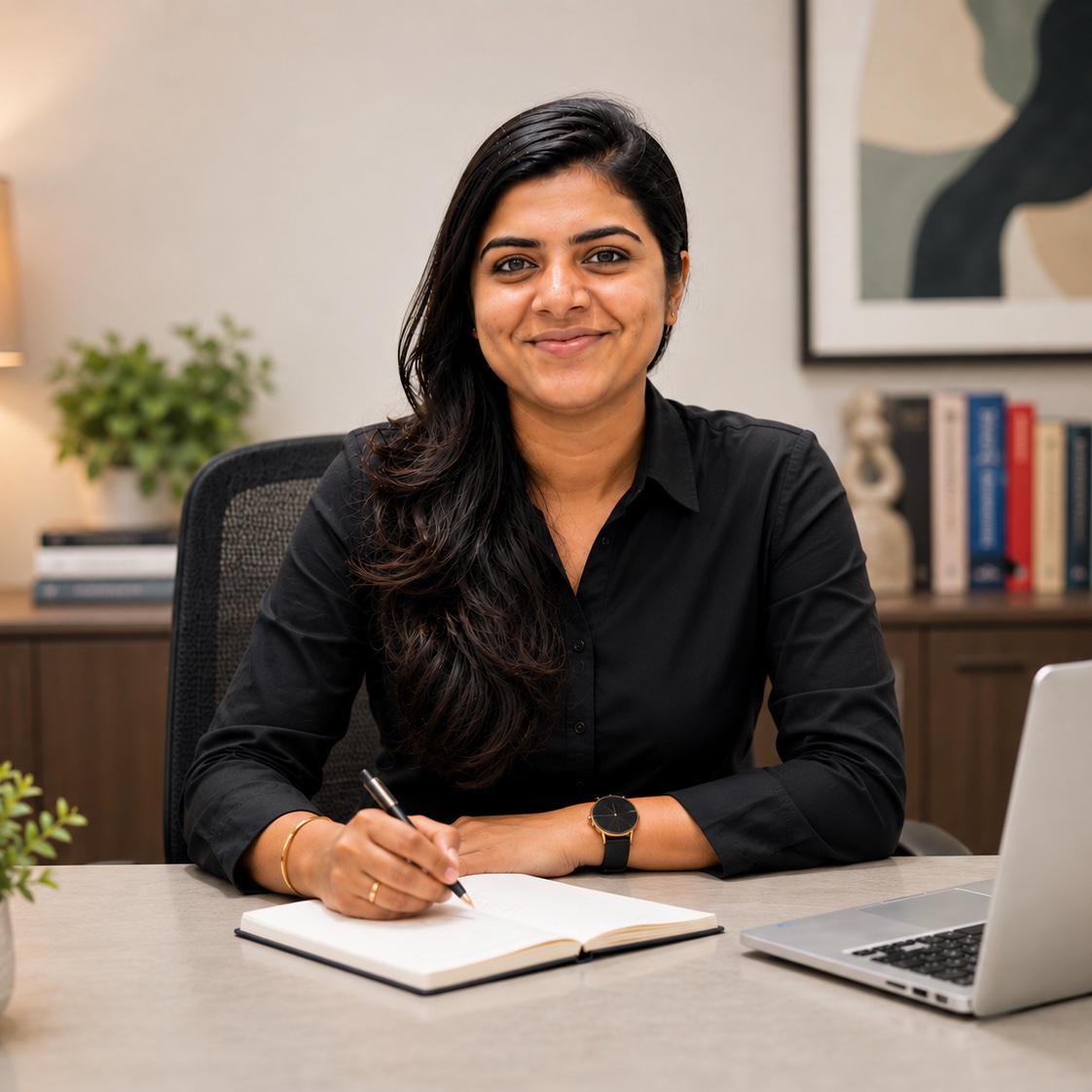
I am Dr. Sandhiya Loganathan, psychiatrist at Fertilia, with a focus on women’s mental health. In this post, I want to talk about what body image is, why pregnancy and weight changes affect it so deeply, when the difficulty crosses into something that needs professional support, and what genuinely helps in the meantime.
For more on this, read our guide on Low Libido in Women.
For more on this, read our guide on Coping After Pregnancy Loss.
For more on this, read our guide on Therapy in India.
What Body Image Is
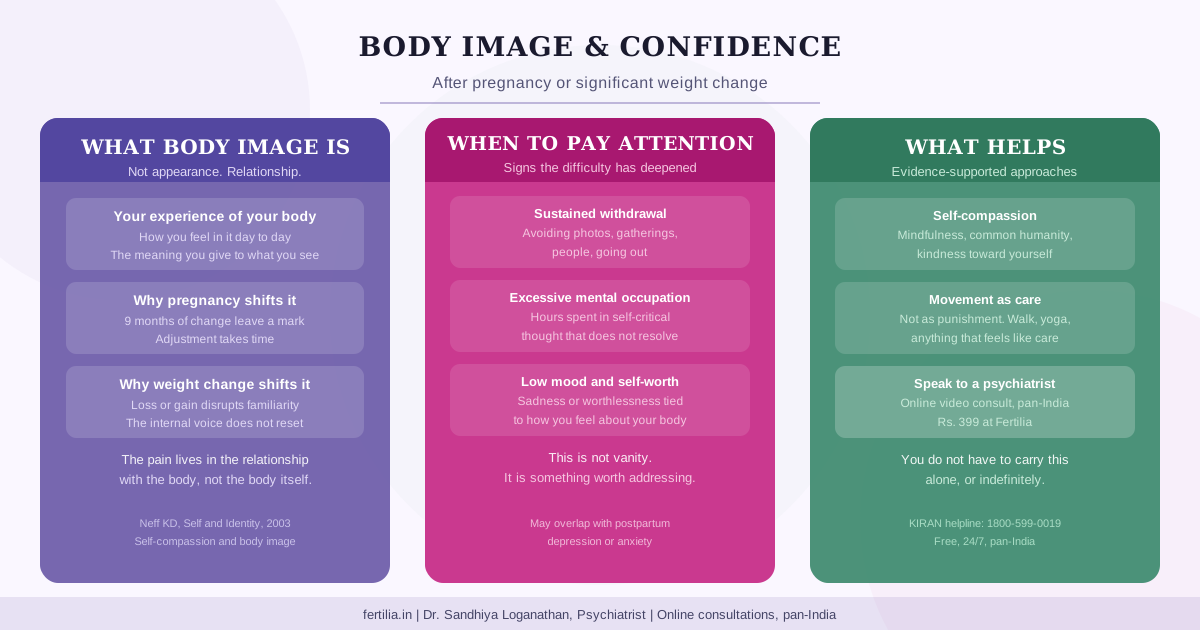
Body image is your experience of your body, and that experience is distinct from your appearance itself.
A person can have a body that others would consider conventionally attractive by any standard and still carry profound distress about how she looks. Another person might exist entirely outside standard beauty ideals and feel genuinely comfortable, even at ease, in her own skin. The connection between objective appearance and subjective body image is much weaker than most people assume.
What body image is made of: the mental picture you carry of yourself, how you feel when you move through a room, the thoughts that arise when you catch your reflection, and the meaning you attach to what you see. It includes how familiar your body feels to you, how much you trust it, and how much kindness or harshness you extend toward it in moments of difficulty.
The pain of poor body image lives in the relationship with the body, not in the body itself. This matters because it shifts the question from “how do I change my appearance?” to “how do I change this experience?” Those are very different questions with very different answers.
Why Pregnancy Changes the Experience
Pregnancy asks your body to do something remarkable. Over nine months, it reshapes itself entirely: skin stretches, proportions shift, organs rearrange, and the body that emerges after birth carries the visible marks of everything it has done.
From a clinical standpoint, this is completely expected. A body that has grown and delivered a child will look different. That is not a failure. It is the record of work done.
But clinical expectation and personal experience operate differently. For many women, the postpartum period brings a particular kind of disorientation: the body that was familiar for decades is now different in ways that were not fully anticipated, and the adjustment does not always arrive automatically. Research in reproductive health has consistently documented that body dissatisfaction increases significantly in the postpartum period, and that the first two years after birth are particularly vulnerable for negative shifts in how women experience themselves, independent of how much weight they have gained or lost.
What makes this harder is a cultural gap: pregnancy is celebrated, and the postpartum body is largely ignored by the culture around it, or worse, quietly criticized. The questions begin quickly. When will she get back to her old shape? Did she bounce back yet? The comment from the well-meaning aunty about looking “heavier” at six weeks postpartum. The comparison to a cousin who “managed it so fast.” These land at a moment when a woman is already managing enormous physical and emotional change, and they add to an internal environment that is already under pressure.
In many Indian households, there is an additional layer: a woman’s body has rarely been treated as simply her own. It has been subject to family commentary from girlhood, measured against film and media images, evaluated through standards of fairness and figure that absorb deeply over time. Many women carry these standards so internally that the external critics no longer need to be present. The internal voice does the work instead.
Why Weight Change Shifts This in Either Direction
The experience does not belong only to postpartum women. I see it in women who have gained weight during illness, during periods of sustained stress, during hormonal changes, during the years when thyroid dysfunction or perimenopause quietly reroutes the body’s metabolism.
And I see it just as frequently in women who have lost significant weight and expected peace to follow. The critical internal voice does not automatically update when the number on the scale changes. It shifts its attention: to what remains, to the fear of regaining, to new comparisons. Many women who achieve a long-held weight goal describe feeling almost cheated by the experience: they did the thing and the feeling did not come.
Weight change, in either direction, can disrupt body image for a direct reason: it is change. Our sense of ourselves is built partly on bodily familiarity. When that familiarity is disrupted, a period of adjustment is necessary. Sometimes that adjustment happens on its own, with time. Sometimes it needs support.
If you have been finding it difficult to feel comfortable in your own body since a pregnancy or weight change, and the difficulty has been there for a while, speaking to someone who works with this can help. Dr. Sandhiya offers online consultations across India. Message the Fertilia team on WhatsApp for a ₹399 appointment.
When This Becomes Part of Something Larger
For most women, some degree of adjustment difficulty after pregnancy or significant weight change is part of a normal range of experience. The discomfort tends to shift over time, especially with adequate support, rest, and the gradual return of familiarity with the changed body.
But sometimes it does not shift. And sometimes it deepens into something that sits closer to depression or anxiety.
There are some signs worth paying attention to.
Sustained withdrawal. You have stopped doing things you used to do because of how you feel about your appearance. Not occasional avoidance, but a persistent pattern over weeks or months: declining gatherings, stepping out of photographs, not meeting friends you used to see regularly, feeling unable to be in public without significant distress.
Excessive mental occupation. You spend a substantial portion of your day thinking about your body: analyzing it, comparing it to how it was, planning what you will do to change it, cycling through self-critical thought that does not resolve anything but takes up a great deal of mental energy. When this pattern is intrusive and difficult to redirect, it is a clinical signal.
Mood and self-worth. There is a pervasive low mood or a sense of worthlessness that you trace primarily to how you feel about your appearance. When body image distress is feeding a depressive state, the two often need to be addressed together. This is worth distinguishing from the ordinary tiredness or adjustment difficulty of early postpartum.
Social anxiety linked to appearance. Dread before situations where others will see you. Relief when plans are cancelled. A persistent self-consciousness in public that is exhausting to manage. When this is specifically tied to how you believe you look, it may be worth a closer assessment.
It is also worth knowing that postpartum depression and postpartum anxiety can include significant body image distress as one component. If the difficult feelings about your body arrived alongside the postpartum period more broadly, it may be worth considering whether a fuller evaluation makes sense.
None of these experiences mean something is wrong with you as a person. They mean you are carrying something that has become genuinely heavy. That is enough reason to seek support.
What Helps
Self-compassion is one of the better-supported approaches for improving body image in clinical psychology, and it tends to be precisely what the harsh internal voice makes most difficult.
Psychologist Kristin Neff’s foundational work on self-compassion (Self and Identity, 2003) describes it as having three components that work together. Mindfulness: noticing your distress without amplifying it or pushing it away. Common humanity: recognizing that difficulty and imperfection are part of everyone’s experience, not evidence of particular personal failure. And self-kindness: responding to yourself in hard moments with the warmth you would offer someone you care about.
For many Indian women, self-kindness around the body can feel almost countercultural. We are taught from early on that self-criticism is discipline, that being hard on yourself about your appearance is the way you stay motivated to improve. But the clinical evidence goes the other direction: self-compassion is associated with greater emotional resilience, lower body shame, and better long-term wellbeing. Chronic self-criticism is associated with increased depression and sustained body dissatisfaction. The harsh internal voice does not help. It compounds the difficulty.
Beyond the conceptual framework, there are practical steps that support it.
Move in a way that feels like care. Exercise framed as a way to punish your body back into a previous shape, or as compensation for what you have eaten, tends to worsen the relationship with your body over time. Movement that is about how your body feels: a walk, gentle stretching, yoga, swimming, tends to build a more neutral and gradually more positive experience of the body from the inside.
Give your body context for what it has done. After pregnancy, the changes you are looking at in the mirror are the record of something your body did, not a verdict on your worth. After a period of significant weight gain, your body adapted to a difficult period. After weight loss, your body did work. Reframing the body as a site of lived experience rather than an object to be assessed does not happen in one reflection, but it builds with repetition.
Reduce comparison. Social media presents a curated, heavily edited selection of bodies. The “postpartum transformation” content, the “bounced back” photographs, none of this represents the actual range of real bodies in real postpartum periods. Reducing the time you spend in comparison, online and in conversation, tends to reduce the intensity of dissatisfaction over time.
Name the experience. The difficulty tends to grow when it is kept private. Speaking about what you are going through, to a partner, a trusted friend, or a therapist, reduces its hold. The experience of being heard without judgment is itself therapeutic, and it breaks the silence in which shame tends to compound.
The mental load and burnout that accumulate postpartum and during difficult life periods also compound body image distress. Addressing the broader weight you are carrying, not just the body-specific feelings, often matters more than it might seem at first.
When to Seek Professional Support
If the experience has been going on for more than a few weeks, has not shifted with time and self-care, and is affecting your daily life, your relationships, or your ability to find enjoyment in things, it is worth speaking to someone with clinical training.
This does not require a diagnosis. It does not require that things have reached a crisis point. It requires that you have noticed something that has not moved, and that carrying it alone for longer is unlikely to change that.
Online psychiatric consultations are valid and accessible across India under the Telemedicine Practice Guidelines (2020). You do not need to be in the same city as your doctor.
If you are in distress and need immediate support, the KIRAN Mental Health Helpline (1800-599-0019) is available free of charge, 24 hours a day, in 13 languages.
Frequently Asked Questions
Is it normal to feel worse about your body after pregnancy than before?
It is very common, and it is documented consistently in reproductive health research. The body changes substantially in a short period of time, the cultural environment offers little preparation for the postpartum body, and the postpartum period is already one of significant physical and emotional demand. What you are experiencing is not vanity or weakness. It is a recognized part of the postpartum experience for a meaningful proportion of women, and it responds to time, support, and in some cases professional help.
How long does it take to adjust to your body after pregnancy?
There is no fixed timeline, and comparisons to other women are rarely useful because the factors involved are different for everyone: how the birth went, how much support you have, your prior relationship with your body, and whether postpartum depression or anxiety is part of the picture. The more useful question is whether the experience is gradually shifting over time (even slowly) or whether it is staying the same or worsening. The latter is a signal to seek support rather than continue waiting.
Why don’t I feel better about my body even after losing weight?
Because body image is not directly controlled by body weight. The way you experience your body is shaped by habits of perception and thought that have developed over years. Weight change on its own does not rewrite those habits. Many women who reach a weight goal find that the critical internal voice simply redirects: to what remains, to the fear of regaining, to a different area. Any approach that focuses only on changing the body, without addressing the relationship with the body, tends to have limited results over time.
What is the difference between body image concerns and body dysmorphic disorder?
Body dysmorphic disorder (BDD), as defined in the DSM-5, involves a persistent preoccupation with one or more perceived defects in appearance that are not observable to others or appear minor to others. The preoccupation causes significant distress or impairment in daily functioning and drives repetitive behaviors: checking, seeking reassurance, camouflaging. General body image dissatisfaction exists on a spectrum from mild and transient discomfort to more significant and sustained distress, but BDD is a distinct clinical condition at the more severe end of that spectrum. If you are uncertain where your experience sits, a psychiatrist can assess this.
Pregnancy ke baad body se unhappy rehna kya normal hai? (Is it normal to feel unhappy with your body after pregnancy?)
Haan, yeh bohot common hai aur research mein bhi documented hai ki delivery ke baad body image ke baare mein negative feelings kaafi mahilaon ko hoti hain. Iska matlab yeh nahin ki aapke saath kuch galat hai. Pregnancy mein shareer bahut badlta hai, aur yeh adjustment samay leta hai. Agar yeh feelings kaafi hafton se hain aur aapki zindagi ya rishton ko affect kar rahi hain, toh kisi se baat karna sahi raasta hai. Dr. Sandhiya ke saath online consultation phone ya video call se pan-India uplabdh hai.
Can body image concerns affect my relationship with my partner or family?
Yes, and this is more common than it tends to be discussed openly. When you are uncomfortable in your own body, it can affect how physically present you are with your partner, how you communicate about what you are experiencing, and how connected you feel within the relationship. Partners often notice the withdrawal without understanding its source. Naming what you are going through, even imperfectly, tends to reduce the distance between you. If the effect on your relationship is significant and persisting, that is itself a reason to seek support, alongside the body image concern itself.
How do I know when it is time to speak to a psychiatrist about this?
When the difficulty has been present for more than a few weeks and has not shifted with time and ordinary self-care. When it is affecting how you function day to day, the activities you participate in, or your sense of who you are. When it feels linked to low mood, persistent anxiety, or a broader sense of worthlessness. You do not need to be in crisis to reach out. A consultation at this point is about getting a clear picture and the right kind of support, not about labeling something in a way that will define you.
Body image concerns are common, often quietly carried, and respond well to the right support. Dr. Sandhiya Loganathan offers online psychiatric consultations with women across India. WhatsApp the Fertilia team to book a ₹399 appointment by video call.
From the Fertilia Mental Health Series
If you are also navigating low mood, anxiety, or the wider weight of the postpartum period, these posts may be useful: