After a miscarriage, questions come fast. One of the earliest is almost always: when can we try again?
Some women want to start almost immediately, driven by a grief that quickly turns into the desire to be pregnant again. Others feel they need time, physically or emotionally, before they are ready. And some hear the advice to wait six months and are not sure where that number comes from, or whether it applies to them.
This post answers the timing question directly, with the current evidence, and without catastrophising the road ahead. For a full explanation of why miscarriages happen and what recovery involves, read our complete guide to miscarriage, its causes and signs.
What your body does after a miscarriage
Before you think about trying again, it helps to understand what is happening in your body in the weeks after a loss.
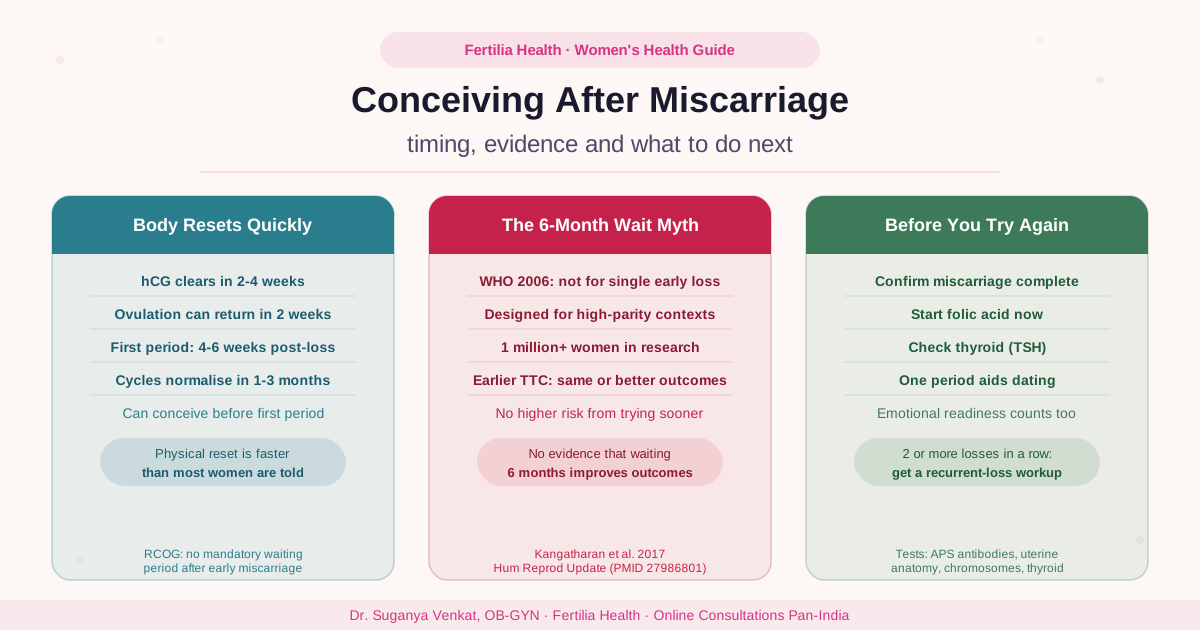
After a pregnancy ends, the hormone human chorionic gonadotrophin, hCG, which sustains the pregnancy, begins to fall. Your body recognises the loss and starts resetting. The rate at which hCG clears depends on how far the pregnancy had progressed. After an early first-trimester loss, hCG typically returns to a non-pregnant level within two to four weeks. Your doctor may check this with a blood test, particularly if there is any question about whether the miscarriage was complete.
Once hCG clears, the reproductive cycle restarts. The ovaries receive the signal to begin recruiting a new follicle, and ovulation can occur as early as two weeks after the pregnancy tissue has passed. This means it is biologically possible to conceive again before you have even had your first post-miscarriage period.
That first period, when it comes, usually arrives four to six weeks after the loss. Some women find their cycles are slightly irregular for a cycle or two, and that is normal. Most return to their regular pattern within one to three cycles.
The body does not need months to be physically ready again. The reset happens faster than most women are told.
Where the “wait six months” advice comes from
Many women are told to wait at least six months before trying to conceive after a miscarriage. This recommendation traces back to the World Health Organization’s technical consultation on birth spacing (Geneva, 2005; published 2007 as report WHO/RHR/07.1, who.int), which advised an interval of at least six months before attempting a new pregnancy after a miscarriage or abortion.
It is worth understanding what that guidance was designed for. It was created in the context of high-parity women in low-resource settings, where short intervals between pregnancies carried risks related to nutritional depletion and limited access to maternity care during subsequent pregnancies. It was not derived from studies specifically examining women who had had a single early miscarriage while otherwise healthy.
The six-month figure became widely repeated in clinical practice, which is how population-level guidance often travels. But the evidence base behind it, for this specific scenario, was always limited.
What the research shows
In 2017, a systematic review and meta-analysis published in Human Reproduction Update examined ten studies involving more than one million women who had experienced a miscarriage. The researchers looked at whether the length of the interpregnancy interval, the time between the loss and the next conception, affected pregnancy outcomes (Kangatharan et al., Hum Reprod Update, 2017, PMID 27864302).
The findings were clear. Women who tried to conceive within three months of their miscarriage did not have worse pregnancy outcomes than those who waited longer. In several of the included studies, women who conceived sooner had higher rates of live births. There was no signal of increased risk for preterm birth, low birthweight, or miscarriage in the next pregnancy.
An earlier Scottish study published in the BMJ in 2010 found the same pattern. Using data from over 30,000 women, it found that those who conceived within six months of a miscarriage had better outcomes on several measures, including higher rates of live birth and lower rates of preterm delivery (Love et al., BMJ, 2010, PMID 20688842).
Consistent with this evidence, the Royal College of Obstetricians and Gynaecologists’ patient guidance on early miscarriage (rcog.org.uk) sets no mandatory waiting period: it advises that a couple can try again as soon as they feel physically and emotionally ready, and that conceiving soon after a miscarriage does not increase the risk of miscarrying again. Many major clinical bodies have updated their guidance in the same direction.
Physically, there is no six-month rule. That does not mean timing never matters, but the specific concern about waiting six months for the benefit of the next pregnancy is not supported by current evidence.
Want to think through your next steps after a loss? Dr. Suganya Venkat offers online consultations for women across India who want personalised guidance on fertility, timing, and preparation after miscarriage. WhatsApp Dr. Suganya to book a Rs. 399 consultation.
Does the type of miscarriage management affect timing?
For most early miscarriages that resolved naturally without any intervention, there is no physical reason to delay beyond the return of ovulation or your next period.
Expectant management (letting it pass naturally): Once the pregnancy tissue has passed and your hCG has returned to a non-pregnant level (confirmed by blood test if indicated), your body is physically ready. Many doctors suggest waiting for one normal period before trying again, but this is a practical rather than a clinical-safety recommendation.
Medical management with misoprostol: Your doctor will usually arrange a follow-up scan or blood test to confirm the uterus is clear. Once that is confirmed and hCG is back to baseline, there is no physical reason to wait further.
Surgical management (ERPC or manual vacuum aspiration): After a surgical procedure, the uterine lining needs a few weeks to heal. Most doctors advise waiting at least one full cycle before trying to conceive, both for physical recovery and to give a clean date from which to count the next pregnancy. This is practical guidance in most cases, not a hard clinical-risk rule, but it is worth following.
If you had a second-trimester loss, or if your pregnancy involved complications, your doctor’s specific advice on timing takes priority over general guidance.
One period before trying: practical, not mandatory
Many doctors suggest waiting for one normal period before trying to conceive again after a miscarriage. The reason is largely practical: it gives a known first day from which to count when you do get pregnant, which makes early dating of the new pregnancy more reliable.
This is not a safety requirement. Some women and their doctors decide together that waiting for a period is not important to them, and both choices are reasonable. If you ovulate before your first post-miscarriage period and conceive in that cycle, the new pregnancy is not at higher risk because of the timing.
Emotional readiness matters alongside physical readiness
Physical readiness and emotional readiness do not always arrive on the same timeline, and both deserve attention.
Some women, once their body has recovered, feel ready to try again quickly. That impulse is valid. It does not put the next pregnancy at risk, and there is nothing clinically wrong with it.
Others need more time. Grief after pregnancy loss is real, even when the loss happened early. Being in a place where you can engage with a new pregnancy, and manage the anxiety that often comes with it after a loss, is a legitimate part of the picture. There is no fixed schedule for that, and no right or wrong timeline.
If grief is prolonged, if it is affecting daily life, or if the thought of trying again brings significant anxiety, speaking to someone who works with pregnancy loss can help. That does not have to wait until things feel unbearable.
What to do before your next pregnancy
Regardless of how soon you try again, a few practical steps make a meaningful difference.
Start folic acid now: Folic acid supplementation, at least 400 mcg daily, should begin before conception rather than after a positive test. Neural tube closure happens in the first four weeks of pregnancy, often before most women know they are pregnant. For a full breakdown of timing, dose, and whether to choose folic acid or methylfolate, read our complete guide to folic acid in pregnancy.
Check your thyroid: Thyroid disorders are among the more common and treatable contributors to miscarriage and recurrent loss. If you have not had a thyroid test in the past year, or if your results were borderline, a TSH check before your next conception attempt is sensible. See our guide on thyroid and fertility for what the numbers mean and when treatment is indicated.
Confirm the miscarriage was complete: Before trying again, it is worth confirming with your doctor that the uterus is clear, either through a scan or by checking that hCG has returned to baseline. A retained product of conception is uncommon but does occur, and starting a new cycle on that background is not ideal.
If this was your second or third loss: Two or more consecutive miscarriages qualify as recurrent pregnancy loss, and that warrants a structured workup before trying again. Tests cover antiphospholipid antibody syndrome, uterine anatomy, chromosomal factors, and thyroid function. Our guide on what tests to get after recurrent miscarriage covers this in full.
Talk it through together: Pregnancy after miscarriage can feel different, and having a shared plan with your partner, knowing what monitoring you would want in early pregnancy and how you will handle the first weeks, can make the experience feel more manageable.
A note on chemical pregnancies
A chemical pregnancy, a very early loss before the pregnancy is visible on ultrasound, typically at four to five weeks, follows the same general principles. The body resets quickly, and the evidence does not support a mandatory waiting period. Many women who have a chemical pregnancy conceive naturally in the following cycle. For more on what this type of loss means for your fertility, read our guide to chemical pregnancy.
The bigger picture on fertility after one miscarriage
A single miscarriage is common. Around 10 to 20 percent of confirmed pregnancies end this way, and the true figure is likely higher if very early chemical losses are included. Chromosomal errors in the embryo, which are largely chance events, account for the majority of early losses. A single miscarriage is not a sign that something is wrong with your fertility.
Most women who have one miscarriage go on to have a successful pregnancy. The research on interpregnancy intervals consistently shows that trying again sooner, once the body has recovered, does not harm the next pregnancy. For many women, the evidence points modestly toward benefit from not waiting.
If you want to think through your specific situation, including what preparation makes sense, what monitoring to request in the next pregnancy, and whether any tests are worth doing first, Dr. Suganya can help. She works with women across India via online consultation.
WhatsApp Dr. Suganya to book a Rs. 399 online consultation.
Frequently Asked Questions
How soon after a miscarriage can I get pregnant?
Ovulation can return as early as two weeks after a completed miscarriage, which means it is biologically possible to conceive before your next period. A 2017 systematic review of over one million women found that trying to conceive within three months of a miscarriage did not increase the risk of complications in the next pregnancy (Kangatharan et al., PMID 27864302). There is no medical basis for the six-month wait in most early miscarriage cases.
Do I need to wait for my period before trying again?
Waiting for one period is a practical suggestion, not a safety rule. A period gives you a clear date from which to count when you do conceive, making early pregnancy dating easier. If you ovulate before your first post-miscarriage period and get pregnant, the new pregnancy is not at greater risk because of the timing.
Is it safe to try again right after a miscarriage?
For most early first-trimester miscarriages, yes. The research does not show worse outcomes for women who try again within the first few months. The important checks are that the miscarriage was complete (hCG back to baseline) and that you feel emotionally as well as physically ready. After surgical management, most doctors suggest waiting one cycle for uterine recovery.
I had a D&C or ERPC. How long should I wait before trying again?
After a surgical evacuation, most doctors recommend waiting at least one full menstrual cycle. This gives the uterine lining time to rebuild and also makes early pregnancy dating more reliable. This is practical guidance in most cases. Your own doctor’s advice, based on your specific recovery, should be your reference.
Miscarriage ke baad kitne time mein dobara try kar sakte hain?
Miscarriage ke baad body kaafi jaldi reset ho jaati hai. Ovulation sirf do se char hafte mein wapas aa sakti hai. Ek badi research (10 lakh se zyada mahilaon par) mein dikha ki jo mahilayein teen mahine ke andar dobara try karti hain, unhe koi zyada takleef nahin hoti. Chhe mahine intezaar karna zaroori nahin hai. Apni doctor se apni specific situation ke hisaab se poochhen.
What supplements should I take before trying again?
Folic acid, at least 400 mcg daily, is the most important supplement to start before conception rather than after a positive test. Neural tube closure happens before most women know they are pregnant. Your doctor may also check vitamin D and iron levels. The form of folic acid you take (standard folic acid vs methylfolate) matters if you have the MTHFR variant.
Does one miscarriage affect my chances of getting pregnant in the future?
One miscarriage does not impair future fertility. Most women who have a single miscarriage go on to have a healthy subsequent pregnancy. Chromosomal errors, which are random events, account for the majority of early losses. Recurrent miscarriage (two or more consecutive losses) is a separate clinical question that warrants investigation, but a single loss in an otherwise healthy woman is not a predictor of long-term fertility problems.