One of the most common questions I hear from women across all age groups: “Doctor, I have a burning feeling when I urinate. Is it a urine infection? Should I take antibiotics, or will it go away on its own?”
Urinary tract infections are among the most common bacterial infections in women. Foxman (2002, Am J Med, PMID 12113866) estimated that roughly half of all women experience at least one UTI in their lifetime, and a significant proportion experience repeated episodes. In India, this is a condition that cuts across age groups and is searched for under many names: “urine infection,” “burning urination,” “peshab mein jalan” in Hindi, or “siruneer erithal” (சிறுநீர் எரிச்சல்) in Tamil.
This guide covers the practical questions: what the symptoms look like, how to distinguish a straightforward bladder infection from a kidney infection, what the treatment options are in an Indian context, and specifically when you need to see a doctor the same day rather than waiting.
What this post covers:
- Why women develop UTIs more often than men
- Recognising the symptoms, and what is usually not a UTI
- The critical difference between bladder infection and kidney infection
- Treatment options available in India
- Hydration and home support measures
- UTI during pregnancy: why different rules apply
- Prevention that actually works
- When to seek a doctor, with specific criteria
Why women develop UTIs more often than men
The anatomy explains most of it. A woman’s urethra (the tube carrying urine from the bladder to the outside) is approximately 4 cm long. In men, it is around 20 cm. That shorter distance means bacteria can reach the bladder much more easily. The urethral opening also sits closer to the anal area in women, which is where the primary UTI-causing organism, Escherichia coli, naturally lives.
E. coli accounts for 80 to 85 percent of uncomplicated UTIs in women (Hooton TM, 2012, NEJM, PMID 22417256). Other organisms include Staphylococcus saprophyticus (more common in younger sexually active women), Klebsiella pneumoniae, and Proteus mirabilis.
Several situations raise a woman’s risk further:
- Sexual activity: bacteria can be pushed toward the urethra during intercourse. UTIs occurring within 24 to 48 hours of sex are common enough that the older term “honeymoon cystitis” still gets used clinically.
- Pregnancy: hormonal changes relax the smooth muscle of the urinary tract, which slows urine flow and makes it easier for bacteria to ascend.
- Menopause and perimenopause: lower oestrogen levels thin the urinary tract tissue, alter the local bacterial flora, and reduce natural defences against infection. If recurrent UTIs start around your mid-40s, oestrogen loss is often part of the picture.
- Diabetes: higher glucose levels in the urine support bacterial growth, and reduced immune function plays a role as well.
- Catheter use or recent urological procedures.
- Urinary retention or incomplete bladder emptying.
Recognising UTI symptoms
The typical presentation is fairly specific and recognisable:
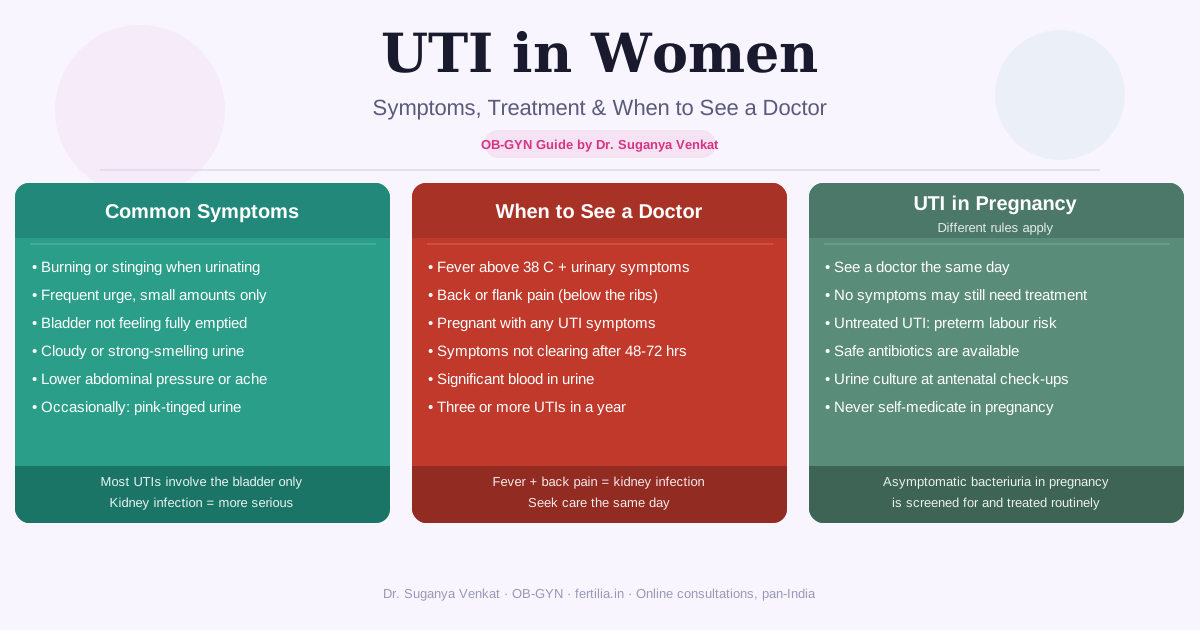
Symptoms that point toward a UTI:
- A burning or stinging sensation while urinating (this is the most characteristic symptom)
- Needing to urinate frequently but producing only small amounts each time
- A persistent feeling that the bladder has not fully emptied, even after going
- Cloudy, dark, or unusually strong-smelling urine
- Pressure or aching in the lower abdomen or pelvis
- Occasionally, pink or red-tinged urine (blood in the urine), which can look alarming but is common in bladder infections and does not on its own indicate something serious
What is usually not a UTI:
- Thick white vaginal discharge accompanied by itching suggests a yeast infection, not a urinary infection
- Burning on the outer skin (vulvar burning, rather than the internal sensation while passing urine) often points to vulvar irritation or candida rather than a urinary infection
For more on this, read our guide on Vaginal Yeast Infection.
- Foul-smelling vaginal discharge with odour suggests vaginal infection
These conditions can sometimes occur together, which is one reason a urine test is helpful when there is uncertainty. If you are noticing discharge alongside urinary symptoms, that distinction matters for treatment. For information on what vaginal discharge during pregnancy looks and smells like when it is normal versus concerning, the white discharge in pregnancy guide covers this in detail.
Bladder infection vs kidney infection: the most important distinction
This is the clinical distinction that determines whether a UTI can be managed with a short antibiotic course at home or whether it needs same-day assessment.
Uncomplicated lower UTI (cystitis, meaning bladder only):
- Involves the bladder only, has not spread upward
- No fever (temperature below 38 C), or only a very slight elevation
- No back or flank pain (flank = the area just below the ribs, on either side of the spine)
- No nausea or vomiting
- The patient is not pregnant, has no structural urinary abnormality, and has not recently had a catheter or urological procedure
- Responds well to a 3 to 7-day antibiotic course
Pyelonephritis (kidney infection):
- The infection has ascended from the bladder up to one or both kidneys
- Presents with: fever above 38 C, often with chills or rigors, AND significant flank pain (pain in the back or side, just below the rib cage)
- Almost always accompanied by nausea, and often vomiting
- May include the urinary burning and frequency of cystitis as well
- Requires prompt medical assessment; many cases need a longer antibiotic course and some need intravenous antibiotics
- In pregnancy, pyelonephritis is a medical emergency
Do not manage fever combined with flank pain at home. This combination warrants a doctor’s assessment on the same day. The burning urination of a simple bladder infection can be uncomfortable; the fever and back pain of a kidney infection are a different situation entirely.
Treatment for uncomplicated UTI in India
For a straightforward lower UTI with no fever, no back pain, and not during pregnancy, antibiotics are the appropriate treatment. The Infectious Diseases Society of America and European Society for Microbiology and Infectious Diseases guidelines (Gupta et al., 2011, Clin Infect Dis, PMID 21292654) inform the choice of antibiotic, alongside local resistance patterns.
Antibiotics commonly prescribed in India for uncomplicated UTI:
- Nitrofurantoin (brands: Macrobid, Macrodantin, Nitrofur): 100 mg twice daily for 5 days. Effective for uncomplicated cystitis with generally lower resistance rates. Avoid in the third trimester of pregnancy (after 36 weeks).
- Fosfomycin trometamol (brands: Fomac, Fosfocin): a single 3 g sachet dissolved in water. Convenient one-dose option with low resistance. Particularly useful when a woman cannot complete a multi-day course.
- Trimethoprim-sulfamethoxazole (cotrimoxazole): resistance rates have increased substantially in India, so this is less reliable as a first-line choice unless sensitivity is confirmed on culture.
- Fluoroquinolones (ciprofloxacin, norfloxacin, ofloxacin): very widely prescribed in India for uncomplicated UTI, but current international guidelines recommend reserving them for complicated infections because overuse drives resistance. They are not the preferred first choice for simple cystitis.
- Cephalexin: used more commonly in pregnancy and in patients with specific allergy history.
Two practical points: first, complete the full antibiotic course even if symptoms improve quickly within the first day or two. Stopping early leaves surviving bacteria behind and increases recurrence risk. Second, if symptoms do not improve within 48 to 72 hours of starting antibiotics, see your doctor rather than continuing the same course. A urine culture (sent before starting antibiotics when possible) is particularly valuable if symptoms recur or if there is any reason to suspect a resistant organism.
Home care to support recovery
Antibiotics are the treatment for infection. These additional steps support comfort and recovery:
- Increase fluid intake. Aim for at least 8 to 10 glasses of water a day during active infection. Increased urine flow helps flush bacteria from the bladder. Tender coconut water, nimbu paani (lemonade), and plain barley water (jau ka paani) are good choices: hydrating, easy on the stomach, and widely available in India.
- Avoid caffeine and alcohol. Both are bladder irritants that worsen the urgency and burning while symptoms are active.
- A warm compress. A cloth soaked in warm water, or a hot water bottle placed over the lower abdomen, can ease the cramping and pressure sensation.
- Do not delay urinating. Urinate when you feel the urge rather than holding it, especially during active infection.
What about cranberry juice? The evidence for cranberry products as a treatment for an existing UTI is weak. Some research suggests that proanthocyanidins in cranberry may reduce bacterial adherence to the bladder wall (Jepson & Craig, 2008, Cochrane, PMID 18253990), but this effect is at best a prevention strategy, not a treatment for an established infection. If you have burning urination, you need an antibiotic. Cranberry juice alongside the antibiotic does no harm, but it will not substitute for the antibiotic.
If you have burning urination, recurrent urine infections, or want to understand what treatment is right for your situation, you are welcome to speak with me directly: WhatsApp +91 99402 70499.
UTI during pregnancy: different rules apply
This section needs its own emphasis because the implications are different from a UTI outside of pregnancy.
During pregnancy, progesterone relaxes the smooth muscle of the ureters, and the growing uterus can partially compress them. These changes slow urine flow and make it much easier for bacteria to ascend from the bladder to the kidneys. The result is that a bladder infection in pregnancy carries a meaningful risk of progressing to kidney infection if not treated promptly.
There is also a condition unique to pregnancy called asymptomatic bacteriuria: significant numbers of bacteria present in the urine without any symptoms. In a non-pregnant woman, asymptomatic bacteriuria is usually left untreated. In pregnancy, it is treated, because the risk of progression to pyelonephritis is substantially higher. Untreated UTI in pregnancy, including asymptomatic bacteriuria, has been associated with pyelonephritis and increased risk of preterm labour (Schieve et al., 1994, Am J Public Health, PMID 8129056). This is why urine culture is included as a standard part of early antenatal care.
If you have UTI symptoms during pregnancy:
- See your doctor the same day. Do not wait until the next scheduled antenatal visit.
- Do not self-medicate with leftover antibiotics.
- A urine culture should be sent before starting antibiotics when possible, so treatment can be targeted if needed.
Antibiotics that are safe and commonly used for UTI in pregnancy include cephalexin (cefalexin) and amoxicillin-clavulanate. Nitrofurantoin is generally used safely in the first and second trimesters but is avoided after 36 weeks. Fluoroquinolones and tetracyclines are not used in pregnancy. Your doctor will prescribe the appropriate choice based on your trimester and culture results.
If you are pregnant and running a fever with back pain, this needs emergency assessment. Pyelonephritis in pregnancy requires hospitalisation and intravenous antibiotics in many cases (Jolley and Wing, 2010, Drugs, PMID 20731473). It is not a situation to manage at home or wait out.
For a full picture of what to expect and monitor during pregnancy, the comprehensive pregnancy care guide is a useful starting point. The pregnancy do’s and don’ts guide also covers hygiene and infection prevention practices that reduce UTI risk during pregnancy. If you have been told you have gestational diabetes, it is worth knowing that diabetes in pregnancy raises UTI risk: good blood sugar control reduces this.
Prevention
Most of the practical prevention steps are straightforward:
- Drink adequate water throughout the day. The simplest measure. Aim for pale-yellow urine. Concentrated, dark urine makes the bladder environment more hospitable to bacterial growth.
- Urinate soon after sexual intercourse. Within 30 to 60 minutes of sex. This is the most consistently supported behavioural prevention measure for women who experience UTIs linked to intercourse.
- Wipe front to back after using the toilet. This prevents E. coli from the rectal area being carried toward the urethra.
- Do not delay urinating when you feel the urge. Holding urine allows bacteria to multiply in the bladder.
- Change menstrual hygiene products regularly (pads, tampons, menstrual cups). A damp environment near the urethra for extended periods raises infection risk.
- Avoid harsh soaps or douches inside or around the vaginal and urethral area. These disrupt the natural protective flora.
- Wear cotton underwear and avoid wearing tight synthetic clothing for extended periods, particularly in hot and humid weather.
- If you have diabetes, keeping blood sugar well controlled reduces UTI risk by limiting the glucose available to bacteria in the urine.
For women with recurrent UTIs (three or more in a year, or two or more in six months), there are additional prevention options beyond the above. These include low-dose daily prophylactic antibiotics, post-coital antibiotic prophylaxis (a single antibiotic tablet after sex), D-mannose supplementation, and in postmenopausal women, vaginal oestrogen (which restores the protective local environment). These are decisions made with a doctor after a urine culture has confirmed which organisms are involved and their sensitivities.
When to see a doctor: a clear summary
Same-day assessment:
- Fever above 38 C together with urinary symptoms
- Back or flank pain (below the rib cage, on one or both sides)
- Pregnant and have any UTI symptoms, regardless of severity
- Vomiting and unable to keep fluids down
- Significant blood in the urine
Within 1 to 2 days:
- Classic UTI symptoms (burning, frequency, urgency) without fever or back pain, where you want antibiotic treatment started
- Symptoms not improving 48 to 72 hours into a prescribed antibiotic course
- Any underlying medical condition (diabetes, single kidney, previous urological surgery, immune suppression)
Consider specialist review:
- Three or more UTIs in the past 12 months (recurrent UTI evaluation needed to look at underlying causes and prevention options)
- UTIs clearly and repeatedly linked to sexual activity that are not responding to post-coital voiding
For more on this, read our guide on Recurrent UTI in Women.
- Postmenopausal woman with new or worsening recurrent infections (local oestrogen is often effective and worth discussing)
What is a UTI called in Tamil, Hindi, and Telugu?
| Language | Common term | Meaning |
|---|---|---|
| Tamil | சிறுநீர் பாதை தொற்று (siruneer paadhay thoru) | Urinary tract infection |
| Tamil (symptom) | சிறுநீர் எரிச்சல் (siruneer erithal) | Burning on urination |
| Hindi | मूत्र मार्ग संक्रमण (mutra marg sankraman) | Urinary tract infection |
| Hindi (symptom) | पेशाब में जलन (peshab mein jalan) | Burning on urination |
| Telugu (approximate) | mutra naala sankramana | Urinary tract infection (Roman transliteration) |
These are the same condition regardless of the term your family uses. “Urine infection” (colloquial English, widely used in India) refers to the same thing as UTI.
Frequently Asked Questions
Can a UTI go away without antibiotics?
A mild bladder infection occasionally resolves without antibiotics, but this is not reliable. Without treatment, there is a real risk that bacteria ascend to the kidneys and cause pyelonephritis. If symptoms are present, a short antibiotic course is the appropriate treatment. Do not wait more than 48 to 72 hours hoping symptoms will clear on their own.
What are the best home remedies for UTI in India?
Home measures support comfort and recovery but do not substitute for antibiotics once infection is established. The most useful are: drinking plenty of water (8 to 10 glasses a day), tender coconut water for hydration and electrolytes, barley water (jau ka paani), nimbu paani, and a warm compress on the lower abdomen for discomfort. Avoid caffeine and alcohol during active symptoms. Cranberry-based products are a weak prevention measure, not a treatment for symptoms already present.
How do I know if a UTI has spread to my kidneys?
The key signs of kidney infection (pyelonephritis) are: fever above 38 C with chills, and pain in the flank (the back or side just below the ribs). These are distinct from the lower abdominal pressure of a simple bladder infection. If you have fever combined with back or flank pain, see a doctor the same day rather than waiting.
Is it safe to take antibiotics for UTI during pregnancy?
Yes, with the right antibiotic and under medical guidance. Several antibiotics are safe and effective for UTI in pregnancy, including cephalexin and amoxicillin-clavulanate. The correct choice depends on your trimester and urine culture results. Fluoroquinolones and tetracyclines are avoided in pregnancy. Please do not self-medicate with leftover antibiotics during pregnancy. Treating UTI promptly in pregnancy is important: untreated infection carries a risk of ascending to the kidney and of contributing to preterm labour.
I keep getting urine infections. What should I do? (Baar baar urine infection aana)
Recurrent UTIs (three or more in a year, or two or more in six months) warrant a proper evaluation rather than repeated courses of the same antibiotic. A urine culture confirms which bacteria are involved and whether they are sensitive to the antibiotic being prescribed. Underlying factors such as urinary retention, anatomical considerations, sexual activity patterns, contraceptive use, and in older women, low oestrogen levels are assessed. There are effective prevention strategies: post-coital prophylaxis, low-dose maintenance antibiotics, D-mannose, and vaginal oestrogen in postmenopausal women. Book a video consultation rather than managing each episode in isolation.
Can sex cause a UTI?
Yes, in some women. Sexual intercourse can push bacteria toward the urethra, which is why UTIs occurring 24 to 48 hours after sex are common in some women (the old term “honeymoon cystitis” refers to this). Urinating within 30 to 60 minutes after intercourse is the most evidence-supported preventive measure. If UTIs keep recurring in a clear pattern around sexual activity, speak with a doctor about post-coital antibiotic prophylaxis (a single tablet after sex), which is an effective prevention strategy for this pattern.
What is the difference between a UTI and a vaginal infection?
The key difference is where the sensation comes from. A UTI produces burning or pain that occurs internally while passing urine, along with frequency, urgency, and changes in the appearance of the urine. A vaginal infection (whether bacterial vaginosis or a yeast infection) typically presents with vaginal discharge, itching or irritation around the vaginal opening, and odour. External burning around the vulva (not internal during urination) suggests vaginal or vulvar involvement rather than a urinary tract infection. These conditions can occur simultaneously, which is why a clinical evaluation rather than self-diagnosis is more reliable when there is any uncertainty.
If you are dealing with a UTI during pregnancy, have had more than two urine infections in the past year, or want to talk through your symptoms before deciding on next steps, I am available for a video consultation: WhatsApp +91 99402 70499.