You open Practo or type your symptom into Google, and within seconds you are staring at a wall of titles: gynaecologist, obstetrician, endocrinologist, reproductive endocrinologist, “PCOS specialist”, fertility consultant, general physician. Each one sounds slightly more qualified than the last. You just wanted to know why your periods have gone quiet for three months, and now you are trying to decode a hospital directory.
I see the result of this confusion in clinic often. Women arrive having spent months not booking anyone, because they were not sure who the right person was, or having seen three different specialists who each treated one piece of the puzzle. The reality is far simpler than the search results make it look. For the large majority of women with PCOS, irregular periods, or painful periods, there is one clear starting point, and a good first doctor will guide you to anyone else you need.
This guide covers:
- The one-line answer to who you should see first
- What a gynaecologist, endocrinologist, and general physician each actually handle
- A by-symptom map so you can match your situation to the right doctor
- Why a referral onward is good care, not a failure
- How an online consultation lets you reach a specialist from anywhere in India
The short answer: start with a gynaecologist
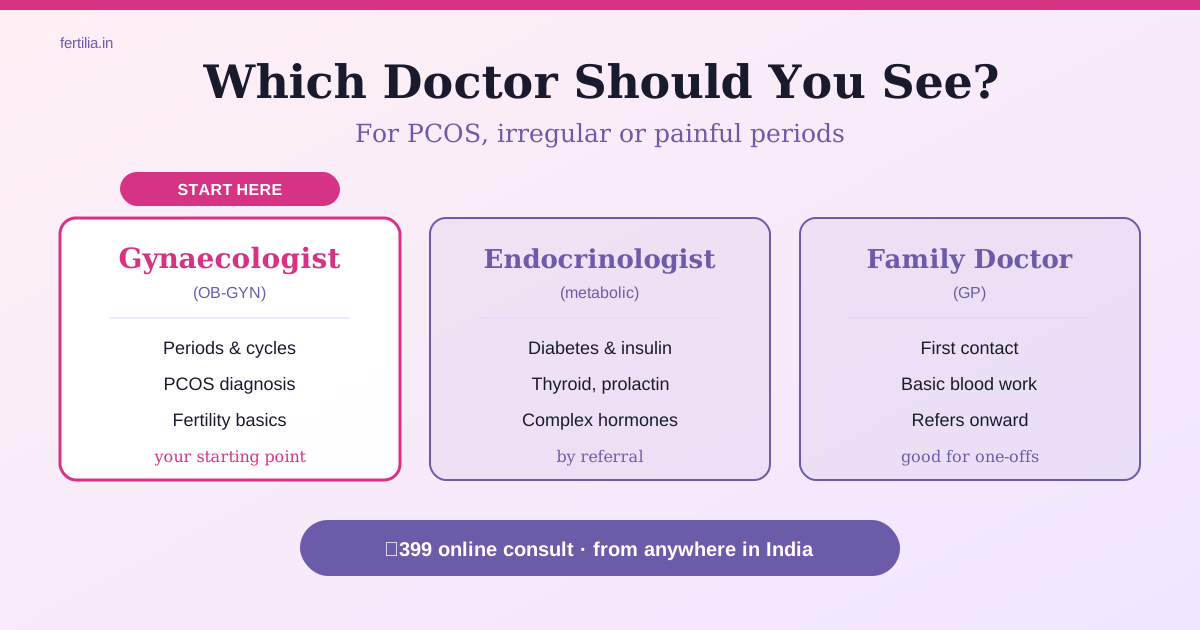
For irregular periods, missing periods, painful periods, suspected PCOS, or that vague sense that something is off with your cycle, the right first stop for almost every woman is a gynaecologist (an OB-GYN).
Here is why. Your menstrual cycle and ovarian function are precisely a gynaecologist’s domain. A gynaecologist can take a proper history, examine you, arrange a pelvic ultrasound, and order the right hormone tests in the right order. PCOS itself is diagnosed using the Rotterdam criteria, the international gold standard, which requires looking at your cycles, your androgen levels, and your ovaries together (Azziz et al., 2009). That is a gynaecological assessment.
Just as importantly, a gynaecologist knows when your situation needs an extra pair of hands. Think of them less as the only doctor you will ever see and more as the person who maps the route. If your thyroid or prolactin is off, if your blood sugar needs dedicated management, or if you are ready for advanced fertility treatment, your gynaecologist is the one who points you to the right specialist at the right time.
What each specialist actually does
It helps to know what sits behind each title, so the choices stop feeling interchangeable.
Gynaecologist (OB-GYN)
The specialist for the female reproductive system: periods, ovulation, the uterus and ovaries, contraception, pregnancy, and conditions like PCOS, endometriosis, and fibroids. For period and PCOS questions, this is your home base. A gynaecologist diagnoses PCOS, explains what is driving it in your body, starts first-line management, and coordinates the rest of your care.
General physician or family doctor (GP)
In much of India, the family doctor is the first person we tell when something feels wrong. A GP is excellent for an initial conversation, for ordering basic blood work, and for treating general health issues. For an occasional late period during a stressful month, a GP can reassure you. But for a recurring pattern, a PCOS diagnosis, or anything involving the ovaries and cycle specifically, a GP will usually refer you to a gynaecologist, because that is the more precise fit.
Reproductive endocrinologist or fertility specialist
This is a gynaecologist with extra training in fertility and reproductive hormones. If you have been trying to conceive without success, if first-line ovulation support has not worked, or if you are considering IUI, IVF, or egg freezing, this is the specialist who designs and monitors those treatments. Most women do not need to start here. You usually arrive here on referral, once a fertility plan calls for it.
Medical endocrinologist
An endocrinologist treats the body’s hormone-producing glands, including the thyroid, adrenal glands, and pancreas. For PCOS, you would see a medical endocrinologist when the metabolic side of the picture needs dedicated attention: diabetes, significant insulin resistance, a thyroid disorder, or unusually high prolactin. PCOS sits at the meeting point of the reproductive and the metabolic, which is exactly why a gynaecologist and an endocrinologist sometimes work together on the same patient.
The supporting team
The 2023 International Evidence-Based Guideline for PCOS, the most current global consensus, is clear that PCOS is best managed by a coordinated, multidisciplinary team rather than a single “PCOS doctor” (Teede et al., 2023). Depending on your symptoms, that team can also include a dermatologist (for acne, excess hair, or scalp thinning), a dietitian (for nutrition and insulin resistance), and a mental health professional (for the mood and anxiety that often travel alongside hormonal conditions). You do not assemble this team yourself. Your gynaecologist brings in each member as your needs change.
A by-symptom decision map
When you are not sure, match your situation to the row below. “Start here” is your first appointment. “You may be referred to” is who your first doctor might loop in later, if needed.
| Your situation | Start here | You may be referred to |
|---|---|---|
| Irregular or missing periods | Gynaecologist | Endocrinologist if thyroid or prolactin is abnormal |
| Suspected PCOS (irregular cycles, acne, excess hair) | Gynaecologist | Endocrinologist for diabetes or marked insulin resistance; dermatologist for skin and hair |
| Painful periods | Gynaecologist | Further imaging or specialist input if endometriosis or fibroids are suspected |
| Trying to conceive with PCOS or irregular cycles | Gynaecologist or fertility specialist | Reproductive endocrinologist if IUI or IVF is being considered |
| Already diagnosed diabetes alongside PCOS | Gynaecologist and endocrinologist together | Dietitian for coordinated nutrition support |
| An occasional late period during a stressful month | GP or gynaecologist | Gynaecologist if it becomes a recurring pattern |
The pattern is consistent: the gynaecologist is the hub, and the other specialists are spokes you reach when a specific need calls for them.
Why a referral onward is good care, not a failure
I want to gently correct a worry I hear a lot. When a gynaecologist sends you to an endocrinologist or a fertility specialist, it does not mean she could not handle your case, and it certainly does not mean anything is seriously wrong. It means she is matching the right expertise to the specific part of your picture that needs it. That is exactly what good, careful medicine looks like.
The same is true in reverse. If your family doctor refers you to a gynaecologist, that is not a delay or a runaround. It is the system working the way it is designed to, moving you toward the most precise fit. Every doctor in this chain is on your side, and each one is adding a layer rather than replacing the last. You are allowed to keep your trusted local doctor and add a specialist’s input. The two are not in competition.
Not sure which door to knock on first?
If your periods are irregular, you suspect PCOS, or you have been passed between doctors without a clear plan, you can start with a single conversation. Dr. Suganya Venkat is an OB-GYN with 15+ years of experience helping women find the root cause and a plan that actually fits their life.
₹399 online consultation · Done over video from anywhere in India · Evidence-based and personalised
You do not have to be in a big city to see the right doctor
There is a quiet assumption many women carry, especially in smaller towns: that real specialist care means either the one or two clinics nearby or a long, expensive trip to a metro for a second opinion. That assumption keeps a lot of women from getting clear answers.
It does not have to be that way anymore. Fertilia’s consultations are done online. Dr. Suganya is based in Coimbatore, but the ₹399 consultation happens over a video call, which means a woman in a small town in Tamil Nadu, a city in another state, or even an NRI abroad can sit down with the same OB-GYN and the same depth of attention, from home.
Here is the honest, collaborative version of how this fits with the care you may already have. Some things genuinely need a doctor in the room: a pelvic examination, an ultrasound scan, a blood draw, or any procedure. For those, your local gynaecologist remains essential, and we will say so plainly. What an online consultation adds is the layer that often gets squeezed out of a busy 7-minute appointment: time to actually read through your reports, explain what your diagnosis means, decide which tests you genuinely need (and which you can skip), and build a root-cause lifestyle plan around nutrition, insulin resistance, and cycle tracking that you can follow from your own kitchen. Bring your reports to both your local doctor and your online consult, and the two work together rather than against each other.
For more on this, read our guide on Infertility Doctor in India. For many women, this is the closest they can get to an experienced gynaecologist’s guidance without geography deciding their care.
How to make your first appointment count
Whether you see someone in person or online, a little preparation turns a rushed visit into a useful one.
- Track your last few cycles. Note the dates of your last three to six periods, how many days each lasted, and how heavy they were. A simple note on your phone is enough.
- List your symptoms honestly. Acne, weight changes, hair on the chin or jawline, hair thinning on the scalp, mood swings, fatigue. Things that feel embarrassing are often the most diagnostically useful.
- Carry your past reports. Any earlier blood tests, ultrasound scans, or prescriptions. They save you from repeating tests and help your doctor see the trend.
- Note your family history. Diabetes, thyroid problems, or PCOS in close relatives genuinely change how your doctor thinks.
- Write down your single biggest question. In the moment it is easy to forget. Having it written means you leave with it answered.
Frequently asked questions
Should I see a gynaecologist or an endocrinologist for PCOS? Start with a gynaecologist. PCOS is diagnosed and first managed by gynaecologists using the Rotterdam criteria, and they handle the cycle, ovarian, and fertility aspects that define the condition. You would add a medical endocrinologist when the metabolic side needs dedicated attention, such as diabetes, marked insulin resistance, or a thyroid disorder. For most women, the two specialists complement each other, and the gynaecologist coordinates the plan.
Which doctor treats irregular periods? A gynaecologist is the right first doctor for irregular or missing periods. They can identify whether the cause is PCOS, a thyroid issue, high prolactin, stress, weight change, or something else, and then either manage it or refer you to the precise specialist. If you only have an occasional late period during a stressful month, a general physician can reassure you, but a recurring pattern is worth a gynaecologist’s review.
Do I need a “PCOS specialist”? Is that a real specialty? There is no separate medical degree called “PCOS specialist”. The phrase is used informally for doctors who see a lot of PCOS, which is usually a gynaecologist or an endocrinologist with a strong interest in it. What matters is not the label but whether the doctor takes a complete view: your cycle, your hormones, your metabolism, and your lifestyle together, rather than just writing a prescription for one symptom.
Can a general physician (GP) treat PCOS or period problems? A GP is a good first point of contact and can order basic tests and offer initial advice. For a one-off issue, that may be all you need. But for diagnosing PCOS, interpreting hormone results, performing or arranging a pelvic ultrasound, and building an ongoing plan, a gynaecologist is the better fit, and most GPs will refer you to one. A referral here is the system working well, not a setback.
Which doctor should I see if I am trying to get pregnant and have PCOS? Begin with a gynaecologist, who can confirm whether you are ovulating, optimise your cycle, and start first-line fertility support. If those steps do not lead to pregnancy, or if your situation calls for it, you would move on to a reproductive endocrinologist or fertility specialist for treatments like IUI or IVF. You can read our honest Do You Need IVF decision framework to understand when that step makes sense.
Can I consult a doctor for PCOS or irregular periods online? Yes, for a great deal of it. An online consultation is well suited to reviewing your reports, explaining your diagnosis, deciding which tests you actually need, and building a lifestyle and nutrition plan. The parts that need a doctor physically present, such as a pelvic examination, an ultrasound, or a blood draw, are best done with a local doctor, and an online consult works alongside that, not instead of it. This is how Fertilia’s ₹399 consultation reaches women anywhere in India.
Which doctor should I see for very painful periods? A gynaecologist. Period pain that is severe, getting worse over time, or interfering with your daily life deserves proper evaluation rather than only painkillers, because it can point to conditions like endometriosis or fibroids that benefit from targeted care. A gynaecologist can assess the cause and arrange any imaging or further input that is needed.
Related reading
- PCOS: Symptoms, Root Causes & Natural Treatment, the complete picture of what PCOS is and what drives it
- Irregular Periods: Causes, When to Worry & What Helps, why cycles go off track and how to bring them back
- Insulin Resistance & PCOS: Signs, Diet & What to Do, the most common driver behind PCOS symptoms
- Metformin for PCOS: When You Actually Need It, where medication fits alongside lifestyle change
- Can PCOS Be Cured Naturally Without Medication?, who can manage PCOS with lifestyle alone and when medicine genuinely helps
- Thyroid & Fertility: How It Affects Conception, a common reason periods turn irregular
The right first doctor is rarely the hardest part once you know the map: for PCOS, irregular periods, or painful periods, a gynaecologist is your starting point, and a good one will bring in anyone else you need. The bigger barrier, for many women, is simply reaching that doctor without travelling far or waiting months.
If you would like a clear, unhurried conversation about what is happening with your cycle and what to do next, Dr. Suganya’s 90-day PCOS Symptom Reversal Program addresses the full picture together: nutrition, movement, insulin resistance, and the markers worth tracking. You can download the free PCOS Reversal Guide to see the approach before deciding anything, or message Dr. Suganya on WhatsApp to start the conversation.
Dr. Suganya Venkat, OB-GYN with 15+ years of clinical experience. DNB OB-GYN (GKNM, Coimbatore) · MD Pathology (CMC Vellore) · MBBS with 5 Gold Medals (SRMC).