PMDD has an awkward problem built into it. The symptoms are emotional, so a woman thinks of a psychiatrist; but they are tied to her cycle, so she thinks of a gynaecologist; and not being sure, she often sees neither, or gets bounced between the two. I have met many women who spent years stuck in exactly this gap, taking their mood symptoms to one specialist and their period to another, with nobody connecting the two.
I am a psychiatrist, and I contribute educational content to Fertilia’s blog on women’s mental and hormonal health. This post explains which door to start at, what to bring to make the visit count, and what actually happens in a first PMDD consultation, so you can walk in prepared instead of uncertain.
The short answer: either door works
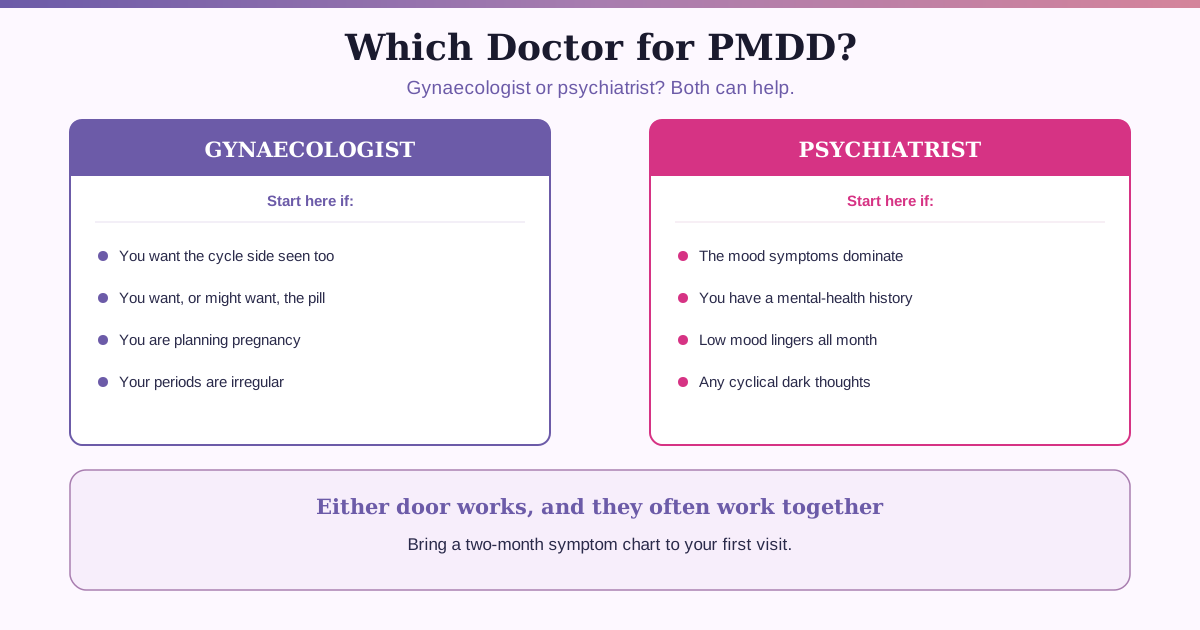
PMDD sits exactly where gynaecology and psychiatry overlap, which means both a gynaecologist and a psychiatrist can begin your assessment. A good clinician of either kind will recognise the condition, and the best care often involves both working together: the hormonal side and the mood side of the same problem, addressed in one plan. So you cannot really choose wrong here. What helps is choosing the starting door that fits your situation, so you reach the right help faster.
Start with a gynaecologist if…
A gynaecologist is a sensible first stop if:
- Your symptoms are a mix of physical and emotional, and you want the physical side, the cramps, bleeding, and cycle pattern, looked at too.
- You also want, or might want, contraception, since a particular combined pill is one of the effective PMDD treatments.
- You are trying to conceive, or planning to soon, and want your premenstrual symptoms managed with that in mind.
- Your periods are irregular or there are other gynaecological concerns alongside the mood changes, which can sometimes point toward conditions like PCOS, where mood and cycle issues travel together.
A gynaecologist can diagnose PMDD, start lifestyle measures and the pill, and refer you onward if the mood symptoms need psychiatric input.
Start with a psychiatrist if…
A psychiatrist is the better first door if:
-
The mood symptoms are the loudest part: severe irritability, depression, anxiety, or a sense of losing control every cycle.
-
You have any history of depression, anxiety, or other mental health conditions, since your premenstrual symptoms may be interacting with them.
-
Your low mood or anxiety does not fully lift after your period, which suggests an underlying condition that worsens premenstrually rather than PMDD alone, a distinction a psychiatrist is trained to make.
-
You have ever had cyclical thoughts of self-harm, which need psychiatric assessment without delay.
-
You want to consider an SSRI, which is the first-line medication for PMDD.
There is no physical examination in a psychiatric consultation. It is a conversation: the doctor takes your history, maps your pattern with you, and agrees a plan together.
Why PMDD falls between two stools, and how not to
The reason so many women go undiagnosed is that PMDD can be dismissed from both sides. Take cyclical mood symptoms to a busy clinic and you may be told it is “just PMS, everyone gets it.” Take them somewhere else and the cyclical pattern gets overlooked entirely, so you are treated for general depression with no attention to the timing that holds the key.
The way to protect yourself from both errors is the same, and it is the single most useful thing you can do before any appointment: bring evidence of the pattern. A clinician who can see, in black and white, that your symptoms switch on before your period and switch off after it cannot easily wave them away, and cannot easily miss the cyclical nature either.
What to bring: a two-month symptom chart
PMDD cannot be diagnosed from a blood test, and it should not be diagnosed from memory, because memory exaggerates the bad weeks and forgets the good ones. The standard of care is to track your symptoms forward, day by day, across at least two menstrual cycles (Craner et al., 2014, Women & Health, PMID 24512469). This is something you can, and should, start before you ever see a doctor. Our full step-by-step guide to tracking your cycle for a PMDD diagnosis covers the method, the tool to use, and how to read the pattern; here is the short version.
Here is how to do it simply:
- Every evening, rate your main symptoms on a 0 to 3 scale (none, mild, moderate, severe). Pick the ones that matter to you: irritability, low mood, anxiety, tearfulness, bloating, fatigue, whatever your pattern includes.
- Mark the days you bleed. This is the anchor that makes the pattern visible.
- Keep it up for at least two full cycles. A note on your phone is perfectly adequate; you do not need a special app, though validated tools like the Daily Record of Severity of Problems exist if you prefer structure.
- Look at the shape. The PMDD signature is symptoms that climb in the week or two before your period and clear within a few days of it starting, leaving a calm stretch after. If your symptoms never fully clear, that is important information too, and points the diagnosis elsewhere.
Walking in with two months of your own data does more than speed up the diagnosis. It changes the conversation from “I think something is wrong” to “here is the pattern,” and it is the best protection against being dismissed. If you are still unsure whether your pattern is PMS or PMDD, our guide on how to tell the two apart walks through the distinction.
What the first consultation involves
Many women delay because they imagine an uncomfortable examination or an intimidating interrogation. A PMDD consultation, especially with a psychiatrist, is neither. Typically it involves:
- Talking through your symptoms, your cycle, and how the bad days affect your life.
- Looking at your symptom chart together, if you have one.
- Ruling in or out other contributors: thyroid issues, an underlying mood or anxiety condition, the effect of any medication you take.
- Discussing the options that fit you, from lifestyle and supplements to an SSRI or the pill, and deciding the first step together.
A good consultation is not rushed and nothing is imposed. You should leave with a plan and a clear idea of what to expect over the next couple of cycles. The full range of treatments a doctor might discuss is laid out in PMDD treatment in India: what actually works.
How online consultations work for PMDD
PMDD is well suited to online care, which matters in a country where clinicians who take premenstrual mood disorders seriously are not evenly spread. A video consultation needs no physical examination, so nothing is lost by doing it from home, and a great deal is gained: access to a clinician regardless of your city, privacy, and the comfort of talking about cyclical mood symptoms from your own space rather than across a crowded clinic. Because the gynaecological and psychiatric sides of PMDD overlap, the ideal is care where both perspectives are available, so whichever door you start at, the other is within reach when your plan needs it.
When not to wait for an appointment
One situation overrides all of the above. If you are having thoughts of harming yourself or that life is not worth living, even if those thoughts only come before your period and lift afterward, please get help now rather than waiting for a scheduled visit. Speak to a doctor today, tell someone you trust, or call the free national mental health helpline KIRAN on 1800-599-0019, available around the clock. Cyclical suicidal thoughts are a recognised feature of severe PMDD, and they are treatable. Reaching out is the right call, not an overreaction.
Frequently Asked Questions
1. Should I see a gynaecologist or a psychiatrist for PMDD?
Either can help, and they often work together. Start with a gynaecologist if you want the physical and cycle side addressed too, want contraception, or are planning pregnancy. Start with a psychiatrist if the mood symptoms dominate, you have a mental health history, or you have ever had cyclical thoughts of self-harm.
2. Can a gynaecologist diagnose and treat PMDD?
Yes. A gynaecologist can diagnose PMDD using your symptom chart and history, start lifestyle measures and the drospirenone-containing pill, and refer you to a psychiatrist if the mood symptoms need that input. Many women are managed well in a gynaecology setting.
3. How do I get diagnosed with PMDD?
By tracking your symptoms forward across at least two menstrual cycles to show they cluster before your period and clear after it, combined with a clinical assessment. There is no blood test. A simple daily symptom chart you keep yourself is the core of the diagnosis.
4. How do I track my symptoms for a PMDD diagnosis?
Each evening, rate your main symptoms from 0 to 3, mark the days you bleed, and keep it up for at least two full cycles. Then look at whether the symptoms rise before your period and fall after it. A phone note works; structured tools like the Daily Record of Severity of Problems are an option if you prefer.
5. Can I treat PMDD online?
Yes. PMDD needs no physical examination to diagnose or manage, so video consultations work well, and they widen access to clinicians who treat the condition seriously. Because gynaecology and psychiatry both have a role, the ideal is care where the two work together as needed.
6. What should I bring to my first PMDD appointment?
Ideally two months of a daily symptom chart with your period days marked, a list of your symptoms and how they affect your life, details of any medications you take, and any relevant medical or mental health history. This makes the visit faster and the diagnosis clearer.
7. What if my doctor says it is just PMS?
Bring your symptom chart. If your data shows severe, disabling mood symptoms that disrupt your life every cycle, that is more than ordinary PMS and deserves a proper assessment. If you do not feel heard, it is reasonable to seek a second opinion from a clinician who treats premenstrual mood disorders.
Where to begin
The decision about which doctor to see is far less important than the decision to see one at all. PMDD is treatable, and the women who get better are simply the ones who stopped waiting and started the conversation.
Begin a symptom chart tonight, so your next two cycles speak for you, then take it to a gynaecologist or a psychiatrist. If you would like the bigger picture first, our psychiatrist’s guide to PMS and PMDD is the place to start. And if your symptoms are affecting your daily life, please seek help from a doctor.