A woman remarries at 34 and wants a child with her new husband. Another loses her only child at seven and, three years later, is ready to try again. A third simply changes her mind after the operation, for reasons that are entirely her own and don’t need defending to anyone. All three come to the same question: after a tubectomy, can the tubes be reopened, and is it worth doing?
I am Dr. Suganya Venkat, an OB-GYN with fifteen years of clinical experience, and this is a question I get asked more often in an online consultation than most people expect. Tubal ligation reversal is a real, well-studied procedure with decades of outcome data behind it. It is also not the right path for every woman who asks about it. This post walks through what the surgery involves, what it costs in India in 2026, what the actual success rates are (by age and by how the original tubectomy was done), the honest risks, and how to think about reversal against IVF as the other route back to pregnancy.
Here is what this post covers:
- What tubal ligation reversal actually is, and who typically asks about it
- 2026 cost in India, and what a quote should include
- Success rates by age and by original sterilization method, with sources
- Ectopic pregnancy risk after reversal, stated plainly
- Who is a good candidate, and who isn’t
- Reversal vs IVF, weighed honestly
- Recovery timeline and what to expect
What Tubal Ligation Reversal Is
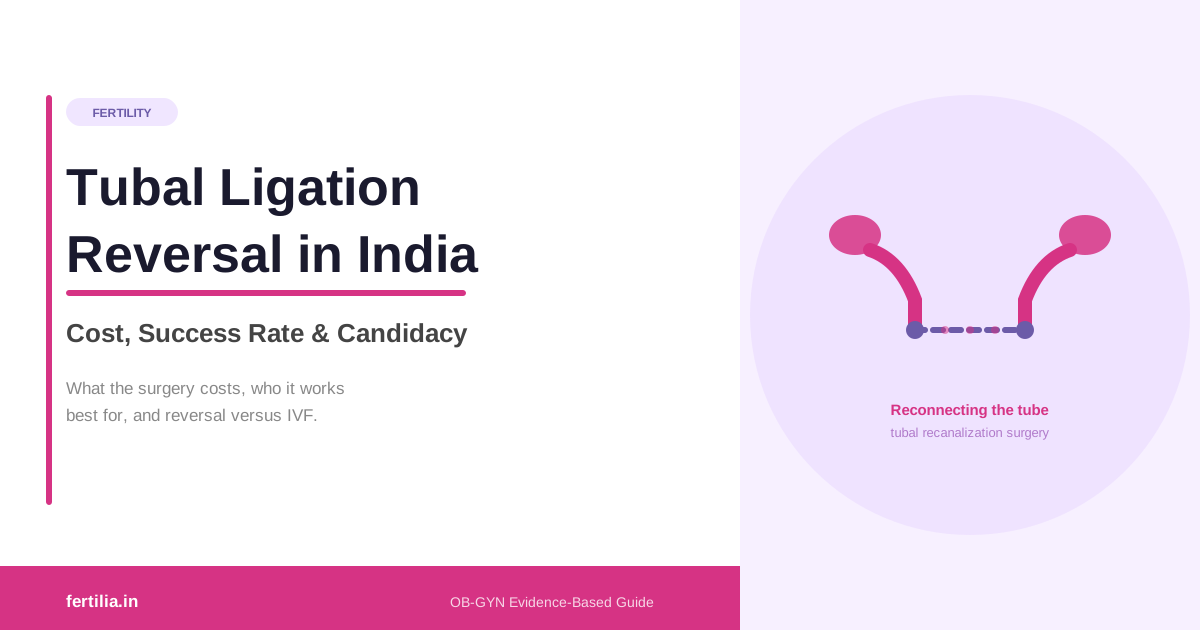
A tubectomy (tubal ligation) closes the fallopian tubes, usually by cutting and tying a segment, applying a clip or ring, or sealing the tube with cautery, so that an egg can no longer travel down to meet sperm. Reversal, medically called tubal recanalization or tubal reanastomosis, is a surgery that reopens or reconnects the tube so the natural path is restored.
It is not a simple undoing. The surgeon identifies healthy tube on either side of the blocked or removed segment, trims back scarred tissue, and rejoins the two ends under magnification, matching the inner canal (the lumen) of each side as precisely as possible so the tube can function again. This can be done laparoscopically (through small incisions) or by open microsurgery, depending on the surgeon’s approach and what the original sterilization method has left behind to work with.
At Fertilia, this comes up most often with women who are remarrying, who have lost a child and want to try again, or whose family plans have genuinely changed. None of these are unusual reasons, and none of them make the original decision to be sterilized a mistake. Family planning decisions are made with the information and circumstances available at the time. Wanting something different a few years later is not a contradiction of that.
Cost of Tubal Ligation Reversal in India (2026)
Prices vary by city, surgical approach, and what your original ligation left behind for the surgeon to reconstruct. As a realistic 2026 planning range across Indian fertility and gynaecology centres:
| Cost component | Typical range |
|---|---|
| Consultation and pre-operative assessment | ₹2,000 – ₹10,000 |
| Fertility work-up (tests, imaging, semen analysis) | ₹10,000 – ₹30,000+ |
| Recanalization surgery (surgeon, OT, anaesthesia) | ₹60,000 – ₹1,50,000 |
| Medicines, consumables, short admission, follow-up | ₹10,000 – ₹30,000+ |
| Typical all-in total | ₹80,000 – ₹1,80,000 |
Laparoscopic recanalization nationally is commonly quoted between ₹65,000 and ₹1.8 lakh. Open microsurgical reversal, more complex cases, or premium hospital settings can push the total closer to ₹2 lakh. This is meaningfully more than the original tubectomy (often ₹30,000 to ₹80,000 laparoscopic), because reversal is the technically harder of the two procedures: reconnecting a tube under magnification takes longer and demands more surgical skill than closing one.
Before you book, ask for a written, itemised quote that states clearly whether it includes:
- The surgical approach (laparoscopic or open microsurgery), anaesthesia, OT and surgeon fees
- Pre-operative tests and any assessment of tubal length or patency
- Admission duration, consumables, and medicines
- Management of adhesions, endometriosis, or hydrosalpinx if found during surgery
- Follow-up testing (an HSG or similar) to confirm the tube is open afterward
- What monitoring is planned once you conceive, given the ectopic risk discussed below
If a quote doesn’t mention most of these, ask directly. Reversal quotes without an itemised breakdown are one of the more common sources of unpleasant surprises after surgery.
Not sure whether reversal makes sense for your situation, or want help finding the original operative details from your tubectomy? Dr. Suganya can review your history over a video consultation and help you think through the options before you commit to a surgery date.
Success Rates: What the Evidence Shows
This is the part that gets flattened into a single number in most marketing pages (“50 to 80% success”). The real picture is more specific, and more useful, once you break it down by age and by how the original tubectomy was performed.
By Age at the Time of Reversal
A widely cited French cohort of 226 women who had microsurgical reversal by open laparotomy found that age was the single most significant predictor of success. Cumulative intrauterine pregnancy rates at 2 years were:
| Age at reversal | Cumulative pregnancy rate at 2 years |
|---|---|
| 33 or younger | 83.5% |
| 34 to 36 | 70.0% |
| 37 to 39 | 62.5% |
| 40 or older | 51.4% |
(Dubuisson et al., Human Reproduction, 1995, PMID 7657755.) A separate Thai cohort of 98 women found an overall pregnancy rate of 62.5%, with cumulative rates building over time (30.7% at 6 months, 39.8% at 12 months, 49.0% at 18 months, 53.7% at 24 months), and again identified age as the only significant independent predictor in their statistical model (Sreshthaputra et al., J Reconstr Microsurg, 2013, PMID 23338785). A Dutch laparoscopic series of 127 patients reported a 74% cumulative pregnancy rate at 40 months and a 59% ongoing pregnancy rate, with age again the dominant factor (Schepens et al., Human Reproduction, 2011, PMID 21115505).
The pattern across all three is consistent: reversal works, and age is the variable that moves the number most. This is the same age-related decline in fertility that applies to natural conception generally, not something specific to the reversal procedure itself.
By Original Sterilization Method
The second major factor is what kind of tubectomy was originally done, because it determines how much healthy tube the surgeon has to work with.
- Filshie or Hulka clip: Usually leaves the most reconstructable tube, because the injury is localised to a short, well-defined segment. This method generally offers the best reversal prognosis.
- Falope ring (silastic ring): Also generally favourable, similar reasoning to the clip method.
- Pomeroy method (ligation and resection, common after delivery): Intermediate results, dependent heavily on how much tube was removed and how much healthy segment remains to reconnect.
- Bipolar or monopolar cautery: Usually the least favourable starting point for reversal, because cautery tends to damage a longer stretch of tube, sometimes on both the proximal and distal sides of the closure.
If you had a tubectomy and are considering reversal, the single most useful document you can bring to that first consultation is the original operative note. It tells the surgeon exactly which method was used and roughly how much tube was affected, which shapes the entire conversation about what to expect. If you don’t have it, the hospital or clinic where the original procedure was done should be able to provide a copy on request.
Ectopic Pregnancy Risk After Reversal: Stated Plainly
This deserves its own section because it matters and because it should not be glossed over. Reversal reconnects a tube that has scar tissue at the join, and scar tissue changes how easily a fertilised egg travels through. That raises the chance that a pregnancy implants inside the tube (an ectopic pregnancy) instead of the uterus.
Published rates of ectopic pregnancy after reversal generally run around 4 to 8% of pregnancies, higher than the roughly 1 to 2% background risk in the general population. In the cohorts above specifically, the Dubuisson series reported 4 ectopic pregnancies out of the total (2% of all patients at 2 years), and the Schepens series reported 5 ectopic pregnancies among 127 patients (3.9%). This is a real risk, not a theoretical one, and it is the reason follow-up matters as much after successful reversal as the surgery itself.
What this means practically: once you conceive after reversal, an early confirmation with a blood beta-hCG test followed by a transvaginal ultrasound around 6 weeks (to confirm the pregnancy is inside the uterus) is a reasonable, evidence-based precaution, not an overreaction. If you have any sharp one-sided pelvic pain, spotting, or dizziness in early pregnancy after reversal, that is worth getting checked promptly rather than waiting it out. For a fuller walkthrough of what ectopic pregnancy looks like and how it’s diagnosed, see our guide on ectopic pregnancy signs and what to expect.
Who Is a Good Candidate for Reversal
The American Society for Reproductive Medicine’s practice committee opinion on tubal surgery (ASRM, 2021) supports microsurgical anastomosis as the recommended reversal technique and frames candidacy around a specific set of factors, not age alone.
Reversal is generally a reasonable option when:
- The original sterilization used clips or rings (more tube to work with)
- The predicted remaining healthy tubal length after reconstruction is at least around 4cm
- There are no significant pelvic adhesions, advanced endometriosis, or hydrosalpinx
- Your partner’s semen parameters are normal
- Your ovarian reserve is adequate for your age (this is worth checking with an AMH test beforehand, alongside the rest of a standard fertility work-up)
Reversal is generally a poor choice, with IVF the better path, when:
- The original tubectomy was by extensive cautery or removed a large segment, leaving very little tube to reconnect
- The predicted remaining tubal length is under about 4cm
- There is significant pelvic scarring, advanced endometriosis, or a hydrosalpinx
- There is a separate, significant male-factor infertility issue that reversal cannot address
- Age or ovarian reserve is already a limiting factor on its own, independent of the tubes
This is not a value judgement about which women “deserve” reversal. It is a technical assessment: reversal only works if there is enough healthy tube left to reconnect and a reasonable chance the reconnected tube will function. When those conditions aren’t met, recommending reversal anyway wastes time, money, and hope on a procedure with a low realistic chance of success.
Reversal vs IVF: Weighing the Two Honestly
Both are legitimate paths back to pregnancy after tubal sterilization, and the right one depends on your specific situation rather than one being universally “better.”
Reversal tends to make more sense when:
- You are under 37, with clip or ring sterilization and good remaining tubal length
- You want the option of multiple future pregnancies without repeating a fertility procedure each time
- You prefer to conceive naturally, cycle after cycle, without the medication and monitoring schedule of IVF
- Cost matters over the longer term: one surgery, potentially several pregnancies, versus paying per IVF cycle
IVF tends to make more sense when:
- Your tubectomy was by extensive cautery or resection, or the predicted tubal length is short
- You are 38 or older, where time itself carries a real cost that IVF’s higher per-cycle success and speed can help recover, in the same way we discuss with couples deciding between repeated IUI cycles and moving to IVF
- There is also male-factor infertility that IVF (particularly with ICSI) can address directly
- You want to avoid a second surgery and its recovery time altogether
There is also a cost-comparison worth doing honestly rather than assuming reversal is always cheaper. A single reversal surgery at ₹80,000 to ₹1.8 lakh, followed by natural conception, usually costs less than even one cycle of IVF in India, which runs roughly ₹1.5 lakh to ₹3.5 lakh per fresh cycle. But if reversal doesn’t lead to pregnancy within 12 to 18 months and IVF becomes necessary anyway, the total cost of both together will exceed what going straight to IVF would have cost. This is worth discussing candidly with your doctor before choosing a path, not after a year of trying.
Neither path is a fallback for the other. Fertilia works alongside whichever specialist performs the surgery, whether that’s reversal or IVF, to help with the fertility work-up, cycle monitoring where relevant, and the parts of this journey that sit outside the operating theatre.
Weighing reversal against IVF for your specific situation? Dr. Suganya can go through your original operative details, age, and ovarian reserve together and help you understand which path gives you the better realistic odds.
Chat with Dr. Suganya on WhatsApp →
Fertilia’s 90-day Fertility program supports women through the work-up, decision-making, and treatment process, whichever path you and your surgeon choose.
Recovery Timeline
Recovery depends on whether the surgery was laparoscopic or open microsurgery.
Laparoscopic reversal:
- Hospital stay: often same-day or around 1 day
- Return to light daily activity: roughly 1 to 2 weeks
- Return to strenuous exercise or heavy lifting: usually around 3 to 4 weeks, subject to your surgeon’s clearance
Open microsurgical reversal:
- Hospital stay: commonly 1 to 3 days
- Return to light daily activity: roughly 2 to 4 weeks
- Return to strenuous exercise or heavy lifting: often around 4 to 6 weeks, subject to clearance
Most surgeons ask you to wait until after your first normal period following surgery, and until they’ve confirmed healing at a follow-up visit, before actively trying to conceive. Conception can happen within the first few cycles after that, though it’s more realistic to plan for it taking several months; in the cohorts above, average time to pregnancy ranged from roughly 6 to 14 months depending on the study. If pregnancy hasn’t happened within 12 months of clearance to try, that’s a reasonable point to circle back for a fresh evaluation, sooner if you’re 35 or older.
Frequently Asked Questions
How much does tubal ligation reversal cost in India?
A realistic 2026 all-in budget is ₹80,000 to ₹1,80,000, covering consultation, fertility work-up, the surgery itself, and follow-up. Laparoscopic reversal nationally is commonly quoted between ₹65,000 and ₹1.8 lakh; open microsurgical or more complex cases can run higher. Always ask for a written, itemised quote before scheduling.
What is the success rate of tubal ligation reversal?
It depends primarily on your age and how the original tubectomy was performed. In published cohorts, cumulative pregnancy rates at 2 years range from around 83.5% for women 33 or younger to around 51.4% for women 40 or older (Dubuisson et al., 1995). Clip or ring sterilization generally reverses more successfully than extensive cautery.
Is tubal ligation reversible after many years?
Time since the original sterilization matters less than the surgical method used and how much healthy tube remains. Reversals have succeeded even a decade or more after the original tubectomy, provided there’s enough healthy tube to reconstruct.
Is tubal reversal or IVF better?
Neither is universally better. Reversal tends to suit younger women with clip or ring sterilization and good remaining tubal length who want the option of multiple future pregnancies. IVF tends to suit women with extensive tubal damage from the original procedure, additional male-factor infertility, or where age makes speed the priority.
What is the risk of ectopic pregnancy after tubal reversal?
Published rates run around 4 to 8% of pregnancies after reversal, compared to roughly 1 to 2% in the general population, because the surgical join carries some scar tissue. Early pregnancy confirmation with a blood test and ultrasound is a sensible precaution once you conceive.
Can I have more than one pregnancy after tubal reversal?
Yes. This is one of reversal’s genuine advantages over IVF: once the tube is successfully reopened, it functions for future cycles too, without needing to repeat a fertility procedure for each pregnancy, assuming no new blockage develops.
Who is not a good candidate for tubal reversal?
Women whose original tubectomy was by extensive cautery or removed a large tube segment, who have significant pelvic adhesions or advanced endometriosis, or who have a separate significant male-factor infertility issue are generally better served by IVF than by attempting reversal.
Dr. Suganya Venkat is an OB-GYN with 15+ years of clinical experience. She founded Fertilia to give every woman access to personalised, evidence-based fertility guidance through online consultations, pan-India.