A mother brings her 14-year-old daughter for a consultation. Her daughter’s periods started about a year ago, they are still irregular, and someone at a clinic mentioned PCOS as a possibility. The mother wants to know if there is something seriously wrong, what to do now, and whether her daughter’s future fertility is at risk.
For more on this, read our guide on Irregular Periods in Teenagers. This is one of the most common consultations I have with parents of teenage girls. The concern is entirely understandable, and the question deserves a careful answer, not a quick label.
PCOS (Polycystic Ovary Syndrome, also now called PMOS, or Polyendocrine Metabolic Ovarian Syndrome, since the 2026 international name update) in teenagers is real. It does occur in this age group. But it is also one of the most over-diagnosed conditions in adolescence, because irregular periods in the first year or two after periods begin are very often normal, not a sign of PCOS.
This guide is for parents who have been told their daughter might have PCOS, and for teenage girls trying to make sense of a diagnosis or a concern that was raised at a recent visit.
Why Diagnosing PCOS in Teenagers Requires Extra Care
When a girl’s first period arrives (menarche), the hormonal system that governs her menstrual cycle is not yet fully coordinated. The hypothalamic-pituitary-ovarian (HPO) axis, which is the three-part signalling chain between the brain and the ovaries that produces regular cycles in adult women, is still in the process of maturing.
For more on this, read our guide on First Period (Menarche). This maturation takes time, typically one to two years after menarche, sometimes up to three. During this window, irregular cycles are not just possible, they are expected. A teenager whose periods started a year ago and are still unpredictable in timing does not necessarily have PCOS.
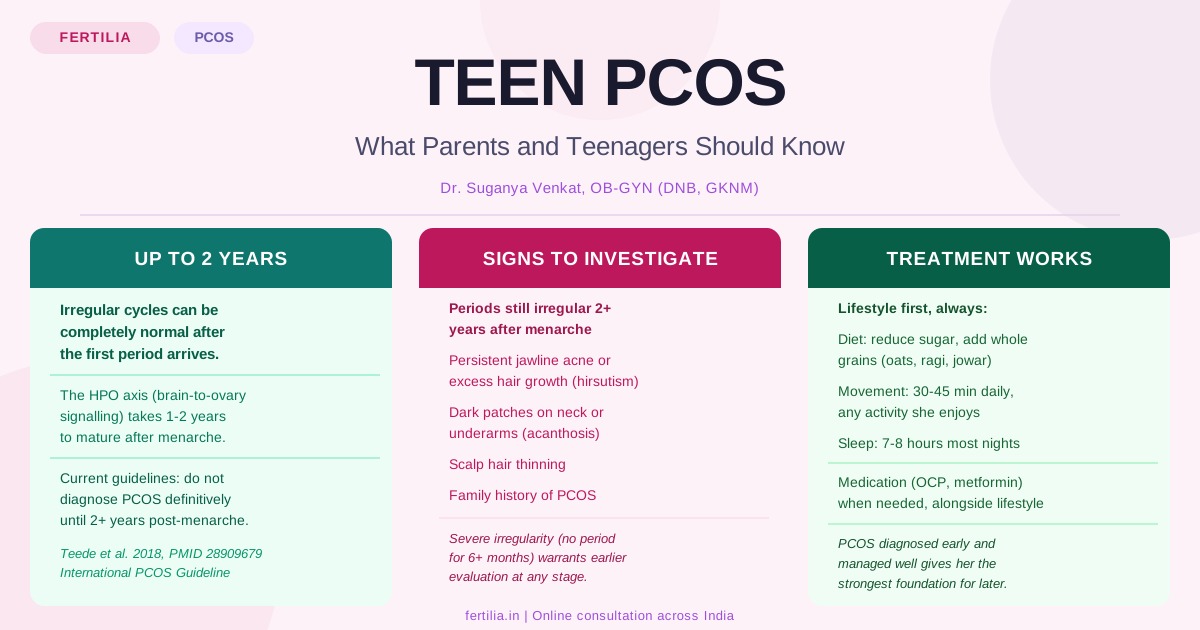
The 2018 International Evidence-Based Guideline for PCOS (Teede et al., Human Reproduction, 2018), the most comprehensive clinical consensus available on this condition, specifically recommends against making a definitive PCOS diagnosis in the first two years after menarche. The reasoning is clear: the features that raise suspicion for PCOS in adults (irregular cycles, elevated androgen levels, and a polycystic-looking ovary on ultrasound) can all appear in a completely normal, healthy adolescent during this developmental period.
What this means in practice: if your daughter’s periods started 14 months ago and are still irregular, that is not yet a reason to diagnose PCOS. It is a reason to watch, track, and see how things develop.
What Is Normal and What Is Worth Investigating
The picture changes once the cycle has had enough time to settle. Here is a practical framework.
Within the first two years of menarche: Some irregularity is expected. Cycles may vary in length, spacing, or flow. This is the HPO axis finding its rhythm, not a disease process. You can keep a cycle record and monitor, but there is no need for urgent investigation unless the irregularity is severe (no period for six or more consecutive months, or cycles shorter than 21 days repeatedly).
Two or more years after the first period, cycles are still irregular: This is when a proper evaluation makes sense. If cycles are consistently absent for more than 90 days at a time, or arriving very frequently, the window for normal variation has passed and the body needs a look.
Persistent signs of androgen excess at any stage: These can appear before the two-year mark and still warrant attention. This includes moderate to severe acne on the jawline and lower face that has not responded to standard treatment, noticeable excess hair growth on the upper lip, chin, or inner thighs (hirsutism), and significant scalp hair thinning. Mild acne and a little peach-fuzz hair growth are normal in puberty. A pronounced, persistent pattern is different.
Dark, velvety skin patches around the neck or underarms: This is a condition called acanthosis nigricans, and it is a visible sign of insulin resistance, one of the most common drivers of PCOS. You can read more about it in the guide to acanthosis nigricans and what it means. When I see this in a teenager, I take it seriously as a metabolic signal.
Family history of PCOS: If a mother, sister, or maternal aunt has PCOS, the likelihood in a daughter or sibling is higher. Family history alone is not a diagnosis, but it is reason to investigate earlier rather than waiting.
If your daughter is two or more years past menarche and has any of the above features, speaking to a gynaecologist is the right next step.
How PCOS Is Evaluated in Teenagers
If an evaluation is needed, the process in adolescents differs from what adults go through, in a few important ways.
Blood tests lead the workup. A typical panel includes testosterone (total and free), LH, FSH, anti-Mullerian hormone (AMH), fasting insulin, fasting glucose, and thyroid function (TSH). This tells us whether androgens are elevated and whether insulin resistance is present. It also helps rule out other causes of irregular periods, particularly thyroid dysfunction and elevated prolactin.
Ultrasound is not the primary diagnostic tool here. In adults, a polycystic ovarian appearance on ultrasound is one of the three Rotterdam Criteria used to establish the diagnosis. In teenagers, the same ovarian appearance is common in girls who do not have PCOS, because a maturing ovarian follicle pattern can look polycystic on imaging without being pathological. Most expert guidelines now recommend against using the ultrasound alone to diagnose PCOS in adolescents. When an ultrasound is done, age-specific reference values are used, not adult thresholds.
The diagnosis may be provisional. The 2018 International PCOS Guideline recommends labelling adolescents who have some features of PCOS but have not fully met criteria as “at risk for PCOS.” This provisional label is a deliberate clinical choice: start lifestyle interventions now, follow up over time, and re-evaluate as the cycle matures.
Other conditions are ruled out first. Before confirming PCOS, we check for congenital adrenal hyperplasia (CAH, which raises adrenal androgens and can mimic PCOS), thyroid dysfunction, and elevated prolactin, all of which can cause irregular cycles and are distinct conditions requiring different management.
What This Means for Future Fertility
The question every parent asks first: will this affect her ability to have children one day?
The short answer is that PCOS is one of the most common causes of fertility challenges in women, and also one of the most treatable. A teenager being evaluated now has significant advantages over women who encounter this diagnosis only when they are trying to conceive.
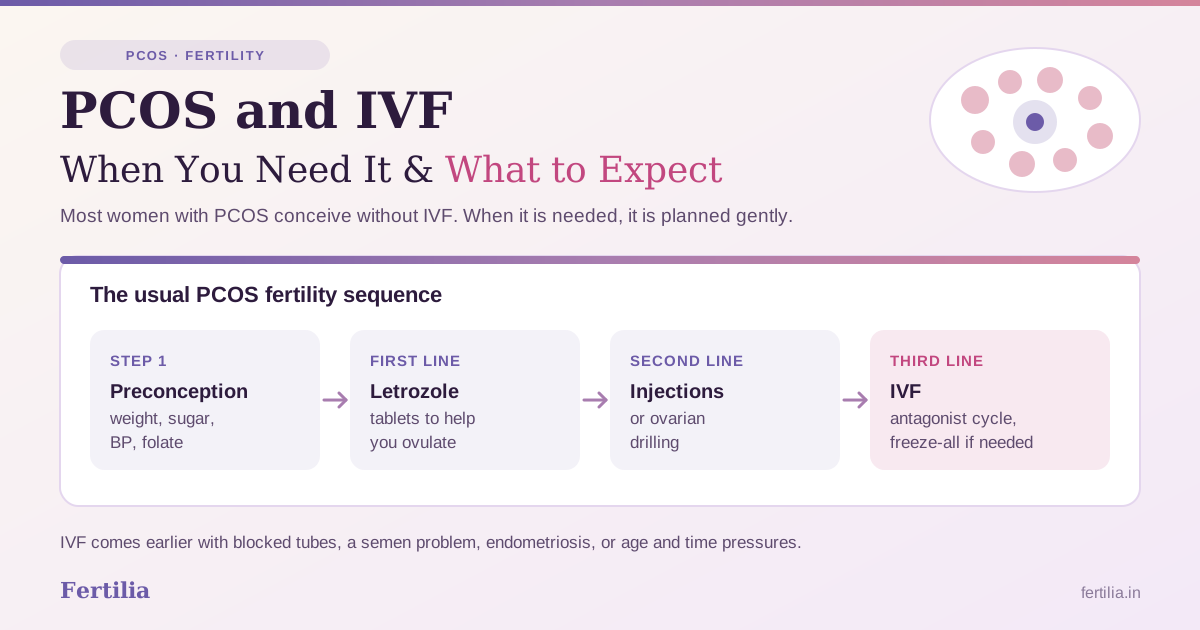
Fertility is not an immediate concern for a teenager. The relevant conversation is about managing the condition well now, so that her body is in a better position later. Women with well-managed PCOS have very reasonable outcomes. Many conceive naturally. Those who need support have effective options. You can read about what that journey looks like in the guide to PCOS and natural conception.
Managing PCOS well in these early years builds a stronger foundation for her metabolic health, skin, and cycles for the long term. Starting at 14 or 16 is a genuine head start.
What Treatment Looks Like at This Age
Management of PCOS in adolescents follows the same general approach as in adults, with lifestyle changes as the first line.
Nutrition: keeping insulin steady. Insulin resistance is present in a large proportion of women and teenagers with PCOS (Dunaif A, Endocrine Reviews, 1997), and diet has a direct effect on it. The goal is not a restrictive eating plan; it is a pattern of meals that avoids repeated blood sugar spikes through the day.
In practice, this means:
- Less refined sugar, maida-based foods, and sweetened drinks
- More fibre from whole grains: oats, ragi (finger millet), brown rice, jowar
- Protein at each meal: eggs, dal, curd, paneer, chicken or fish
- Plenty of vegetables, particularly non-starchy ones
- Regular meal timing rather than long gaps followed by large quantities
A South Indian diet with a good proportion of sambar, dal, sabzi, and curd rice is already reasonably well structured for this. The problem is when the diet shifts heavily toward biscuits, chips, sugary drinks, and skipped meals, a pattern that has become common in school-going teenagers. For a fuller guide to eating for PCOS, the PCOS diet chart for Indian women covers this in detail.
Movement: even small amounts help. Regular physical activity, even 30 to 45 minutes of brisk walking most days, improves insulin sensitivity in ways that are measurable. For a teenager, this does not have to mean a gym or a structured programme. It means finding movement she actually wants to do, whether that is dance, badminton, cycling, swimming, or walking in the evenings. The PCOS exercise guide explains what type of movement is most useful.
Sleep: it matters more than most people realise. Disrupted or insufficient sleep worsens insulin resistance and raises cortisol, which in turn raises androgens. A teenager sleeping five to six hours during exam season and catching up on weekends is in a hormonal environment that actively works against PCOS management. Getting seven to eight hours on most nights is not optional when PCOS is part of the picture.
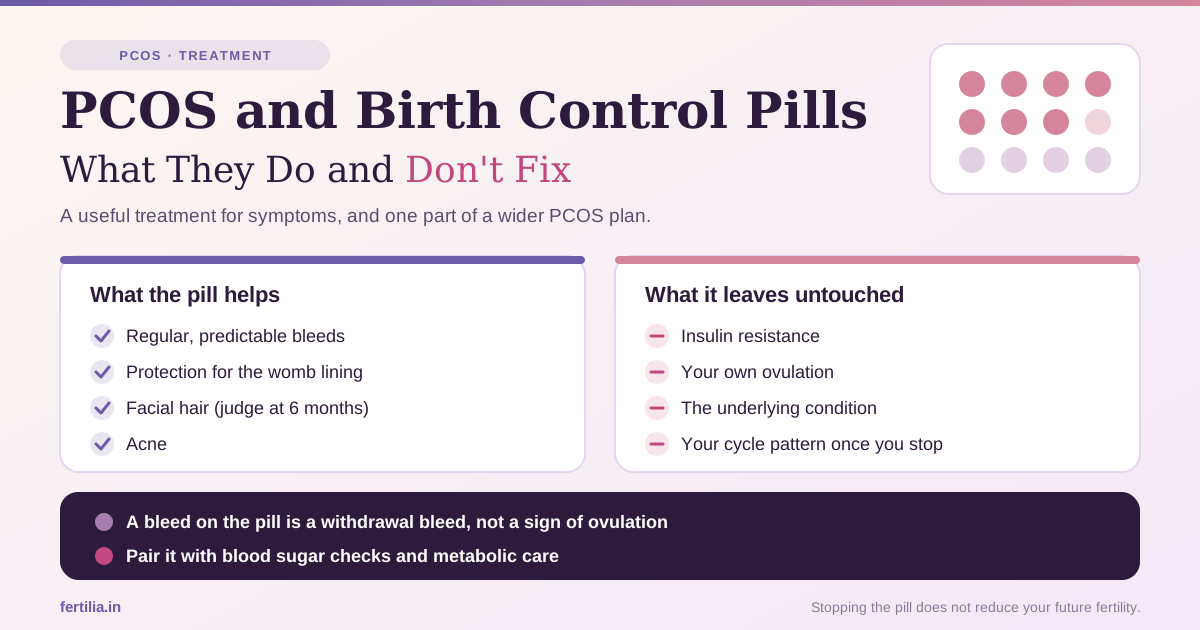
Medication when it is needed. The combined oral contraceptive pill (OCP) is sometimes used in teenagers to regulate cycles and manage acne or excess hair. It helps with symptoms but does not address the underlying metabolic drivers of PCOS. Metformin, which improves insulin sensitivity, is used in teenagers with clear insulin resistance on blood tests. Both are established treatments, and the guide to when metformin is used in PCOS explains the reasoning.
These medication decisions are made in consultation with a gynaecologist or endocrinologist, based on the individual teenager’s blood results, symptoms, and circumstances. They are not decisions to make on the basis of an article.
If you are a parent with questions about your daughter’s cycle or a PCOS evaluation she has recently had, Dr. Suganya Venkat consults with women and families across India via video call. You can reach her on WhatsApp at wa.me/919940270499 to ask about her specific situation and what next step makes sense.
What Parents Can Do Right Now
A parent’s role in this is important, and it is different from the clinician’s role.
Track her cycles, starting today. The first day of each period, recorded in a simple app or on a paper calendar, is the single most useful piece of information for any gynaecology consultation. A three to six month record tells us far more than a general memory of “irregular periods.” Many free cycle-tracking apps work well for this purpose.
Keep the conversation calm and practical. Teenagers absorb the emotional tone of the adults around them. A parent who is visibly worried makes the experience more stressful, and stress itself worsens PCOS through its effect on cortisol and androgen levels. A calm, practical framing (“we are going to track this and figure out what is happening”) is genuinely more helpful, not just for the teenager’s anxiety but for the condition itself.
Include her in the conversation with the doctor. A teenage girl should be a participant in any discussion about her own health, not talked about in the third person while sitting in the room. When she understands what her body is doing and why the lifestyle changes matter, she is far more likely to follow through with them.
Support habit changes without creating food anxiety. Reducing refined carbohydrates and increasing movement are the right directions, but imposing a rigid diet on a teenager can create its own set of problems. Gradual, sustainable change, introduced with her involvement and buy-in, works far better than a sudden overhaul.
Go to the right doctor. A gynaecologist with experience in adolescent PCOS, or a paediatric endocrinologist, is best placed to do the initial evaluation and establish a management plan. If significant acne is part of the picture, a dermatologist can be brought in alongside.
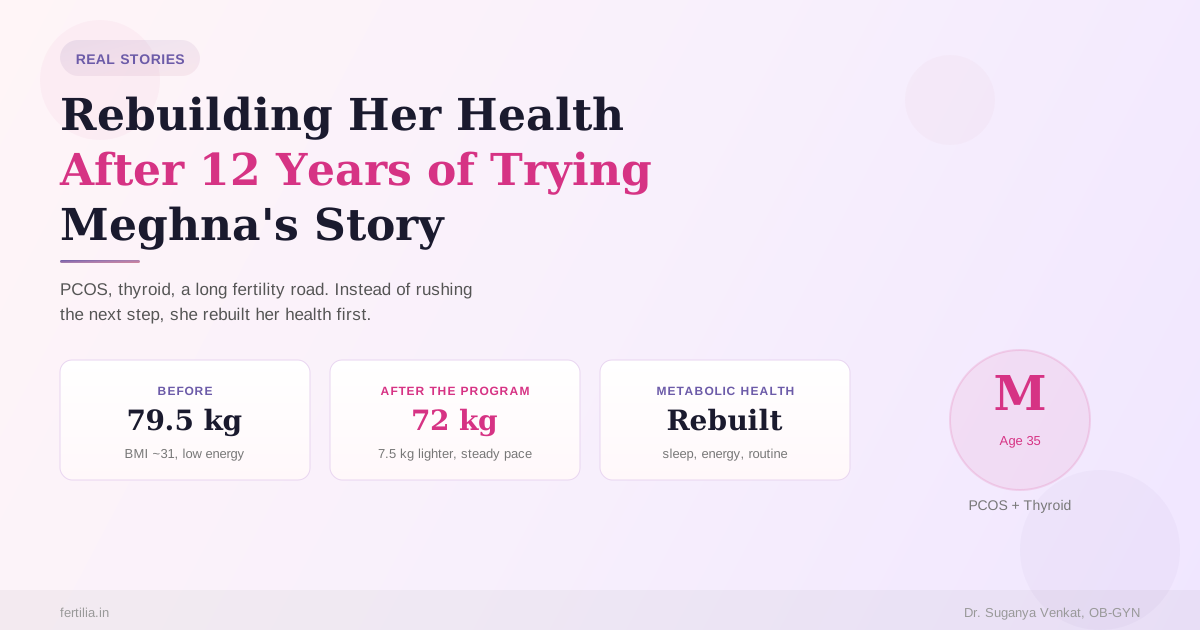
Harini came to me at 15 with her periods absent for five months and a polycystic ovarian pattern confirmed on ultrasound. It took about a year of steady lifestyle work to see consistent improvement, and no hormonal tablets were needed. Her full story, including the setbacks and where she is now, is written up here. It is a useful reference for families who want to understand what this journey looks like in real terms, not just in clinical language.
The PCOS Reversal Guide covers the full approach to managing PCOS: the drivers, the evidence, and what practical changes make the biggest difference. Comment PCOS below or on Instagram, or message Dr. Suganya on WhatsApp, to get a copy sent to you directly.
Frequently Asked Questions
At what age can a teenager be diagnosed with PCOS? There is no fixed minimum age, but the current international guideline (Teede et al., Human Reproduction, 2018) recommends not making a definitive PCOS diagnosis in the first two years after a girl’s first period. The HPO axis is still maturing during this window and irregular cycles are frequently normal. After two years, if cycles remain irregular and other features are present (elevated androgens, acne, excess hair, insulin resistance signs), a proper evaluation and diagnosis are appropriate.
My daughter’s periods started at 12 and she is now 14 with still-irregular cycles. Should I be concerned? Two years is roughly the outer edge of the normal establishment window, so this is a reasonable time to get a proper evaluation. A gynaecologist would typically do a blood panel (androgens, fasting insulin, thyroid, AMH) and take a cycle history. This is not an emergency, but it is the right moment to get a baseline assessment rather than waiting further.
Can lifestyle changes at this age actually make a difference? Consistently, yes. Insulin resistance is a central feature in many teenagers with PCOS, and the metabolic response to diet and exercise is measurable and real at this age. Teenagers who reduce refined carbohydrates, add regular movement, and improve sleep often see changes in cycle regularity within three to six months. Starting early is a genuine advantage.
Will having PCOS as a teenager mean difficulty getting pregnant later? PCOS is one of the most common causes of fertility challenges, and also one of the most treatable. Many women with PCOS conceive naturally. Those who need support have very good options available. A teenager who manages her PCOS well in these years is in a stronger position when she is ready to think about having children. This is not a reason to assume she will have fertility problems; it is a reason to manage the condition well now.
Does the pill taken to regulate her periods make PCOS worse in the long run? No. The combined oral contraceptive pill is a valid tool for managing cycle irregularity, acne, and excess hair in PCOS. It does not worsen the condition. It does not treat the underlying metabolic drivers (insulin resistance, androgen excess) either, which is why lifestyle management is important in parallel. Women who stop the pill after several years may find their cycles are still irregular, because the underlying PCOS was managed, not resolved, during that time. This is normal and expected.
Meri beti ko periods aniyamit hain, kya yeh PCOS hai? (My daughter has irregular periods, is it PCOS?) Pehle do saalon mein irregular periods aam hote hain kyunki hormonal system adjust ho raha hota hai. Agar do saal baad bhi periods aniyamit hain (अनियमित माहवारी), ya saath mein munjhe (muh ke baal), pimples, ya weight gain hai, to ek stree rog visheshagya (gynaecologist) se milna chahiye. Seedha PCOS bol dena theek nahi hoga, pehle jaanch karni chahiye.
How soon should we expect cycle changes after starting lifestyle improvements? This varies. Some teenagers notice improvement within 2 to 3 months, particularly when insulin resistance is the main driver and diet changes are consistent. For others, it takes 6 months or longer. Cycle regularity is usually the last thing to improve, after sleep, energy, and skin changes. The absence of rapid results is not a sign the approach is not working. Consistency over months, rather than dramatic changes in weeks, is what produces lasting improvement in PCOS.
If you have questions about your daughter’s situation, want to understand whether an evaluation makes sense, or are looking for guidance on what lifestyle changes to start with, Dr. Suganya Venkat is available for video consultations across India. Message her on WhatsApp at wa.me/919940270499 and she will be able to advise on next steps based on your daughter’s specific history.