A pattern I see regularly in my clinic: a woman books a consultation with classic PCOS symptoms, irregular periods, weight that is difficult to shift, excess facial hair. Her insulin levels are elevated. We start working on the drivers together. A few months in, she is doing everything right, but something is still off. Her energy is low. Her periods are not settling the way we expect. A repeat blood panel finds what we missed the first time: her TSH comes back clearly above range, and her anti-TPO antibodies are elevated.
She has both.
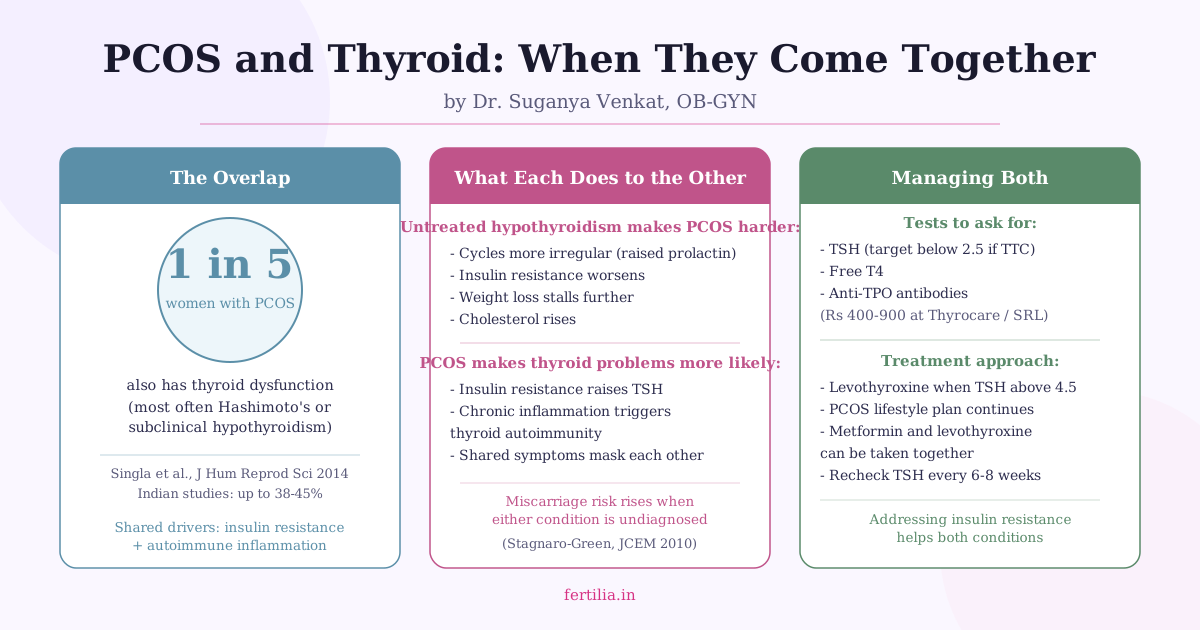
PCOS and thyroid dysfunction are the two most common hormonal conditions in Indian women of reproductive age. They are not mutually exclusive. Reported rates vary with the population studied and the diagnostic threshold used, but thyroid dysfunction is consistently more common in women with PCOS, on the order of one in five in several studies. That means nearly one in five women diagnosed with PCOS also has a thyroid problem, most often Hashimoto’s thyroiditis or hypothyroidism.
If only one is found and treated, the other keeps working against you. This post is about what the combination looks like, why it matters, and what a thorough approach covers.
How Common Is the Overlap?
The numbers are not disputed, even if they are underappreciated.
A systematic review and meta-analysis of thirteen studies (1,210 women with PCOS and 987 controls) found autoimmune thyroid disease roughly three times more common in women with PCOS than in those without (odds ratio 3.27; Romitti et al., Endocrine Connections, 2018, PMID 30352422). An odds ratio of around three lines up with the roughly one-in-five figure above. An Indian cross-sectional study from Eastern India found autoimmune thyroiditis, defined by raised anti-TPO antibodies, in 22.5% of women with PCOS compared with 1.25% of controls, alongside a higher mean TSH in the PCOS group (Sinha et al., Indian Journal of Endocrinology and Metabolism, 2013, PMID 23776908).
In India, where iodine deficiency has historically been prevalent and autoimmune thyroid disease is common, the overlap is likely at the higher end of that range.
The most common thyroid finding in PCOS women is subclinical hypothyroidism: TSH elevated (typically 4.5 to 10 mIU/L) with normal free T4. The next most common is Hashimoto’s thyroiditis: elevated anti-TPO antibodies, sometimes with a normal TSH, sometimes with subclinical hypothyroidism, sometimes with overt hypothyroidism.
Why the Two Conditions Overlap
The connection between PCOS and thyroid dysfunction is not coincidental.
Shared autoimmune terrain. PCOS is associated with a low-grade inflammatory state, and inflammation raises the risk of autoimmune conditions. Hashimoto’s thyroiditis is itself an autoimmune condition. Insulin resistance, which is present in roughly 70% of PCOS cases (Dunaif, 1997), further amplifies the inflammatory background. The same immune dysregulation that drives PCOS creates a setting where thyroid autoimmunity is more likely to develop.
Overlap in symptom presentation. This is where the diagnostic picture becomes complicated. Both conditions cause fatigue, weight gain, irregular cycles, and difficulty losing weight. Hypothyroidism specifically causes slower metabolism, constipation, and hair thinning. PCOS causes hyperandrogenism, acne, and polycystic ovaries on scan. But the shared symptoms are enough that each condition can mask or mimic the other. You can read about how PCOS presents in Indian women for a full clinical picture.
What Thyroid Dysfunction Does to PCOS
When a woman has both conditions, each affects the other. Untreated hypothyroidism makes PCOS harder to manage in specific ways.
Periods become more irregular. Thyroid hormones regulate the menstrual axis. Hypothyroidism increases prolactin secretion by raising thyrotropin-releasing hormone (TRH), which stimulates the pituitary to release both TSH and prolactin. Elevated prolactin suppresses GnRH pulsatility, disrupting LH and FSH release and making ovulation even more unpredictable than PCOS alone causes.
Insulin resistance worsens. Thyroid hormones regulate glucose metabolism and insulin sensitivity. Hypothyroidism reduces glucose uptake in peripheral tissues, compounds the insulin resistance already present in PCOS, and makes the metabolic picture harder to shift. Women with both conditions often find that lifestyle efforts that should be moving the needle feel ineffective.
Weight loss stalls. Thyroid hormones set the basal metabolic rate. Even mild hypothyroidism reduces caloric expenditure, making it substantially harder to create the energy deficit needed for weight reduction. Women with both PCOS and hypothyroidism frequently describe doing everything right and not moving. This is covered in more depth in what actually works for PCOS weight loss.
Cholesterol elevates. Hypothyroidism impairs lipid metabolism, raising LDL and triglycerides. PCOS independently raises cardiovascular risk. Together, the metabolic burden is cumulative.
What PCOS Does to Thyroid Function
The relationship is bidirectional.
Insulin resistance, one of the main drivers in PCOS, also tends to track with TSH. In my clinical experience, women with insulin-resistance-led PCOS often sit in the upper-normal TSH range (3.0 to 4.5 mIU/L) that does not technically meet the threshold for subclinical hypothyroidism, yet still leaves them feeling metabolically sluggish.
There is also evidence that the chronic inflammatory state in PCOS can trigger or accelerate thyroid autoimmunity in genetically susceptible women. Elevated interleukin-6 and TNF-alpha, both raised in PCOS, have been proposed as one mechanism by which chronic inflammation may affect thyroid hormone synthesis and contribute to thyroid autoimmunity, though this link is associative rather than proven.
How to Diagnose Both
If you have PCOS, the thyroid screen should not be an afterthought. I recommend including the following in the initial workup:
TSH (thyroid-stimulating hormone). This is the primary screening test. A value above 4.5 mIU/L on two separate readings confirms subclinical hypothyroidism. Values between 2.5 and 4.5 warrant monitoring, especially in women trying to conceive. For women already on thyroid medication and planning pregnancy, the American Thyroid Association advises a preconception TSH target under 2.5 mIU/L (American Thyroid Association 2017 Guidelines, PMID 28056690); for women not yet on treatment, whether to treat depends on TSH level and antibody status.
Free T4 (fT4). Measuring free T4 alongside TSH determines whether hypothyroidism is subclinical (normal fT4, high TSH) or overt (low fT4, high TSH). Overt hypothyroidism requires treatment. Subclinical hypothyroidism in a woman with PCOS who is trying to conceive also usually warrants treatment.
Anti-TPO antibodies (anti-thyroid peroxidase). This test identifies Hashimoto’s thyroiditis, the autoimmune condition most commonly underlying hypothyroidism in women of reproductive age. A woman with PCOS, even with a normal TSH, and elevated anti-TPO antibodies needs closer monitoring. Her thyroid is under autoimmune attack. TSH can be normal for years before hypothyroidism sets in.
Free T3. Not always required as a first-line test, but useful when symptoms of hypothyroidism persist despite a normal TSH, which can happen when conversion of T4 to the active form T3 is impaired.
At the practical level in India, this panel, including TSH, fT4, and anti-TPO, is affordable and widely available through Thyrocare, Metropolis, SRL, and similar labs. As of 2026, a basic thyroid profile (TSH with T3/T4) is inexpensive at roughly Rs 300 to Rs 600, but adding the anti-TPO antibody test raises the total to roughly Rs 1,000 to Rs 1,800 depending on the lab and city, because anti-TPO is the largest single component. See also our guide to the full fertility workup for where thyroid testing sits in the broader picture. Because PCOS and thyroid rarely act alone, both usually sit inside a wider hormonal picture that is best handled with coordinated, multidisciplinary care.
It is worth checking your thyroid sooner if you have persistent fatigue with cold intolerance, new constipation, noticeable hair thinning, a swelling at the front of the neck, or a newly confirmed early pregnancy. In these situations, you can ask for the panel before your next routine review.
If you have PCOS and have not had this panel done, or if it has been more than a year since your last thyroid check, I am happy to go through your reports with you. You can reach me on WhatsApp:
What Treatment Looks Like for Both
Thyroid treatment does not change the PCOS treatment framework. The lifestyle foundations, nutrition, movement, sleep, stress management, still apply and remain first-line for PCOS. But when hypothyroidism is confirmed, thyroid treatment runs alongside rather than replacing this.
Levothyroxine (thyroxine replacement). When TSH is above 4.5 mIU/L, or when a woman with TSH between 2.5 and 4.5 mIU/L is trying to conceive, your treating endocrinologist or gynaecologist will typically start levothyroxine (brand names include Eltroxin, Thyronorm in India). The starting dose depends on weight and degree of deficiency, and the goal is to bring TSH to a stable therapeutic level, usually under 2.5 mIU/L preconceptionally.
TSH monitoring after starting treatment. Thyroid levels need re-checking 6 to 8 weeks after any dose change. It takes this long for the body to equilibrate. Women should not adjust their levothyroxine dose based on how they feel week to week. The treating doctor re-evaluates and titrates based on the lab number.
Levothyroxine and metformin together. Many PCOS women are on metformin for insulin resistance. These two medications can be taken together. The only practical consideration is timing: levothyroxine works best when taken on an empty stomach, at least 30 to 60 minutes before breakfast. Metformin is typically taken with food to reduce gastrointestinal side effects. They do not interfere with each other when spaced appropriately.
Addressing the insulin resistance. This is where the lifestyle work directly benefits both conditions. Reducing insulin resistance through a lower glycaemic diet, regular movement, and adequate sleep improves insulin sensitivity, which in turn takes some of the metabolic pressure off the thyroid. Women with both conditions often find that their TSH naturally stabilises at a better level once insulin resistance is meaningfully addressed, sometimes allowing dose reductions over time (under their doctor’s supervision). If you want this handled in a structured way rather than piecemeal, our PCOS Symptom Reversal program works on insulin resistance and the drivers over 90 days alongside your thyroid care.
Anti-TPO positivity with normal TSH. When anti-TPO antibodies are elevated but TSH is still normal, treatment with levothyroxine is generally not started immediately. The role of thyroid management here is monitoring: TSH re-checked every 6 to 12 months, more frequently if trying to conceive. Some research suggests selenium supplementation may modestly reduce anti-TPO antibody levels over time (Ventura M et al., 2017, PMID 28255299). Dietary selenium comes from foods such as sunflower seeds and til (sesame), though the amounts studied in trials are higher than diet alone typically provides. This is a supporting, not a substituting, measure, and the treating doctor remains the decision-maker for medication.
Fertility Implications When Both Are Present
For women trying to conceive, the interaction between PCOS and thyroid dysfunction deserves particular attention. You can also read the dedicated post on how thyroid dysfunction affects conception for more on the general picture.
Thyroid and miscarriage risk. Subclinical hypothyroidism and anti-TPO positivity are both independently associated with increased miscarriage risk. In a prospective study of 984 pregnant women, euthyroid anti-TPO-positive women who were not treated had a miscarriage rate of 13.8%, compared with 2.4% in anti-TPO-negative women, and treatment with levothyroxine brought the treated group’s rate down to 3.5%, close to the antibody-negative group (Negro et al., Journal of Clinical Endocrinology & Metabolism, 2006, PMID 16621910). In women with PCOS who already have a slightly elevated risk of early pregnancy loss, an undetected thyroid disorder adds another layer of risk that is entirely addressable.
TSH target before trying to conceive. The American Thyroid Association 2017 guidelines recommend a preconceptional TSH target of under 2.5 mIU/L for women on levothyroxine who are planning pregnancy. This is a stricter target than the general therapeutic range (under 4.5 mIU/L) because thyroid hormones are critical for early foetal brain development in the first trimester, before the foetal thyroid is functional. Women with PCOS who are trying to conceive need to know this number and aim for it.
Ovulation is harder to restore when both are present. One of the primary goals in managing PCOS for fertility is restoring ovulation. When hypothyroidism is also present and untreated, the prolactin elevation from TRH suppresses the hypothalamic-pituitary-ovarian axis independently. You can address all the PCOS drivers (insulin resistance, androgens, inflammation) and still not restore regular ovulation because the thyroid problem is running interference.
Once both are treated, the fertility picture often clears. I see this regularly. A woman with PCOS and subclinical hypothyroidism who has been struggling with irregular cycles often begins ovulating more predictably within a few months of getting her TSH to target and addressing her insulin resistance simultaneously. It does not guarantee conception, and some women need additional support, but removing both obstacles at once gives the body a genuine opportunity to restore its natural rhythm.
If you have PCOS and would like to understand how your thyroid levels might be contributing to your symptoms or your fertility picture, I am available for an online consultation. A single session is Rs 399, via video call, anywhere in India. You can message me here and we will go through your reports together.
Frequently Asked Questions
Can PCOS cause thyroid problems? PCOS does not directly cause thyroid disease, but the two share common ground. The chronic low-grade inflammation and insulin resistance present in PCOS create conditions in which autoimmune thyroid disease is more likely to develop. Women with PCOS have significantly higher rates of anti-TPO antibody positivity compared to women without PCOS, which suggests an increased susceptibility to Hashimoto’s thyroiditis.
What TSH level is too high if I have PCOS and am trying to conceive? For women who are already on thyroid medication and planning pregnancy, the American Thyroid Association recommends a preconception TSH target under 2.5 mIU/L; for women not yet on treatment, whether to treat depends on TSH level and antibody status. The general “normal” range up to 4.5 mIU/L is appropriate for non-pregnant adults who are not planning pregnancy, but the preconceptional threshold is stricter because thyroid hormones play a role in early foetal development before the foetal thyroid is active.
If I am already taking metformin for PCOS, can I also take levothyroxine? Yes. The two medications are commonly prescribed together and do not interfere with each other. The practical consideration is timing: levothyroxine is best absorbed on an empty stomach, 30 to 60 minutes before the first meal, while metformin is taken with food. Take them at separate times and there is no pharmacological interaction.
My TSH is 3.8 and my doctor says it is normal. Should I be concerned? A TSH of 3.8 is within the conventional normal range. However, if you have PCOS, elevated anti-TPO antibodies, and are trying to conceive, some guidelines recommend aiming for under 2.5 mIU/L. Discuss this with your treating doctor. The preconceptional threshold is a clinical conversation, not a rigid cutoff, and depends on your full picture, including antibody status, symptoms, and conception timeline.
Do both conditions need to be treated for fertility to improve? Generally, yes. Treating only PCOS while leaving an underlying thyroid problem unaddressed leaves one of the hormonal obstacles in place. In practice, once both are identified and managed, women with PCOS and subclinical hypothyroidism often see meaningful improvement in cycle regularity and ovulatory function compared to treating either condition alone.
Will I need thyroid medication forever? This depends on the underlying cause. Hashimoto’s thyroiditis is a chronic autoimmune condition, and women with it typically need long-term thyroid hormone replacement because the gland is progressively damaged. Subclinical hypothyroidism without significant antibody elevation sometimes resolves, particularly if the contributing factors (insulin resistance, iodine deficiency, nutritional gaps) are addressed. Your endocrinologist or gynaecologist will guide the ongoing monitoring.
Can improving my diet and lifestyle lower my TSH if I have PCOS? Addressing insulin resistance through diet, movement, and sleep can reduce the metabolic stress on the thyroid and, in some cases, result in modest TSH improvement. This is most likely when TSH is mildly elevated (between 3.0 and 5.0 mIU/L) and without significant anti-TPO elevation. It is not a substitute for medication when medication is indicated, and any changes in thyroid levels should be confirmed with labs and reviewed by your treating doctor.