The positive test is a week old. The first shock has settled, and now something else is arriving: a nausea that greets you before breakfast, a fatigue that lands like a wall at three in the afternoon, and breasts so tender that pulling on a salwar kameez feels like an ordeal.
This is the second month of pregnancy. It runs from week five through week eight, counting from the first day of your last menstrual period (LMP), which is the standard way obstetricians date a pregnancy. For most women, this is when symptoms become most pronounced, and also when the most critical developmental work is happening inside the womb.
This guide covers what your baby looks like at each week of this month, which symptoms are expected and why, how to read spotting (and when bleeding needs same-day evaluation), and what to expect at your first prenatal visit.
A Quick Word on How Pregnancy Months Are Counted
In standard obstetric practice, pregnancy is counted in weeks from the first day of your last menstrual period:
- Month one: weeks one through four
- Month two: weeks five through eight
- Month three: weeks nine through twelve (the end of the first trimester)
When you tell someone you are two months pregnant, you are typically around week eight or nine. That is the window this post is written for.
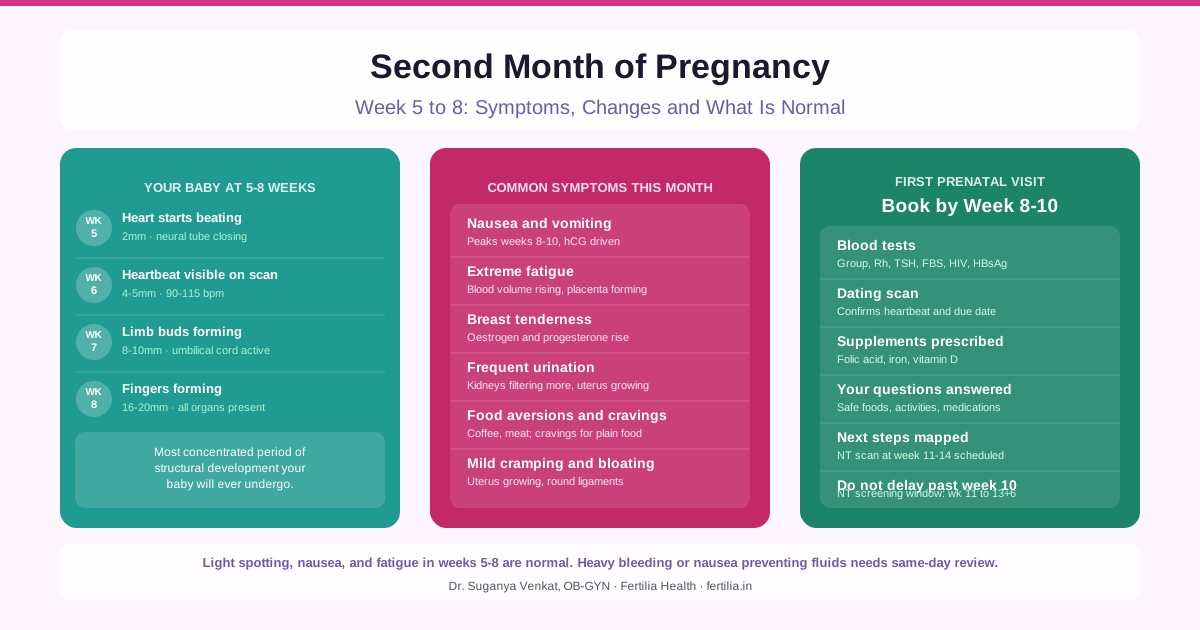
What Your Baby Looks Like at 5 to 8 Weeks
The embryo transforms remarkably during these four weeks, and understanding the timeline helps make sense of the symptoms you are feeling.
Week 5 (approximately days 29 to 35 from LMP)
The embryo is about two millimetres long, roughly the size of a sesame seed. The neural tube, which will become the brain and spinal cord, is in the process of closing this week. The embryo’s heart has begun to beat, an organised flutter around days 22 to 23 post-fertilisation. At week five of pregnancy (by LMP), this translates to approximately day 35 to 37, and the heartbeat may not yet be detectable on ultrasound.
This is also why folic acid matters so much in these early weeks. The neural tube closes between weeks five and six, and folic acid supports that process directly. See our guide on folic acid in pregnancy: when to start and how much.
Week 6 (approximately days 36 to 42 from LMP)
At week six, the embryo has grown to four to five millimetres. Cardiac activity is now typically visible on a transvaginal ultrasound: a fetal heart rate between 90 and 115 beats per minute is normal at this stage (Doubilet PM et al., SRU Consensus Statement, 2013, PMID 24106937). Small limb buds (the beginning of arms and legs) are forming. The face is starting to take shape as dark spots that will become the eyes and jaw.
This is usually when the first scan is done if you have gone in early. Read our detailed guide on what is seen on an early pregnancy scan at 6 to 8 weeks for a full explanation of what to expect.
Week 7 (approximately days 43 to 49 from LMP)
The embryo is now eight to ten millimetres, roughly the size of a blueberry. The limb buds have developed into distinct paddle-shaped structures. The brain is developing rapidly, the intestines are beginning to form, and the umbilical cord is now functioning to carry nutrients.
Week 8 (approximately days 50 to 56 from LMP)
By week eight, the embryo measures approximately 16 to 20 millimetres, about the size of a kidney bean. Fingers and toes are beginning to form. All major organ systems are present in early form. The embryo will be reclassified as a foetus at week ten, but at week eight it has already completed the most concentrated period of structural development it will ever undergo.
Symptoms in the Second Month: What Is Normal and Why
Nausea and Morning Sickness
Nausea affects 70 to 80 percent of pregnant women (Gadsby R, et al., Br J Gen Pract., 1993, PMID 8373648). It typically begins around week five or six and peaks between weeks eight and ten. The name “morning sickness” is misleading because it can strike at any hour.
The main driver is human chorionic gonadotropin (hCG), which rises sharply throughout this month. hCG levels double approximately every 48 to 72 hours in early pregnancy, peaking around weeks eight to ten (Cole LA, Expert Rev Mol Diagn, 2009, PMID 19817551). The surge of hCG signals your ovaries to keep producing progesterone, which maintains the pregnancy, but which also slows digestion and lowers the threshold for nausea.
For most women, nausea improves significantly by week 12 to 14. For detailed, India-specific remedies and guidance on when nausea needs medical attention, read our guide on morning sickness: causes, timing, and safe remedies.
Fatigue
The exhaustion of the second month is profound, and it has a clear explanation. Your blood volume is increasing. Your heart is pumping harder. Your body is producing hormones at levels it has never reached before. Progesterone, elevated throughout the first trimester, has a sedative effect. The placenta is still forming and your body is redirecting enormous amounts of energy toward it.
Rest when you can. This is not laziness; it is your body doing exactly what it should.
Breast Changes
Your breasts may feel heavier, tender at the edges, or sore to the touch. The areolas (the darker skin around the nipples) often deepen in colour and may develop small raised bumps called Montgomery tubercles, oil glands that will eventually help lubricate the nipple during breastfeeding. Both changes are driven by rising oestrogen and progesterone, and both are normal.
Frequent Urination
Most women notice more bathroom trips from around week six or seven. Two mechanisms are responsible. First, your kidneys filter blood at a significantly higher rate during pregnancy, roughly 40 to 60 percent above the pre-pregnancy baseline by the end of the first trimester. Second, your growing uterus presses on the bladder from below. This usually eases in the second trimester as the uterus rises out of the pelvic cavity, then returns in the third trimester when the baby descends.
For more on this, read our guide on Pregnancy Heartburn & Acidity.
For more on this, read our guide on Pregnancy Gas & Bloating.
Food Aversions and Cravings
Smells and flavours you previously enjoyed may become intolerable. Coffee, cooked meat, and strong spices are among the most commonly reported aversion triggers. Cravings for plain, starchy, or sour foods often emerge at the same time. Both responses are thought to be driven by hCG and by the heightened sense of smell that progesterone causes.
If you are struggling to eat, focus on whatever you can tolerate. Plain idli, thin curd rice, dry roasted murmura, or a banana with water are often better tolerated than richer foods during this period.
Mild Cramping and Bloating
Progesterone slows digestion to allow more nutrients to be absorbed, but the side effect is bloating, gas, and constipation. Mild cramping, similar in feel to period cramps, is also common in early pregnancy as the uterus grows and its round ligaments stretch. This is known as round ligament discomfort and is entirely normal.
Mood Changes and Heightened Sensitivity
Fluctuating hormone levels affect neurotransmitter activity. Emotional swings, unexplained tearfulness, or feeling overwhelmed are all reported in the second month. These feelings are real and they have a physiological basis. You are not being dramatic.
Spotting vs Bleeding: What Is Normal and What Needs Attention
Approximately 20 to 25 percent of women experience some vaginal bleeding in the first trimester (Harville EW et al., Hum Reprod, 2003). Not all of it means something is wrong. Knowing how to read it matters.
Light Spotting (Generally Normal)
Light spotting means a small amount of pink or brown discharge, not enough to fill a pad, noticed only on underwear or toilet paper. Common causes include:
Implantation bleeding: When the embryo embeds into the uterine lining, around six to twelve days after fertilisation (approximately week four to five by LMP), a brief, light spotting episode may occur. It is shorter and lighter than a period.
Cervical sensitivity: The cervix becomes more vascular during pregnancy. Light spotting after sex or an internal pelvic examination is common and does not harm the pregnancy.
Subchorionic haematoma: A small collection of blood between the placenta and the uterine wall. These are seen on ultrasound in up to 18 percent of first-trimester pregnancies. Most resolve on their own, though your doctor may recommend serial scans to monitor them.
When to Call Your Doctor the Same Day
Contact your doctor promptly if you experience:
- Bleeding heavy enough to soak a pad
- Bright red bleeding that does not reduce over a few hours
- Any bleeding accompanied by significant cramping or lower abdominal pain
- Passing tissue or clots
- Bleeding with fever, chills, or one-sided pelvic pain
These symptoms need evaluation. They do not automatically indicate miscarriage, but they warrant an ultrasound and, often, a blood hCG test. For more on what hCG levels tell us in early pregnancy, read our guide on beta hCG levels by week.
Questions about what is normal in your second month? Dr. Suganya Venkat offers first-trimester consultations via video call, pan-India. Chat on WhatsApp
Your First Prenatal Visit: When and What to Expect
Most obstetricians recommend booking your first antenatal appointment between weeks eight and ten. Going in at week six is perfectly fine if you want an early confirmation scan, or if you have a history of miscarriage, ectopic pregnancy, or a condition such as thyroid disease or PCOS.
Do not delay the first visit past week ten, because the first-trimester screening window (the NT scan and double marker test) runs from week eleven to thirteen plus six days.
What Happens at the First Visit
The first antenatal appointment is usually the longest of the pregnancy. It covers:
History taking: your last menstrual period, any past pregnancies and their outcomes, underlying medical conditions, current medications, and relevant family history.
Baseline measurements: blood pressure, weight, and height.
Blood tests: full blood count, blood group and Rh factor, thyroid function (TSH), fasting blood sugar (FBS), rubella immunity, HIV (ICTC testing, which is routine at government facilities in India), hepatitis B surface antigen (HBsAg), and VDRL for syphilis. If you have a family history of diabetes or a BMI above 30, an oral glucose tolerance test may be ordered.
Urine tests: urine microscopy, urine culture, and urine albumin.
Dating scan: confirms gestational age, checks for a fetal heartbeat, and confirms that the pregnancy is intrauterine (inside the uterus rather than in the tube). A transvaginal scan gives the clearest picture at this stage.
Supplement prescription: if you are not already on folic acid, your doctor will prescribe it now. Iron, calcium, and vitamin D may also be started, depending on your blood results.
Due date calculation: your estimated date of delivery (EDD) will be confirmed using your LMP date or the scan measurement, whichever gives the most accurate dating.
Prepare a Few Questions in Advance
It helps to bring a written list. Common useful questions:
- What supplements should I be taking, and at what dose?
- Are any of my current medications safe to continue in pregnancy?
- What activities and foods should I avoid?
- What are the signs that should prompt me to call you immediately?
- When is my next scan, and what does it check for?
- At which hospital will I deliver?
For a broader picture of what to expect across the full first trimester, read our guide on first trimester symptoms, tests, and what to expect.
Practical Steps to Support Your Body This Month
Eat small, frequent meals. An empty stomach worsens nausea. Small amounts every two to three hours, rather than three large meals, help keep hCG-driven nausea manageable. Keep dry murmura, plain crackers, or a banana within reach.
Stay hydrated, slowly. Sips of coconut water, thin chaas (buttermilk), or nimbu pani work better when nausea is high. Aim for at least two litres of fluid across the day, even if you have to take it in small amounts.
Continue folic acid. The neural tube closes around weeks five and six. Folic acid at 400 to 500 mcg per day during this window directly supports that process.
Avoid large doses of ajwain, papaya, and herbal teas marketed for “period regulation.” These have uterotonic properties and are not safe in early pregnancy. Stick to safe warming options: ginger in any form, saunf (fennel), and jeera water.
Rest is part of the work. You are not unwell. Your body is building an organ (the placenta) that did not exist three weeks ago. Treat fatigue as information, not inconvenience.
Symptoms That Need a Doctor’s Assessment This Month
Call your doctor the same day if you notice:
- Bleeding heavy enough to need a pad, or any bright red bleeding with pain
- Nausea so severe that you cannot keep fluids down for more than 24 hours (hyperemesis gravidarum is a medical condition and is treatable)
- High fever above 38 degrees Celsius
- Burning or pain with urination (urinary tract infections are more common in pregnancy and need prompt treatment)
- One-sided pelvic pain with vaginal bleeding, especially if your pregnancy has not yet been confirmed as intrauterine on a scan
Second Month Pregnancy: Questions Answered
What are the normal symptoms in the second month of pregnancy? (Dusre mahine mein pregnancy ke kya lakshan hote hain?)
The most common normal symptoms in weeks five to eight are nausea, fatigue, breast tenderness, frequent urination, food aversions, mild bloating, and mood changes. All are driven by rapidly rising hCG and progesterone. They do not indicate something is wrong; they indicate that early pregnancy is progressing.
Is it normal to have no symptoms in the second month?
Yes. Symptom intensity varies considerably between women and between pregnancies. Some women feel very little nausea or fatigue and still have entirely healthy pregnancies. Absence of symptoms is not a warning sign.
Can symptoms disappear suddenly in the second month? Should I be worried?
Natural day-to-day variation in nausea, fatigue, and breast tenderness is common, particularly in the earlier part of the second month before symptoms peak. One good day does not indicate a problem. A complete, sudden disappearance of all symptoms alongside cramping or bleeding is worth a call to your doctor, but on its own it is usually not a concern.
How much spotting is normal in the second month?
Small amounts of pink or brown spotting, not enough to fill a pad, are common in the second month. They may reflect implantation, cervical sensitivity, or a small subchorionic haematoma, all of which are benign in most cases. Bright red bleeding, heavy flow, or spotting with significant lower abdominal pain needs same-day evaluation.
Is cramping normal in the second month of pregnancy?
Mild, period-like cramping without bleeding is generally normal. It reflects the uterus growing and its round ligaments stretching. Sharp, one-sided pain or cramping alongside bleeding needs prompt assessment to rule out ectopic pregnancy if the pregnancy has not yet been confirmed on scan.
For more on this, read our guide on Round Ligament Pain. When should I schedule my first prenatal visit?
Ideally between weeks eight and ten. Week six is fine if you want an early confirmation scan or have any risk factors (prior ectopic, recurrent miscarriage, thyroid disease, PCOS). Do not delay past week ten, as the first-trimester screening window (NT scan) opens at eleven weeks.
What supplements do I need in the second month of pregnancy?
Folic acid (400 to 500 mcg daily) is the most critical supplement in the second month, particularly because the neural tube closes during weeks five and six. Iron may be added based on your blood count results. Calcium and vitamin D are typically introduced at your first antenatal visit. Your doctor will guide the specific doses based on your blood work.
Navigating your second month and not sure what is normal? Dr. Suganya Venkat consults online across India via video call. Start a conversation on WhatsApp and we can go through it together.
For the full picture of what the first trimester involves, including all the scans and tests from week one to twelve, visit the Fertilia Pregnancy Guide or read First Trimester: Symptoms, Tests and What to Expect.