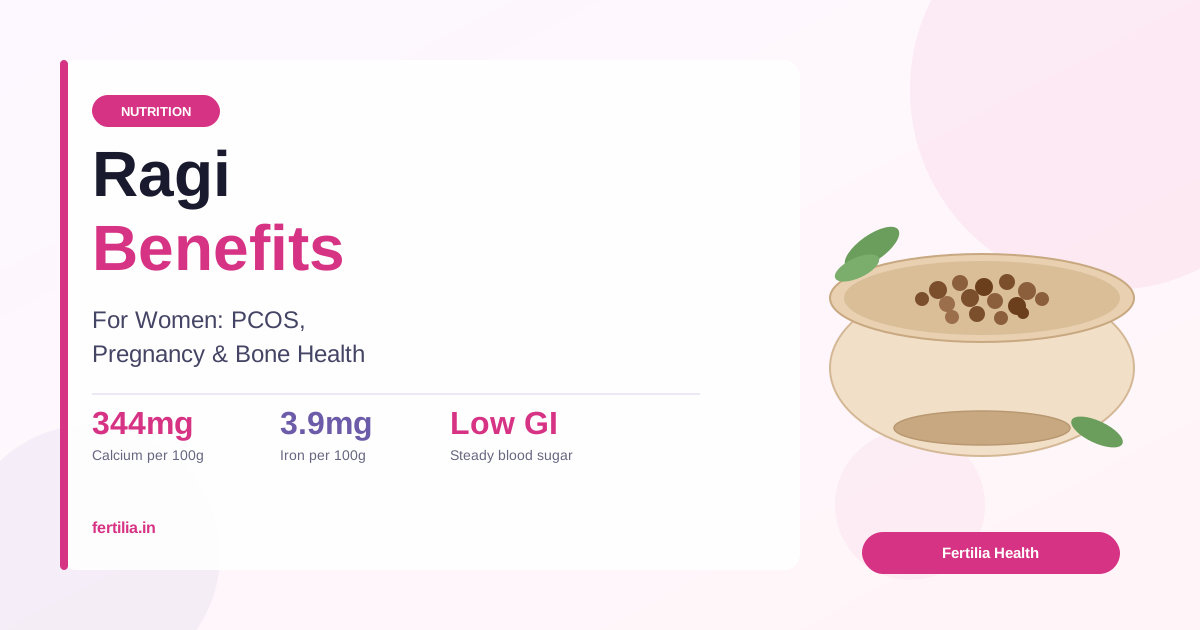
Ragi is an ordinary cooked cereal, eaten across South India through pregnancy, breastfeeding and in PCOS diets. By weight it is the most calcium-dense grain in most Indian kitchens: 364mg per 100g of raw grain, so a 40g whole-grain-equivalent flour portion works out to an estimated 146mg calcium and 1.8mg iron before anything else goes in. It is a carbohydrate food, so the portion sits inside your overall carbohydrate plan, and how it is milled, fermented and sweetened changes the blood-sugar answer more than the grain itself does.
Ragi at a Glance
| Life stage | What ragi contributes | Forms women actually use | Watch for |
|---|---|---|---|
| PCOS | Calcium and iron from a whole grain; a carbohydrate that replaces refined grains rather than adding to them | Roti from coarse flour tested lowest for blood sugar; java, idli and dosa were not GI-tested | Jaggery-sweetened java and laddoos are added-sugar preparations |
| Pregnancy | Food-based calcium toward the 1,000mg daily target (ICMR-NIN RDA 2020); iron alongside a Vitamin C source | Thin java in the first trimester, mudde, idli, roti later | Does not replace prescribed calcium or iron; ask your doctor if you have GDM or a kidney condition |
| Breastfeeding and the first 40 days | Adds to the mother’s daily calcium intake; a warm, filling meal that can be put together quickly | Ragi java with ghee, ragi laddoo | Laddoos and sweetened java carry added sugar and fat |
| General | Among the richest common Indian cereals in calcium; gluten-free; inexpensive | Any preparation | A grain, so it takes the place of other grains in the meal |
Every nutrient figure on this page uses 40g of ragi flour as the worked example, not as a prescribed dose.
Jump to: What ragi contains | For PCOS | During pregnancy | Breastfeeding | 7 recipes
What Ragi Contains
Ragi (finger millet, Eleusine coracana) is a gluten-free grain grown across Karnataka, Andhra Pradesh and Tamil Nadu, and it is among the richest common Indian cereals in calcium.
Here are the mean values for 100 grams of raw ragi grain (A010) in the ICMR-NIN Indian Food Composition Tables 2017, Tables 1 and 5, printed pages 3 and 113-114:
| Nutrient | Amount per 100g raw grain |
|---|---|
| Calcium | 364 mg |
| Iron | 4.6 mg |
| Protein | 7.2 g |
| Total Dietary Fibre | 11.2 g |
| Energy | 321 kcal |
| Phosphorus | 210 mg |
The energy figure is converted from 1,342 kJ using IFCT’s 1 kcal = 4.18 kJ. These are raw-grain values, not measured flour or cooked-porridge values. Estimates for flour assume the whole grain is retained during milling and exclude additions. Cooked volume and nutrient retention are not established by this table.
For an equal-mass comparison, IFCT lists 118mg calcium per 100g whole cow’s milk (L002), about 31mg for whole-wheat atta (A019), and 7.5mg for raw milled rice (A015). Raw ragi’s calcium concentration is about 3.1 times that of the milk. This does not compare usual portions, calcium absorption or clinical benefit.
Food-composition data tells us what the grain contains. It does not establish pregnancy, PCOS or breastfeeding outcomes.
The form you buy changes the decision
Four things labelled ragi sit on the same shop shelf, and they are not interchangeable in a diet plan:
- Whole grain, milled at home or at the local mill. Coarser particles. This is the version the flour estimates above assume.
- Packet flour. Usually finer than mill-ground flour, which matters for blood sugar (below). Packet products vary in how finely they are milled and how much of the grain is retained, so check that the label says whole ragi and nothing else.
- Ragi malt or instant mix. Germinated and processed, often sold sweetened. Check the ingredient list and pick one without added sugar.
- Fermented batter. Ragi idli and dosa batter behave like other fermented batters in the kitchen. The glycaemic tests below did not include fermented preparations, so treat them as untested rather than assumed.
Plain ragi flour and unsweetened malt are stocked by most kirana shops and supermarkets. The only label check worth making is for added sugar in malts and instant mixes.
Is ragi good for PCOS?
Ragi is a reasonable daily grain for women with PCOS, with one condition: it replaces a refined grain rather than adding to the meal, and the preparation decides how gentle it is on blood sugar. It carries 4.6mg iron and 364mg calcium per 100g of raw grain, useful minerals to be getting from food.
Blood sugar depends on how the ragi is made. Ragi is a carbohydrate food, and the glycaemic response to it is not a fixed property of the grain. In a crossover study in 11 healthy volunteers published in the Ceylon Medical Journal, finger-millet roti made with stone-ground flour had a glycaemic index of 44, while the same roti made with industrially milled flour measured 59; pittu from the two flours measured 67 and 79. Particle size was the factor that differed (Jayasinghe MA et al., Ceylon Med J, 2013, PMID 24385055). In a second set of glycaemic-index tests, decorticated finger millet and finger-millet flakes measured 84.7 and 82.3, both high, while a vermicelli and an extruded snack with added soluble fibre came in around 65 (Shobana S et al., Asia Pac J Clin Nutr, 2018, PMID 29222884).
Both measured the immediate blood-sugar response to particular foods in healthy volunteers using standard glycaemic-index protocols. Neither tested PCOS symptoms or any longer-term outcome. What they do say is useful at the shop and at the stove: stone-ground ragi roti had the lowest glycaemic index among the preparations tested, and decorticated grain and ready flakes the highest. Coarser flour produced a lower glycaemic index in one small study, and keeping the sugar out keeps the carbohydrate load of the meal down. Neither of those makes every ragi preparation low GI. Jaggery-sweetened java and laddoos are sweet preparations whose portion belongs inside your carbohydrate plan for the day.
Iron. Periods in PCOS are often irregular rather than routinely heavy, but when a bleed is heavy or prolonged, iron losses go up with it. At 4.6mg per 100g of raw grain, ragi adds to dietary iron. How much of that iron you absorb is another matter. Finger millet is high in phytic acid, which holds on to iron: in a stable-isotope study in Indian women, iron absorption from a high-phytate finger-millet accession was 1.3 percent, against 3.7 percent from a naturally low-phytate accession the researchers had selected out of a collection of 623 (Reddy BHR et al., Front Nutr, 2021, PMID 35402470). Those were research accessions rather than shop ragi, and shop ragi is the high-phytate kind. Either way, the 4.6mg on the table is not 4.6mg into your blood. Including a Vitamin C-rich food in the same meal is the practical counter, and that is what a squeeze of lime over the java or a tomato on the side is doing.
Building the plate. Ragi on its own is a carbohydrate. A ragi meal holds up better when the plate is built around it:
- Breakfast: 2 ragi idlis with sambar (the dal is the protein) and a vegetable poriyal or chutney
- Dinner: 1 ragi roti with palak dal and a vegetable sabzi, or with curd and a salad
If you are starting from zero, two or three ragi meals a week is an easy place to begin, and ragi can sit in a daily grain rotation as long as it is replacing refined grains rather than adding to the day.
For a full guide on building a PCOS-supportive diet, including specific foods to include and foods that work against you, read the PCOS Diet Chart: What to Eat and Avoid. For breakfast ideas that include ragi as a staple, the PCOS-Friendly Indian Breakfast Ideas guide has twenty practical options, and the PCOS blood sugar guide covers the dietary approach in more depth. To understand what is driving your PCOS in the first place, start with PCOS symptoms, root causes and treatment.
If you are trying to work out which grains, portions and meal patterns suit your own PCOS, thyroid or insulin numbers, that is the part worth doing with a doctor rather than from a list. Dr. Suganya consults online, pan-India, over a video call, and her team builds the food plan around your reports and what your kitchen actually cooks. WhatsApp us at +91 99402 00330 to start. Her 90-day PCOS program and her free PCOS reversal guide set out the approach before you decide anything.
Is ragi safe during pregnancy?
Ragi is an ordinary cooked cereal and is eaten right through pregnancy across South India. It is not a special-caution food, and it is not a treatment either. What it contributes is calcium and iron from the everyday plate.
Calcium. The recommended daily calcium intake for pregnant women in India is 1,000mg per day (ICMR-NIN Recommended Dietary Allowances, 2020). Using the IFCT 2017 raw-grain mean, roughly 40g of flour contributes an estimated 146mg calcium if the whole grain is retained during milling, before other ingredients. That calculation does not measure a cooked cup or quantify cooking losses. Ragi adds to your calcium intake alongside prescribed supplementation; it does not replace it.
Iron. Anaemia in pregnancy is common in India: 52.2 percent of pregnant women aged 15 to 49 were anaemic (haemoglobin under 11.0 g/dl) in the National Family Health Survey 2019-21, Table 10.23.1. Ragi’s iron, eaten with a Vitamin C source at the same meal, adds to dietary iron in a food-based way. This complements prescribed iron tablets rather than substituting for them.
Which preparation, when. Some women find thin ragi java (40g flour cooked in water or thin milk) easier to keep down when first-trimester nausea makes heavier food difficult. Mudde, idli, dosa and roti are straightforward additions later on as appetite returns.
Where your plan may differ. Ragi is a carbohydrate, so if you have gestational diabetes, are on a prescribed carbohydrate or renal diet, or have been advised a low-phosphorus diet for kidney-related reasons, your portions come from your treating team rather than from a general article.
For a complete trimester-by-trimester guide on what to eat during pregnancy, including specific food recommendations for each stage, see What to Eat During Pregnancy: Indian Diet Guide.
Ragi for Postpartum and Breastfeeding Mothers
The postpartum weeks are the ones where a mother’s own meals get skipped. Ragi earns its place in South Indian postpartum kitchens partly on nutrition and partly on logistics: java can be cooked in five minutes with one hand, and a laddoo can be eaten standing up.
Calcium intake. Ragi contributes to the mother’s daily calcium intake from food. A 40g flour portion gives an estimated 146mg on the whole-grain-retained assumption, before other ingredients. Whether you need more than your diet provides, and whether that means a supplement, is a question for your own doctor.
A meal you will actually eat. Ragi java cooked with ghee and dried ginger is the traditional version, and ragi laddoos (ragi flour, ghee, jaggery, cardamom) are calorie-dense and keep for days. Both are worth having in the house. Both also carry the sugar and fat you add to them, so they sit alongside meals rather than replacing them.
Ragi is not an established galactagogue. It is food that makes it easier to eat properly during a stretch when eating properly is hard.
For the full picture of the first 40 days after delivery, including what to eat, what to rest from, and how the body recovers, read the After Delivery Care: 40-Day Recovery Guide. For breastfeeding nutrition specifically, the Breastfeeding Diet: What Indian Mothers Should Eat covers daily meal planning in detail.
How to Eat Ragi: 7 Practical Indian Ways
Quantities below are ingredient amounts, not analysed nutrient values for the finished dish. What the cooked plate contains depends on the rest of the recipe.
1. Ragi Java (Porridge) Mix ragi flour with water, cook on low heat while stirring continuously to prevent lumps, and season with a pinch of salt. For a sweet version, add jaggery and a small spoon of ghee, and count that sweetness in your day.
2. Ragi Idli Replace 30 to 40 percent of the rice in idli batter with ragi flour or soaked ragi grains. The idlis come out slightly darker and denser, with a mild, earthy flavour. They pair well with sambar and coconut chutney.
3. Ragi Dosa Mix ragi flour with a small amount of rice flour, thin it with water, and make dosas on a hot tawa. Crisp-edged, slightly nutty, and an easy weekday breakfast.
4. Ragi Mudde A staple in Karnataka. Cook ragi flour in boiling water and shape the dough into smooth balls while hot. Traditionally eaten with saaru or sambar. Dense and filling.
5. Ragi Laddoo Dry-roast ragi flour in a little ghee until it smells nutty, mix with powdered jaggery and cardamom, then roll into balls. A classic postpartum food. It is a sweet, so treat it as one. Keeps in an airtight box for five to seven days.
6. Ragi Upma Use ragi flour in place of semolina. Temper with mustard seeds, curry leaves, green chilli and onion, then add the flour gradually with water, stirring continuously.
7. Ragi Roti Mix ragi flour with warm water and a pinch of salt to form a stiff dough. Pat or roll into thick rotis and cook on a dry tawa over medium heat. Coarser, mill-ground flour is the version that tested best for blood sugar. Pairs with dal, any vegetable curry, or coconut chutney.
Ragi is always eaten cooked. Traditional soaking and sprouting of the grain before milling are done partly to work on the phytic acid, the same lever the Vitamin C at the meal pulls, though how much difference the home version makes is not quantified.
FAQ
Is ragi safe during pregnancy? Yes, as an ordinary cooked grain. Assuming the whole grain is retained in flour, 40g contributes an estimated 146mg calcium before additions, using IFCT 2017 raw-grain values. This does not measure the calcium in a cooked cup. It complements prescribed supplements and does not replace them. If you have gestational diabetes, a kidney condition, or a prescribed diet, your portions come from your treating doctor.
Can ragi cause miscarriage? Ragi is an ordinary grain and is not generally restricted in pregnancy. It is a whole-grain cereal eaten routinely through pregnancy across South India. If you have bleeding or pain, that needs your doctor rather than a change of cereal.
Does ragi really have more calcium than milk? By equal mass, yes. IFCT 2017 lists 364mg calcium per 100g raw ragi grain and 118mg per 100g whole cow’s milk, a concentration ratio of about 3.1. This is not a comparison of usual servings or calcium absorption. A bowl of cooked porridge contains water and may include other ingredients; its calcium depends on those amounts.
Is ragi low glycaemic index? It depends on the preparation, and the range is wide. Tested finger-millet foods have ranged from a glycaemic index of 44 for roti made with stone-ground flour up to about 85 for decorticated grain (Jayasinghe MA et al., Ceylon Med J, 2013, PMID 24385055; Shobana S et al., Asia Pac J Clin Nutr, 2018, PMID 29222884). Coarser flour, a savoury preparation and a sensible portion are what keep it at the gentler end.
How much ragi can I eat if I have PCOS? There is no official daily amount for ragi. A practical pattern is two or three ragi meals a week to start, building to daily if it suits you, with ragi replacing a refined grain rather than adding to the meal. The 40g flour figure used for the calculations on this page is a worked example, not a prescription, and the cooked volume or number of rotis it makes depends on the recipe.
Is ragi or oats better for PCOS? Both work, and they are good at different things. Ragi is much higher in calcium; oats carry more soluble fibre. For women who eat little dairy, ragi’s calcium is the practical advantage. Both can sit in the same week’s meals.
What is the difference between ragi flour, ragi grain and ragi malt? Ragi grain is the whole unprocessed seed. Ragi flour is that grain milled, and it is what most recipes use. If the whole grain goes in and nothing is sieved out, the flour is the same grain; where flours differ is in what the miller removes and how fine the grind is, and neither is printed on the packet. That is the argument for buying from a mill you know, or a packet that lists whole ragi and nothing else. Ragi malt is germinated and further processed, often sold as an instant powder, and it frequently contains added sugar, so read the label.
Can ragi support breastfeeding? Ragi is a traditional food for nursing mothers across South India, usually as java and laddoos, and it adds to the mother’s daily calcium and energy intake. It is not a clinically established galactagogue, and milk supply concerns are worth raising with a lactation professional rather than managing through diet alone.
Other Indian foods worth exploring
- Jowar Roti: Nutrition, Pregnancy Guide and Recipes (another high-protein, gluten-free millet)
- Flaxseeds for PCOS: Daily Dose and Recipes (pair with ragi java for extra omega-3)
- Til (Sesame Seeds): Safety and Benefits in Pregnancy (another calcium-rich Indian staple)
- Iron-Rich Indian Foods for Pregnancy (complete guide with daily meal plan)
If you want the portions worked out against your own reports rather than a general range, message Dr. Suganya’s team on WhatsApp. Consultations are online, pan-India.