In every Indian kitchen where halwa is made, there is usually a small container of magaz somewhere nearby. The dried, roasted kernels from inside the watermelon. They go into barfi as a garnish, into thandai as a base, and into the glass jar of mixed seeds that many women keep on the kitchen counter.
Most people scatter them without much thought. But if you look at the numbers, magaz is one of the more nutrient-dense seeds available in an Indian kitchen, particularly for protein and magnesium. A tablespoon gives you roughly 2.8g of protein and about 50mg of magnesium before you have added anything else to the meal.
This guide covers what is in these seeds, how to prepare them at home, what a sensible daily portion looks like across different life stages, five Indian ways to use them in cooking, and how to buy and store them well.
What Is Magaz?
Magaz is the dried inner kernel of the watermelon seed. The name comes from an Urdu-Hindi word for kernel or brain, and it refers specifically to the flesh inside the black outer shell, not the shell itself.
In Indian cooking, magaz refers to a particular form: the seeds are collected, dried, and lightly roasted, then used as a garnish on sweets, as a base ingredient in thandai, and as a snack in their own right. The black outer shell may or may not be present depending on how they are sold at the shop. When a recipe calls for magaz, it almost always means the shelled, roasted inner kernel.
Regional Names for Watermelon Seeds
Watermelon seeds are known by different names depending on the language and region.
| Language | Name | Notes |
|---|---|---|
| Hindi (general) | tarbooz ke beej | Refers to the whole seed, shell included |
| Hindi or Urdu (roasted kernel) | magaz | Specifically the dried inner kernel used in cooking |
| Marathi | kalingad beej | Kalingad = watermelon |
| Bengali | tormuj er bij | Tormuj = watermelon |
| Gujarati | tarbooch na beej | Tarbooch = watermelon |
| Tamil | tharboosani vithai | Literal translation (Roman only) |
| Telugu | puccha ginja | Common transliteration; confirm with a Telugu speaker |
When a thandai recipe or a mithai recipe calls for magaz, it means the shelled, roasted form from a dry-fruit shop. When someone says tarbooz ke beej in everyday conversation, it usually refers to the whole seed with the shell on.
Nutritional Breakdown (USDA FDC ID 170184)
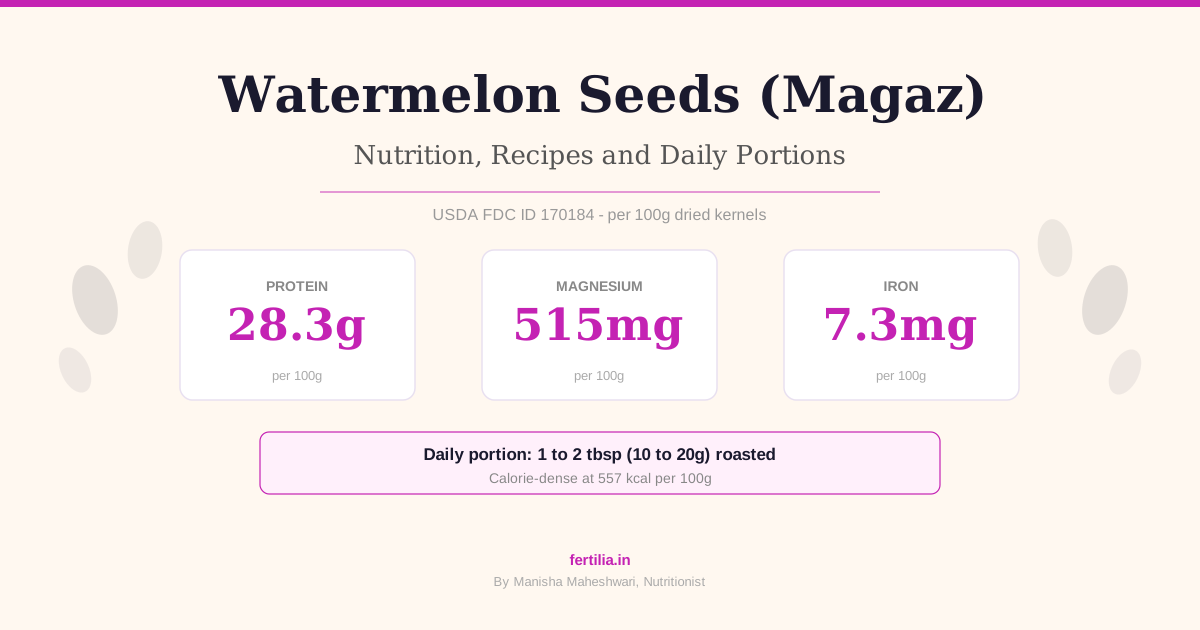
Source: USDA FoodData Central, ID 170184 (Seeds, watermelon seed kernels, dried). All figures are per 100g of dried kernels.
| Nutrient | Per 100g | Per 1 tbsp (approx. 10g) |
|---|---|---|
| Energy | 557 kcal | 55.7 kcal |
| Protein | 28.3g | 2.8g |
| Total Fat | 47.4g | 4.7g |
| Carbohydrate | 15.3g | 1.5g |
| Dietary Fibre | 0.5g | 0.05g |
| Calcium | 54mg | 5.4mg |
| Iron | 7.3mg | 0.73mg |
| Magnesium | 515mg | 51.5mg |
| Zinc | 10.2mg | 1.02mg |
A few things stand out from this profile.
Protein at 28.3g per 100g is comparable to most dals and nuts. Per tablespoon you get about 2.8g of protein, which adds up meaningfully when eaten daily.
Magnesium at 515mg per 100g is exceptionally high. One tablespoon of magaz gives roughly 51.5mg of magnesium, which is about 14 to 17 percent of a woman’s daily requirement (310 to 360mg per day, ICMR-NIN 2020). For comparison, ragi provides around 137mg of magnesium per 100g. Magaz is nearly four times richer per gram.
Iron at 7.3mg per 100g is meaningful for a snack-sized food. One tablespoon contributes about 0.73mg, modest but consistent if eaten daily.
Fat and calories are the reason portion size matters here. At 47.4g fat and 557 kcal per 100g, a two-tablespoon serving (20g) adds about 111 kcal. That is fine as part of a balanced diet, but these are calorie-dense enough that a large handful can add up quickly without feeling like much.
Zinc at 10.2mg per 100g is also notable. Zinc is involved in wound healing, skin repair, and immune function, all of which are relevant during the postpartum period.
For a broader look at how seeds like magaz fit into a PCOS-supportive diet, see our high-fibre Indian foods guide for PCOS.
How to Prepare Magaz at Home
You do not need to buy magaz from a shop. If you regularly eat watermelon, you can prepare your own batch with a few days of drying and a quick roasting session.
Step 1: Collect and rinse. After eating the watermelon, collect the seeds from the flesh. Rinse them well under running water to remove any fruit pulp. There is no need to peel or shell them at this stage.
Step 2: Sun-dry. Spread the seeds in a single layer on a clean plate or tray. Leave them to dry in the sun for two to three days, flipping once a day. A warm kitchen counter away from moisture works too if you do not have direct sunlight. The seeds are ready when they feel fully dry and no longer soft.
Step 3: Roast. Place the dried seeds in a dry kadai or flat pan over a low flame. Stir constantly for 5 to 7 minutes. The seeds are done when they smell mildly nutty and look slightly golden at the edges. Do not increase the flame; magaz burns quickly. Alternatively, roast in an oven at 180 degrees Celsius for 8 to 10 minutes, stirring once halfway.
Step 4: Shell (optional). The black outer shell is edible, so you can eat whole roasted seeds without shelling them. If you want clean magaz kernels for use in thandai or chutney, crack the shells gently (a rolling pin works) and pick out the inner kernels. This takes time and is why most people buy ready-shelled magaz for cooking.
Let cool before storing or eating.
Daily Portions by Life Stage
Because magaz is calorie-dense, portion size matters more here than with lighter seeds such as sabja (chia). These are general food guidance figures; follow your nutritionist or doctor’s specific advice if you have particular health requirements.
| Life Stage | Daily Portion | Notes |
|---|---|---|
| General (adult women) | 1 tbsp (10g) | As part of a mixed-seed snack or garnish on meals |
| PCOS | 1 to 2 tbsp (10 to 20g) | Good snack between meals; lower in carbohydrates, higher in protein than most packaged snacks |
| Pregnancy (first trimester) | 1 tbsp | Introduce gradually; stick to dry-roasted, not fried versions |
| Pregnancy (second and third trimester) | 1 to 2 tbsp | Useful contribution of magnesium and iron as a daily snack |
| Postpartum (week 1 onward) | 1 to 2 tbsp | Easy to add to thandai or ladoo; zinc content is relevant in recovery |
| GDM (gestational diabetes) | 1 tbsp | Low carbohydrate relative to most snacks; discuss with your dietitian for your overall plan |
A tablespoon of whole roasted seeds (with shell) weighs about 10 to 12 grams. A tablespoon of shelled magaz kernels weighs about 8 to 10 grams. For cooking and garnishing purposes this small difference is not significant.
For a broader list of Indian foods that support fertility and pregnancy, see our fertility foods Indian diet list.
If you are unsure how to build seeds and nutrient-dense foods into your daily eating plan for PCOS, pregnancy, or postpartum recovery, a short online consultation can help.
WhatsApp us at wa.me/919940200330 to book a Rs.399 video consultation with our nutritionist team.
5 Indian Ways to Use Watermelon Seeds
1. Dry-Roasted Masala Magaz (Daily Snack)
The simplest and most common use. Dry-roast 2 tablespoons of magaz in a dry kadai on a low flame for 5 to 7 minutes, stirring throughout. While still warm, toss with a small pinch of sendha namak (rock salt), a pinch of roasted jeera powder, and a tiny pinch of red chilli powder if you like heat. Let cool and eat as a snack, or store in a small jar for the week.
Works well as an afternoon snack between lunch and dinner, particularly when hunger arrives but a full meal feels like too much.
2. Magaz Thandai (Cooling Drink)
Thandai is a chilled spiced milk drink made with a paste of magaz, almonds, and spices. It is popular during summers in Maharashtra, Rajasthan, and Uttar Pradesh.
Soak 1 tablespoon of magaz and 6 to 8 almonds overnight in a cup of water. In the morning, drain and blend to a smooth paste with a small amount of fresh water. Mix the paste into 250ml cold milk. Sweeten lightly with a teaspoon of jaggery or sugar. Add a pinch of cardamom powder and a few dried rose petals if you have them. Stir well and drink cold.
Best made fresh and consumed the same day.
3. Magaz Chutney
Blend 2 tablespoons of roasted magaz with a small piece of fresh coconut (2 to 3 tablespoons grated), one green chilli, a thin slice of ginger, a handful of fresh coriander leaves, a squeeze of lime juice, and salt to taste. Add a few tablespoons of water to reach the right consistency. Adjust lime and chilli to your preference.
Serve with idli, dosa, or as a side condiment with a simple dal-rice meal. Keeps in the fridge for two to three days.
4. Magaz as a Garnish on Halwa or Kheer
The most traditional use in North Indian cooking: a small spoonful of magaz scattered over warm atta halwa, suji halwa, or rice kheer just before serving. The seeds add a gentle crunch and a mild nuttiness that contrasts well with the sweetness of the dish.
Use about 1 teaspoon per serving. It is a small quantity but adds meaningful nutrients when repeated across weeks.
5. Mixed-Seed Daily Jar
Combine roasted magaz with other seeds you already use regularly: roasted sunflower seeds, pumpkin seeds (kaddu ke beej), alsi (flaxseeds), and til (sesame seeds). Keep a small jar on your kitchen counter. Add one heaped tablespoon to any meal where it fits naturally: stirred into dahi, kneaded into roti dough, scattered on top of upma or poha, or eaten alongside a piece of fruit.
The jar method works well because it turns seeds into a habit rather than a separate decision. For details on pumpkin seeds specifically, including their nutritional profile and pregnancy portions, see our pumpkin seeds post.
Buying and Storage Guide
What to look for:
- Whole roasted magaz is available at Indian dry-fruit shops, supermarkets with a bulk foods or dry-fruit aisle, and online (search “magaz seeds” or “roasted watermelon seeds”). The kernels should be cream to pale golden in colour.
- Avoid seeds that are dark brown, have an off smell, feel limp rather than firm, or have visible clumping.
- If buying from an open-air counter, look for seeds kept in a clean, covered container. Avoid open bins in dusty or humid conditions.
- You can also buy whole black-shelled watermelon seeds from local shops and roast them with the shell on. Eating the shell is safe; it just makes precise portioning harder.
Storage:
- Roasted magaz keeps well in an airtight glass or steel jar at room temperature for up to three months.
- In humid climates or coastal cities, store in the fridge to prevent the natural fats from going rancid. Refrigerated magaz keeps for up to six months.
- Freshness check: smell the seeds before eating. Fresh magaz has a mild, nutty aroma. Rancid seeds smell noticeably sharp or paint-like. Discard if in doubt.
For a full guide to which seeds and dry fruits work well across pregnancy, see our dry fruits during pregnancy guide.
Frequently Asked Questions
How much protein is in 100 grams of watermelon seeds? Dried watermelon seed kernels (magaz) carry roughly 28 grams of protein per 100 grams, which is high for a seed and close to pumpkin seeds. The portion you actually eat matters more, though: a tablespoon of magaz is about 8 to 10 grams, giving you roughly 2.5 to 3 grams of protein, so it works as a handy plant-protein topping rather than a full protein source on its own. The kernels also bring magnesium, iron and healthy fats.
What is magaz and how is it different from regular watermelon seeds? Magaz is the inner kernel of the watermelon seed, separated from the black outer shell. Regular watermelon seeds include the black shell. Magaz is the form most commonly sold in Indian dry-fruit shops and used in thandai, ladoo, and as a garnish. Nutritionally they are the same food; magaz is just more convenient to measure and use in recipes.
How much magaz can I eat per day? A sensible daily amount is 1 to 2 tablespoons (10 to 20 grams) of roasted magaz. More than this adds significant calories without a proportional nutrient benefit, since one to two tablespoons already delivers meaningful protein, magnesium, and zinc.
Are watermelon seeds safe during pregnancy? Yes. Roasted magaz in normal food amounts is safe during pregnancy. One to two tablespoons daily contributes iron, magnesium, and zinc. Stick to dry-roasted or plain roasted varieties rather than heavily salted or fried versions. For general guidance on postpartum nutrition, see our after delivery food guide.
Are watermelon seeds useful for PCOS? Watermelon seeds are a practical snack choice for women managing PCOS. They are lower in carbohydrates than most packaged snacks, higher in protein, and rich in magnesium. For a comprehensive guide to building a PCOS-supportive diet, read our PCOS diet chart.
tarbooz ke beej kaise khate hain (how do you eat watermelon seeds)? Tarbooz ke beej ko sabse simple taur par dry-roast karke khaya ja sakta hai: ek dry kadai mein dhimi aanch par 5 to 7 minute tak chalate huye roast karein, thoda rock salt aur jeera powder milayein, aur snack ki tarah khayein. You can also use them in thandai or scatter them over halwa.
How do watermelon seeds compare to pumpkin seeds nutritionally? Watermelon seeds (magaz) are higher in protein (28.3g vs about 19g per 100g) and considerably higher in magnesium (515mg vs about 262mg per 100g) than pumpkin seeds. Pumpkin seeds have a higher iron content per gram and are also richer in zinc on an absolute basis. Both are useful additions to an Indian diet. For full details on pumpkin seeds, see our pumpkin seeds guide.
Can I give watermelon seeds to children? Whole roasted watermelon seeds are a choking hazard for children under five. For older children and adults, roasted magaz is a safe and nourishing snack. Always supervise young children with any seeds or nuts.
Building a nourishing postpartum, pregnancy, or PCOS-supportive eating pattern does not require expensive supplements or unusual ingredients. Often, it is the everyday Indian kitchen staples like magaz, til, and alsi that do the most work. In the early weeks after delivery, those everyday staples are exactly what our 90-day Postpartum program leans on to support your recovery.
WhatsApp Dr. Suganya Venkat’s team at wa.me/919940200330 for personalised nutrition guidance at Rs.399 per consultation, available online across India.