When people in Maharashtra sit down to a meal, they reach for bhakri. Not wheat roti, but bhakri: made from jowar flour, thick and slightly rough-edged, best eaten with a smear of ghee and some thecha or dal. This is not a health food trend. It is simply how meals have looked in large parts of India for centuries.
Jowar (sorghum, botanical name Sorghum bicolor) is a grain that feeds more people across Africa, Asia, and India than most imported superfoods combined. It is affordable, grows well in dry conditions, and requires no special preparation. And yet, like most traditional Indian grains, it has been pushed aside by wheat flour in modern urban kitchens.
This post covers what jowar actually contains, why it works well as a daily bread, and six ways to bring it into your meals today.
What Makes Jowar Nutritious?
The figures below describe raw jowar grain, not flour or cooked roti. We use them to estimate the nutrients in a recipe’s flour, assuming the whole grain has been retained during milling. They do not measure what remains after cooking.
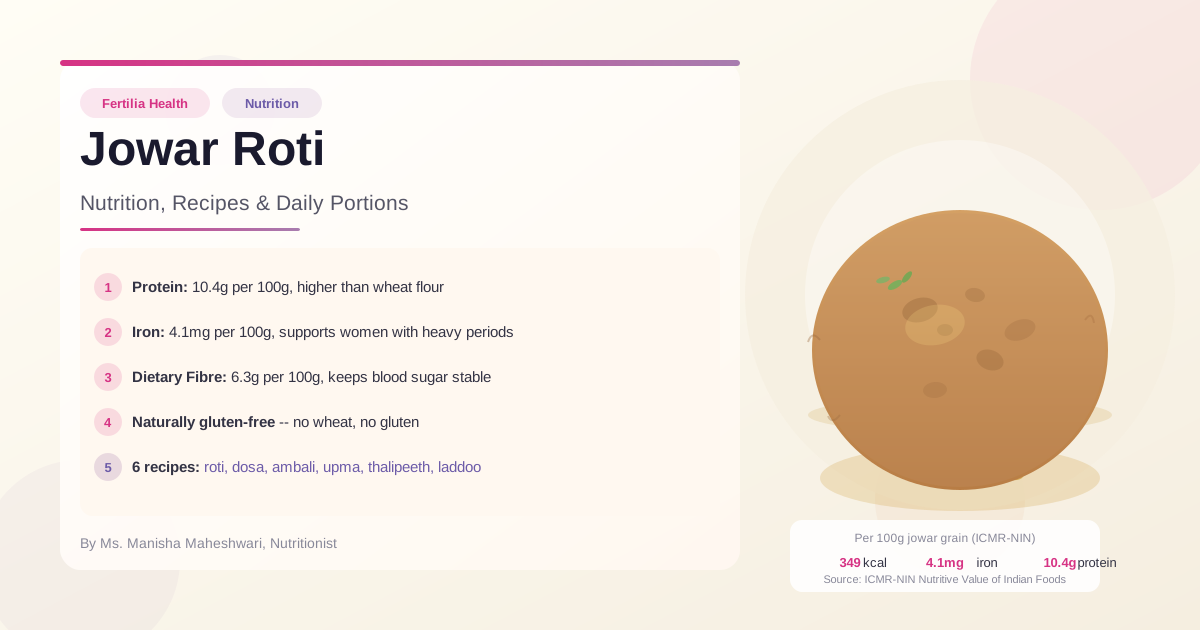
Here is what 100 grams of raw jowar grain, food A005, contains according to the ICMR-NIN Indian Food Composition Tables 2017 (Tables 1 and 5, printed pages 3 and 113):
| Nutrient | Amount per 100g |
|---|---|
| Energy | 334 kcal |
| Protein | 10.0 g |
| Fat | 1.7 g |
| Dietary Fibre | 10.2 g |
| Iron | 4.0 mg |
| Calcium | 28 mg |
| Phosphorus | 274 mg |
| Magnesium | 133 mg |
IFCT 2017 reports energy as 1,398 kJ per 100g raw edible portion. The 334 kcal figure uses the book’s conversion of 1 kcal = 4.18 kJ.
A few numbers stand out. The protein content at about 10g per 100g is above milled white rice (about 7.9g in the same tables), though it is broadly comparable to whole wheat flour rather than better than it. Jowar’s real advantages over wheat are that it is naturally gluten-free and has a lower glycaemic index, not that it out-performs wheat on protein. The total dietary fibre at 10.2g per 100g is close to whole wheat atta (11.4g) and far above refined flour and milled rice. The iron content at 4mg per 100g holds its own among the whole grains commonly found in Indian kitchens.
For more on this, read our guide on Bajra (Kambu). Jowar is also naturally gluten-free. Unlike wheat, barley, or rye, it contains no gluten. This makes it a practical option for women with gluten sensitivity, and a natural base for a varied grain rotation alongside ragi, bajra, and rice.
Jowar for Women with PCOS
If you are managing PCOS, two practical food-level priorities are keeping blood sugar more stable through the day and getting enough iron, particularly if your periods are heavy or irregular. Jowar supports both from a whole food rather than a supplement.
Blood sugar stability: Jowar has a lower glycemic index than wheat roti and white rice, which is the main reason to choose it. Replacing even a couple of wheat rotis per day with jowar roti is a practical food-level change most women find easy to sustain. For the science behind low-GI eating and PCOS, read our Insulin Resistance and PCOS guide.
Iron: Women with PCOS often experience heavier or more prolonged periods, which increases iron losses. At 4mg per 100g, jowar is a solid iron-contributing whole grain. Pair it with a Vitamin C source such as lemon, tomato, or amla at the same meal.
For a complete guide to eating for PCOS, including which foods to prioritise and which to limit, read the PCOS Diet Chart: What to Eat and Avoid. For a full week’s meal plan built around Indian foods, the PCOS Weight Loss Diet: Indian Meal Plan That Works has daily menus with portions.
Have questions about what to eat for PCOS? Dr. Suganya’s nutrition team at Fertilia Health can work out a personalised Indian eating plan for you. WhatsApp us at +91 99402 70499 to start the conversation.
Download our free PCOS diet guide, a practical Indian food plan built around grains like jowar, ragi, and bajra. Get it here
Jowar During Pregnancy
Jowar provides two nutrients that matter during pregnancy: iron and protein. It also tends to be easier to digest than wheat for many women.
Iron: Iron-deficiency anaemia is common during pregnancy in India. Jowar’s iron content makes it a useful addition to a pregnancy diet that already includes dal, leafy greens, and (for non-vegetarians) meat or eggs. Pair jowar meals with a Vitamin C source such as lemon, tomato, or amla.
Protein: IFCT 2017 lists 9.97g protein per 100g raw jowar grain. Assuming the whole grain is retained during milling, 80-90g of flour contributes an estimated 8-9g protein before other ingredients are counted. This is an ingredient estimate, not a measurement of two cooked rotis. For another grain-and-pulse meal to cook, see the urad dal khichdi recipe.
Digestibility: Jowar ambali (a thin, cooked porridge) is gentle on the stomach and can be a good breakfast option during the first trimester when nausea makes heavier foods harder to manage.
For a full trimester-by-trimester guide to eating during pregnancy, including specific food recommendations for each stage, read the Pregnancy Diet Chart: Indian Foods for Each Trimester.
How to Make Jowar Roti
Jowar roti (bhakri) has a reputation for being difficult. It does not have gluten, so it cannot be rolled out the way wheat roti can. Here is a reliable method.
Ingredients (makes 2 rotis):
- 80-100g jowar flour
- Warm or hot water (approximately 80-100ml)
- Pinch of salt
Method:
- Add a pinch of salt to the jowar flour in a wide bowl.
- Add hot water a little at a time, mixing as you go. The dough needs to be soft but not sticky. Hotter water makes the dough more pliable.
- While the dough is still warm, divide into two portions and roll each into a smooth ball.
- Place one ball on a dry, clean surface. Press it out with your palm in circular motions to form a round disc about 6-7 inches across and 3-4mm thick. Do not use a rolling pin (the dough will crack).
- Wet your fingers lightly if the surface is cracking as you press. Some cracks at the edges are normal.
- Place on a hot dry tawa. Cook for 2 minutes per side until small brown spots appear and the roti looks cooked through.
- Hold directly over the flame for a few seconds each side to puff slightly and finish cooking.
Eat warm with dal, any vegetable curry, coconut chutney, or ghee and thecha. Jowar roti does not stay soft for long, so it is best eaten fresh and warm.
5 More Ways to Use Jowar
1. Jowar Dosa Mix jowar flour with a little rice flour (about 3:1 ratio) and enough water to make a thin batter. Cook on a hot, lightly oiled tawa as you would any dosa. Crisp around the edges, slightly denser than a rice dosa, with a mild nutty flavour. Pairs well with coconut chutney or sambar.
2. Jowar Ambali (Porridge) Jowar ambali is a traditional fermented porridge from Karnataka and Andhra Pradesh, typically eaten in summer. Simple version: cook jowar flour in water on low heat, stirring continuously, until it thickens to a porridge consistency. Season with salt and temper with mustard seeds, curry leaves, and a pinch of asafoetida. Serve with curd on the side.
3. Jowar Upma Use jowar semolina or coarse jowar flour in place of regular semolina (rava). Temper with mustard seeds, curry leaves, onion, and green chilli, then add the jowar gradually with water and stir until cooked through. A quick and filling breakfast.
4. Jowar Thalipeeth Thalipeeth is a spiced flatbread from Maharashtra. Mix jowar flour with small amounts of bajra flour and besan, add chopped onion, coriander leaves, green chilli, and cumin. Add water to form a soft dough. Pat directly onto a hot oiled tawa and cook covered for 3-4 minutes per side. Hearty, flavourful, and easy to customise with whatever vegetables you have.
5. Jowar Laddoo Dry-roast jowar flour in a little ghee until the raw smell disappears and it turns slightly golden. Mix with powdered jaggery, cardamom, and sesame seeds. Roll into balls while still warm. Jowar laddoos are a traditional snack and energy food, easy to pack and store for up to five days in an airtight container.
How Much Jowar to Include
There is no fixed prescription, and your overall diet, digestion, and preferences will guide how much works for you. A practical starting point: two jowar rotis per meal, two to three times a week, is a manageable way to begin if you are not currently eating jowar at all.
For the recipe above, each roti uses approximately 40-50g of flour before cooking. For its two rotis, the 80-100g of flour gives the following ingredient estimates, calculated from IFCT 2017 food A005 and assuming the whole grain is retained during milling:
- about 268-334 kcal
- 8.0-10.0g protein
- 8.2-10.2g total dietary fibre
- 3.2-4.0mg iron
These estimates exclude additions such as ghee. They are not laboratory measurements of cooked rotis; the actual flour weight and milling can change the finished values.
Eating jowar daily is fine for most healthy women. At typical daily amounts of two to four rotis, it fits well into a varied Indian diet.
If you have been prescribed a specific therapeutic diet for kidney, metabolic, or digestive conditions, check with your nutritionist before making significant changes to your grain intake.
FAQ
Is jowar roti better than wheat roti? Jowar and wheat are different grains with different nutritional profiles. On protein and fibre the two are closer than most comparisons online suggest, and whole wheat atta is not the weaker grain on either count. What jowar genuinely offers is that it is naturally gluten-free. Wheat roti is easier to make and more familiar in many households. Neither is universally better. Rotating between grains is a practical way to get the benefits of both. The PCOS Diet Chart has specific guidance on grain choices for women managing PCOS.
Can I eat jowar roti every day? Yes. Jowar roti can be eaten daily as part of a varied Indian diet. If you are including it as your primary bread alongside dal and vegetables, it is a nutritionally solid choice. Many households in Maharashtra eat bhakri at most meals without any issues.
Is jowar suitable during pregnancy? Yes. Jowar is a safe, nutritious grain during pregnancy. Its iron and protein content make it a practical addition to a pregnancy diet. Jowar ambali or jowar roti can be included at any trimester. It complements prescribed iron supplements but does not replace them.
Why is jowar roti difficult to make? Jowar lacks gluten, the protein in wheat that gives dough its elasticity. Without gluten, the dough cannot be stretched and rolled like wheat roti (it cracks). The technique is pressing with the palm rather than rolling, and using warm or hot water to make the dough more pliable. It takes a few attempts to get comfortable, but most people find the rhythm within a week of practice.
Does jowar cause digestive issues? Jowar is generally well-tolerated and not known to cause bloating or gas. Its fibre content supports digestion. If you are introducing jowar after eating primarily wheat or rice, start with one roti per meal and gradually increase over a week or two.
Where can I buy jowar flour in India? Jowar flour is available at most kirana stores, provision shops, and supermarkets including Reliance Fresh, More, and D-Mart. Online, it is stocked on BigBasket, Amazon, and Flipkart. Look for whole grain jowar flour without additives. Brands like 24 Mantra Organic, Organic India, and Manna Foods are reliable options; local store-brand jowar flour is typically fine too.
Jowar has been feeding families across Maharashtra, Andhra Pradesh, Karnataka, and Rajasthan for generations. It is affordable, widely available, and suited to Indian cooking in six different ways, from the everyday bhakri to quick dosas, warming porridge, and filling laddoos.
If you want help building a practical Indian eating plan that fits your situation, whether you are managing PCOS, navigating pregnancy, or simply looking to eat better, the Fertilia Health nutrition team is here. If you are expecting, an iron-rich grain like jowar is exactly the kind of swap our 90-day Pregnancy Care program builds into everyday rotis and meals.
Start a conversation on WhatsApp and we will work out something that fits your kitchen, your schedule, and your health goals.