Almost every week, a woman with PCOS joins me on a video call and asks the same question. She’s seen seed cycling on Instagram, she’s a little skeptical, and she wants to know if it’s worth her time. So here is what I tell her.
Yes, I do suggest seed cycling to many of my PCOS patients. Not because it’s a miracle, and not because it “balances your hormones” the way a reel promises. I suggest it because it’s one of the very few Instagram trends that has real nutrition science behind it, it costs less than ₹400 a month, it does no harm, and it gives a woman something steady and proactive to do for her body every single day.
Some of the women who stay consistent for three months tell me their cycles start to feel more predictable, or that the daily ritual simply helps them feel more in control of their PCOS. Can I always tell whether that’s the seeds, the consistency, or the other changes she made alongside? Honestly, no. But I can show you the actual research, give you the precise plan, and let you decide. That’s what this article is for.
What Seed Cycling Is, and the 28-Day Plan
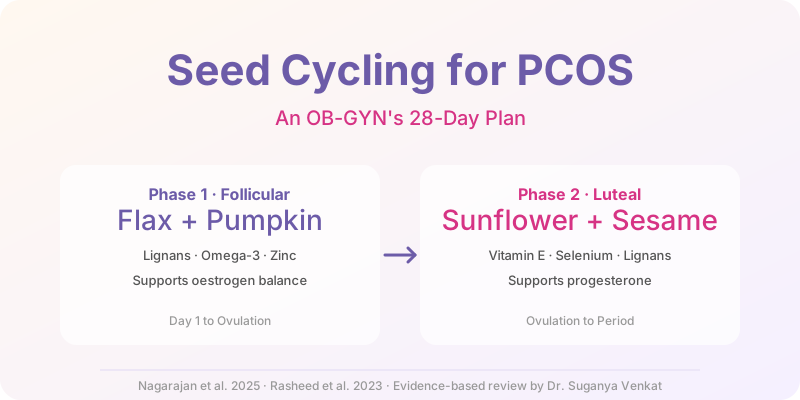
Seed cycling is simple. You eat two specific seeds during the first half of your menstrual cycle, then switch to two different seeds during the second half.
Phase 1. Follicular Phase (Day 1 to Ovulation)
- 1 tablespoon ground flaxseeds (alsi / ஆளி விதை)
- 1 tablespoon pumpkin seeds
Phase 2. Luteal Phase (Ovulation to Period)
- 1 tablespoon sunflower seeds
- 1 tablespoon sesame seeds (til / எள்)
The idea is that the Phase 1 seeds support healthy oestrogen activity, while the Phase 2 seeds support progesterone. That’s the theory. The honest version is that the seeds themselves carry the evidence, more than the precise switching does, but I’ll come to that.
The part that matters most for PCOS: many women with PCOS don’t ovulate regularly, so the “follicular” and “luteal” labels become theoretical. Here is how I tell my patients to handle it.
If you have somewhat regular periods (25-35 day cycles)
Follow the natural protocol: flax + pumpkin from your period until ovulation, then sunflower + sesame from ovulation until your next period.
If your periods are very irregular or absent
Use a fixed 28-day calendar instead of trying to track ovulation. Pick any day as “Day 1”:
- Days 1-14: 1 tbsp ground flaxseeds + 1 tbsp pumpkin seeds
- Days 15-28: 1 tbsp sunflower seeds + 1 tbsp sesame seeds
- On Day 29, start over at Day 1.
Either way
Give it at least 3 months before you judge it. Hormonal shifts are gradual, and this is a habit, not a tablet.
A note on dose: the trials that showed hormonal changes used about 30g of flaxseed a day, closer to three tablespoons. One tablespoon a day is the target; with flax I ask patients to start at half a tablespoon for the first ten days and build up, which avoids the bloating some women notice.
That is the entire plan. Four seeds, one tablespoon of two of them each day, switched halfway. Here is why I recommend it anyway.
Why I Suggest It Despite the Limited Science
I’m an OB-GYN. I trust randomised controlled trials, not testimonials. So when I recommend something with imperfect evidence, I owe you my reasoning.
Here it is: seed cycling sits in a rare category. It is safe, it is cheap, it is nutrient-dense, and the downside risk is essentially zero. The one thing women do notice is mild bloating in the first week if they jump straight to a full tablespoon of flax, which is why I start them at half a tablespoon and build up over ten days. When something can only help (with good nutrition) and is very unlikely to harm, the bar of evidence I need to say “sure, try it” is much lower than the bar I’d need to prescribe a medication.
That’s different from saying it’s proven. It isn’t a cure, it won’t fix insulin resistance on its own, and it shouldn’t replace anything your gynaecologist has prescribed. Think of it as a useful addition to your PCOS care, not a substitute for it. Your gynaec handles the medical side; seed cycling is one small, food-based layer you add on top.
What the Research Shows
I want to separate two things that get blurred online: the evidence for the individual seeds (quite good, and growing) versus the evidence for the specific cycling protocol (newer and thinner). Being honest about that distinction is exactly what protects you from the hype.
Flaxseed: the strongest evidence, including in Indian women
Flaxseeds are rich in lignans (plant compounds with weak oestrogen-modulating activity) and omega-3 fatty acids. Of all four seeds, this is the one I’d keep even if you did nothing else.
What recent PCOS trials show:
- A 2025 randomised controlled trial in Frontiers in Endocrinology gave 70 women with PCOS 30g of milled flaxseed daily (with lifestyle changes) for 12 weeks. The flaxseed group saw a significant rise in FSH and a significant drop in the LH/FSH ratio, a pattern that often runs in the wrong direction in PCOS.
- Two further RCTs (Nutrition Journal, 2020; Exp Clin Endocrinol Diabetes, 2018) found flaxseed and flaxseed oil improved insulin resistance (HOMA-IR), triglycerides, and inflammatory markers (hs-CRP) in women with PCOS.
The honest counterweight: a 2023 meta-analysis in Frontiers in Nutrition pooled 10 flaxseed RCTs across the general adult population and found no statistically significant effect on testosterone, SHBG, or FSH overall. In other words, the PCOS-specific trials are promising, but the broader picture is mixed. I’d rather you know that than believe a guarantee.
Pumpkin seeds: useful nutrition, indirect evidence
Pumpkin seeds are particularly rich in zinc, a mineral central to ovulation and reproductive health.
- Women with PCOS tend to have lower zinc levels than women without it (Abedini et al., 2019, PMID 30732885).
- Zinc supplementation has been shown to improve insulin-resistance markers in PCOS (Foroozanfard et al., 2015).
- Zinc deficiency is linked to menstrual irregularity and impaired ovulation (Nasiadek et al., 2020).
They also supply magnesium and healthy fats, both useful in PCOS. Note that these are zinc association and supplementation studies, not trials of pumpkin seeds themselves. Pumpkin seeds are a nutrient-dense food that supports a PCOS-friendly diet; they are not a stand-alone hormone treatment.
Sesame and sunflower seeds: lignans, vitamin E, selenium
Sesame seeds add more lignans (sesamin, sesamolin) with anti-inflammatory properties, relevant because chronic low-grade inflammation is one of the recognised PCOS drivers (González, 2012). For more on that, read our guide on the anti-inflammatory diet for Indian women.
Sunflower seeds provide vitamin E and selenium, the latter supporting thyroid function, which matters because thyroid issues often travel alongside PCOS.
The cycling protocol itself
This is where I stay measured. Most of the strong data above tested individual seeds, not the switching schedule.
- A 2023 RCT (90 women with PCOS, Food Science and Nutrition) compared a portion-controlled diet plus seed cycling against metformin, and reported significant improvements in FSH and LH in the seed-cycling group over 12 weeks.
- A 2025 systematic review in Cureus pooled 10 studies (635 women), most of them small and heterogeneous, and concluded that seed cycling, and flax and sesame in particular, was associated with improved menstrual regularity, better sex-hormone profiles, and metabolic improvements, while calling for larger trials.
So the protocol shows promise, but we don’t yet have big randomised trials isolating the cycling schedule from simply eating the seeds. My practical takeaway: the schedule is a sensible, harmless way to make sure you actually eat all four seeds across the month. The nutrients are doing the heavy lifting.
💬 Want a PCOS plan that builds seed cycling into the rest of your diet and lifestyle? Chat with Dr. Suganya on WhatsApp, and she’ll help you build something that fits your life.
How to Do Seed Cycling in India
One of the things I love about this is that all four seeds are easily available and affordable here. You don’t need to order anything fancy.
What you need
| Seed | Hindi / Tamil Name | Where to Buy | Monthly Cost |
|---|---|---|---|
| Flaxseeds (alsi) | अलसी / ஆளி விதை | Any kirana store | ₹50-80 |
| Pumpkin seeds | कद्दू के बीज / பூசணி விதை | Supermarket, online | ₹100-160 |
| Sesame seeds (til) | तिल / எள் | Any kirana store | ₹30-50 |
| Sunflower seeds | सूरजमुखी बीज / சூரியகாந்தி விதை | Supermarket, online | ₹80-120 |
Total: roughly ₹300 to 400 a month (2026 retail), far less than most supplements.
How to prepare and eat them
Flaxseeds MUST be ground. Whole flaxseeds pass straight through your digestive system undigested, so the lignans never get released. Grind them fresh in a mixer, or grind a week’s worth and store in an airtight jar in the fridge.
Simple ways to fit seeds into Indian meals:
- In your dosa or idli batter: mix ground seeds straight in
- Chutney: a flaxseed chutney (common in Maharashtra and Karnataka) is an easy daily dose
- On curd or in raita: stir seeds into your afternoon curd
- In smoothies: blend with banana, curd, and a little jaggery
- Laddoos: flax-and-pumpkin laddoos with jaggery are perfect for Phase 1
- On poha, upma, or salads: sprinkle as a topping
- In roti dough: knead ground seeds into your atta
A sample Phase 1 day
- Breakfast: ragi porridge with 1 tbsp ground flaxseed stirred in
- Mid-morning: a small handful of pumpkin seeds with your tea
- Lunch: your normal meal with flaxseed chutney on the side
- Evening: curd with pumpkin seeds on top
What Seed Cycling Can and Can’t Do
Because I’ve seen too many reels promise the world, let me be precise.
What it CAN do ✅
- Deliver nutrients many women with PCOS are short on: omega-3s, zinc, selenium, vitamin E, and lignans
- Modestly support metabolic markers, especially through flaxseed (insulin sensitivity and inflammation; SHBG showed a signal in some PCOS trials but was not confirmed in the pooled analysis above)
- Give you daily agency, a small, consistent act of care for your body
- Work alongside medical treatment: I am not aware of any interaction with metformin or letrozole, but because flaxseed is high in fibre, take your seeds at least two hours apart from your tablets and tell your treating doctor what you are adding
- Add fibre, which supports gut health, an area of active research in PCOS
What it CAN’T do ❌
- Replace medical management if you have significant insulin resistance or high androgens that need clinical treatment
- Guarantee regular periods on its own. PCOS has multiple drivers, and seeds alone won’t address all of them
- Work overnight: give it 3-6 consistent months
- Cure PCOS: nothing does, but PCOS can be managed very well
Who Should Try Seed Cycling
It’s worth trying if you:
- Have PCOS and want to add a natural, food-based layer alongside your current care
- Want an affordable, low-risk way to support your hormonal health
- Have no seed allergies (check with your doctor if you’re unsure)
- Are willing to be consistent for at least 3 months
It may not be your best first step if you:
- Have severe insulin resistance that needs medical management first
- Have had absent periods for 6+ months, in which case see a doctor before relying on diet alone
- Are looking for a single solution (seed cycling works best as one part of a fuller plan)
How It Fits the Bigger Picture
In my practice, the women who do best with PCOS rarely rely on any single thing. They combine:
- Nutrition (including approaches like seed cycling, and understanding why PCOS causes stubborn belly fat)
- Movement (even 30 minutes of daily walking helps)
- Sleep (7-8 hours affects insulin sensitivity more than most people realise)
- Stress management (cortisol directly worsens PCOS)
- Medical support when it’s needed (there’s no shame in metformin or other medication)
Seed cycling slots neatly into the first pillar. It gives you a daily practice, it provides real nutrients, and the PCOS-specific research is encouraging. Just don’t ask it to do the work of all five pillars alone.
Frequently Asked Questions
Does seed cycling work for PCOS?
For the individual seeds, the evidence is encouraging, with recent PCOS trials showing flaxseed improving insulin markers and the LH/FSH ratio, though effects on androgens are less consistent. The specific “cycling” schedule has less isolated evidence, but it’s a safe, harmless way to make sure you eat all four beneficial seeds across the month. I recommend it as a useful addition to PCOS care, not as a cure.
Are pumpkin seeds good for PCOS and fertility?
Pumpkin seeds (the seed used in the first half of seed cycling) are a nutritious snack: a tablespoon gives you zinc, magnesium, iron and healthy fats, all useful in a PCOS-friendly diet that is already built around protein, fibre and balanced blood sugar. What the evidence does not support is the idea that pumpkin seeds on their own shift your hormones or directly improve fertility. Treat them as one helpful, nutrient-dense food within a good overall diet, not as a stand-alone PCOS or fertility cure. As a snack they are a far better choice than biscuits or namkeen.
Can I do seed cycling if I’m on birth control pills?
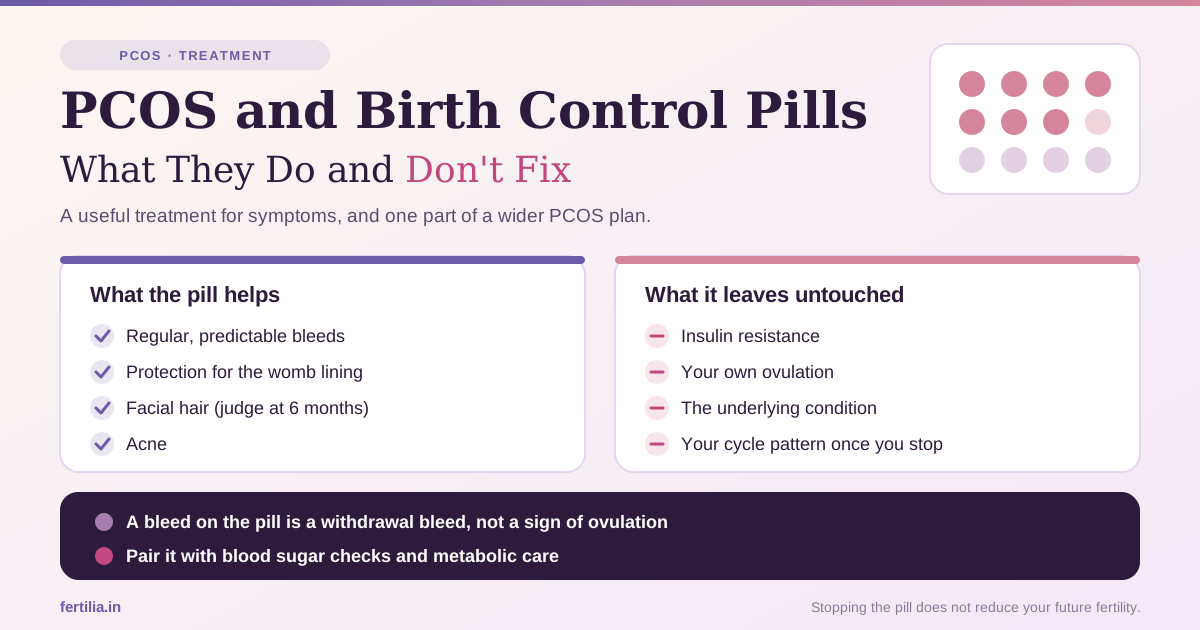
Yes, it’s safe alongside oral contraceptives. Since the pill overrides your natural cycle, the “cycling” aspect matters less, but you still get the nutritional benefits of the seeds themselves.
Do I need to eat the seeds raw, or can I cook them?
Raw or lightly roasted is best. Flaxseeds should always be ground. Avoid deep-frying, which destroys the omega-3s. Light roasting of pumpkin, sunflower, and sesame seeds is perfectly fine.
How long before I see results?
Give it 3-6 months. Hormonal changes are gradual. Track your cycles through this window so you have something concrete to look back on.
Can seed cycling help with PCOS facial hair (hirsutism)?
Possibly, but the evidence is limited. Flaxseed’s lignans can raise SHBG, which in theory binds some of the free androgens that drive facial hair, but there is no strong trial showing flaxseed improves hirsutism in PCOS specifically. Meaningful improvement usually needs additional steps too, which you can read about in our guide on PCOS hair growth and what works.
Is it safe during pregnancy?
Large amounts of flaxseed are sometimes avoided in pregnancy because of their phytoestrogenic activity. If you’re trying to conceive or are pregnant, check with your doctor before continuing seed cycling. Small amounts as part of a normal diet are generally considered safe.
Where can I buy good-quality seeds in India?
Any well-stocked kirana store will have flaxseeds (alsi) and sesame (til). Pumpkin and sunflower seeds are easy to find on Amazon, BigBasket, or at D-Mart and Reliance Fresh. Buy from a trusted brand and store them in airtight containers.
The Bottom Line
Seed cycling isn’t a miracle, and it isn’t a hoax. The individual seeds, flax above all, carry real and growing evidence for hormone and metabolic health in PCOS, and the cycling schedule is a safe, ₹300-400-a-month way to make sure you actually eat them. The downside is close to nothing; the upside is a daily, nourishing habit that works quietly alongside your medical care.
That’s exactly why I suggest it to so many of my patients. Just don’t let it be your only plan.
💜 Living with PCOS and not sure where to start? Dr. Suganya builds personalised plans that combine nutrition (seed cycling included), lifestyle, and medical support, tailored to your specific PCOS drivers. Start a conversation on WhatsApp, no pressure, just guidance. Seed cycling is one small piece of that wider plan, which lives inside her 90-day PCOS Symptom Reversal program.
References
- Nagarajan DR et al. (2025). Efficacy of Seed Cycling as an Integrative Therapy for Premenstrual Syndrome and Polycystic Ovary Syndrome in Reproductive-Aged Women: A Systematic Review. Cureus. PMID: 41018334.
- Rasheed N et al. (2023). Effectiveness of combined seeds (pumpkin, sunflower, sesame, flaxseed) as adjacent therapy to treat polycystic ovary syndrome. Food Science & Nutrition. PMID: 37324929.
- Wang Y et al. (2025). Flaxseed intervention and reproductive endocrine profiles in patients with polycystic ovary syndrome: an open-labeled randomized controlled clinical trial. Frontiers in Endocrinology. DOI: 10.3389/fendo.2025.1531762. PMID: 40260281.
- Haidari F et al. (2020). The effects of flaxseed supplementation on metabolic status in women with polycystic ovary syndrome: a randomized open-labeled controlled clinical trial. Nutrition Journal. DOI: 10.1186/s12937-020-0524-5.
- Mirmasoumi G et al. (2018). The Effects of Flaxseed Oil Omega-3 Fatty Acids Supplementation on Metabolic Status of Patients with PCOS: A Randomized, Double-Blind, Placebo-Controlled Trial. Exp Clin Endocrinol Diabetes. PMID: 29117618.
- Musazadeh V et al. (2023). The effect of flaxseed supplementation on sex hormone profile in adults: a systematic review and meta-analysis. Frontiers in Nutrition. DOI: 10.3389/fnut.2023.1222584.
- Abedini M et al. (2019). Zinc status and polycystic ovarian syndrome: A systematic review and meta-analysis. Journal of Trace Elements in Medicine and Biology. 52:216-221. PMID: 30732885.
- Foroozanfard F et al. (2015). Effects of zinc supplementation on markers of insulin resistance in women with PCOS. Exp Clin Endocrinol Diabetes. 123(4):215-20.
- González F (2012). Inflammation in Polycystic Ovary Syndrome. Best Pract Res Clin Endocrinol Metab. 26(2):171-180.
- Nasiadek M et al. (2020). The Role of Zinc in Selected Female Reproductive System Disorders. Nutrients. 12(8):2464.