The short version
If you have PCOS and your weight seems to settle around your middle first, you are not imagining it, and it is not a failure of willpower. A large review of 35 studies (over 15,000 women) found that women with PCOS were about 1.7 times more likely to have central obesity than women without PCOS (Lim SS et al., Hum Reprod Update, 2012, PMID 22767467).
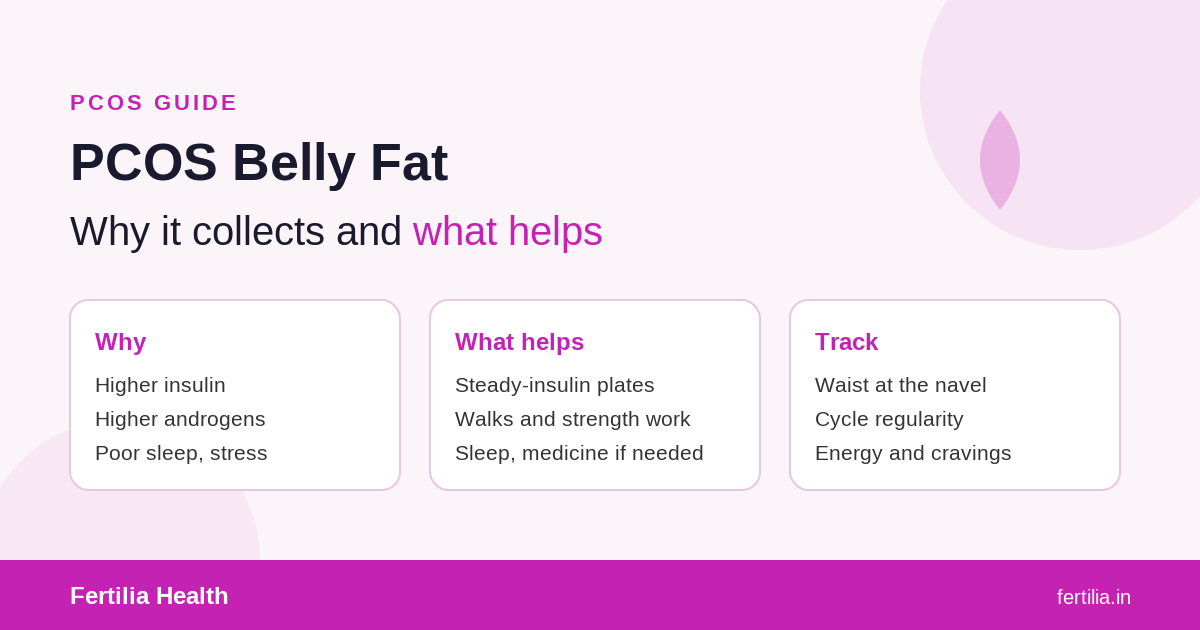
The main reason is insulin. Many women with PCOS need more insulin than usual to keep blood sugar steady, and higher insulin, together with higher androgen (male-type hormone) levels, nudges the body to store fat around the abdomen.
The good news: this is one of the most responsive parts of PCOS. Small, steady changes in food, movement and sleep shift insulin first, and the waist usually follows.
This post covers:
- Why fat gathers at the belly in PCOS
- Why slim women with PCOS can have it too
- What has evidence behind it, and how much to expect
- How to track progress without obsessing over the scale
- FAQs
If your question is how to tell a PCOS belly from early pregnancy or bloating, read PCOS belly vs pregnant belly first. This post goes deeper into the why.
Why the belly, of all places?
Insulin resistance is built into PCOS
Insulin is the hormone that moves sugar from your blood into your cells. In insulin resistance, the cells respond less, so the pancreas makes more insulin to get the same job done.
For years, people assumed this was simply because many women with PCOS carry extra weight. Gold-standard clamp studies tell a different story. A meta-analysis of these studies found that women with PCOS had about 27% lower insulin sensitivity than women without it, and that this reduction was independent of BMI (Cassar S et al., Hum Reprod, 2016, PMID 27907900).
In plain words, insulin resistance is part of PCOS itself. Weight can make it worse, but it is there underneath.
High insulin and androgens feed each other
Higher insulin does two things that matter for the belly:
- It encourages the ovaries to make more androgens (testosterone).
- It lowers a protein called SHBG (sex hormone-binding globulin), which normally holds testosterone in check. Less SHBG means more free, active testosterone.
Androgens, in turn, are linked with a more “male-pattern” fat distribution, that is, more fat around the waist and less on the hips and thighs. Abdominal fat itself is metabolically active and tends to worsen insulin resistance. So the loop runs both ways: insulin raises androgens, androgens favour belly fat, belly fat worsens insulin resistance.
A second review from the same research group looked at what excess weight does to PCOS. Central obesity was associated with higher fasting insulin, and overweight and obesity were linked with lower SHBG and higher free androgen levels (Lim SS et al., Obes Rev, 2013, PMID 23114091).
That loop is why the belly feels like the stubborn area. It is also why breaking it at any point (food, movement, sleep, medicine when needed) tends to help everywhere else too.
Stress and sleep add to it
Poor sleep and long-term stress both make insulin work less well. Many women with PCOS also sleep badly, for reasons we explain in PCOS and sleep. When sleep is short, hunger signals rise and cravings for quick-sugar foods are harder to resist. This is how the body responds to short sleep, and it eases when sleep improves.
Why slim women with PCOS can still have belly fat
“I’m not overweight, so why is it only my stomach?” is something I hear every week in consultations.
Because insulin resistance in PCOS does not depend on BMI, a woman with a normal weight on the scale can still have higher insulin levels and a thicker waist relative to her frame. BMI measures total weight for height; it does not tell you where the fat sits.
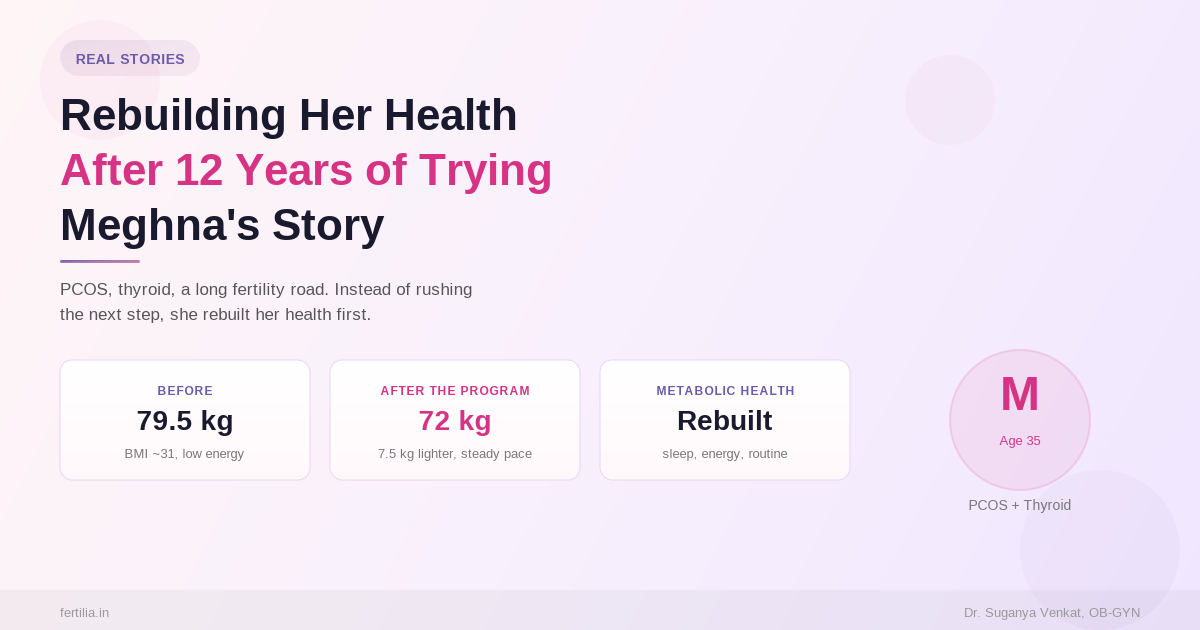
This is also why the scale can mislead you. Two women with the same BMI can have very different waists and very different metabolic pictures. If you have lean PCOS, the waist tape and your periods are often better guides than the weighing machine. One example of how this plays out is in our lean PCOS story.
For South Asian women, there is an extra layer. Indians tend to develop insulin resistance and metabolic risk at a lower body weight than people of European ancestry, which we explain in insulin resistance in Indian women with PCOS.
Not sure whether insulin is driving your belly fat? You can message Dr. Suganya on WhatsApp and book a ₹399 video consultation to look at your symptoms and reports together.
What helps: the steps with evidence behind them
The 2023 international PCOS guideline, built from roughly 6,000 pages of evidence review, keeps healthy lifestyle at the centre of PCOS care, alongside emotional wellbeing and awareness of weight stigma (Teede HJ et al., Eur J Endocrinol, 2023, PMID 37580861). That is the starting point here too.
1. Eat to keep insulin steady, not to starve
You do not need a crash diet. Very low-calorie eating often backfires: hunger rises, the plan breaks, and the weight returns. What helps is a steady pattern that avoids big sugar spikes:
- Build each plate around protein and vegetables. Dal, sundal, paneer, eggs, curd, fish or chicken with a good portion of vegetables (keerai, beans, cabbage poriyal).
- Choose slower carbohydrates and watch the portion. Ragi, millets, brown or hand-pounded rice, whole wheat rotis, in a portion that fits your palm rather than filling the plate.
- Keep sweets and sweet drinks for occasions. Sweet coffee or tea several times a day, juices and bakery snacks add up quickly.
- Do not skip breakfast and then overeat at night. An idli or ragi dosa with sambar and a protein side at breakfast is a better start than nothing until noon.
For a full Indian meal structure, see our PCOS weight loss diet and Indian meal plan.
2. Move in a way you can keep doing
Muscle is where most blood sugar is used, so working your muscles improves insulin sensitivity even before any weight changes. A practical mix:
- Daily walking, especially a 10 to 15 minute walk after your largest meal.
- Strength work two or three times a week, such as squats, lunges, wall push-ups or resistance bands at home.
- Something you enjoy: dance, yoga, badminton, swimming. Consistency beats intensity.
Spot exercises like crunches strengthen the core, which is good, but they do not burn fat specifically from the belly. The waist changes when insulin and overall body fat change.
3. Protect sleep and lower daily stress
Aim for a regular sleep and wake time and seven or more hours where you can. Bring screens down an hour before bed. If you snore heavily or wake unrefreshed, mention it to your doctor, because sleep apnoea is more common in PCOS and is treatable.
4. Know what to expect from lifestyle change
It helps to be realistic so you do not give up too early. A Cochrane review of 15 randomised trials found that lifestyle intervention (diet, exercise, behavioural support) in women with PCOS may reduce weight by about 1.7 kg on average and may lower the free androgen index compared with minimal or no treatment. The evidence was rated low quality, and the trials were small and short (Lim SS et al., Cochrane Database Syst Rev, 2019, PMID 30921477).
Two things follow from this:
- The average number is modest, but many trials were brief. Real change usually needs months, not weeks.
- The hormonal benefit (lower free androgens) showed up even with small weight changes. So you may feel and see improvements, in periods, skin or energy, before the scale moves much.
For more on the size of change that matters, see PCOS weight loss: what works.
5. Medicines and supplements: when they fit
Lifestyle comes first, but it is not the only tool, and needing medicine is not a sign you have failed.
- Metformin improves how the body responds to insulin and is commonly used in PCOS, especially when insulin resistance or prediabetes is clear. It is a prescription medicine, decided with your doctor. We explain who benefits in metformin for PCOS.
- Myo-inositol is a supplement some women use for insulin-related PCOS symptoms. The evidence is more limited; see myo-inositol for PCOS before buying one.
Your gynaecologist or endocrinologist may suggest one of these alongside lifestyle changes, and that combined approach is often the most practical.
How to track progress without the scale ruling your mood
Belly fat in PCOS often changes before the weight does, so track the things that move first:
- Waist measurement. Measure at the level of your navel, standing relaxed, once every two weeks, at the same time of day. A slow downward trend matters more than any single reading.
- How your clothes fit. Waistbands are a simple, low-stress measure.
- Your cycle. More regular periods are a sign insulin and androgens are settling.
- Skin signs. Darkening at the neck or underarms (acanthosis nigricans) often fades as insulin improves. We cover this in acanthosis nigricans and insulin resistance.
- Energy and cravings. Fewer afternoon slumps and fewer sugar cravings are early wins.
If you want numbers, ask your doctor about fasting glucose, fasting insulin or HbA1c, and a lipid profile. Repeating them after three to six months shows whether the inside is changing, even when the mirror is slow.
What I tell women in the first consultation
I’m Dr. Suganya Venkat, an OB-GYN with more than 15 years of experience, and in Fertilia’s online PCOS program the belly is rarely the first thing we target directly. We start with the drivers: meal timing, a plate that steadies insulin, a walk after dinner, sleep, and a look at reports to see whether insulin resistance needs medicine too.
When those settle, the waist usually starts to come down on its own. And the women who track the waist, the cycle and their energy, rather than only the scale, tend to stay with the plan long enough to see it.
Frequently asked questions
Why does PCOS cause belly fat?
PCOS often comes with insulin resistance, so the body makes more insulin. Higher insulin raises androgen levels and lowers SHBG, and this hormone pattern favours fat storage around the abdomen. Abdominal fat then worsens insulin resistance, creating a loop.
Can I have PCOS belly fat if I am slim?
Yes. Research using gold-standard insulin tests shows insulin resistance in PCOS is present independent of BMI. A woman with a normal weight can still carry more fat around her waist. The waist measurement is a more useful guide than BMI here.
How do I lose belly fat with PCOS?
Focus on steadying insulin: meals built around protein and vegetables, smaller portions of slower carbohydrates, a daily walk after meals, strength training two or three times a week, and good sleep. Belly fat cannot be targeted by spot exercises; it reduces as overall body fat and insulin levels come down.
How long does it take to reduce PCOS belly fat?
It varies, but most women need several months of steady change. Trials of lifestyle change in PCOS have mostly been short, with modest average weight loss. Hormonal improvements and a better cycle often appear before large weight changes, so track your waist and periods, not just the scale.
Does metformin reduce PCOS belly fat?
Metformin improves how the body responds to insulin, which addresses one of the drivers of central fat. It is not a weight-loss drug on its own and works best alongside food and movement changes. Whether you need it is a decision to make with your doctor based on your reports.
Are crunches useful for PCOS belly?
Core exercises strengthen the abdominal muscles, which helps posture and back health. They do not burn fat from the belly specifically. Walking, strength training of large muscle groups, and food changes do more for the waist.
Is PCOS belly fat dangerous?
Belly fat is a signal that insulin is working harder than it should, and it is worth addressing for long-term heart and metabolic health. It is also very responsive to change. Seeing it as a useful early signal, rather than a verdict, makes it easier to act on calmly.
Where to start this week
Pick two things: a 10 to 15 minute walk after dinner, and a protein-and-vegetable first plate at lunch. Measure your waist today and again in two weeks. For a structured plan, download our free PCOS Reversal Guide.
If you would like a plan built around your own reports, cycle and routine, message Dr. Suganya on WhatsApp to book a ₹399 video consultation, from anywhere in India.