Your scan came back with “reduced liquor” or a low AFI number, and the word that followed was oligohydramnios. Maybe your doctor asked you to drink more water and come back for a repeat scan. Maybe they used a different, more careful tone, and mentioned growth scans or a Doppler study. Both of those can be the right response to the same word, because oligohydramnios is not one situation. It is a scan finding with several different causes, and the cause is what actually determines what happens next.
I’m Dr. Suganya Venkat, an OB-GYN with over 15 years of clinical experience, and I want to walk you through oligohydramnios properly: what it means, why the cause and the timing matter more than the label itself, what the real risks are (and are not), and how it is watched and managed so you know what to expect at your next visit.
What Oligohydramnios Means
Amniotic fluid is the water surrounding your baby inside the amniotic sac. In the second half of pregnancy, most of it is your baby’s own urine: your baby swallows fluid, processes it, and passes it back out, in a continuous cycle. The fluid cushions your baby, allows the limbs to move and develop, helps the lungs mature, and keeps the umbilical cord from being compressed between your baby and the uterine wall.
On a scan, this volume is estimated in one of two ways:
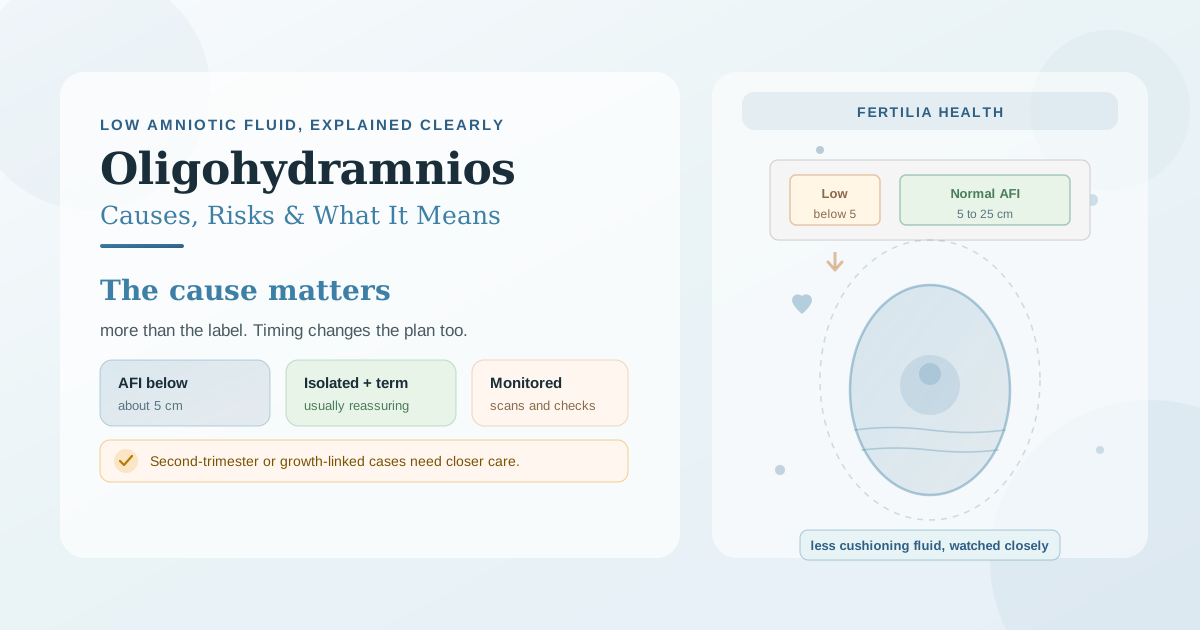
- Amniotic fluid index (AFI): the sonographer measures the deepest fluid pocket in four regions of the uterus and totals them. A normal AFI is roughly 5 to 25 cm.
- Single deepest pocket (SDP), also called maximum vertical pocket (MVP): the depth of the single largest pocket of fluid. A normal SDP is roughly 2 to 8 cm.
Oligohydramnios usually means an AFI at or below 5 cm, or an SDP at or below 2 cm. It is opposite to polyhydramnios, where there is too much fluid, and it describes a scan finding rather than a standalone diagnosis.
One methodology point worth knowing: research comparing the two measurement methods has found that using AFI leads to more oligohydramnios diagnoses than SDP does, without any improvement in how babies actually do, because AFI flags more borderline cases that SDP does not (Nabhan and Abdelmoula, Cochrane Database of Systematic Reviews, 2008, PMID 18646160). A review in the Journal of Ultrasound in Medicine reached a similar conclusion: sonographic estimates correlate only loosely with the true fluid volume, and SDP appears to be the better screening choice because AFI increases inductions and caesareans without improving outcomes (Magann et al., Journal of Ultrasound in Medicine, 2011, PMID 22039031). This is one reason two scans a week apart, or two different sonographers, can give you numbers that feel inconsistent. A single reading is a snapshot, and it is usually rechecked before any decision is made.
The Cause Matters More Than the Label
“Oligohydramnios” on a report can mean very different things depending on why it happened. It helps to think in three groups.
Usually low-risk and often reversible:
- Not drinking enough water. Maternal dehydration is common, especially in Indian heat, and is one of the most straightforward causes to address.
- Going past your due date. Amniotic fluid naturally tends to decline after 40 weeks, which is one reason post-term pregnancies are watched more closely.
- No cause found (idiopathic). Particularly near term, with an otherwise healthy, well-grown baby, no specific cause is identified in many cases, and outcomes tend to be reassuring.
Needs a defined medical plan:
- A slow leak of fluid (ruptured or micro-ruptured membranes). This can feel like an ongoing watery trickle, distinct from normal discharge, and it changes how you are monitored.
- Certain medicines, such as regular NSAID painkillers, can reduce fetal urine output and lower fluid. This is one reason not to take them in pregnancy without your doctor’s advice.
Needs closer specialist involvement:
- Placental insufficiency, where the placenta is not delivering enough blood flow to the baby. The baby’s body responds by prioritising blood flow to the brain and reducing it elsewhere, including the kidneys, so less urine is produced and fluid drops. This is why oligohydramnios and a baby measuring smaller than expected are often seen together. Our guide to IUGR and fetal growth restriction explains this mechanism and how it is monitored.
- The baby’s kidneys or urinary tract. Because most fluid in later pregnancy is fetal urine, a difference in how the kidneys or urinary tract have formed can markedly reduce fluid, and this is specifically looked for on the anomaly scan.
- A chromosomal or structural difference, uncommonly, when oligohydramnios appears earlier or alongside other findings on the scan.
You will notice water intake is only one line on this list. It helps some women, but it is not the explanation for every low-fluid finding, which is exactly why your doctor orders a proper workup rather than sending everyone home with the same advice. For the full, evidence-based picture of what hydration can and cannot do, our companion guide on low amniotic fluid and how to increase it safely covers that in detail.
Why Timing Changes the Picture
The same word, oligohydramnios, carries a different weight depending on when in pregnancy it is found.
Second-trimester (early-onset) oligohydramnios is uncommon, affecting roughly 1% of pregnancies in some estimates, but it is taken more seriously (Kozinszky et al., Current Opinion in Obstetrics and Gynecology, 2014, PMID 24614021). At this stage the fluid plays a direct role in lung development, so persistently very low fluid in the second trimester is managed with closer specialist input, more frequent scanning, and a careful search for the cause, whether that is a membrane rupture, a kidney difference in the baby, or placental insufficiency.
Third-trimester and late-pregnancy oligohydramnios, especially an isolated finding near or after your due date with a normally grown baby, carries a different, more reassuring outlook. A systematic review and meta-analysis looking specifically at isolated oligohydramnios at term and post-term found it was associated with more obstetric intervention, meaning a higher chance of induction or caesarean for fetal distress, but it did not find a difference in meconium-stained fluid, low Apgar scores, NICU admission, or perinatal death compared to pregnancies with normal fluid (Rossi and Prefumo, European Journal of Obstetrics & Gynecology and Reproductive Biology, 2013, PMID 23561019). That distinction is worth holding onto: your team will likely manage your labour and delivery a little differently, but the underlying evidence does not point to your baby being in danger simply because the fluid is low and everything else, growth included, looks normal.
This is also why “isolated” is a word worth listening for on your report. Isolated oligohydramnios, where growth, the anomaly scan, and the placenta all look normal, is a different situation to oligohydramnios found alongside a baby measuring small, which points more toward placental insufficiency and needs the closer surveillance that IUGR care involves.
Scan showed oligohydramnios and you're not sure what it means for you? Dr. Suganya Venkat reads your report with you, explains what the cause and timing mean for your specific pregnancy, and helps you understand the plan. Chat on WhatsApp
What Oligohydramnios Can Make More Likely
It helps to be specific about what the evidence actually shows, rather than treating “low fluid” as one undefined worry.
- More induction of labour and caesarean delivery for fetal distress. This is the most consistently observed effect, seen in both the Rossi and Prefumo meta-analysis above and the Cochrane comparison of AFI versus SDP. With less fluid to cushion it, the umbilical cord is more easily compressed during contractions, which can show up as changes on the fetal heart rate monitor in labour.
- A baby that is not growing at its expected pace, when the underlying cause is placental insufficiency. In this situation, the fluid and the growth are both signals of the same process, which is why growth scans and oligohydramnios findings are read together.
- Postmaturity effects, if the low fluid is related to going past your due date, which is why post-term pregnancies are monitored more closely and often discussed for induction around 41 weeks.
What the evidence, specifically for isolated, late-pregnancy, normally grown babies, does not show is a higher rate of low Apgar scores, NICU admission, or stillbirth. That reassurance applies to the isolated, late-pregnancy picture. It does not apply the same way to early-onset oligohydramnios or to fluid that is low alongside a growth-restricted baby, both of which are managed as the closer-surveillance situations they are.
How Oligohydramnios Is Diagnosed and Monitored
Oligohydramnios is usually picked up on a routine scan, often a growth scan in the third trimester, though it can appear earlier.
At diagnosis, your team typically checks:
- A repeat scan to confirm the finding and rule out a one-off low reading.
- A detailed anomaly scan, if not done recently, to look closely at your baby’s kidneys, bladder, and overall structure.
- Growth measurements, to see whether your baby’s size matches your dates, since growth restriction changes the monitoring plan considerably.
- Doppler ultrasound, if growth is a concern, to check blood flow through the umbilical cord and to your baby, which is how placental insufficiency is assessed. Our guide to the growth scan and Doppler report explains what these numbers mean.
- A question about leaking fluid. Mention any watery trickle, even if you are unsure, because it changes what is checked next.
Ongoing monitoring, depending on severity and cause, may include:
- Non-stress tests (NST) or a biophysical profile (BPP), which check your baby’s heart rate pattern, movements, tone, and breathing.
- More frequent scans to track the fluid trend and your baby’s growth over time, rather than reacting to a single number.
- Closer fetal heart rate monitoring during labour, since cord compression is more likely when fluid is low.
- A conversation about delivery timing, particularly as you approach or pass your due date, or if growth restriction is part of the picture.
Staying aware of your baby’s movements matters here too. It is the everyday reassurance between scans, and a noticeable drop is always worth a same-day call to your maternity team, regardless of what your last AFI reading was.
Oligohydramnios is also one of the common reasons a pregnancy is classified as higher risk. Our guide to high-risk pregnancy explains what that label actually means and how the added monitoring works, because the word “risk” in obstetrics usually means closer watching, not an impending problem.
How Oligohydramnios Is Managed
Management depends entirely on the cause, the severity, and how far along you are.
Mild, isolated, late-pregnancy oligohydramnios with a well-grown baby: the most common approach is monitoring, with repeat scans to check the trend, attention to your baby’s movements, and a plan for delivery timing that is discussed as you approach your due date. Many women in this category go on to a normal labour with somewhat closer monitoring.
If dehydration or the time of day is a factor: your doctor will likely advise steady hydration and recheck the fluid, since this can shift a borderline number.
If placental insufficiency and growth restriction are involved: the plan follows the IUGR pathway, with Doppler studies, more frequent growth checks, and a delivery plan built around your baby’s wellbeing rather than the fluid number alone. Our IUGR guide explains this in detail.
If it is a leak of fluid: the management depends on how far along you are and how much fluid has been lost, and is decided with your obstetric team, sometimes in hospital.
In early, severe cases: care is led by a maternal-fetal medicine specialist, and the approach is individualised to the cause, the gestational age, and the trend over repeat assessments.
Delivery planning: if oligohydramnios persists as you approach term, your team will talk to you about the timing and, sometimes, the method of delivery. During labour, if the cord seems to be compressed on the monitor, a hospital procedure called amnioinfusion (adding fluid through the cervix) is sometimes used to cushion the cord. This is your delivery team’s tool, used as needed, not something to plan around in advance.
How Care Works: Your Hospital Leads, We Support Between Visits
Oligohydramnios is diagnosed, investigated, and managed by your own obstetrician, in person, using scans, Doppler studies, and fetal monitoring. That is exactly where it should stay, and it does not change with any program you join.
Where support helps is in the space between those hospital visits, when a low-fluid finding can sit with you for days before your next scan. That includes understanding what your specific AFI or SDP number means, knowing what actually helps (steady hydration, rest) versus what needs your doctor (a suspected leak, reduced movements, a growth concern), eating well through a pregnancy you are working hard to protect, and having someone available who speaks the same clinical language as your hospital team.
At Fertilia, this support happens online, pan-India, over a video call, alongside your medical team and never instead of it. If anything you describe needs to be seen or assessed in person, that is said clearly, the same day.
Call Your Hospital the Same Day If
- Your baby’s movements are noticeably reduced
- You notice a watery trickle or a sudden gush of fluid
- You develop regular contractions, sudden abdominal pain, fever, or any bleeding
Do not use an online consultation as the first stop for these symptoms. Go to your own maternity team or the nearest hospital.
What You Can Do Now
- Attend your repeat scan. The trend over two or more readings, not one number, is what actually guides the plan.
- Stay hydrated through the day. It helps some women and does no harm for anyone, so it is a reasonable first step while you wait for your follow-up.
- Mention any leaking, even if you’re unsure. It changes what is checked and how quickly.
- Ask specifically whether your case is “isolated.” Whether growth, the anatomy scan, and Doppler are all normal changes how the finding should be understood.
- Track your baby’s movements daily, and call your team the same day if you notice a clear drop.
- Avoid NSAID painkillers in pregnancy unless your doctor has specifically advised them.
FAQ: Oligohydramnios
What does oligohydramnios mean?
Oligohydramnios means the amount of amniotic fluid around your baby is lower than expected, usually an amniotic fluid index (AFI) at or below 5 cm, or a single deepest pocket at or below 2 cm. It is a scan finding, and the cause, ranging from dehydration to placental insufficiency to a slow fluid leak, is what determines how it is managed.
What causes oligohydramnios?
Common causes include not drinking enough water, going past your due date, a slow leak of amniotic fluid, and certain medications. When it is linked to placental insufficiency, the placenta is not delivering enough blood flow, so the baby produces less urine and the fluid drops, often alongside slower growth. Less commonly, it relates to how the baby’s kidneys or urinary tract have formed. In many late-pregnancy cases, no specific cause is found.
Is oligohydramnios dangerous?
It depends on the cause, the severity, and when it is found. For isolated oligohydramnios at term, with a normally grown baby, the evidence shows more obstetric intervention (induction or caesarean for fetal distress) but no increase in low Apgar scores, NICU admission, or stillbirth compared to normal fluid (Rossi and Prefumo, 2013). Second-trimester or severe cases, and cases linked to poor growth, are managed with closer specialist surveillance because the picture is genuinely different.
How is oligohydramnios treated?
Mild, isolated, late-pregnancy oligohydramnios is usually monitored with repeat scans and attention to your baby’s movements, rather than actively treated. If dehydration is a factor, steady hydration can help. If growth restriction or placental insufficiency is involved, the IUGR monitoring pathway applies, with Doppler studies and more frequent checks. Severe early cases need a maternal-fetal medicine specialist’s involvement.
Can I have a normal delivery with oligohydramnios?
Often, yes, particularly with mild, isolated, late-pregnancy oligohydramnios and a well-grown baby. Your team may monitor your baby’s heart rate more closely during labour, since less fluid means the umbilical cord can be compressed more easily by contractions, and this is what amnioinfusion (adding fluid during labour) is sometimes used for. Whether induction, the timing of delivery, or a caesarean is the right path for you is decided with your obstetrician based on your specific findings.
What is a normal amniotic fluid level?
A normal amniotic fluid index (AFI) is roughly 5 to 25 cm, and a normal single deepest pocket (SDP) is roughly 2 to 8 cm. Below that range is oligohydramnios (too little), and above it is polyhydramnios (too much). The exact numbers are read alongside your stage of pregnancy and your baby’s overall wellbeing, not as a number on its own.
Does drinking more water actually help?
For dehydration-related low fluid, yes, steady hydration measurably helps in many women. It is a reasonable, harmless first step while you wait for your repeat scan. It is not, however, a fix for oligohydramnios caused by a fluid leak, a kidney difference in the baby, or placental insufficiency, which is why the follow-up scan and workup matter more than the amount of water alone. Our guide on how to increase amniotic fluid safely walks through the full, evidence-based picture.
The Bottom Line
Oligohydramnios is not one situation with one answer. Mild, isolated fluid low near your due date, with a well-grown baby, tends to mean closer monitoring and a somewhat different labour plan, not a crisis. Fluid that is low earlier in pregnancy, alongside slower growth, or linked to a fluid leak deserves, and usually gets, a more focused specialist plan. What changes the picture is the cause and the timing, which is exactly what your repeat scans and workup are designed to work out.
You do not have to sit with the worry alone between hospital visits. For steady support through an oligohydramnios pregnancy, alongside your own obstetrician, Dr. Suganya’s Pregnancy Care program helps you understand your scans, know what genuinely helps versus what needs medical attention, and stay prepared through the weeks that matter.
Want calm, well-informed support through an oligohydramnios pregnancy? Dr. Suganya Venkat helps you understand your scans and your specific plan, and steadies the worry, all alongside your own hospital team. Chat on WhatsApp
Dr. Suganya Venkat is an OB-GYN with a DNB from GKNM Hospital, Coimbatore, an MD Pathology from CMC Vellore, and 5 Gold Medals in MBBS from SRMC. She has 15+ years of clinical experience in obstetrics and women’s health.