Your scan report came back with a number your doctor circled: a low AFI, or the word “oligohydramnios,” or simply “liquor reduced.” You were told to drink plenty of water and come back for another scan. And then, of course, you searched it, and the calm your doctor was aiming for disappeared.
Let me walk you through what low amniotic fluid actually means, because for many women it is a finding that improves with something as simple as drinking more water, and even when it needs more than that, there is a clear, calm plan.
This guide explains what amniotic fluid is, what the numbers on your report mean, what causes low fluid, and, most importantly, how to increase amniotic fluid safely, including the honest version of what helps and what needs your doctor’s involvement.
What Amniotic Fluid Is and Why It Matters
Amniotic fluid is the water that surrounds your baby inside the amniotic sac. It is not just padding. It does several important jobs: it cushions your baby from bumps, lets the limbs move and the muscles develop, helps the lungs mature as your baby “breathes” the fluid in and out, keeps the umbilical cord from being squeezed, and maintains a steady temperature.
In the second half of pregnancy, most of the fluid is actually your baby’s urine. Your baby swallows the fluid and passes it back out, in a constant, healthy cycle. This is why the amount of fluid tells your doctor something useful about how your baby and the placenta are doing.
Because the fluid is produced and balanced by this cycle, the amount can dip for simple, temporary reasons, and it can also be a signal worth paying attention to. Working out which of the two it is, is exactly what the follow-up scan is for.
What the Numbers Mean: AFI and the Normal Range
On a scan, the fluid is measured in one of two ways:
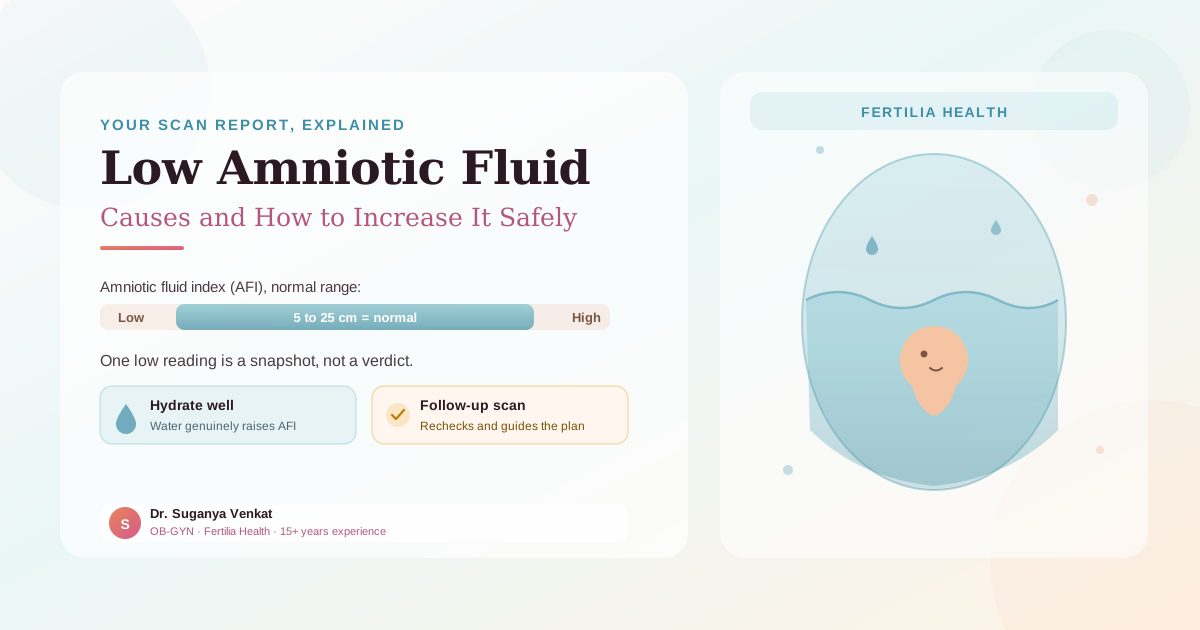
- Amniotic fluid index (AFI): the sonographer measures the fluid in four areas of the uterus and adds them up. A normal AFI is roughly 5 to 25 cm.
- Single deepest pocket (SDP): the depth of the single largest pocket of fluid. A normal SDP is roughly 2 to 8 cm.
Using these measures:
- Low amniotic fluid (oligohydramnios) usually means an AFI below about 5 cm, or an SDP below 2 cm.
- High amniotic fluid (polyhydramnios) means an AFI above about 25 cm, or an SDP above 8 cm.
One thing worth holding on to: a single measurement is a snapshot. Amniotic fluid can vary with the time of day, how hydrated you are, and even which way your baby is lying. This is why one low reading is usually rechecked rather than acted on immediately, and why your doctor asked you to hydrate and return. The SDP measure is often preferred late in pregnancy because it flags fewer women unnecessarily than AFI (Kehl et al., 2016, Ultrasound in Obstetrics and Gynecology).
What Causes Low Amniotic Fluid
There is rarely one dramatic reason. The common causes range from the entirely reversible to the ones that need medical attention:
- Not drinking enough water. Maternal dehydration is one of the most common and most reversible causes, especially in the Indian heat. This is the reason your doctor’s first advice is usually to hydrate.
- Leaking fluid (ruptured membranes). Sometimes a slow leak of fluid, which can feel like a trickle of watery discharge, lowers the level. This one is important to mention to your doctor, because it is checked and managed differently.
- The placenta. If the placenta is not delivering as much blood flow as it should, the baby produces less urine and the fluid drops. This is why low fluid is sometimes seen alongside a baby measuring small or raised blood pressure. Our guide to gestational hypertension explains that connection.
- Going past your due date. After 40 weeks, fluid naturally tends to decline, which is one reason post-term pregnancies are watched closely.
- The baby’s kidneys or urinary tract. Less commonly, the fluid is low because of how the baby’s kidneys are forming, which the anomaly scan looks for.
- Certain medicines. Some medications, such as regular NSAID painkillers, can lower fluid, which is one reason not to take them in pregnancy without your doctor’s advice.
- Idiopathic. In many cases, especially near term with an otherwise healthy baby, no specific cause is found, and outcomes are often good.
Scan showed low amniotic fluid and not sure what to do? Dr. Suganya Venkat reads your report with you, explains your AFI in plain language, and helps you understand what will help and what needs closer attention. Chat on WhatsApp
How to Increase Amniotic Fluid Safely
This is the question most women arrive with, so let me give you the honest, evidence-based version rather than a list of miracle foods.
1. Drink more water. This genuinely works for many women. Maternal hydration has real evidence behind it: drinking plenty of water measurably increases amniotic fluid in women with low levels (Hofmeyr and Gülmezoglu, Cochrane Review, 2002). This is not a folk remedy, it is the single most useful thing most women can do. Aim for steady hydration through the day rather than a large amount at once. In Indian heat, this matters even more.
2. Hydrate with more than plain water too. Tender coconut water (naariyal paani), buttermilk (chaas or moru), nimbu pani, and water-rich fruits like watermelon, cucumber, and oranges all add to your fluid intake and are easy on the stomach. They support hydration; they are not a substitute for water, but they help you keep it up across the day.
3. Rest, and lie on your left side. Resting and lying on your left side improves blood flow to the uterus and placenta, which can support fluid levels. It is gentle, it is free, and it is worth doing.
4. Treat the actual cause. If the low fluid is due to a medication, your doctor will review it. If it is due to leaking fluid, the placenta, or the baby, then water alone will not fix it, and that is not a failure on your part. It simply means the plan is a medical one, made with your obstetrician, rather than something you manage at home.
For women who need it, hospitals also have tools such as intravenous fluids, and, during labour, a procedure called amnioinfusion that adds fluid through the cervix during labour if needed. These are your doctor’s tools, and they exist precisely because low fluid is a well-understood, manageable situation.
The one thing to avoid is treating “how to increase amniotic fluid” as something you must solve alone by drinking litres of water in a panic. Hydrate well, yes, but let the follow-up scan and your doctor guide the rest.
How Low Amniotic Fluid Is Monitored
The plan depends on how many weeks pregnant you are and whether the baby is otherwise well. Typically it includes:
- A repeat scan to confirm the finding, since a single reading can be misleading.
- A biophysical profile (BPP) and Doppler scans, which check the baby’s movements, breathing, and blood flow, so your team is looking at the baby’s wellbeing, not just the fluid number.
- Growth scans, if there is any concern the baby is measuring small.
- A conversation about delivery timing if you are near term. Sometimes, when low fluid persists close to your due date, the safest plan is to deliver rather than wait, and your obstetrician will guide this.
Keeping an eye on your baby’s movements is part of this too. Our guide to fetal movement explains what is normal and when to call. Low amniotic fluid is also one of the common reasons a pregnancy is watched more closely, which we cover in our guide to high-risk pregnancy.
When It Is the Opposite: High Amniotic Fluid
Some women get the opposite finding: too much fluid, called polyhydramnios (an AFI above about 25 cm). It has its own set of causes, including gestational diabetes and, less commonly, differences in how the baby swallows. If your report says high fluid rather than low, the principle is the same: it is a signal for closer monitoring, not an automatic emergency, and your obstetrician will look for the cause and make a plan. Do not try to “reduce” fluid at home; that is entirely a medical matter.
Can I Have a Normal Delivery With Low Amniotic Fluid?
Often, yes.
Many women with low amniotic fluid, particularly near term and with reassuring monitoring, go on to have a safe vaginal delivery. The monitoring exists so your team can see how your baby is coping and choose the safest timing and method with you. In some cases, low fluid can mean the cord is more likely to be compressed during labour, so you may be monitored more closely during delivery, and occasionally a caesarean is the safer route. As always, whether that is the case for you is a decision made together with your obstetrician based on your specific situation.
What You Can Do Now
- Hydrate steadily. Water through the day, supported by coconut water, buttermilk, and water-rich fruits. This is the one thing genuinely in your hands, and it helps.
- Mention any leaking. If you feel a watery trickle or your underwear is unusually wet, tell your doctor. It changes what needs to be checked.
- Attend your follow-up scan. The repeat scan and the baby’s wellbeing checks are what actually guide the plan.
- Watch your baby’s movements. A noticeable drop in movement deserves a same-day call.
- Do not panic-drink or self-medicate. Steady hydration helps; litres in an hour do not, and no painkiller should be taken without your doctor’s advice.
FAQ: Low Amniotic Fluid
What does low amniotic fluid mean?
It means the amount of fluid around your baby, measured on a scan as the amniotic fluid index (AFI), is below about 5 cm, a finding called oligohydramnios. It can happen for simple, reversible reasons like not drinking enough water, or for reasons that need closer medical attention, such as the placenta or a slow leak of fluid. A single low reading is usually rechecked rather than acted on straight away.
How can I increase my amniotic fluid?
The most useful step for most women is to drink more water; maternal hydration has real evidence for increasing amniotic fluid. Support it with coconut water, buttermilk, nimbu pani, and water-rich fruits, and rest lying on your left side to improve blood flow to the uterus. If the low fluid is due to the placenta, the baby, or leaking fluid, water alone will not fix it, and your doctor will guide the medical plan.
Does drinking water really raise amniotic fluid?
Yes, in many cases. Studies show that maternal hydration, drinking plenty of water, measurably increases amniotic fluid in women with low levels (Cochrane Review, 2002). It is the reason your doctor’s first advice is usually to hydrate and return for a repeat scan. It does not help when the cause is not dehydration, which is why the follow-up scan matters.
What is a normal amniotic fluid level?
A normal amniotic fluid index (AFI) is roughly 5 to 25 cm, and a normal single deepest pocket (SDP) is roughly 2 to 8 cm. Below that range is called low (oligohydramnios) and above it is called high (polyhydramnios). The exact number varies with your stage of pregnancy and can change through the day, so it is read alongside your baby’s wellbeing, not on its own.
Can I have a normal delivery with oligohydramnios?
Often, yes, especially near term with reassuring monitoring. You may be watched more closely during labour because low fluid can make the cord more prone to compression, and occasionally a caesarean is the safer choice. Whether a vaginal delivery is right for you is decided with your obstetrician based on your baby’s wellbeing and your stage of pregnancy.
I feel a watery trickle. Could I be leaking fluid?
Possibly, and it is worth telling your doctor. A slow leak of amniotic fluid can feel like a watery, sometimes continuous, discharge that is different from normal pregnancy discharge. It is easy to check and important to manage correctly, so do not wait to mention it. Our guide to white discharge in pregnancy explains normal discharge and when a trickle needs a check.
What is polyhydramnios?
Polyhydramnios is the opposite finding: too much amniotic fluid, an AFI above about 25 cm. Common causes include gestational diabetes. Like low fluid, it is a reason for closer monitoring rather than an automatic emergency, and your obstetrician will look for the cause and make a plan. You should not try to reduce fluid yourself.
The Bottom Line
Low amniotic fluid on your scan is not a crisis. For many women it improves with better hydration, and even when it needs more than that, there is a clear, calm plan built around rechecking the fluid and watching how your baby is doing. Drink well, mention any leaking, attend your follow-up scan, and let your team guide the rest.
You do not have to carry the worry alone. For steady support through a low amniotic fluid pregnancy, alongside your own obstetrician, Dr. Suganya’s Pregnancy Care program helps you understand your reports, hydrate and eat well for your situation, and stay calm and prepared.
Have questions about your amniotic fluid report? Dr. Suganya Venkat reviews your scan, explains what your AFI means, and helps you support your pregnancy safely alongside your hospital team. Chat on WhatsApp
Dr. Suganya Venkat is an OB-GYN with a DNB from GKNM Hospital, Coimbatore, an MD Pathology from CMC Vellore, and 5 Gold Medals in MBBS from SRMC. She has 15+ years of clinical experience in obstetrics and women’s health.