“Can you really reverse PCOS in 90 days?”
I see this phrase in ads, in WhatsApp forwards, in friends’ Instagram messages every week. And every week, women come into a consultation asking me, gently, whether it is true. Some sound hopeful. Some sound suspicious. Almost all sound a bit tired of being sold something.
Here is the honest answer, the one I would give my own sister.
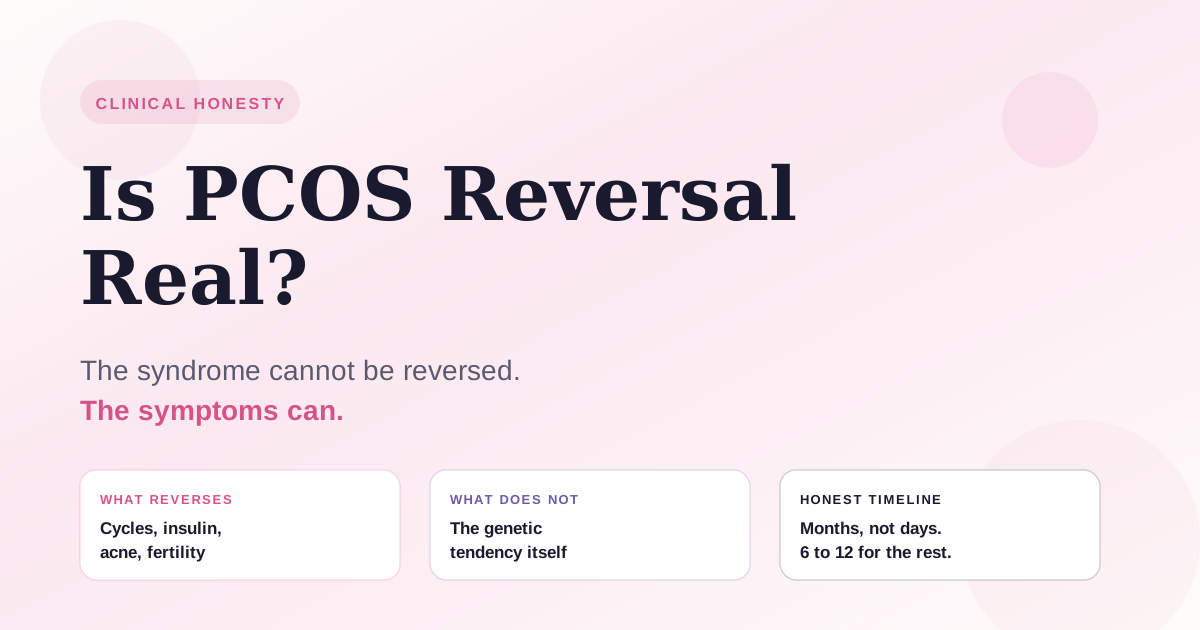
PCOS, the syndrome itself, cannot be reversed. It has a genetic basis and meets the clinical definition of a chronic condition. What can be reversed, and is genuinely well-documented in clinical research, is its symptoms. Irregular cycles can become regular. Acne can clear. Weight that would not move can move. Insulin resistance can drop. Fertility can return. That is what most articles, programs, and patient stories mean when they say “PCOS reversal.” When the underlying drivers are addressed, the symptoms recede. Sometimes deeply enough that a woman is essentially symptom-free for years.
The word that is missing from most of the marketing is also the word that makes the claim true: symptom.
This post covers:
- The clinical distinction between reversing the syndrome and reversing its symptoms
- What gets called “PCOS reversal” by the wellness industry, vs what the research actually supports
- The four PCOS drivers, and which symptoms typically reverse when each is addressed
- How to tell if your symptoms are reversing (the first signs, in order)
- When medication is still the right call (and why that is not a failure)
- The honest timeline (months, not days)
The honest answer in one paragraph
If you only read one paragraph, this is it.
PCOS is a syndrome, not an infection or a tumour. It has a genetic component, which means the underlying tendency does not vanish. It is diagnosed by the Rotterdam Criteria (Azziz 2009): two of three features, irregular ovulation, signs of high androgens like acne or excess hair, and polycystic ovaries on ultrasound. What lifestyle work actually does is address the drivers underneath, insulin resistance (Dunaif 1997), inflammation (González 2012), adrenal androgen excess (DeUgarte 2005), or hormonal rebound after coming off contraception (often transient, may not be true PCOS), and when those drivers are corrected, the symptoms recede. That is what reversal means clinically. Symptoms in remission. Not a cure.
For the full picture of what PCOS is and how the drivers work, our complete PCOS guide covers symptoms, root causes, and treatment in depth.
What the wellness industry calls “PCOS reversal” (and where it overpromises)
Walk through an Instagram feed for a week and you will see a pattern. “Reverse PCOS in 90 days.” “Cure your PCOS naturally.” “I reversed my PCOS without medication.” Some of these claims are made in good faith by women who genuinely saw their symptoms resolve. Some are made by programs selling outcomes they cannot guarantee.
Where the framing breaks is in the word “reverse” being applied to the wrong noun. The syndrome is not what reverses. The symptoms are.
If a program tells you it can “reverse PCOS” without first asking what your specific drivers are, what your insulin profile looks like, whether you are coming off the pill, whether your androgens are elevated, that is a signal to be cautious. PCOS heterogeneity is well-established in the clinical literature (Escobar-Morreale 2018). Two women with the same diagnosis can have entirely different root causes. One will respond to a low-glycaemic eating pattern in weeks. Another will need to add stress and sleep work before anything moves. A generic “PCOS reversal” plan that does not distinguish between them is, in practice, a guess.
The honest version is more specific. It starts with identifying which of the four drivers is dominant in your case, builds the plan around that, and tells you which symptoms are realistic to expect changes in, and by when.
What actually reverses (and the evidence)
This is the part the research is unambiguous on.
The Cochrane systematic review on lifestyle interventions for PCOS (Lim 2019) found significant improvement in androgen levels, insulin resistance, body composition, and menstrual regularity when women followed structured lifestyle programs. Moran 2011 showed that a 5 to 10 percent reduction in body weight produced measurable improvement in ovulation and cycle regularity. These are not anecdotes. They are randomised trial data.
Here is what typically reverses when the underlying drivers are addressed:
- Irregular cycles. Most women see cycles regulate within 2 to 3 months once insulin resistance is being addressed. Some see it in 4 weeks. Some take longer if other drivers are also present.
- Insulin resistance and HbA1c. Fasting insulin and HbA1c can drop within 8 to 12 weeks of consistent lifestyle change. This is measurable on a lab report. See our deeper guide on insulin resistance, PCOS signs, diet, and what to do.
- Acne and skin clarity. Hormonal acne usually starts to clear in 6 to 12 weeks. Full skin clarity takes longer, often 4 to 6 months. See our piece on PCOS acne: why it happens and what actually works.
- Scalp thinning and excess facial hair. These take the longest, often 6 to 12 months, because hair follicles cycle slowly. Read PCOS hair loss: scalp thinning and what works for the full timeline.
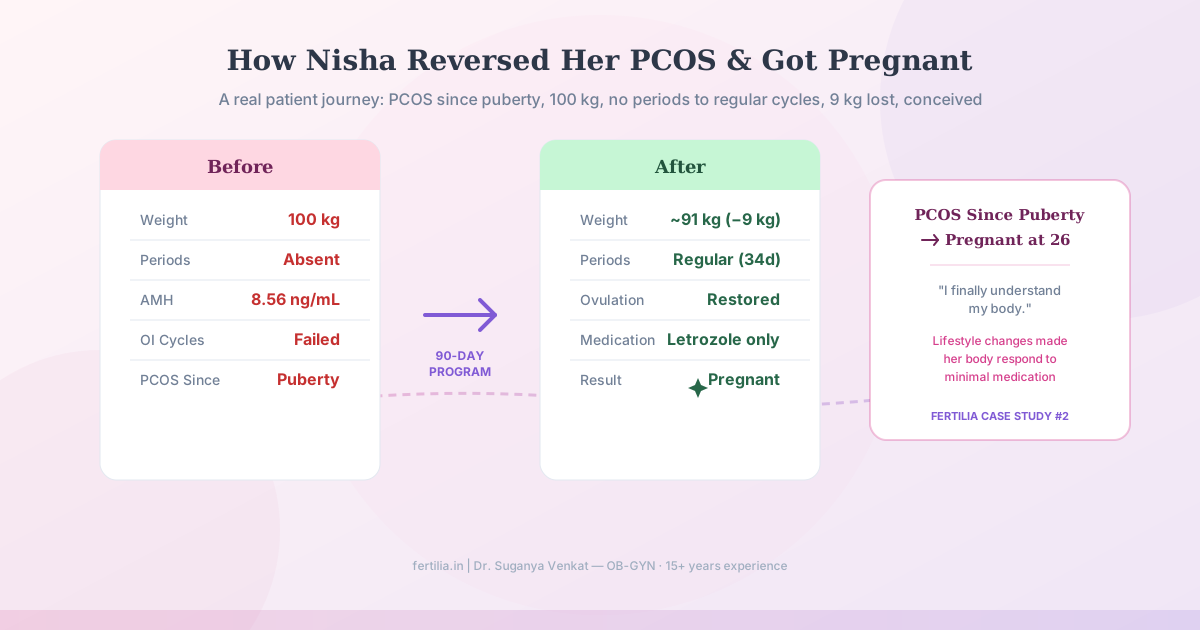
- Anovulatory infertility. Many women who have not ovulated in months or years begin ovulating again within 8 to 16 weeks of consistent work on insulin resistance and weight. Real cases from our clinic: Nisha conceived naturally after years of irregular cycles, and Aishwarya and Prakash went from PCOS to baby.
- Weight that would not move. When insulin sensitivity improves, weight that was previously stuck often starts moving. The pattern is not the dramatic “lost 10 kg in 30 days” version you see on Instagram. It is slower, around 0.5 to 1 kg a month for most women, and far more sustainable.
What does not reverse (the genetic part)
The underlying tendency.
PCOS has a familial pattern. If your mother had it, your sister has it, your daughter has higher odds of developing it. That is not something lifestyle removes. The work you do reverses the expression, the symptoms, the metabolic and hormonal cascade. The underlying biology is still there.
This is why every honest PCOS program ends with the same conversation. The habits matter beyond the program. If habits drift significantly for several months, some symptoms can return. The good news is that the same work that resolved them the first time will resolve them again, and the foundation is already built.
Want to understand which specific drivers are at play for you, and what an honest plan would look like for your body? A ₹399 online consultation with Dr. Suganya covers your history, your labs, and what is realistic in your specific case. No 90-day promises, just the honest version. Message Dr. Suganya on WhatsApp to start the conversation.
How to tell if your symptoms are actually reversing (signs in order)
The wellness industry will tell you to look at the scale. The scale is the last thing to move. The real signs come earlier, and they are often the ones women dismiss because they do not look like wins.
In the first 4 to 6 weeks:
- Energy stabilises. The 3pm crash gets smaller.
- Sugar cravings drop. The compulsive need for something sweet after lunch fades.
- Sleep deepens. You wake feeling actually rested.
- Mood swings reduce, especially the pre-period emotional crash.
In months 2 to 3:
- Periods start arriving closer to a predictable window.
- The pattern of pre-period acne reduces. Existing breakouts may still be there; new ones come slower.
- Bloating that felt constant becomes occasional.
- Hair fall in the shower noticeably reduces.
In months 4 to 6:
- Cycle regularity improves further. Some women who had not menstruated for 6 to 12 months see a return.
- Fasting insulin and HbA1c on a repeat lab show measurable improvement.
- Scalp density starts visibly improving in the parting and crown.
- Weight that was stuck often begins to move.
This is the honest order. If a program promises every change at once, in the first month, it is selling something. The body reverses symptoms in sequence, not in parallel.
For what this looks like in a real person, see Harini’s story, a 15-year-old who had gone five months without a period and saw her cycles return within a month of changing her diet and movement.
When medication is still the right call (and why that is not a failure)
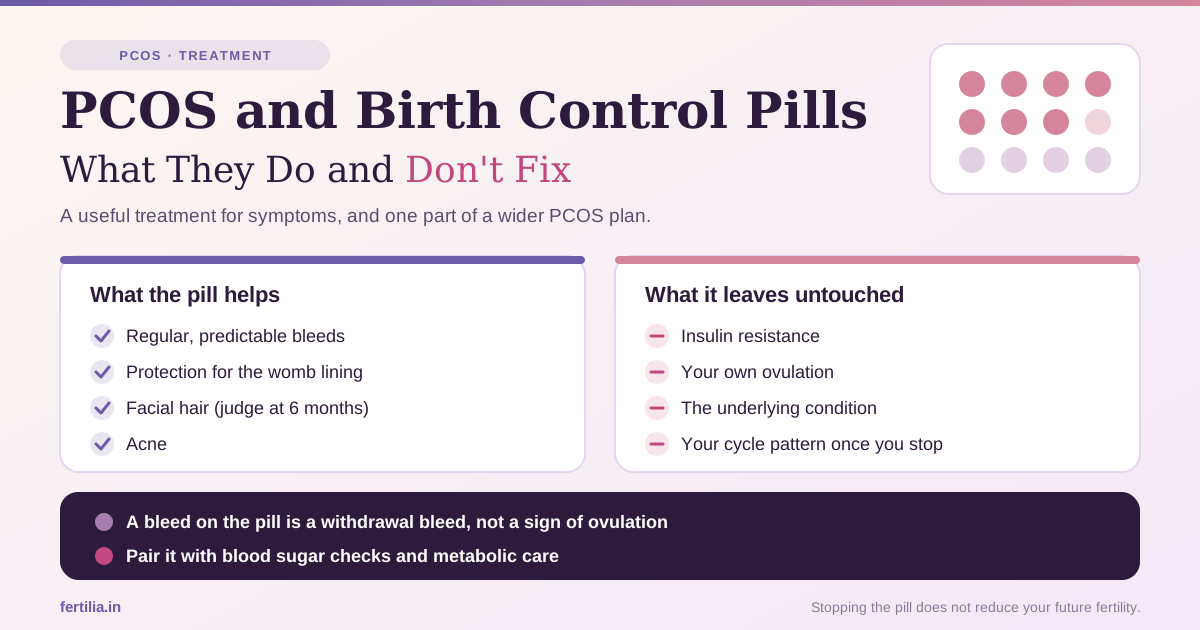
Medications, the combined oral contraceptive pill, metformin, letrozole, spironolactone, are valid tools. They are not failures of lifestyle. They are not what you have to “stop” to qualify as having reversed your PCOS.
There are three situations where I keep medication in the plan:
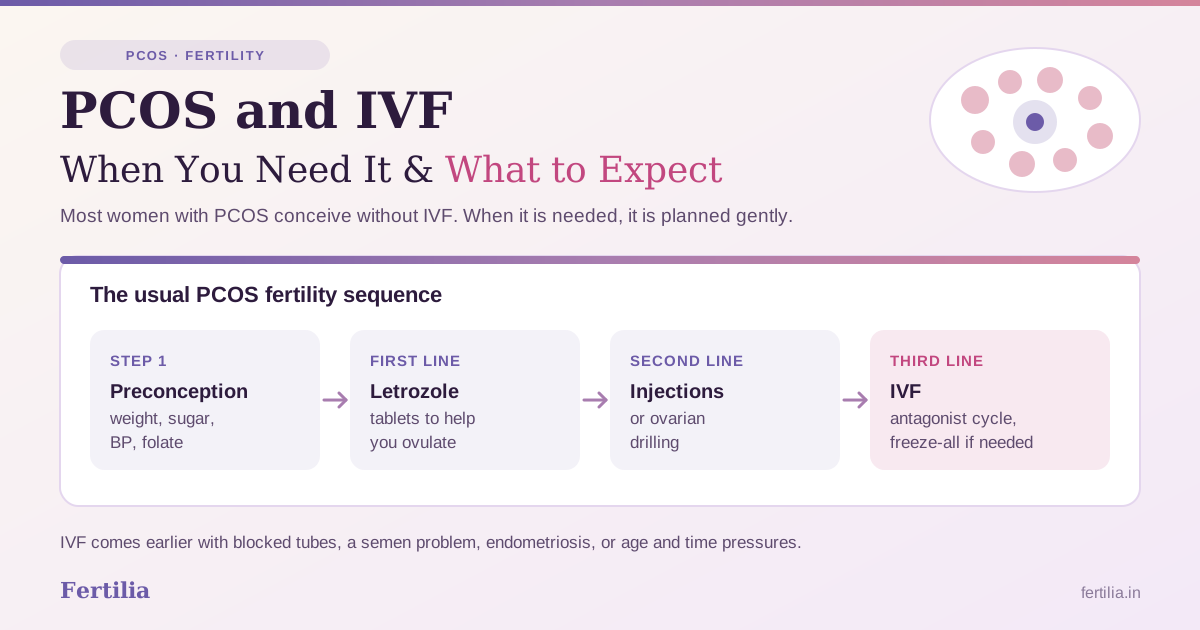
- The patient is also trying to conceive in the near term and needs ovulation induction. Letrozole or clomiphene used short term is sometimes the right bridge while lifestyle work continues underneath.
- Insulin resistance is severe. A woman with pre-diabetes range HbA1c, or a fasting insulin in the 25 to 40 range, will often need metformin for a window of 6 to 12 months while lifestyle work reduces the load. The eventual goal is to wean. The starting plan needs the medication.
For more on this, read our guide on Letrozole for PCOS. 3. The androgen symptoms (acne, hirsutism) are causing significant distress. Spironolactone or the pill can be added so a woman is not waiting 12 months for hair changes to start feeling like herself. Lifestyle work continues; medication accelerates the visible part.
Working with your gynaecologist, not around her, is the right model. Fertilia’s program adds the lifestyle and metabolic layer to the medical care you are already receiving. For more on the doctor question, see which doctor to see for PCOS or irregular periods.
Medications are not the enemy. The enemy is no plan, in either direction.
The honest timeline: 90 days, 6 months, 1 year
Here is what 90 days actually buys you when the work is done well.
Measurable insulin sensitivity improvement. Better energy and sleep. Cycle regulation in many cases. The start of acne improvement. The early signs of fertility returning. It is not enough to undo years of metabolic stress entirely.
Six months is when most of the visible symptoms have either improved or stabilised. Skin is clearer. Periods are regular. Many women who were trying to conceive have either become pregnant or are ovulating consistently. Weight is moving at a sustainable pace, often 0.5 to 1 kg a month.
One year is when the foundation is durable. The habits are integrated. The labs reflect a different metabolic profile. The symptoms that were the loudest a year ago are quiet enough that the woman often describes herself as no longer having PCOS, even though the underlying biology is still there.
Saying she has reversed her PCOS is not technically accurate. What she has done is reversed the symptoms. The clinical literature supports it. Her body knows it. The label on the marketing pamphlet is the only part that is wrong.
Practical takeaways
- If you have been diagnosed with PCOS, ask which driver is dominant in your case. That single answer tells you what to work on first. Generic “PCOS reversal” advice that does not distinguish drivers is unlikely to move the needle for you. (For a deeper read on whether you can manage PCOS without medication, see can PCOS be cured naturally without medication.)
- Look at the signs of improvement in order. Energy and cravings first. Cycles and acne next. Weight and hair last. If you are 8 weeks in and your scale has not moved but your energy is steadier and your cycle showed up closer to on time, your body is working. Stay the course.
- Do not treat medication as a personal failure. If your doctor has put you on metformin or the pill, those are valid tools. Lifestyle work is additive, not replacement.
- Be cautious of any program that promises “PCOS reversal” without first asking what your drivers are. A real plan starts with your specific picture, not a generic protocol.
If you want to talk through your specific picture with Dr. Suganya, message her team on WhatsApp and they will take it from there. Or download her free PCOS reversal guide, which walks through this in more detail.
FAQ
Can you actually reverse PCOS, or is it always there?
The syndrome is always there. PCOS has a genetic basis. The symptoms can be reversed, and that is what most people mean by “reversing PCOS.” When the underlying drivers (insulin resistance, inflammation, adrenal stress) are addressed, the symptoms recede, often deeply enough that a woman is essentially symptom-free for years while she keeps the habits in place.
How long does it take to reverse PCOS symptoms?
Most women see the first changes in 4 to 6 weeks, typically energy, cravings, and sleep. Cycle regulation usually takes 2 to 3 months once insulin resistance is being addressed. Weight, skin, and scalp hair are slower, often 4 to 12 months. The 90-day window is enough to produce a measurable shift. The full reset usually takes 6 to 12 months.
Can I reverse PCOS without medication?
Often, yes, depending on which drivers are dominant and how severe each is. Women whose primary driver is insulin resistance frequently respond well to nutrition, movement, sleep, and stress changes alone. Women with severe androgen symptoms, very high HbA1c, or those trying to conceive in the near term may benefit from medication used in parallel. Medication is a tool, not a failure.
What is the difference between “PCOS reversal” and “PCOS cure”?
Cure means the underlying disease is gone. Reversal, in the clinical sense, means the symptoms are gone but the underlying tendency remains. PCOS cannot be cured. Its symptoms can be reversed. That distinction is medical, not marketing.
What are the first signs that my PCOS symptoms are reversing?
In order: energy stabilising, sugar cravings dropping, sleep deepening, mood swings reducing, periods starting to arrive closer to a predictable window, pre-period acne lessening, hair fall in the shower reducing, and finally weight starting to move. The scale is the last thing to change, not the first.
If I stop the program, will the symptoms come back?
The genetic component is still there, so habits matter beyond the program. If habits drift significantly for several months, some symptoms can return. The good news is that the same habits that resolved them the first time will resolve them again, and the foundation is already built. Most women who finish a 90-day program continue the habits naturally because they have started feeling the difference.
Is “PCOS reversal” the same as “PMOS reversal” now that PCOS has been renamed?
The condition is the same; only the official name changed in May 2026. PCOS, PCOD, and PMOS all refer to the same syndrome. The diagnostic criteria (Rotterdam) and treatment principles are identical. So “PMOS symptom reversal” and “PCOS symptom reversal” describe the same clinical reality. See our PCOS to PMOS rename explainer for the full picture of the rename.
A final word
PCOS is one of the most over-promised conditions in women’s health, and one of the most under-explained. If you have been doing the work and seeing some of the signs above but feel unsure what to focus on next, that is exactly the conversation worth having.
Message Dr. Suganya on WhatsApp for a ₹399 online consultation that walks through your specific picture: what your drivers likely are, what is realistic in 90 days, and what an honest plan looks like for your body. Or download her free PCOS reversal guide to see the approach in more detail before deciding anything. The structured version of that work is her 90-day PCOS Symptom Reversal program, where each driver gets tracked and worked on over time rather than guessed at.
The honest version is always available. You just have to ask for it.