In the last few months, more women have started asking about Ozempic in my video consultations than any other single medication. Some have seen a friend’s transformation, some found it on Instagram, and some are simply exhausted after years of being told to “just lose weight” for their PCOS. It’s a fair question to bring to your doctor. It is not a fair question to answer with a one-line yes or no, because the honest picture has real promise in it and real gaps in it, sitting right next to each other.
The short version: GLP-1 receptor agonists (semaglutide, sold as Ozempic and Wegovy, and liraglutide, sold as Saxenda and Victoza) were developed first for type 2 diabetes and then for obesity. They were not designed as PCOS drugs, but because insulin resistance and excess weight are drivers in a large share of PCOS, researchers have started testing them specifically in women with PCOS, and the early trial results on weight and insulin markers are genuinely encouraging. What they have not been shown to do is treat PCOS as a whole, they are not approved for a PCOS indication in India, and there is a real, non-negotiable planning step around pregnancy that gets left out of most online discussions. This post covers all of it.
Here is what this post covers:
- Why GLP-1 drugs came up in PCOS at all
- What the trials actually found on weight, insulin, and hormones
- India’s regulatory status: what these drugs are and aren’t approved for here
- Where GLP-1 therapy fits, and where it doesn’t, alongside first-line PCOS care
- Who might be a candidate, and who clearly isn’t
- The pregnancy planning point that matters most
- Cost and access in India
Why GLP-1 Drugs Came Up in PCOS at All
GLP-1 (glucagon-like peptide-1) is a hormone your gut naturally releases after eating. It slows stomach emptying, increases the feeling of fullness, and helps your pancreas release insulin more efficiently in response to food. GLP-1 receptor agonist medications mimic this hormone at a stronger, sustained dose, which is why they produce meaningful appetite reduction and, over time, weight loss.
The connection to PCOS runs through insulin resistance, which is one of the PCOS drivers in roughly 70% of women with the condition (Dunaif, 1997). When insulin resistance is significant, the pancreas compensates by producing more insulin, and excess insulin is understood to push the ovaries to produce more androgens, which in turn worsens the irregular cycles, acne, and hair growth that bring most women to a PCOS diagnosis in the first place. A medication that improves insulin sensitivity and reduces excess weight is, on paper, addressing a real upstream piece of that chain, which is exactly why researchers started running dedicated PCOS trials rather than just extrapolating from the general obesity data.
That reasoning is sound. It is also not the same as proof that these drugs work well for PCOS specifically, which is where the actual trial evidence comes in.
What the Trials Found
This is worth reading slowly, because the honest picture here is stronger on some outcomes than others.
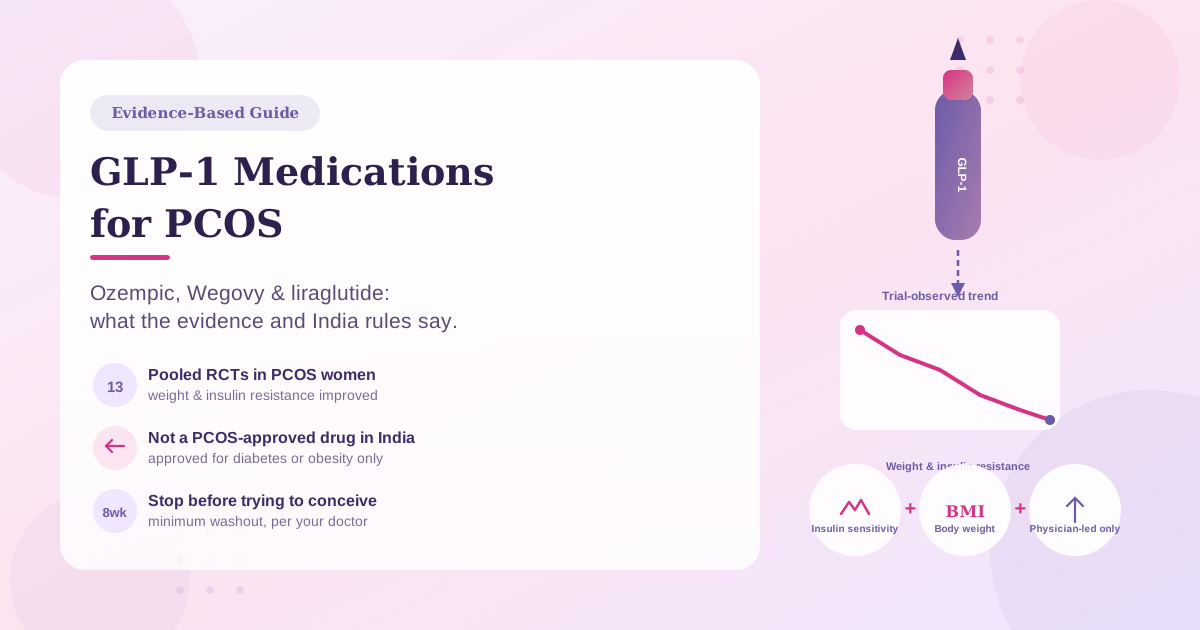
The most complete evidence to date is a 2025 systematic review and meta-analysis by Lin et al. (Scientific Reports, PMID 40360648), which pooled 13 randomised controlled trials of GLP-1 receptor agonists in women with PCOS, comparing them against metformin or placebo. Across the pooled trials, GLP-1 therapy produced statistically significant reductions in body weight, BMI, waist circumference, waist-to-hip ratio, fasting insulin, and HOMA-IR (the standard lab measure of insulin resistance), with the anthropometric reductions reaching P<0.0001. The same review found more nausea, vomiting, and dizziness in the GLP-1 group, which tracks with what’s known about these drugs generally, and importantly, most hormone and lipid measures the review examined did not show a significant change, aside from a reduction in HDL cholesterol.
Liraglutide has the more mature trial base specifically in PCOS. A 26-week, placebo-controlled randomised trial by Nylander et al. (Endocrine Connections, PMID 28119323) in 72 women with PCOS found a placebo-adjusted body weight reduction of 5.2 kg, a BMI reduction of 1.8 kg/m², and a waist circumference reduction of 5.7 cm, roughly a 5% weight loss over half a year. Companion papers from the same trial cohort reported meaningful reductions in liver fat and visceral fat, and improvements in menstrual bleeding pattern and free testosterone.
Semaglutide’s PCOS-specific evidence is smaller and earlier stage. The most cited study is Carmina and Longo (Journal of Clinical Medicine, PMID 37762862), a small observational cohort of 27 women with PCOS and obesity who had not achieved weight loss through lifestyle intervention alone. On a comparatively low weekly dose (0.5 mg), the group lost an average of 7.6 kg over 3 months, and among the women who continued and responded through 6 months, average total loss reached 11.5 kg, with menstrual regularity reported in 80% of that responder subgroup. This is a real, useful signal. It is also a small, single-centre study without a randomised placebo arm, at a dose lower than what’s commonly used for obesity in the general population, so it should be read as promising, not conclusive.
⚠️ What this evidence does and doesn’t establish. The weight and insulin-resistance findings are consistent and reasonably strong across the pooled trials. The fertility, ovulation, and hormone findings are thinner, mostly from smaller individual trials rather than the large meta-analysis, and were not the primary outcome most of these studies were designed to measure. Treat “GLP-1 drugs help you lose weight and improve insulin resistance in PCOS” as fairly well supported, and “GLP-1 drugs restore ovulation and fertility in PCOS” as an open question still being studied, not yet a settled finding.
💜 Wondering whether a GLP-1 medication is worth discussing for your PCOS? Message Dr. Suganya on WhatsApp to talk through whether this fits your specific PCOS picture, over a video consultation.
India’s Regulatory Status: What These Drugs Are (and Aren’t) Approved For
This is the part that gets skipped in most social media discussion, and it matters.
In India, semaglutide is marketed under two separate brand names for two separate approved uses: Ozempic is approved for type 2 diabetes, alongside diet and physical activity, and Wegovy is approved for chronic weight management in adults with obesity (and, as of a July 2026 CDSCO approval, for the liver condition MASH at its 2.4 mg dose). Liraglutide, sold under brand names for either diabetes or weight management depending on the specific product, follows the same pattern. As of writing (checked August 2026), none of these medications carry a DCGI-approved indication specifically for PCOS, in India or elsewhere.
What that means in practice: if a doctor prescribes a GLP-1 medication to a woman with PCOS, the prescription is written under the diabetes or obesity indication she independently qualifies for, typically based on BMI or blood sugar criteria, not under a “PCOS treatment” label, because that label doesn’t exist yet on any Indian product. This is standard practice for many medications used in PCOS care, including metformin itself, and it doesn’t make the use inappropriate. It does mean it should always be a considered, individualised decision made with a doctor who is looking at your full picture, not a self-directed purchase.
India’s semaglutide patent expired in March 2026, and generic semaglutide products have since entered the market at meaningfully lower prices. Approved indications on generic products are formulation-specific, so an approval for one brand or strength does not automatically extend to another. Verify the specific product’s approved indication and source it through a licensed prescription channel rather than an informal seller.
Where GLP-1 Therapy Fits, and Where It Doesn’t
At Fertilia, GLP-1 medications are discussed as one possible tool within a broader PCOS plan, never as the plan itself, and never as a first move.
First-line treatment for PCOS remains lifestyle change, metformin when insulin resistance is significant, and myo-inositol as a well-evidenced supplement option. These are the foundations because they’re better studied in PCOS specifically, more accessible, and appropriate for a much wider range of women, including many who wouldn’t meet the BMI or metabolic criteria that make a GLP-1 medication a reasonable clinical option. Our guide on why PCOS makes weight loss so hard covers the lifestyle and metabolic pieces this rests on.
GLP-1 therapy becomes a reasonable conversation when a woman has significant obesity or marked insulin resistance that hasn’t responded adequately to lifestyle changes and first-line medication, and she meets the approved criteria for the diabetes or weight-management indication the prescription would actually be written under. It is never a substitute for addressing PCOS drivers individually, and it is not a shortcut around the diet and movement foundations, because the trial evidence itself was built on top of those, not instead of them.
This is also a genuinely collaborative decision between specialities. A GLP-1 prescription for PCOS-related weight and insulin issues is often best managed jointly between your OB-GYN and an endocrinologist or physician experienced with these medications, particularly for dose titration and side-effect monitoring.
Who Might Be a Candidate, and Who Clearly Isn’t
Because these medications are approved in India for diabetes or obesity, not PCOS, candidacy generally follows those same criteria rather than a PCOS-specific rulebook:
- Typically considered: women who meet standard BMI thresholds for obesity (or a lower BMI with weight-related health conditions), or who have type 2 diabetes or prediabetes alongside their PCOS, and who have not reached their goals with lifestyle change and first-line PCOS medication alone.
- Generally not a fit: women with a lean or normal-weight PCOS phenotype, women whose primary goal is fertility in the near term (these are not fertility drugs, and as the next section covers, they specifically need to be stopped before a pregnancy attempt), and anyone considering starting one without a prescribing doctor’s individualised review of contraindications, including a personal or family history of certain thyroid cancers.
This should always be a physician-supervised decision, never a self-directed one. If you’re seeing these medications discussed online as a general weight-loss shortcut, that framing skips the parts that make the decision safe.
The Pregnancy Planning Point That Matters Most
This is, in my view, the single most important safety detail in this entire topic, and it’s the one most likely to get missed in an informal recommendation.
GLP-1 medications must be stopped well before a planned pregnancy attempt, and the timing differs by drug. Semaglutide’s manufacturer labelling specifies discontinuing at least 2 months (about 8 weeks) before attempting to conceive, because of the drug’s long half-life and correspondingly long washout period in the body. Liraglutide’s labelling does not give a fixed number of weeks, but is clear that it should be discontinued once pregnancy is planned or recognised; because it clears the body faster than semaglutide, the exact lead time is something to agree directly with your prescribing doctor. Always verify current washout guidance with your prescribing doctor at the time you’re planning to conceive, since this is exactly the kind of detail that should come from your treating physician reading the current product information, not from an old blog post or an outdated pack insert.
For many women, this is precisely why the sequencing matters: if pregnancy is a near-term goal, a GLP-1 medication is usually not the right tool to reach for right now, and if it’s already part of your plan for a different reason, your doctor needs to know about your conception timeline so the discontinuation window can be built into it properly, alongside a plan for maintaining glucose control or continued weight management in the gap.
💜 Planning a pregnancy while managing PCOS and considering your medication options? Talk to Dr. Suganya on WhatsApp to build a plan that accounts for your conception timeline from the start.
Cost and Access in India
As of August 2026, branded semaglutide in India runs approximately ₹5,660 to ₹9,100 for a 4-week supply of Ozempic (0.25 mg to 1 mg weekly doses) and ₹5,660 to ₹16,400 for a 4-week supply of Wegovy (0.25 mg to 2.4 mg weekly doses), following a Novo Nordisk price reduction earlier this year. Generic semaglutide, available since the March 2026 patent expiry, has been reported at lower starting prices, roughly ₹1,290 to ₹1,300 for a month’s supply in some vial formulations. Prices vary by brand, dose, and pharmacy, and typically rise as the dose is titrated upward over the first several months, so these figures are a starting reference, not a fixed quote. Budget beyond the medication itself for the prescribing consultation and the blood work monitoring most doctors will want during treatment. Fertilia has no commercial relationship with any pharmaceutical brand; verify current pricing directly with a licensed pharmacy before purchasing, and always source these medications through a legitimate prescription channel rather than an unverified online seller.
I’m Dr. Suganya Venkat, and in fifteen years as an OB-GYN, the pattern I see most often with newer medications like this is women arriving with a strong opinion formed online before we’ve even discussed whether it applies to their specific PCOS picture. This is exactly the kind of decision I work through individually with women in the 90-day PCOS Symptom Reversal program: whether a genuinely promising option like GLP-1 therapy fits your metabolic picture, your first-line treatment history, and your fertility timeline, rather than applying it as a general-purpose fix.
💜 Have questions about GLP-1 medications, or want a full PCOS plan built around what’s actually driving yours? Message Dr. Suganya on WhatsApp for a video consultation.
Frequently Asked Questions
1. Does Ozempic help with PCOS? Ozempic (semaglutide) was developed for type 2 diabetes, not PCOS, but a growing body of trial evidence shows GLP-1 medications like semaglutide can meaningfully improve weight and insulin resistance in women with PCOS, both of which are drivers of the condition in many women. It is not approved for a PCOS indication in India, and its effect on fertility and ovulation specifically is not yet well established.
2. Is semaglutide safe for PCOS in India? Semaglutide products (Ozempic, Wegovy, and generics) are DCGI-approved in India for type 2 diabetes or obesity, and using one for PCOS-related weight or insulin issues would be an off-label, physician-supervised decision based on whether you independently meet those approved criteria. It should never be self-started; a doctor needs to review your full history, including thyroid cancer risk factors and pregnancy plans, first.
3. Can I take Ozempic or Wegovy while trying to conceive? No. Semaglutide’s manufacturer labelling specifies stopping at least 2 months before attempting pregnancy because of its long washout period. Liraglutide should also be stopped when pregnancy is planned, though its label gives no fixed number of weeks. Always confirm the current washout guidance with your prescribing doctor when you’re planning to conceive.
4. Is Ozempic better than metformin for PCOS? They aren’t directly comparable as “better” or “worse”; they work differently and are used in different situations. Metformin remains a well-studied, accessible first-line option for PCOS-related insulin resistance for a much wider range of women. GLP-1 medications tend to produce larger weight-loss effects in trials, but the PCOS-specific evidence base is newer and smaller, and they require meeting a diabetes or obesity indication to be prescribed in India.
5. How much weight can you lose with semaglutide for PCOS? In the small PCOS-specific studies available, women lost roughly 7 to 11 kg over 3 to 6 months on semaglutide, and about 5% of body weight on liraglutide over 26 weeks in a larger randomised trial. These are averages from specific study populations, not guarantees, and results vary by individual, dose, and how long the medication is continued.
6. What is the cost of Ozempic for PCOS in India? As of August 2026, branded Ozempic runs approximately ₹5,660 to ₹9,100 for a 4-week supply depending on dose, with Wegovy ranging higher at the weight-management doses. Generic semaglutide, available since the March 2026 patent expiry, has been reported at lower prices, but always verify current pricing with a licensed pharmacy, since this market is changing quickly.
7. Who should not take GLP-1 medications for PCOS? Women with a lean or normal-weight PCOS phenotype who don’t meet obesity or diabetes criteria, anyone planning a near-term pregnancy without first completing the required discontinuation window, and anyone with a personal or family history of certain thyroid cancers are generally not candidates. This decision should always involve an individualised review by a prescribing doctor, never a self-directed start.
Have questions about GLP-1 medications or building a full PCOS plan? Message Dr. Suganya on WhatsApp: wa.me/919940270499