Your gynaecologist mentioned a Pap smear at your last visit. Maybe you nodded, meaning to look it up later. Maybe you have been putting off the appointment because you are not sure what the test involves, what it costs, or whether you actually need it this year.
This guide answers those questions plainly. What a Pap smear checks, when to start, how often to go, what it costs at different labs and hospitals across India, and what to expect during the test itself. No medical jargon, and no reason to keep postponing.
What a Pap Smear Checks (and What It Does Not)
A Pap smear collects a small sample of cells from your cervix, the lower end of the uterus that opens into the vagina. Those cells are looked at under a microscope to see whether any of them are behaving abnormally.
The test does not diagnose cervical cancer. What it does is catch cell changes at an early stage, before they have progressed into anything serious. Most abnormal cervical cells are caused by HPV (human papillomavirus), a common virus. Not every HPV infection leads to cell changes, and most mild cell changes clear up on their own. But some progress slowly over years, and a Pap smear finds those changes early enough to treat completely and simply.
For more on this, read our guide on Cervical Cancer Screening. Cervical cancer is one of the most preventable cancers because of this. The World Health Organization notes that regular screening and early treatment can prevent the majority of cervical cancer deaths. India accounts for a significant share of global cases, largely because screening coverage remains low. Getting a Pap smear is one of the most straightforward things a woman can do for her long-term health.
Who Needs a Pap Smear and When to Start
Women who have been sexually active are the target for cervical screening, because HPV transmission requires sexual contact. If you have never been sexually active, routine Pap smears are generally not recommended, though your doctor may still advise one based on your specific history.
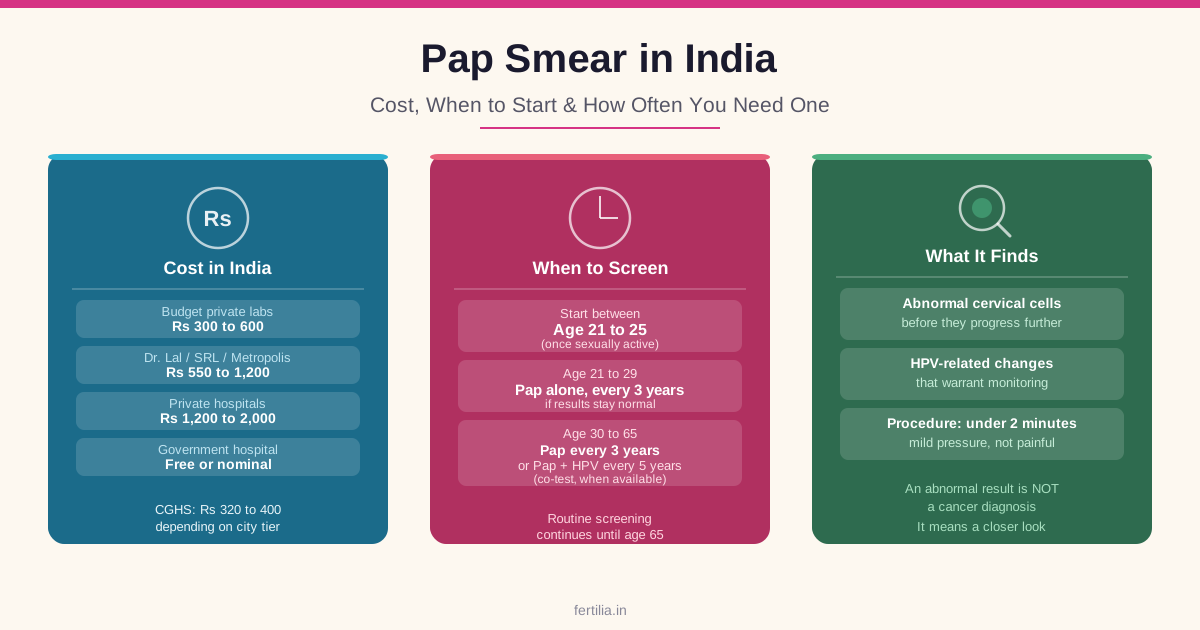
Age to start: Most Indian gynaecologists and FOGSI (Federation of Obstetric and Gynaecological Societies of India) guidance recommend starting cervical screening between age 21 and 25 for sexually active women. Some programmatic guidelines say by age 25 is sufficient for average-risk women; in practice, most OB-GYNs start the conversation at the first gynaecology visit after a woman becomes sexually active.
Upper age: Routine screening is generally recommended until age 65. After 65, if you have had consistent normal results and no history of significant cell changes (CIN2 or higher), you can usually stop. If there has been a history of abnormal results, screening continues for at least 20 years after treatment, even if this takes you past 65.
During pregnancy: Pap smears can be done safely in the first trimester if one is due. If you are past 12 weeks when it comes up, most obstetricians wait until 6 to 12 weeks after delivery.
How Often Do You Need One
The recommended interval depends on your age and which test you choose.
For more on this, read our guide on Breast Ultrasound vs Mammogram. Age 21 to 29: Pap smear alone, every 3 years, as long as results are normal.
Age 30 to 65: Two options:
- Pap smear alone, every 3 years. The simpler option if HPV testing is not available or not convenient at your chosen facility.
- Pap smear plus HPV test (co-test), every 5 years. This combination is considered the preferred strategy when both tests are available, because a negative result on both gives a longer window of reassurance before the next screen.
If your result comes back as mildly abnormal, your doctor will advise a repeat test in 6 to 12 months rather than jumping straight to further investigation, since many mild changes resolve on their own.
For the preconception period specifically, a Pap smear is one of the tests worth completing before you start trying. For a full picture of the investigations that matter before conception, see the fertility workup guide for Indian women. The preconception checkup resource also has a downloadable checklist at preconception checkup guide.
Pap Smear vs HPV Test vs Co-Test
These three terms appear together often, and it helps to know what each one is.
Pap smear (conventional or liquid-based cytology): Looks at the shape and appearance of cervical cells under a microscope. Detects cell changes (dysplasia) regardless of cause.
HPV test: Does not look at cell shape. Instead, it tests the same cervical sample for the DNA of high-risk HPV strains. A positive HPV result means the virus is present; it does not mean cell changes have happened yet.
Co-test: Both tests done from the same cervical sample collected at the same appointment. The combination gives more information than either test alone and supports a longer interval between screens if both are negative.
In most private hospitals and diagnostic chains in India, co-testing is available. Standalone government health centres may offer only conventional Pap smears. Ask what is available at your facility when you book.
Pap Smear Cost in India: Lab and Hospital Prices
Prices vary by city, facility type, and whether the test is conventional or liquid-based. The figures below are current ranges as of mid-2026, verified against lab websites and aggregator listings (Rule 10 applied at write; confirm at your facility before booking, as prices change).
Private diagnostic labs
| Provider | Approximate Cost |
|---|---|
| Dr. Lal PathLabs | Rs 550 |
| SRL Diagnostics | Rs 1,050 |
| Metropolis Healthcare | Rs 300 to 1,200 (city-dependent) |
| Budget local labs | Rs 300 to 600 |
Private hospitals
Most private hospitals include the Pap smear as part of a gynaecology consultation package or women’s health check. Standalone pricing at private hospitals typically runs Rs 1,200 to 2,000, and the total visit cost is higher if bundled with a consultation. If cost is a consideration, booking the test at a standalone diagnostic lab rather than a hospital outpatient department is usually cheaper for the same quality result.
CGHS (Central Government Health Scheme)
If you are a CGHS beneficiary, the reference rate for a Pap smear is Rs 400 in metro cities (Tier X), Rs 360 in Tier Y cities, and Rs 320 in Tier Z cities, at empanelled facilities.
Government hospitals and state health programmes
For women attending government hospitals, Pap smears are often provided free of charge or at a nominal cost under national cervical cancer prevention programmes. Availability depends on the specific hospital and state. Many district and taluk hospitals now offer Pap smears under the NHM (National Health Mission) at no cost for eligible women. It is worth calling ahead to confirm.
Co-test (Pap + HPV together)
Expect to pay Rs 1,500 to 3,500 at private labs and Rs 2,000 to 4,500 at hospitals for the combined test. The HPV component adds to the base Pap smear cost.
If you would like to understand how a Pap smear fits alongside other fertility and preconception investigations, see our complete fertility workup cost guide.
What Happens During a Pap Smear
The procedure takes under 2 minutes.
You will be asked to lie on your back with your knees bent (a position called the lithotomy position). Your doctor or gynaecologist will gently insert a speculum into the vagina to hold it open so the cervix is visible. A soft brush or spatula is then used to collect a small sample of cells from the surface of the cervix and from the opening of the cervical canal. The sample is sent to the lab.
What it feels like: Most women describe mild pressure during the speculum insertion, similar to the sensation of a pelvic exam. Some feel a brief cramp when the cells are collected, lasting a second or two. The test should not be painful. If you have had discomfort before, tell your doctor beforehand so they can use a smaller speculum and go slowly.
A few practical points:
- Schedule the test when you are not on your period. The best time is 10 to 20 days after the first day of your last period.
- Avoid vaginal intercourse, douching, or vaginal medications for 48 hours before the test, as these can affect the sample quality.
- You do not need to do anything special to prepare otherwise.
- You may have very light spotting for a few hours afterwards. This is normal.
If the Result Is Not Normal
A Pap smear result that is not normal does not mean you have cancer. It usually means one of a few things, most of which are manageable with monitoring or simple treatment.
Common abnormal findings:
- ASCUS (atypical squamous cells of undetermined significance): Mild changes that could clear on their own. Often managed with a repeat Pap in 6 to 12 months, or an HPV reflex test.
- LSIL (low-grade squamous intraepithelial lesion): Mild cell changes, often linked to an active HPV infection. Usually monitored rather than treated immediately.
- HSIL (high-grade squamous intraepithelial lesion): More significant changes that warrant a colposcopy.
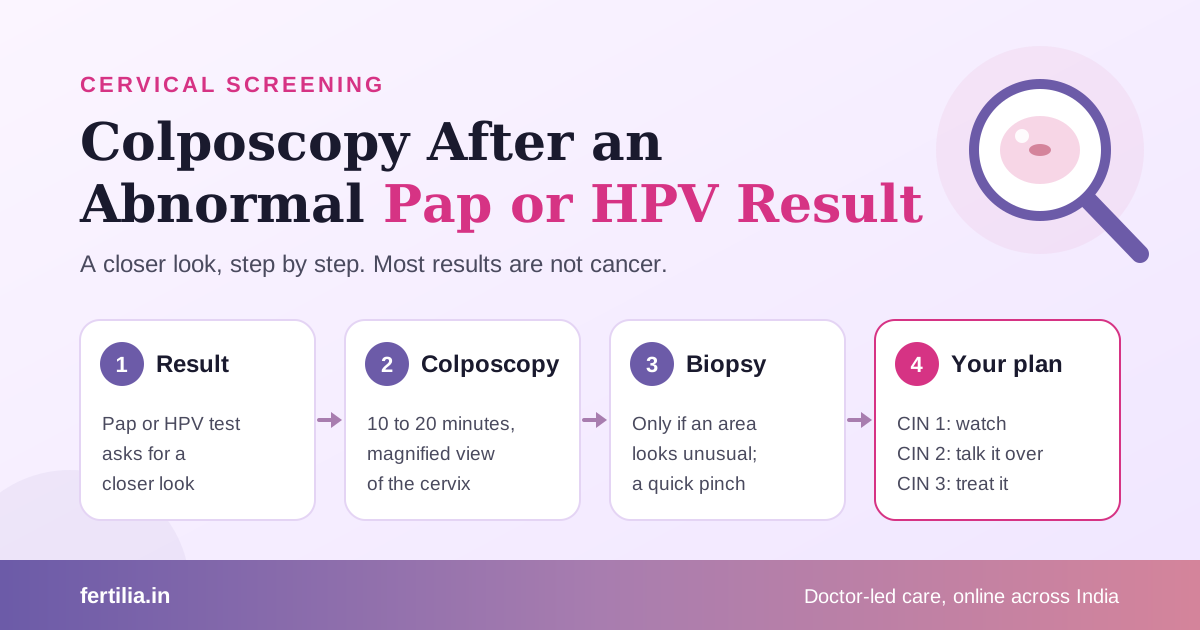
Colposcopy is not a treatment. It is a closer look at the cervix using a magnifying instrument, done in a clinic, usually without anaesthesia. If the colposcopy shows a concerning area, a small biopsy may be taken. From there, your doctor will advise on whether treatment is needed and which kind.
For a broader view of how different women’s health investigations fit together, our guide on multidisciplinary care for women’s hormonal health covers how gynaecological, metabolic, and reproductive care connect.
FAQ: Pap Smear Cost and Screening in India
Is a Pap smear painful? For most women, it is not painful. The speculum may feel uncomfortable, and the cell collection sometimes causes a brief cramp. If you are anxious about the procedure or have had discomfort before, let your doctor know and ask for a small speculum. The test itself lasts under 2 minutes.
Can I get a free Pap smear in India? Yes. Government hospitals and public health centres under the National Health Mission offer Pap smears free or at nominal cost for eligible women. Availability varies by state and hospital. Private labs charge Rs 300 to 1,200 depending on the facility. If you are a CGHS beneficiary, the reference rate at empanelled hospitals is Rs 320 to 400.
At what age should I get my first Pap smear? Most Indian gynaecologists recommend starting between age 21 and 25 once you have been sexually active. If you are over 25 and have never had a Pap smear, it is worth scheduling one regardless. You do not need to wait for a symptom.
How often do I need a Pap smear? Between age 21 and 29: every 3 years, as long as results are normal. Between age 30 and 65: every 3 years (Pap alone) or every 5 years (Pap plus HPV co-test). These intervals apply to women with consistently normal results. If you have had an abnormal result, your doctor will set a different follow-up schedule.
Is a Pap smear necessary if I have had an HPV vaccine? Yes. The HPV vaccine covers the most common high-risk strains but not all of them. Vaccinated women still need regular Pap smears or co-testing according to the standard schedule. The vaccine and the screening programme work together; one does not replace the other.
For more on this, read our guide on HPV Vaccine in India. Can I have a Pap smear done if I am trying to conceive? Yes. A Pap smear does not affect fertility or implantation. It is recommended as part of a preconception checkup because any abnormal finding is easier to address before pregnancy than during it. See the preconception checkup guide for the full list of recommended tests.
I am post-menopausal. Do I still need Pap smears? Until age 65, yes, if you have not had adequate prior screening. If you are under 65 and have never had regular Pap smears, do not skip this one. After 65, screening can usually be stopped if you have had consistently normal results in the preceding 10 years and no history of significant cell changes. Your gynaecologist will confirm this based on your history.
What to Do Next
If you are due for a Pap smear or are not sure when you last had one, the step is simple: book it. At a diagnostic lab, the test costs Rs 300 to 1,200 and takes under 10 minutes of your time including the collection. At a government hospital, it may cost nothing at all.
If you are not sure where you stand with cervical screening, or you received a result that was not fully explained to you, a video consultation with Dr. Suganya is a good starting point. She reviews your history, answers your questions, and explains what the next step should be.