“Doctor, this is the third time this year. Why does it keep coming back?”
I hear some version of this question regularly. A woman finishes her antibiotics, feels better for three or four weeks, and then recognises the familiar burning again, the urgency, the need to be near a bathroom at all times. It feels like the infection never quite left, or like her body just cannot fight it off.
One UTI is common. But two or more in six months, or three or more in a year, crosses into what doctors call recurrent UTI. Aydin et al. (Int Urogynecol J 2015, PMID 25410372) found that 36% of younger women and 53% of women over 55 report at least one recurrence within a year of their first infection. This is not a rare problem.
Here is what I want you to take away from this post: recurrent UTI is almost never just bad luck. There is usually a specific, identifiable reason, and once that reason is clear, breaking the cycle becomes a real possibility.
This post covers:
- What “recurrent UTI” means clinically and why the distinction matters
- The four main reasons recurrence happens
- What prevention evidence supports (and what it does not)
- When to ask for prophylaxis
- When to involve a urologist
- A note on UTIs after perimenopause, and why oestrogen is part of the picture
What “recurrent” means, and why the pattern matters
Doctors define recurrent UTI as two or more confirmed infections within six months, or three or more within twelve months (Arnold et al., Am Fam Physician 2016, PMID 27035041). Within this, two patterns are clinically distinct.
Re-infection is the more common pattern. Each episode is a new infection. The same bacteria, usually E. coli, travels up the urethra again from the same source. Treatment clears it each time, but nothing prevents the next entry.
Relapse is different. The same organism from the previous infection was never fully eliminated. It returns, typically within two weeks of finishing antibiotics, because it found a protected place to survive: a biofilm on the bladder wall, an incompletely treated kidney focus, or a structural pocket where antibiotics do not reach full concentration.
Why does this distinction matter? Because the treatment approach differs. Relapse within two weeks of finishing antibiotics needs a urine culture to confirm the organism, and often a longer or different antibiotic course, plus investigation for structural causes. Re-infection calls for identifying the underlying trigger and either addressing it directly or considering prophylaxis. Both benefit from a properly collected urine culture during an active episode, not just a clinical guess.
If you have been treated repeatedly with the same antibiotic without a culture, that is worth raising with your doctor. Resistance patterns in India are shifting, and the antibiotic that worked last year may not be the right one today.
Four reasons UTIs keep coming back
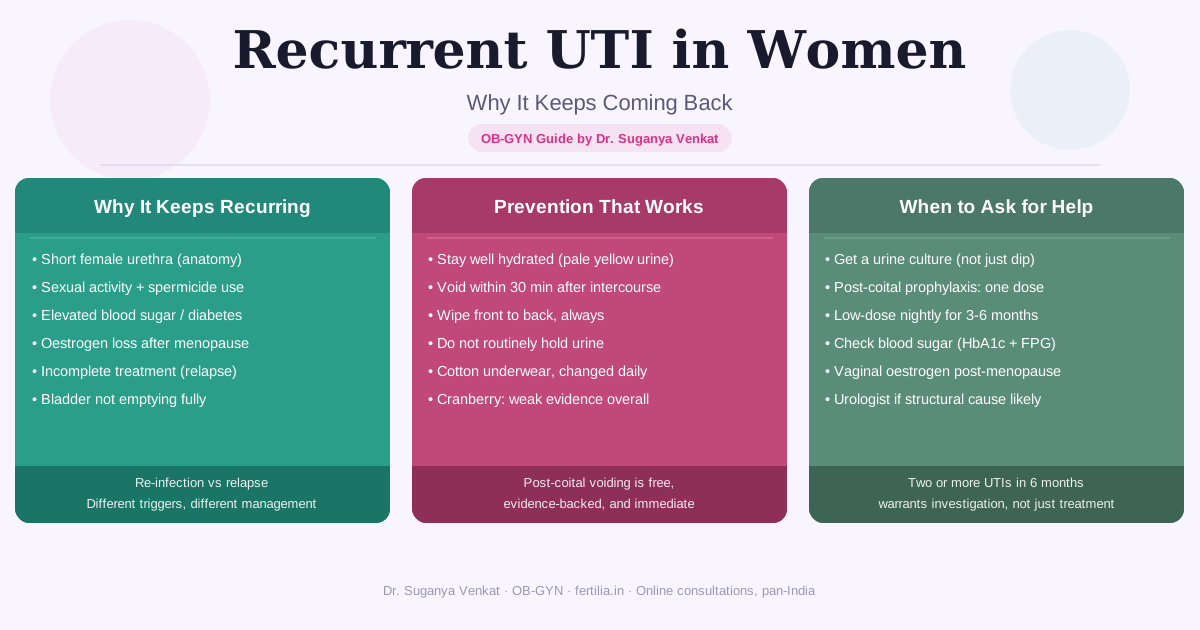
1. Female anatomy
The female urethra is roughly 3 to 4 centimetres long. That short distance is one of the central reasons women develop UTIs at roughly five times the rate men do. Bacteria from the perineal area, particularly E. coli from the gut, have very little distance to travel to reach the bladder. Add the proximity of the urethra to both the vagina and the anus, and the baseline anatomical risk is real and unmodifiable.
This does not mean there is nothing to be done. It means that the other factors on this list operate on terrain that is already at an advantage for bacteria.
2. Sexual activity and spermicide use
In premenopausal women, sexual intercourse is one of the most consistently identified risk factors for recurrent UTI. Intercourse three or more times per week, a new sexual partner, and spermicide use are all independently associated with higher recurrence rates (Arnold et al., Am Fam Physician 2016, PMID 27035041). The mechanical dynamics of intercourse move bacteria from the perineal area toward the urethral opening.
Spermicide use makes this worse in a specific way. Spermicides disrupt the vaginal microbiome by killing protective Lactobacillus bacteria. With fewer Lactobacillus present, opportunistic bacteria including E. coli colonise more readily. Women who use spermicide-coated diaphragms have among the highest rates of recurrent UTI of any group (Stamm and Raz, Clin Infect Dis 1999, PMID 10825026).
If your infections come predictably after intercourse, this is worth naming with your doctor. Post-coital UTI is a specific pattern with a specific management option, covered in the prophylaxis section below.
3. Elevated blood sugar and diabetes
Bacteria thrive in glucose-rich environments. The urine of women with uncontrolled or undiagnosed diabetes often contains glucose, which acts as a growth medium. Women with diabetes have significantly higher rates of recurrent UTI than women with normal blood sugar, and the association holds for type 1, type 2, and the undiagnosed insulin-resistance end of the spectrum.
If you are having frequent infections and have not had a blood sugar check recently, a fasting glucose and HbA1c is a simple and worthwhile thing to do. For women already diagnosed with diabetes, better glycaemic control is one of the more effective underused levers for reducing UTI frequency. For context on insulin resistance and how blood sugar affects other aspects of women’s health, the insulin resistance and PCOS guide on this site is a useful read.
4. Oestrogen changes in perimenopause and after menopause
After menopause, falling oestrogen causes several changes in the urogenital tissues that directly raise UTI risk. The vaginal lining thins, the pH rises (becoming less acidic), and Lactobacillus populations decline. The urethra and bladder wall become less resilient. Post-void residual urine (urine remaining in the bladder after voiding) and cystocele are additional postmenopausal factors that create conditions where bacteria can establish more easily (Stamm and Raz 1999, PMID 10825026).
This is quite different from the risk profile in younger women, which is why management also differs. If you are in perimenopause or past menopause and UTIs have become a new or increasing problem, the oestrogen shift is likely part of the reason. See the detailed note at the end of this post and the linked Menolia guide on this topic.
If you are dealing with recurrent urine infections and want to understand what is driving them in your specific case, you are welcome to speak with me directly: WhatsApp +91 99402 70499.
What prevention evidence supports
There is a lot of advice on UTI prevention online, some of it well-supported and some of it not. Here is what the evidence supports.
Hydration
Keeping well hydrated dilutes the urine and flushes bacteria before they can establish a foothold in the bladder. The practical target is urine that is pale yellow rather than dark amber. In India’s climate, particularly through summer and during physically demanding work, it is easy to become genuinely dehydrated without noticing. Staying consistently hydrated is one of the few prevention strategies with a clear mechanistic basis and no downsides.
Voiding after intercourse
Urinating within 15 to 30 minutes of intercourse flushes out bacteria before they can migrate up the urethra. This is simple, free, and well-supported as a preventive measure. Voiding before intercourse as well adds a small additional buffer. For women with post-coital UTI patterns, this is the first thing to try before any medication.
Wiping technique
Wiping from front to back after a bowel movement keeps rectal bacteria away from the urethral opening. This is widely taught, worth repeating, and takes no effort to maintain.
Not delaying urination
Holding urine for extended periods gives bacteria in the bladder more time to multiply. Emptying the bladder fully when you feel the urge, rather than routinely delaying for hours, reduces bacterial dwell time.
Cotton underwear and breathable clothing
Synthetic fabrics and very tight clothing create warm, moist conditions that bacteria find hospitable. Cotton underwear changed daily, and not spending extended periods in damp workout clothes, makes a modest contribution to a lower-risk environment. It is not a primary lever, but it supports the others.
What the evidence says about cranberry
The evidence for cranberry, whether as juice or capsules, is genuinely mixed. The Cochrane review by Jepson, Williams, and Craig (2012, PMID 23076891) examined 24 studies and did not find statistically significant protection against recurrent UTI across the population of women studied. There was some signal of possible benefit in women with recurrent infections specifically, but the effect was not consistent.
Cranberry is harmless. If you find it helpful or want to try it, there is no reason not to. What I would not recommend is relying on it as your primary prevention while avoiding the interventions with stronger evidence, or continuing it instead of seeking medical review if infections are frequent.
When to ask for prophylaxis
If hydration, voiding habits, and spermicide avoidance have not been enough, prophylaxis is a legitimate and effective option for women with confirmed recurrent infections. There are two main approaches.
Post-coital prophylaxis
For women whose UTIs come predictably after intercourse, a single low-dose antibiotic taken within two hours of sex reduces recurrence substantially. Nitrofurantoin (50 to 100 mg) or trimethoprim (100 mg) is typically used, depending on local resistance patterns and individual tolerance. This approach uses far less antibiotic than daily dosing and is well suited to women with a clear post-coital trigger.
Continuous low-dose prophylaxis
For women with frequent recurrences not clearly linked to intercourse, a low-dose antibiotic taken each night for three to six months can reduce recurrence rates. This approach carries a greater risk of resistance over time and requires more antibiotic exposure, so it is a decision made together with your doctor, factoring in your specific history, infection frequency, culture results, and local resistance data.
Both prophylaxis approaches work best alongside identifying and addressing the underlying trigger. They are tools for managing recurrence while you address its root cause, not a permanent substitute for that investigation.
When to see a urologist
Most women with recurrent UTIs are managed well by a GP or gynaecologist and do not need a urologist. A urological evaluation becomes appropriate in these situations:
- Infections that do not respond to a correctly chosen antibiotic course
- Recurrence fitting the relapse pattern (same organism back within two weeks of completing treatment)
- Blood in the urine with any recurrence (haematuria), to rule out bladder or kidney pathology
- Post-void residual urine on ultrasound
- A history of kidney stones
- Structural symptoms such as difficulty emptying the bladder fully
A urine culture collected during an active infection is the diagnostic cornerstone. If you have been treated multiple times empirically (without a culture), getting at least one culture during an active episode is important. It confirms the organism, rules out antibiotic resistance, and guides the right choice of treatment.
For the basics on UTI diagnosis, symptoms, and when kidney infection is the concern, see the UTI symptoms and treatment guide on this site.
UTIs after perimenopause: the oestrogen connection
If you are in perimenopause or post-menopause and UTIs have become a new or increasing problem when they were not before, the oestrogen shift is likely playing a role. Declining oestrogen thins the vaginal and urethral lining, reduces the protective Lactobacillus populations, raises vaginal pH, and makes the bladder wall less resilient. These changes create conditions where bacteria establish more easily, even with the same hygiene and habits as before.
Vaginal oestrogen (cream, ring, or pessary, used locally rather than as systemic HRT) has been shown to reduce recurrent UTI risk in postmenopausal women by partially restoring the vaginal microbiome and urethral tissue integrity (Fox et al., Menopause 2021, PMID 33973539). This is not appropriate for every woman and is a conversation for your gynaecologist. But it is an evidence-supported and underused option in women with postmenopausal recurrent UTIs.
For a detailed guide to how oestrogen loss affects the urinary tract and what to do about it, the Menolia post Menopause and UTIs: Why They Keep Coming Back is worth reading.
Frequently asked questions
Why does my UTI keep coming back even after I finish the antibiotics?
The most common reason is re-infection, not treatment failure. The antibiotics cleared the infection, but bacteria re-entered the bladder from the same source. Less commonly, a relapse occurs within two weeks of completing treatment, suggesting the original infection was never fully cleared. A urine culture during an active episode identifies which organism is present and whether it is sensitive to the antibiotic being used. If you have been treated multiple times without a culture, that is the first step to request.
Is baar baar urine infection (recurring UTI) something I just have to live with?
No. Baar baar urine infection (frequent urine infections) is not something to accept as a normal feature of life. Two or more in six months meets the clinical definition of recurrent UTI, and there is usually a specific trigger: intercourse pattern, spermicide use, blood sugar, oestrogen levels, or bladder drainage. Identifying and addressing the trigger reduces recurrence substantially for most women.
Does drinking more water prevent UTIs?
Yes, for most women it makes a meaningful difference. Diluting the urine and flushing bacteria before they multiply in the bladder is the mechanism. The practical target is pale yellow urine. In India’s climate, particularly in summer, consistent hydration is genuinely protective, and many women underestimate how much is lost through sweat.
Can I take a single antibiotic dose after intercourse instead of a full course every time?
Yes, for women with clearly post-coital UTI patterns, this is an established and effective strategy called post-coital prophylaxis. One low-dose antibiotic taken within two hours of intercourse (not before, not every day) reduces recurrence substantially. It uses far less antibiotic than continuous daily dosing. It requires a prescription and a discussion with your doctor about which antibiotic is appropriate given your history and local resistance data.
What is the connection between blood sugar and recurring UTIs?
Uncontrolled or undiagnosed high blood sugar creates glucose-rich urine that bacteria can use as a growth medium. Women with diabetes or significant insulin resistance have considerably higher rates of recurrent UTI. If you have frequent infections and have not had a blood sugar check recently, a fasting glucose and HbA1c is a reasonable thing to do. Improving glycaemic control is one of the most effective, and underused, approaches to reducing UTI frequency in women with diabetes. For context on how insulin resistance presents in women, the insulin resistance and PCOS guide has detailed information.
Should I see a urologist or a gynaecologist for recurrent UTIs?
Most women with recurrent UTIs are well managed by a gynaecologist or GP. A urologist adds value when infections are not responding to appropriate antibiotic treatment, when the same organism returns within two weeks of completing a course, when there is blood in the urine with any recurrence, or when an ultrasound shows post-void residual urine or a structural finding. For straightforward recurrent UTIs in women without these features, start with your gynaecologist.
Can UTIs in pregnancy be a sign of recurrent UTI?
UTIs are more common in pregnancy because of physical and hormonal changes that slow urine flow and create conditions where bacteria establish more easily. Even symptom-free bacteriuria (bacteria in the urine without burning or urgency) needs treatment in pregnancy because of the risk of it ascending to the kidneys. If you had recurrent UTIs before pregnancy, this is worth discussing with your obstetrician early on. See the gestational diabetes and urinary health guide for context on how blood sugar in pregnancy affects infection risk.
If you have had two or more UTIs in the past six months and want to understand the pattern and the right management approach for your situation, I am available for a video consultation: WhatsApp +91 99402 70499.