1 tbsp dry soaked daily · Always soak before eating · Choose unsweetened drinks for PCOS
| Guidance | |
|---|---|
| Safe in pregnancy? | See During Pregnancy for the food-level guidance and practical options. |
| Daily amount | 1 tablespoon dry sabja seeds (about 8g), fully soaked in 200 to 250ml water, is a practical daily portion. |
| If gestational diabetes | Choose an unsweetened drink. If your glucose readings change after adding sabja, discuss the pattern with your doctor. |
| Method and best time | Follow the soaking method below. If using sabja before a meal, have it 15 to 20 minutes before lunch or dinner. |
| Skip if | Under-soaked or dry seeds can swell in the throat, a genuine choking risk, especially for young children; give them only fully soaked. Stop if they worsen reflux or bloating in the third trimester. If you take blood-sugar or blood-pressure medication, mention regular sabja use to your doctor. |
Jump to: What Are Sabja Seeds? · Nutritional Facts · How to Soak · Hydration · PCOS Use · 3 Recipes · Portions by Life Stage · FAQs
Walk past any juice stall in Chennai or Bengaluru in May and you will spot them floating in a glass of rose milk: small black seeds, each coated in a smooth, clear jelly. Those are sabja seeds. Most of us have been drinking them since childhood in falooda and rose sharbat without knowing much about what they contain.
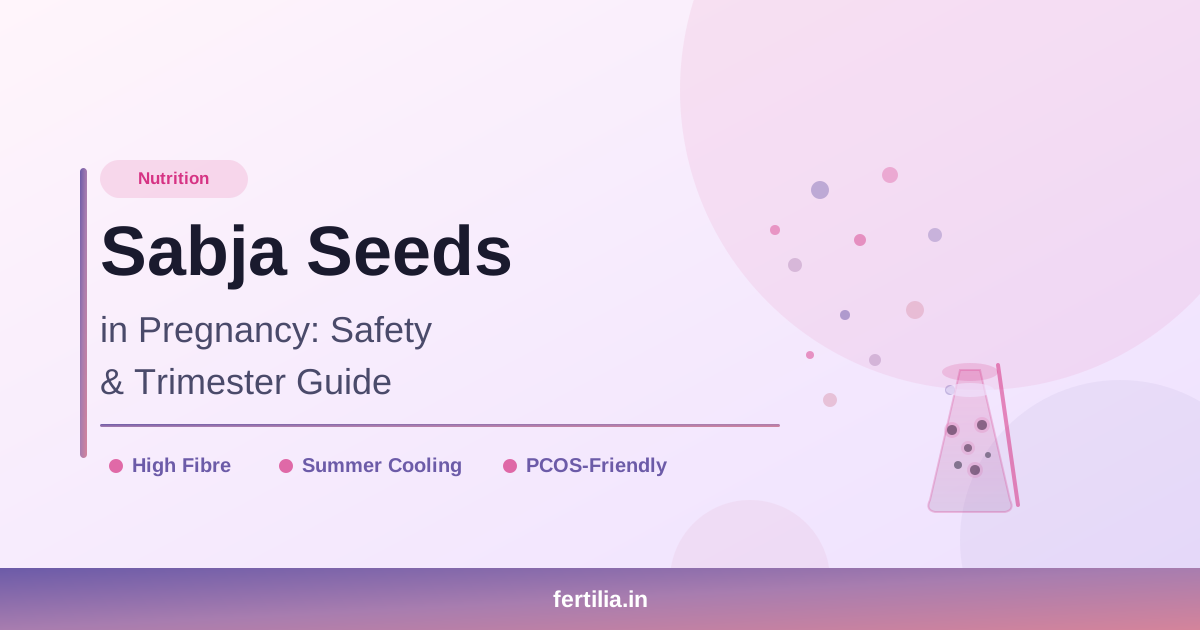
If you are managing PCOS, eating well during pregnancy, or simply looking for a cooling addition to your summer routine, sabja seeds are worth understanding properly. This guide covers what they are, their nutritional profile, how to soak them correctly, three Indian recipes, and the right portions for each life stage.
What Are Sabja Seeds?
Sabja seeds come from the sweet basil plant (Ocimum basilicum). You will find them in Indian kitchens under several names: tukmaria (Hindi and Urdu), thiruneetru pachilai vithai (Tamil), sabja ginja (Kannada), sabja vitthulu (Telugu), and falooda seeds across South Asia.
They are not the same as chia seeds, though the two are often confused at first glance. Sabja is a traditional Indian ingredient with a long history in summer cooling drinks. Chia seeds come from Salvia hispanica, a plant native to Central America, and are a more recent addition to Indian kitchens.
The practical difference shows up immediately when you soak them. Sabja forms a smooth, semi-transparent gel coat in about 5 minutes. Chia takes 20 to 30 minutes and forms a thicker, pudding-like gel.
Women often ask me if sabja is the same as chia or if it “cools the body.” In practice, it behaves like a gentle fibre and a pleasant way to drink more water, nothing more dramatic. That is still useful.
| Feature | Sabja Seeds | Chia Seeds |
|---|---|---|
| Plant source | Ocimum basilicum (sweet basil) | Salvia hispanica |
| Soaking time | About 5 minutes | 20 to 30 minutes |
| Dietary fibre per 100g | High in soluble fibre | 34.4g |
| Total fat per 100g | Contains fat, with the amount varying by source | 30.7g |
| Calcium per 100g | Mineral present, but the amount varies by source | 631mg |
| Iron per 100g | Mineral present, but the amount varies by source | 7.72mg |
| Magnesium per 100g | Mineral present, but the amount varies by source | 335mg |
| Energy per 100g | No settled standard value | 486 kcal |
| Traditional Indian use | Yes (falooda, sharbat, rose milk) | No |
| Texture when soaked | Smooth, semi-transparent jelly | Thicker pudding-like gel |
Basil seeds are not yet in standardised food-composition tables, so unlike chia their exact per-100g values are not settled; treat sabja’s column as directional.
The chia figures are from USDA FoodData Central, FDC ID 170554. For a full side-by-side and chia-specific recipes, see our chia seeds guide for women.
Sabja’s practical advantages are familiarity in Indian drinks, wide availability, and a gel that forms quickly.
Sabja Seeds: Nutritional Facts
Sabja’s main nutritional contribution is its soluble fibre and gel texture. Basil seed oil is largely alpha-linolenic acid, so sabja does provide some omega-3 ALA; there is no reliable per-serving figure for Indian sabja, and chia gives more per tablespoon.
The water used for soaking gives the seeds volume, which can help a drink feel filling. For a broader look at how fibre-rich Indian foods fit into a daily diet, see our high-fibre Indian foods guide.
How to Soak Sabja Seeds
Soaking is essential preparation. Dry or under-soaked sabja seeds can continue swelling in the throat and create a choking risk. Let them form their gel fully before eating or serving them to anyone.
Basic soaking method:
- Put 1 tablespoon (about 8g) of dry sabja seeds into 200 to 250ml of cold or room-temperature water.
- Stir once so they do not clump.
- Wait about 5 minutes, until every seed has a clear, smooth gel coat and no hard centre. If any seeds are still hard, add a little more water and allow 5 to 10 minutes in total.
- Add the fully soaked seeds to a drink, dahi, or dessert.
Practical notes:
- Fully soaked sabja seeds expand to roughly 20 to 30 times their dry volume. The amount differs between seed batches.
- Use cold or room-temperature water for an even gel texture.
- Prepare only what you need, or refrigerate soaked seeds promptly in a covered container.
- Sabja seeds do not dissolve. They retain their gel coat in drinks such as nimbu pani or tamarind sharbat.
Sabja Seeds and Hydration
Sabja nimbu pani or sabja buttermilk is an easy way to get more fluid in during a hot Indian summer. It is not a replacement for plain water, and in real dehydration or illness, ORS is what you need, not a seed drink. Keep it unsweetened if added sugar is not part of your plan.
Sabja Seeds for PCOS
Sabja seeds are a useful addition to a PCOS-supportive diet primarily because of their dietary fibre. Fibre slows digestion and helps with satiety, making it easier to eat well through the day. A soaked tablespoon in cold water or lime water before lunch is a simple way to add fibre without changing the meal. For the science behind how food choices affect PCOS management, read our insulin resistance and PCOS guide.
The commonest mistake I see is sabja taken in sweetened falooda, rose milk or a sugary sherbet and counted as healthy; the sugar undoes the point. A soaked tablespoon in plain water, buttermilk or unsweetened lemon water is what actually helps. And sabja does not melt fat or lower blood sugar on its own; it earns its place by adding fibre and helping a drink feel filling.
If you monitor glucose, use your readings and your doctor’s advice rather than expecting sabja itself to control blood sugar. For a comprehensive list of low-GI food choices for PCOS, see our low-GI Indian foods guide.
Fertilia’s 90-day PCOS Symptom Reversal program builds everyday foods into a full plan around your own PCOS drivers. Talk to Dr. Suganya about your PCOS nutrition plan on WhatsApp
3 Indian Recipes Using Sabja Seeds
1. Sabja Nimbu Pani
India’s most familiar summer drink, with sabja for extra fibre and fullness.
Ingredients:
- 1 soaked tablespoon of sabja seeds (use the method above)
- 250ml cold water
- Juice of 1 lime
- A small pinch of sendha namak or kala namak
- 1 teaspoon jaggery powder, or to taste (optional)
- A few fresh mint leaves
Method: Combine lime juice, jaggery (if using), and salt in a tall glass. Add the cold water and stir to dissolve. Add the soaked sabja seeds last and stir gently. Garnish with mint. Serve immediately over ice if preferred.
When to drink: Before lunch on a summer afternoon. Skip the jaggery if you want an unsweetened PCOS-friendly version.
2. Sabja Rose Milk (Sabja Doodh)
The classic Tamil Nadu cooler that most people associate with sabja seeds.
Ingredients:
- 1 soaked tablespoon of sabja seeds (use the method above)
- 250ml cold full-fat or toned milk
- 1 to 2 teaspoons rose syrup (rooh afza or homemade rose sharbat)
- 3 to 4 ice cubes (optional)
Method: Pour cold milk into a tall glass. Add rose syrup and stir briefly. Add the soaked sabja seeds and stir gently. Add ice if desired. Serve immediately.
Unsweetened version: Replace the syrup with a little rose water and cardamom for the same familiar flavour without added sugar.
Serving note: Make sure the seeds are fully soaked and gelled before serving, especially to children, so they cannot swell in the throat.
3. Sabja Mango Lassi
A seasonal May drink that brings together mango, dahi, and sabja.
Ingredients:
- 1 soaked tablespoon of sabja seeds (use the method above)
- 1 ripe mango (Alphonso or Banganapalli), peeled and chopped (about 200g)
- 150ml thick dahi, chilled
- 100ml cold water or milk
- A pinch of cardamom powder
Method: Blend mango, dahi, and cold water or milk until smooth. Pour into a tall glass. Add the soaked sabja seeds on top and stir gently. Add cardamom powder. Serve immediately.
Practice note: This is more filling than nimbu pani, so treat it as a snack rather than your main hydration drink. If you monitor glucose, let the serving fit your usual meal plan and readings.
Serving note: Make sure the seeds are fully soaked and gelled before serving, especially to children, so they cannot swell in the throat.
Life-Stage Portions Guide
Daily amount: The same 1 tablespoon (about 8g) of dry sabja seeds, fully soaked in 200 to 250ml water, is a practical daily portion across PCOS, pregnancy, and postpartum.
For PCOS Management
Best time: If you like it before a meal, try it 15 to 20 minutes before lunch or dinner. Best form: Sabja nimbu pani (Recipe 1) or plain soaked sabja in cold water with lime. Avoid: Sabja drinks with added sugar or jaggery if blood sugar stability is a priority.
During Pregnancy
Considered safe at normal food quantities; there is no evidence of harm and no reason to avoid it. Some women simply prefer to start in the second trimester because cold sabja drinks are unappealing during first-trimester nausea.
Best use: Add the fully soaked seeds to rose milk (Recipe 2), mango lassi (Recipe 3), or an unsweetened drink that suits your appetite.
If you are building a seed rotation in pregnancy, our guide on pumpkin seeds covers their nutrients, portions, and practical uses. For a full picture of what to eat across all three trimesters, see our pregnancy diet chart.
Fertilia’s Pregnancy Care program supports nutrition and care across each trimester. Talk to Dr. Suganya about your pregnancy nutrition plan on WhatsApp
Postpartum and Breastfeeding
Best use: Sabja rose milk or sabja stirred into thinned room-temperature dahi. Sabja works well alongside the warm postpartum drinks that are traditional in South Indian households. Temperature note: Many families prefer warm foods in the first few weeks after delivery. Sabja is traditionally used in cold drinks. Using it in room-temperature drinks (rather than iced) is a comfortable middle ground.
For postpartum drinks more broadly, our ragi kanji guide covers another nourishing drink. The full postpartum nutrition plan is at our after delivery food guide.
Fertilia’s Postpartum program includes nutrition support for recovery after birth. Talk to Dr. Suganya about your postpartum nutrition plan on WhatsApp
Buying and Storing Sabja Seeds
Where to buy: Most kirana and provision stores sell sabja loose under the names sabja, tukmaria, or falooda seeds.
What to look for: Choose clean, uniform black seeds with little dust and no musty smell. Avoid seeds with white patches, moisture, mould, or insect damage.
Storage: Keep the dry seeds in an airtight container in a cool, dry cupboard. They keep for months when protected from moisture and heat. Refrigerate soaked seeds promptly in a covered container if you are not using them immediately.
When to Check with Your Doctor
Sabja is an ordinary food, but your symptoms and readings can help you decide whether it suits you. Check with your doctor if:
- Constipation or bloating persists after you add more fibre.
- Your gestational-diabetes readings begin drifting from your usual range.
- You develop any new abdominal discomfort.
- You take blood-sugar or blood-pressure medication and plan to use sabja regularly.
If you are unsure about any food in pregnancy, ask before you start or stop it. A quick check can help you choose a comfortable portion without removing foods unnecessarily.
Frequently Asked Questions
Q: Are sabja seeds safe during pregnancy?
Yes, at normal food quantities. See During Pregnancy for the full guidance and practical ways to use them.
Q: What are sabja seeds called in English?
Sabja seeds are most commonly called basil seeds in English. They come from the sweet basil plant (Ocimum basilicum). Other names include tukmaria, falooda seeds, and sweet basil seeds. “Holy basil seeds” is inaccurate because holy basil refers to tulsi (Ocimum tenuiflorum), a different plant.
Q: Are sabja seeds the same as chia seeds?
No. Sabja seeds come from the sweet basil plant and are a traditional Indian ingredient. Chia seeds come from Salvia hispanica, native to Central America. Sabja forms a gel in about 5 minutes, while chia takes 20 to 30 minutes. Chia has standardised per-100g nutrient values, while sabja does not.
Q: Can I eat sabja seeds without soaking them?
No. Dry or under-soaked seeds can continue swelling in the throat and create a choking risk, especially for young children. Wait until every seed has a clear gel coat and no hard centre before eating it.
Q: How many sabja seeds should I eat per day?
Use the daily tablespoon described above, fully soaked. More is not automatically better, especially if you are adding fibre quickly or already have bloating or reflux.
Q: Can I add sabja seeds to hot drinks or cooked food?
Sabja is usually most pleasant in cold or room-temperature drinks. If you want it in something warm, first soak the seeds fully in cool water, then stir them into the food or drink. Do not rely on a hot drink to complete the soaking.
Q: How much omega-3 is in sabja seeds?
Indian sabja does not have a reliable standard per-serving figure. See the nutritional facts above and our chia seeds guide for a sourced chia comparison.