There is a version of the new-mother story that does not get told often enough. She has delivered a healthy baby. The early months pass. Somewhere around the third or fourth month, things start to feel wrong in a way she cannot name. She is exhausted, but all new mothers are exhausted. She is anxious, but there is a lot to be anxious about. Her heart races sometimes. She loses a little weight without trying. Her hands feel shaky.
Then a few months later, the reverse. Heavy fatigue. Low mood. Weight gain that does not budge. Cold all the time. Thinking through fog.
She is told it is baby blues. She is told it is stress. She is told this is just motherhood.
In around 5 to 10 out of every 100 women, it is the thyroid.
Postpartum thyroiditis is an autoimmune inflammation of the thyroid gland that develops in the first year after delivery. It is more common than most women, and many clinicians, realise. It is frequently missed because its symptoms look exactly like something else at each stage: the hyperthyroid phase looks like postpartum anxiety, and the hypothyroid phase looks like postpartum depression. The only way to separate them is a blood test.
This post covers what postpartum thyroiditis is, how the three phases progress, which symptoms to watch for at each stage, who is at higher risk, how it is diagnosed, and what treatment looks like. It also addresses what many women worry about most: is this permanent?
What Postpartum Thyroiditis Is
The thyroid gland, a butterfly-shaped structure in the front of the neck, produces hormones that regulate nearly every system in the body: energy, metabolism, heart rate, mood, temperature regulation, bowel function, and more. During pregnancy, the immune system is partially suppressed to protect the developing baby. After delivery, that suppression lifts. In some women, the immune system overshoots as it reactivates, and autoimmune antibodies that were held back during pregnancy begin attacking the thyroid gland.
This is postpartum thyroiditis: an autoimmune, inflammatory process, not an infection or structural problem. The gland becomes inflamed, temporarily dysfunctional, and releases thyroid hormones in an erratic pattern.
The best-documented risk predictor is the presence of anti-thyroid peroxidase antibodies, known as anti-TPO antibodies, in the blood. Women who test positive for anti-TPO antibodies in the first trimester carry approximately a 50% risk of developing postpartum thyroiditis (Muller et al., Endocrine Reviews, 2001, PMID 11588143). Among the general postpartum population, the condition affects 5 to 10% of women.
A quantitative review across multiple global populations estimated an overall prevalence of approximately 8% (Nicholson et al., Thyroid, 2006, PMID 16839259). An Indian study from the Kashmir Valley found a prevalence of 7% among postpartum women followed prospectively (Zargar et al., Experimental and Clinical Endocrinology and Diabetes, 2002, PMID 12058340). These numbers suggest that in India, where TSH monitoring in the postpartum period is not routine outside specialty settings, a significant number of cases are going undiagnosed.
The Three Phases (and Why Each Gets Missed)
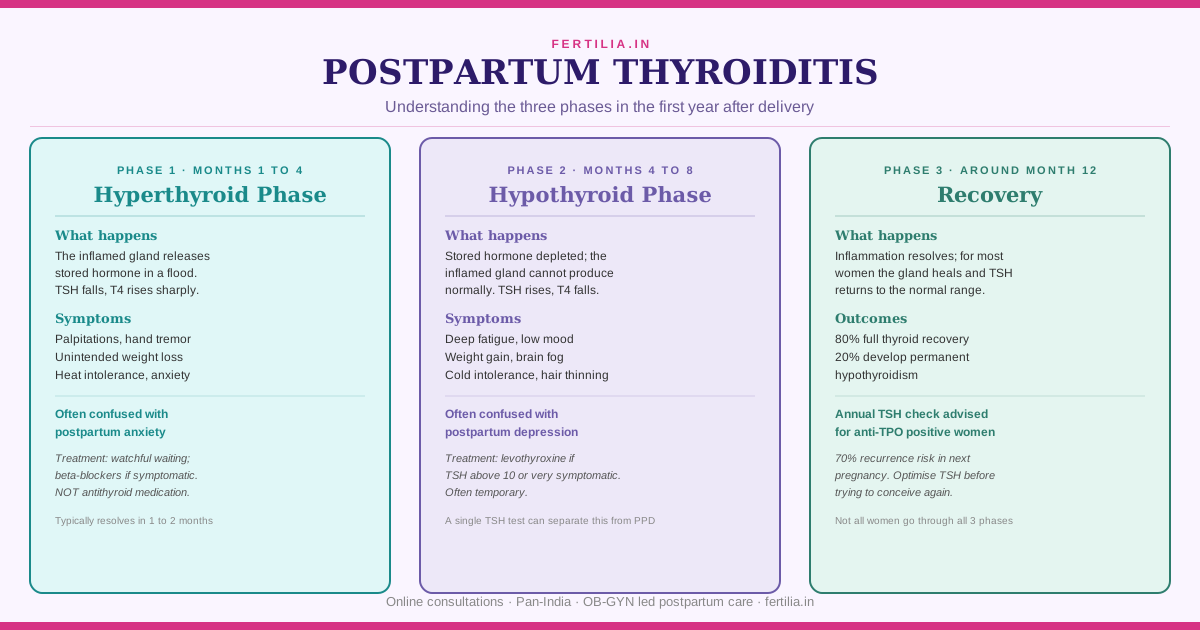
Most descriptions of postpartum thyroiditis reference a classic triphasic pattern, though not every woman experiences all three phases. Some go through the hyperthyroid phase only, some through the hypothyroid phase only, and approximately 40% go through both in sequence.
Phase 1: The Hyperthyroid Phase (Months 1 to 4)
When the inflamed thyroid gland releases stored thyroid hormone in a flood, TSH falls and circulating T3 and T4 levels rise. This is the thyrotoxic phase, and it typically peaks between one and four months after delivery.
Symptoms of this phase:
- Palpitations or awareness of a rapid heartbeat
- Anxiety or feeling wired and restless
- Fatigue alongside feeling unable to settle
- Mild unintended weight loss
- Heat intolerance and sweating
- Tremor in the hands
- Loose stools
These symptoms overlap almost entirely with postpartum anxiety. Women in this phase are frequently told their symptoms are stress-related. Without a TSH measurement, the thyroid cause is invisible.
This phase typically lasts one to two months and resolves on its own as the stored hormone is depleted and the gland quietens.
Phase 2: The Hypothyroid Phase (Months 4 to 8)
As the inflamed thyroid gland’s stored hormone is exhausted, and while the gland itself is still inflamed and cannot produce normally, TSH rises and T4 falls. This is the hypothyroid phase, and it is the stage most likely to cause significant distress.
Symptoms of this phase:
- Deep fatigue, beyond what sleep deprivation explains
- Low mood, tearfulness, emotional flatness
- Weight gain that does not respond to diet changes
- Brain fog and difficulty concentrating
- Constipation
- Cold intolerance
- Dry skin and hair, hair thinning
- Slowed heart rate
The symptom overlap with postpartum depression is almost complete. The fatigue, low mood, brain fog, and weight changes of the hypothyroid phase are clinically indistinguishable from PPD without a blood test. A woman in this phase may be offered antidepressants or psychological support before anyone thinks to check her TSH.
This matters not because antidepressants are wrong, but because the underlying cause needs to be identified. Treating depression alone, when thyroid dysfunction is driving the symptoms, will not resolve the thyroid problem. The brain fog and concentration difficulties of this phase also overlap with common postpartum nutritional deficiencies, particularly iron and B12, which is why a structured blood panel, rather than a single test in isolation, gives the clearest picture. Our post on postpartum brain fog and concentration covers that differential in more detail.
Phase 3: Recovery (Around Month 12)
In approximately 80% of women, the thyroid recovers fully within 12 to 18 months of delivery. TSH normalises, symptoms resolve, and the gland returns to its baseline function. For most women, postpartum thyroiditis is a self-limiting condition.
In approximately 20% of women, permanent hypothyroidism develops. This is more likely in women who had elevated anti-TPO antibodies before or during pregnancy, in women who had a significant hypothyroid phase, and in those with a personal or family history of thyroid autoimmunity. Annual TSH monitoring is a reasonable precaution for this group even after symptoms have resolved.
Who Is at Higher Risk?
Some women have a substantially higher likelihood of developing postpartum thyroiditis:
Elevated anti-TPO antibodies. This is the strongest known predictor. If anti-TPO antibodies were measured during pregnancy, the result carries forward. Even a mildly elevated level in early pregnancy significantly raises the postpartum risk.
Pre-existing or previously treated thyroid disease. Women who have had Hashimoto’s thyroiditis, thyroid surgery, or previous thyroid hormone treatment are at higher risk of a postpartum flare.
Type 1 diabetes. Postpartum thyroiditis is notably more common in women with Type 1 diabetes, with some studies reporting prevalence above 25% in this group compared to the general postpartum rate of 5 to 10%.
PCOS with thyroid overlap. Women who have both PCOS and thyroid autoimmunity, a combination that is more common than either condition alone, may be more vulnerable. Our post on PCOS and thyroid covers that overlap in more detail.
Family history of thyroid or autoimmune disease. A first-degree relative with thyroid disease, Type 1 diabetes, rheumatoid arthritis, or other autoimmune conditions raises the background risk.
Previous episode of postpartum thyroiditis. Women who had postpartum thyroiditis after a previous pregnancy have a 70% likelihood of it recurring after subsequent deliveries.
What Tests Confirm It
The diagnosis rests on a TSH measurement, supported by Free T4 and, where relevant, anti-TPO antibodies.
During the hyperthyroid phase: TSH will be low (often undetectable), Free T4 elevated. A thyroid uptake scan, where it is available, shows low uptake in postpartum thyroiditis. This is one way to distinguish it from Graves’ disease, which shows high uptake and requires different treatment. Distinguishing the two matters: Graves’ disease requires antithyroid medication; postpartum thyroiditis typically does not.
During the hypothyroid phase: TSH will be elevated, Free T4 low or in the lower portion of the normal range.
Anti-TPO antibodies: Elevated in approximately 80 to 90% of women who develop postpartum thyroiditis. A positive result confirms the autoimmune nature but does not by itself mean treatment is needed. It does mean TSH monitoring is worthwhile.
When to test in India: There is no universal postpartum thyroid screening programme in India. Women who are symptomatic in the first year after delivery, particularly those with the risk factors above, should have a TSH and anti-TPO measured. If you are experiencing unexplained fatigue, mood changes, weight fluctuation, heart palpitations, or hair thinning in the months after delivery, a blood test is the simplest starting point.
If something feels off in the months after delivery and you are not sure whether it is thyroid-related, a TSH measurement takes minutes to arrange and often answers months of questions. You can talk through your symptoms and what testing makes sense with Dr. Suganya Venkat over a video call: WhatsApp 91-99402-00330.
How It Is Treated
Treatment depends on which phase you are in and how symptomatic you are.
Hyperthyroid Phase
The hyperthyroid phase of postpartum thyroiditis is caused by the release of pre-formed hormone from the inflamed gland, not by excess hormone production. Antithyroid medications like methimazole or carbimazole work by blocking new hormone synthesis, so they do not help here and are not used. This is one of the key clinical differences between postpartum thyroiditis and Graves’ disease.
For most women, the hyperthyroid phase is mild and does not require medication. Watchful waiting with TSH rechecks every 4 to 6 weeks is appropriate.
For women with significant symptoms, particularly palpitations or tremor, a short course of a beta-blocker can ease the cardiovascular symptoms while the phase resolves naturally. Beta-blockers do not treat the thyroid directly; they reduce the impact of excess thyroid hormone on the heart and nervous system. The decision on whether to use one, and which one, should be made with your treating doctor, particularly if you are breastfeeding.
Hypothyroid Phase
Not every woman with an elevated TSH in the postpartum period needs levothyroxine. The decision depends on the TSH level and symptoms together.
Women with TSH above 10 mIU/L, or those with significant symptoms at lower TSH levels, are typically started on levothyroxine. The goal is relief of symptoms and TSH normalisation.
Women started on levothyroxine for the hypothyroid phase should be reassessed at 12 to 18 months after delivery. Approximately 50% of those who needed treatment during the hypothyroid phase will be able to stop levothyroxine as the thyroid recovers. Whether to continue, reduce, or stop the medication is a clinical decision based on repeat TSH testing.
Women who are still breastfeeding can continue levothyroxine. It is bio-identical to the body’s own thyroid hormone and transfers minimally into breast milk at therapeutic doses.
Recovery Phase and Long-Term Monitoring
If the thyroid recovers fully, no ongoing treatment is needed. However, anti-TPO-positive women who have had postpartum thyroiditis have a 25 to 55% risk of developing permanent hypothyroidism over the following decade depending on the study population (Stagnaro-Green, Journal of Clinical Endocrinology and Metabolism, 2012, PMID 22312087). Annual TSH monitoring is a reasonable precaution for these women, even after the immediate episode has resolved.
For women planning another pregnancy, TSH should be optimised before trying to conceive. Our guide to thyroid and fertility and the post on subclinical hypothyroidism in pregnancy cover those targets in detail.
Postpartum Thyroiditis and Mood
The hypothyroid phase of postpartum thyroiditis produces low mood, tearfulness, emotional flatness, and difficulty concentrating that are genuinely difficult to distinguish from postpartum depression without a blood test. The same is true of the hyperthyroid phase and postpartum anxiety.
In practice this means two things. First, if you are being assessed for postpartum mood difficulties, a TSH measurement should be part of that assessment. It is a simple test. Second, if thyroid dysfunction is found and treated, mood symptoms often improve substantially, sometimes without any additional intervention.
If mood symptoms persist after the thyroid is treated, then postpartum depression or anxiety needs its own evaluation and treatment. The two can coexist. Thyroid dysfunction does not rule out PPD; it can worsen it, and addressing one does not automatically address the other.
If you feel something is wrong and “this is just new motherhood” does not sit right with you, keep asking. A blood test can tell you whether the thyroid is contributing to what you are experiencing.
What Indian Women Specifically Need to Know
In India, routine postpartum thyroid screening is not standard practice in most hospitals. Your 6-week postpartum visit may not include a thyroid panel unless you specifically ask for one, or unless you have a documented thyroid history.
Women who search for this condition in Tamil often use the phrase prasavatharku piragu thyroid (delivery ke baad thyroid in Hindi). Whatever you call it, the approach is the same.
What to ask for, and when:
- At 3 months postpartum: If you have any of the risk factors above (elevated anti-TPO antibodies during pregnancy, personal or family history of thyroid disease, Type 1 diabetes, or a previous episode of postpartum thyroiditis), ask for a TSH and anti-TPO test.
- At any point in the first year: If you are experiencing unexplained fatigue, mood changes, unexpected weight fluctuation, palpitations, hair thinning beyond what seems usual, or cold or heat intolerance that feels disproportionate, a TSH measurement is a reasonable first step.
- Before a subsequent pregnancy: If you had postpartum thyroiditis, have your TSH checked before trying to conceive again and aim for levels below 2.5 mIU/L in the first trimester.
At Fertilia, Dr. Suganya Venkat reviews thyroid function as part of postpartum consultations, alongside nutrition, exercise return, and overall recovery, because what the thyroid does in the first year after delivery shapes energy, mood, weight, and milk supply in ways that are often attributed to everything else first.
For broader postpartum recovery, our Indian postpartum recovery guide covers the full picture of the first year. For hair thinning that may have a thyroid component, see our post on postpartum hair loss. Our postpartum diet guide covers nutritional priorities across the full recovery period.
If you have had a baby in the past year and are dealing with fatigue, mood changes, or symptoms that seem to resist a single explanation, a thyroid check may be the piece that is missing. You can discuss your postpartum health with Dr. Suganya Venkat over a video consultation, pan-India: WhatsApp 91-99402-00330.
Frequently Asked Questions
Is postpartum thyroiditis permanent? For approximately 80% of women, no. The thyroid recovers within 12 to 18 months of delivery and no ongoing treatment is needed. About 20% of women, particularly those with elevated anti-TPO antibodies, go on to develop permanent hypothyroidism. Annual TSH monitoring after an episode is a reasonable precaution for this group.
Can postpartum thyroiditis cause postpartum depression? The two conditions are distinct but overlap in symptoms. The hypothyroid phase of postpartum thyroiditis can cause low mood, fatigue, and difficulty concentrating that closely resemble postpartum depression. Treating the thyroid dysfunction often improves mood significantly. The two can coexist, and if mood symptoms persist after the thyroid is treated, a separate evaluation for PPD is appropriate.
Does postpartum thyroiditis affect breastfeeding? The condition itself does not typically reduce milk supply. The hypothyroid phase can contribute to fatigue and reduced energy, which may affect the mother’s capacity to feed frequently. Women who need levothyroxine for the hypothyroid phase can continue breastfeeding; the medication is safe at therapeutic doses.
Can I take levothyroxine while breastfeeding? Yes. Levothyroxine is bio-identical to your body’s own thyroid hormone. It transfers minimally into breast milk at therapeutic doses and is considered safe during breastfeeding by major endocrine guidelines.
How is postpartum thyroiditis different from Graves’ disease? Both can cause a hyperthyroid state, but through different mechanisms. Graves’ disease is caused by antibodies that stimulate the thyroid to overproduce hormones continuously, and it requires antithyroid medication. Postpartum thyroiditis is caused by inflammation that releases stored hormones in a flood rather than ongoing overproduction, so antithyroid drugs do not help. A thyroid uptake scan distinguishes them when the clinical picture is unclear.
Will it happen again with my next pregnancy? Women who had postpartum thyroiditis have approximately a 70% likelihood of experiencing it again after a subsequent delivery. TSH monitoring in the next postpartum period is particularly important, and optimising TSH before the next pregnancy is advisable.
How soon after delivery does it start? The hyperthyroid phase typically begins between one and four months after delivery. The hypothyroid phase, if it occurs, follows at around four to eight months. Not every woman experiences both phases or the classic sequence. Onset and duration vary considerably between women.