A woman I saw recently had a TSH of 3.8 mIU/L on her first antenatal blood panel. Her lab report marked it “within normal range.” Her referring doctor was not sure whether she needed treatment or not.
This situation comes up regularly in my practice, and the confusion is understandable. TSH reference ranges printed on most Indian lab reports are designed for the general adult population, not for pregnant women. In pregnancy, a number that sits comfortably in the borderline zone outside it may need to come down.
This post is for women who are already pregnant and have been told their TSH is elevated, borderline, or “being watched.” It covers what subclinical hypothyroidism means during pregnancy specifically, why pregnancy raises the stakes for thyroid function, what TSH range to aim for in each trimester, the role of anti-TPO antibodies in the treatment decision, and what levothyroxine does.
If you are still trying to conceive and your TSH is elevated, our post on hypothyroidism and fertility covers the preconception side in detail.
What Subclinical Hypothyroidism Means
Subclinical hypothyroidism (SCH) means your TSH is elevated above the reference range but your free T4 (the active thyroid hormone) is still within normal limits. Your thyroid is producing enough hormone for now, but your pituitary gland is working harder than it should to keep production going. TSH (thyroid-stimulating hormone) is the signal your brain sends to the thyroid telling it to produce more. A high TSH means the signal has been turned up because the thyroid’s output is lower than the body needs.
Outside pregnancy, the standard TSH reference range used by most Indian labs is roughly 0.4 to 4.5 mIU/L. A result within that range gets labelled normal. For most adults outside pregnancy, a TSH up to 4.5 is managed conservatively: monitored if symptoms are present, sometimes treated if anti-TPO antibodies are also elevated.
In pregnancy, that calculus changes for reasons rooted in fetal physiology.
Why Pregnancy Changes the TSH Picture
From around week 6, your body’s demand for thyroid hormone increases significantly. Blood volume rises, metabolic rate goes up, and your placenta produces a hormone called human chorionic gonadotropin (HCG) that partially stimulates the thyroid. This HCG effect often causes TSH to dip slightly in the first trimester before rising again later, which is why a low TSH at 8 weeks is usually a normal pregnancy response rather than a problem.
The reason stricter targets matter in pregnancy is fetal: your baby’s thyroid gland does not begin producing thyroid hormone independently until approximately 20 weeks. Before that point, the fetal brain and nervous system are developing at their fastest pace and they depend entirely on T4 crossing the placenta from your bloodstream. The neural tube closes by week 6. Brain cell multiplication, migration, and early cortical layering all happen in the first trimester, a window when maternal thyroid hormone is the only source available to the fetus.
The American Thyroid Association 2017 guidelines on thyroid disease in pregnancy and the postpartum (Alexander et al., Thyroid, PMID 28056690) form the evidence base for clinical decision-making in this area. They account for the fetal demand picture and translate it into specific TSH targets for each trimester.
A 2005 observational study by Casey and colleagues (Obstetrics and Gynecology, PMID 15684146) found that women with untreated subclinical hypothyroidism in early pregnancy had significantly higher rates of placental abruption and preterm birth compared to women with TSH in the normal pregnancy range. A 2016 systematic review and meta-analysis by Maraka and colleagues (Thyroid, PMID 26837268), pooling data from multiple studies, found that untreated subclinical hypothyroidism was associated with approximately double the miscarriage risk.
These are associations, not certainties, and the individual studies have limitations in design and population. But the consistency across studies is the reason obstetric guidelines recommend tighter thyroid targets in pregnancy rather than relying on the general adult reference range.
Trimester-Specific TSH Targets
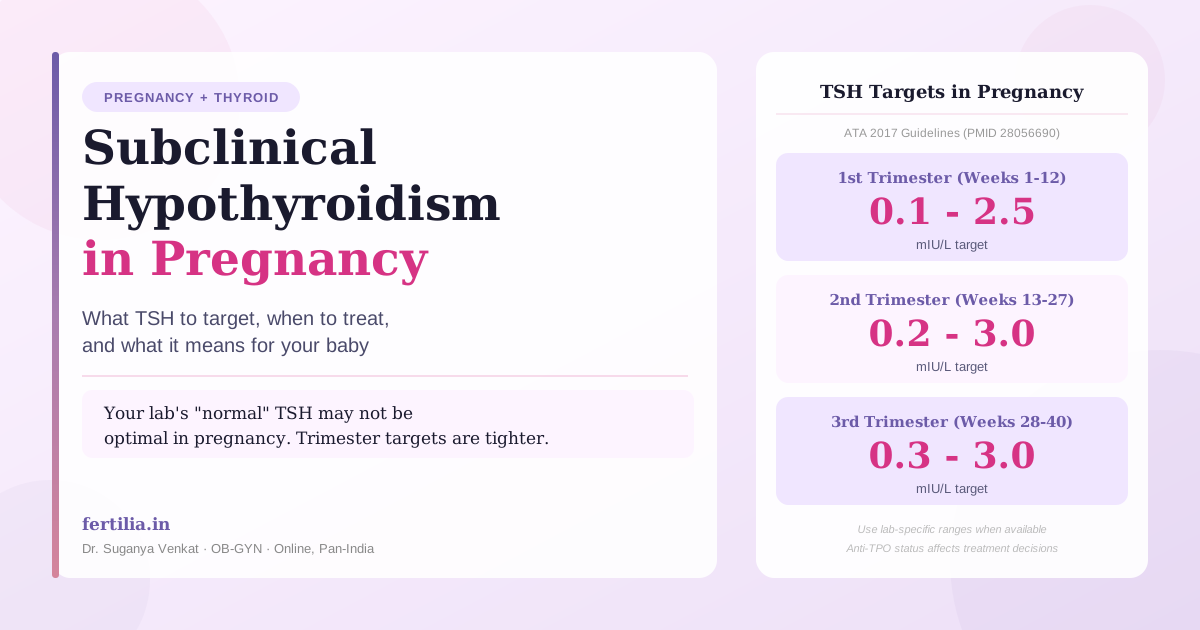
The ATA 2017 guidelines recommend that each laboratory establish its own trimester-specific TSH reference ranges using data from healthy pregnant women in its population. Where labs have done this, those numbers take priority. In the absence of local trimester-specific ranges, which is still the norm across most Indian diagnostic centres, the ATA recommends these approximate targets:
| Trimester | TSH Target Range |
|---|---|
| First (weeks 1 to 12) | 0.1 to 2.5 mIU/L |
| Second (weeks 13 to 27) | 0.2 to 3.0 mIU/L |
| Third (weeks 28 to 40) | 0.3 to 3.0 mIU/L |
To make this concrete: a TSH of 3.8 mIU/L falls inside the general lab reference range (which allows up to 4.5) but is above the recommended target for the first trimester (under 2.5) and borderline for the second and third. At 10 weeks, when early brain development is underway, a TSH of 3.8 is not where you want to be if it can be safely brought lower.
This is not a reason for panic. It is a reason for a timely conversation with your obstetrician about your specific values, antibody status, and whether a short course of low-dose levothyroxine makes sense.
The Anti-TPO Question
Anti-TPO antibodies (thyroid peroxidase antibodies) are markers of autoimmune thyroid inflammation, most commonly Hashimoto’s thyroiditis. Anti-TPO positivity is found in roughly 10 to 15 percent of women of reproductive age and is more common in women with autoimmune conditions, a family history of thyroid disease, and in some studies, women with PCOS. For the overlap between PCOS and thyroid autoimmunity, our post on PCOS and thyroid has the full picture.
Why does anti-TPO status matter in the treatment decision for subclinical hypothyroidism in pregnancy?
Anti-TPO positivity is associated with a higher risk of pregnancy complications independently, even when TSH is within the normal range. A 2006 prospective study by Negro and colleagues (Journal of Clinical Endocrinology and Metabolism, PMID 16621910) found that TPO-positive women with normal TSH who received levothyroxine had significantly lower rates of miscarriage and preterm birth than those who did not receive treatment.
The ATA 2017 guidelines summarize the treatment recommendations as follows:
- Treat if TSH is above the trimester-specific upper limit and anti-TPO antibodies are positive.
- Treat if TSH is above 10 mIU/L regardless of antibody status (this represents overt hypothyroidism even without low free T4).
- Consider treating if TSH is above the trimester-specific upper limit and anti-TPO antibodies are negative. The evidence here is less clear-cut and the decision involves clinical judgment.
- Monitor closely if TSH is between 2.5 and 4.0 mIU/L and anti-TPO antibodies are negative. Recheck TSH every 4 weeks.
The practical implication: if your obstetrician ordered TSH but not anti-TPO antibodies at your first antenatal visit, it is worth asking for the antibody result. A negative anti-TPO result when TSH is borderline often supports a monitoring approach. A positive anti-TPO result changes the recommendation toward treatment.
What Levothyroxine Does in Pregnancy
Levothyroxine is the synthetic form of T4, the same hormone your own thyroid produces. It is not a pregnancy-specific drug. It is the standard treatment for hypothyroidism at any life stage, and it has been used throughout pregnancy for decades.
A concern I hear often from women is that taking any medication during pregnancy feels risky. In this case, the clinical concern sits on the other side: untreated elevated TSH in the context of positive anti-TPO antibodies or TSH above the trimester target carries more documented risk than levothyroxine at a dose appropriate to bring TSH into range. Levothyroxine is listed as safe throughout pregnancy in every major obstetric and endocrinology guideline.
For women who were already on levothyroxine before pregnancy, the ATA 2017 guidelines recommend increasing the dose by approximately 25 to 30 percent as soon as pregnancy is confirmed. This is because the body’s thyroid demand increases from around week 6, and waiting for TSH to climb before adjusting means the first-trimester window may already have been at suboptimal levels. A practical approach: women with known hypothyroidism who get a positive home pregnancy test are advised to take two extra doses of their usual levothyroxine that week and contact their doctor within 48 hours for a TSH check.
For women newly started on levothyroxine during pregnancy, the starting dose is typically 25 to 75 micrograms depending on current TSH and weight (approximately 1 to 1.5 mcg/kg). TSH should be rechecked every 4 weeks in the first trimester, then at 26 to 28 weeks and 32 to 34 weeks. After delivery, the dose is generally stepped back to the pre-pregnancy level and TSH rechecked at 6 weeks postpartum.
Nutrition and Thyroid Support in Pregnancy
Diet supports thyroid function but does not replace levothyroxine when TSH is above the trimester target. These two work together, not as alternatives.
A few nutritional points that are particularly relevant in the Indian pregnancy context:
Iodine. Thyroid hormone synthesis requires iodine. Most Indian households that cook with iodized salt (the standard variety at any provision store) get adequate iodine. Women who cook with rock salt, Himalayan pink salt, or unprocessed salt should switch to iodized salt in pregnancy. These alternatives are not iodized and can contribute to low iodine intake over time.
Selenium. Selenium supports thyroid enzyme function and has been shown in some studies to modestly reduce anti-TPO antibody levels over time. Indian food sources of selenium include sesame seeds (til, which also appear in gingelly-based chutney and til laddoos common in Tamil Nadu and Karnataka), sunflower seeds, and drumstick leaves (murungakeerai). These are not therapeutic amounts, but they are a reasonable nutritional complement.
Iron. Iron deficiency impairs thyroid hormone synthesis, and NFHS-5 data (2019-21) shows that 52.2 percent of pregnant Indian women are anaemic. If your ferritin or haemoglobin is low alongside an elevated TSH, correcting iron deficiency supports thyroid function as well as the broader health of the pregnancy. Ragi (finger millet), drumstick leaves, and green leafy vegetables alongside a vitamin C source (amla, lemon, raw tomato) support iron absorption.
For a guide to everything that goes into antenatal nutrition by trimester, the pregnancy diet chart on Fertilia has the trimester breakdown.
If you have received thyroid results in pregnancy and are not clear whether they are in the right range for where you are in the pregnancy, I am happy to look at the numbers with you.
WhatsApp Dr. Suganya to discuss your thyroid results in pregnancy
Four Questions to Raise at Your Next Appointment
1. What was my TSH value and does it fall within the pregnancy-specific range? The general lab reference range and the ATA pregnancy-specific target are two separate benchmarks. If your TSH is between 2.5 and 4.5, the lab may report it as normal while the first-trimester guideline target is under 2.5. Get the exact number and ask which benchmark your doctor is using to interpret it.
2. Was my free T4 measured alongside TSH? Subclinical hypothyroidism specifically means TSH is elevated with a normal free T4. If free T4 has not been checked, the picture is incomplete. Overt hypothyroidism (TSH elevated, free T4 low) is always treated in pregnancy.
3. Were my anti-TPO antibodies tested? As described above, a positive anti-TPO result changes the treatment recommendation even when TSH is only mildly elevated. This test is not always included in a routine antenatal panel and may need to be requested.
4. If levothyroxine is being recommended, what is the dose and when will TSH be rechecked? The starting dose should be based on your current TSH and weight. Rechecking every 4 weeks in the first trimester is standard practice. This is not a prescription to set once and forget.
If your thyroid was already being monitored before pregnancy, bring those reports to your first antenatal appointment. A trend over 6 to 12 months gives your obstetrician a clearer picture than a single value in isolation.
For a complete picture of what is typically checked at the first antenatal visit and throughout the first trimester, the first trimester guide walks through the standard test panel.
Practical Summary
- Subclinical hypothyroidism in pregnancy means TSH is above the trimester-specific upper limit while free T4 remains normal.
- The pregnancy-specific TSH target is under 2.5 mIU/L in the first trimester and under 3.0 in the second and third, tighter than the general adult range.
- Anti-TPO antibody status is a key part of the treatment decision. TPO-positive women with elevated TSH should be treated. TPO-negative women in the borderline range are typically monitored with 4-weekly retesting.
- Levothyroxine is safe throughout pregnancy. The dose is calibrated to keep TSH within the trimester target.
- Women already on levothyroxine before pregnancy should increase their dose by 25 to 30 percent as soon as pregnancy is confirmed.
- Nutritional support (iodized salt, selenium-rich foods like til and murungakeerai, adequate iron from ragi and greens) complements medical management but does not replace it.
Our posts on hypothyroidism and fertility and on thyroid and fertility more broadly provide the preconception context if you are still in the planning stage.
Frequently Asked Questions
Q: My TSH is 3.2 in the first trimester and my doctor says it is normal. Should I push for treatment? A TSH of 3.2 falls within most labs’ general reference range (typically up to 4.0 to 4.5), so the label “normal” is technically accurate against that benchmark. Against the ATA’s first-trimester target of under 2.5, it sits above the recommended range. Whether to treat TSH between 2.5 and 4.0 with negative anti-TPO antibodies is a genuinely uncertain area. The ATA states there is insufficient evidence to make a firm recommendation for or against treatment in that specific window. If your anti-TPO antibodies are positive, treatment is recommended. Raise both questions explicitly with your obstetrician: what is the antibody result, and is treatment or 4-weekly monitoring the preferred approach for your specific values?
Q: I was on levothyroxine before I got pregnant. Do I need a higher dose now? Yes. The ATA 2017 guidelines recommend increasing your pre-pregnancy levothyroxine dose by approximately 25 to 30 percent as soon as pregnancy is confirmed. The most practical way to do this is to add two extra doses per week on top of your usual daily dose, then confirm with a TSH check within the first 4 weeks of pregnancy. Do not wait for your first formal antenatal visit to make this adjustment.
Q: Can subclinical hypothyroidism cause miscarriage? There is a documented association between untreated subclinical hypothyroidism and elevated miscarriage rates, particularly in women who also have positive anti-TPO antibodies. The Maraka 2016 meta-analysis found approximately double the miscarriage risk with untreated SCH. These are associations from observational data, not from randomised trials where we can establish direct causation. The consistency of the finding across studies is the reason treatment is recommended when TSH is above the trimester target and anti-TPO antibodies are positive. The finding in your specific case depends on your particular numbers and antibody status, which is why a conversation with your doctor about the exact values matters more than any general statistic.
Q: Is levothyroxine safe for the baby? Yes. Levothyroxine is T4, the same hormone your thyroid naturally makes. At doses used to bring TSH into the target range, it does not cross the placenta in significant amounts. The concern runs in the other direction: untreated elevated TSH, particularly with positive anti-TPO antibodies in the first trimester, is the documented risk, not the medication used to correct it. Levothyroxine is used throughout pregnancy worldwide and is endorsed by every major obstetric and endocrinology guideline.
Q: Will I need to stay on levothyroxine after delivery? That depends on your pre-pregnancy thyroid status. Women who had overt hypothyroidism before pregnancy continue levothyroxine indefinitely. Women started on it specifically because of subclinical hypothyroidism in pregnancy, particularly with negative anti-TPO antibodies, often have their dose reduced after delivery and TSH rechecked at 6 weeks postpartum. If TSH normalizes off medication, the prescription may be discontinued. Review this explicitly at your 6-week postpartum appointment. Postpartum thyroiditis (a separate temporary condition) can also cause thyroid changes in the months after delivery, so monitoring at 6 weeks is useful regardless.
Q: My thyroid was normal before pregnancy. Can it change during pregnancy? Yes. Pregnancy increases thyroid demand from around week 6. Women who had a TSH in the upper-normal range before pregnancy (3.0 to 4.0) can move above the first-trimester target (2.5) once that demand rises. This is one reason a thyroid check at the first antenatal visit is recommended even for women with no prior thyroid history. A previous “normal” result outside pregnancy does not guarantee a normal result in early pregnancy.
Q: What is the difference between subclinical and overt hypothyroidism in pregnancy? Subclinical hypothyroidism means TSH is above the trimester-specific upper limit and free T4 is within normal range. Overt hypothyroidism means TSH is elevated and free T4 is also below normal. Overt hypothyroidism is always treated in pregnancy without exception. Subclinical hypothyroidism is treated based on TSH level, anti-TPO status, and trimester, as described above. Both require monitoring throughout pregnancy. For the preconception picture and how TSH affects ovulation and early implantation, our post on can I conceive with hypothyroidism covers that in detail.
Managing thyroid function in pregnancy is one of those areas where a result that would have prompted a “watch and wait” approach outside pregnancy warrants a clearer plan during it. If you have your reports and are not sure how to read them in the context of your pregnancy, we can go through them together on a video call.
WhatsApp Dr. Suganya to review your thyroid reports in pregnancy