When a woman with premenstrual dysphoric disorder asks me whether the pill can help, my answer usually surprises her twice over. Yes, a particular pill can genuinely help PMDD, and no, it is not just any pill, and some can even make premenstrual mood worse. The difference lies in one ingredient and how the pill is taken, and understanding that difference is the whole point of this post.
For more on this, read our guide on PMDD vs PMS.
For more on this, read our guide on PMDD Without Medication.
For more on this, read our guide on SSRIs for PMDD. I am an OB-GYN at Fertilia, and at our practice the hormonal and psychiatric sides of premenstrual care work together, so this piece sits alongside my colleague Dr. Sandhiya’s guides on the psychological side of PMDD. If you are still working out whether you have PMDD at all, our psychiatrist’s guide to PMS and PMDD is the place to start. This post assumes you know PMDD is the issue and you are asking specifically about the pill.
How the pill works for PMDD, differently from an SSRI
PMDD is not caused by abnormal hormones. Women with PMDD usually have entirely normal oestrogen and progesterone levels. The condition reflects an unusual sensitivity of the brain to the normal rise and fall of those hormones across the cycle. That single fact explains why two very different treatments both work.
An SSRI leaves the hormonal cycle alone and steadies the brain’s response to it. The combined pill takes the opposite route: it suppresses ovulation and flattens the natural hormonal swing, so the trigger the sensitive brain is reacting to is smoothed out. Both can reduce PMDD symptoms; they simply come at the problem from different ends. The pill suits some women particularly well, above all those who also want reliable contraception, since one choice then covers two needs.
Why drospirenone, and not just any pill
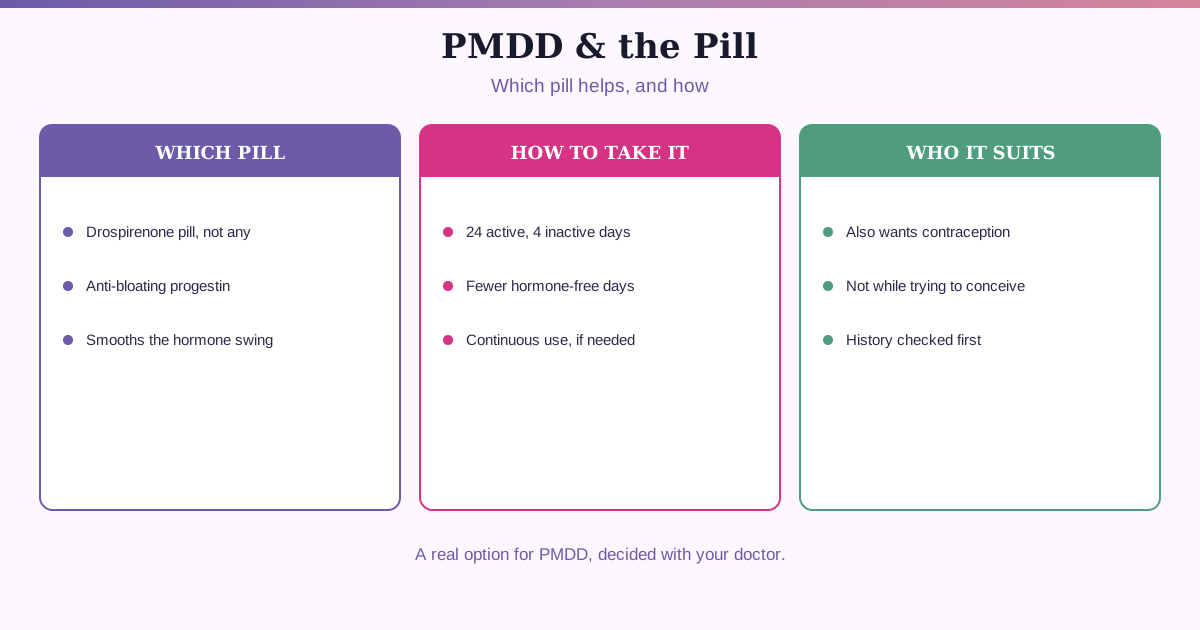
Here is the ingredient that matters. The combined pill formally studied and approved for PMDD contains a progestin called drospirenone, paired with a low dose of ethinylestradiol. Drospirenone behaves differently from older progestins in two ways that matter for mood and premenstrual physical symptoms: it has a mild anti-mineralocorticoid effect, which reduces water retention and bloating, and a mild anti-androgen effect. Older progestins do not share this profile, and in some women they can worsen mood rather than help it, which is why the choice of pill is not interchangeable.
The evidence is specific to this formulation. A pivotal randomised controlled trial found that a drospirenone and ethinylestradiol pill taken on a 24/4 schedule was superior to placebo for PMDD, with a greater reduction in symptoms and a higher response rate (Pearlstein et al., 2005, Contraception, PMID 16307962). A separate randomised trial confirmed the benefit for PMDD specifically (Yonkers et al., 2005, Obstetrics and Gynecology, PMID 16135578). A Cochrane review of drospirenone-containing pills for premenstrual symptoms concluded they may help, while noting that much of the clearest benefit appears in the first few cycles and that a placebo response is part of the picture (Lopez et al., 2012, Cochrane Database of Systematic Reviews, PMID 22336820). In plain terms: this is a real, evidence-based option for PMDD, with realistic rather than miraculous expectations.
What the 24/4 schedule means, and why it helps
Traditional combined pills use a 21/7 schedule: 21 active hormone tablets followed by 7 inactive (placebo) tablets, during which you bleed. The drospirenone pill studied for PMDD uses a 24/4 schedule instead: 24 active tablets and only 4 inactive ones. That matters because the hormone-free days are when hormone levels drop, and for a hormone-sensitive brain that drop can bring back symptoms. Shortening the gap from seven days to four keeps hormone levels steadier and shrinks the window in which premenstrual symptoms can re-emerge.
Some women benefit from going a step further, with continuous or extended use, meaning skipping the inactive tablets and running active pills back to back to avoid the hormone-free interval altogether. This is a decision to make with your doctor, and it is a recognised strategy when the few pill-free days still bring symptoms back. It is safe for many women, but it is individualised, not a default.
💬 The pill is one option among several, and the right one depends on your whole picture. Message Dr. Suganya’s team at Fertilia on WhatsApp. Consultations are over video call, starting at ₹399, and our gynaecology and psychiatry sides work together to match the treatment to you. Message us on WhatsApp
Who the pill suits, and who should be cautious
The drospirenone pill is worth discussing if you have PMDD and also want contraception, prefer a hormonal approach to a psychiatric medication, or have troublesome premenstrual physical symptoms like bloating alongside the mood changes. For the right woman it does two jobs at once.
Like any combined pill, it is not right for everyone, and part of my job is weighing that with you. Combined pills are generally avoided or used with extra caution if you smoke and are over 35, have migraine with aura, have a history of blood clots (deep vein thrombosis or pulmonary embolism), have certain cardiovascular risks, uncontrolled high blood pressure, or specific liver conditions. Drospirenone has a mild potassium-sparing effect, so it also needs care alongside certain medicines or kidney problems. None of this is meant to alarm you; it is simply why a proper history matters before starting, rather than picking a pill off a shelf. Our OB-GYN guide to birth control pill side effects covers what to expect from combined pills in general.
If you are trying to conceive
There is one clear situation where the pill is not the route: if you are trying to conceive now, a contraceptive pill obviously does not fit, since its whole mechanism is to prevent ovulation. In that case the plan shifts toward lifestyle measures and, if needed, an SSRI chosen with pregnancy in mind, which my colleague Dr. Sandhiya covers in the PMDD treatment guide. If pregnancy is a year or two away rather than now, the pill can be a good bridge in the meantime, stopped when you are ready to try. Tell your doctor your conception plans so the plan is built around them from the start.
Working alongside your other care
Many women reach me already under a gynaecologist or a psychiatrist, sometimes on medication that is partly working. The pill is not a replacement for that care and not a verdict on it. Premenstrual disorders often need a combination, and adjusting or adding to a plan across a couple of cycles is normal, collaborative practice. If a previous pill did not suit you, that does not mean the drospirenone formulation will behave the same way, because the progestin is different. These are conversations to have openly with whoever is guiding your care, and at Fertilia the gynaecology and psychiatry sides simply sit at the same table.
A safety note that always applies
Whatever treatment you are considering, one thing overrides the rest. If your premenstrual week brings thoughts that life is not worth living or urges to harm yourself, even if they lift once your period comes, please get help now rather than waiting. Cyclical suicidal thoughts are a recognised feature of severe PMDD, and they are treatable. Speak to a doctor today, tell someone you trust, or call the free national mental health helpline KIRAN on 1800-599-0019, available around the clock. Reaching out is the right response, not an overreaction.
Frequently Asked Questions
1. Can the pill treat PMDD?
Yes, a specific one can. A combined pill containing drospirenone and ethinylestradiol on a 24/4 schedule is the oral contraceptive with formal approval for PMDD, shown superior to placebo in randomised trials (Pearlstein et al., 2005, PMID 16307962; Yonkers et al., 2005, PMID 16135578). Not all pills help, and some can worsen premenstrual mood.
2. Which pill is best for PMDD?
The one studied and approved for PMDD contains drospirenone with ethinylestradiol, taken 24 active tablets to 4 inactive. Drospirenone’s mild anti-mineralocorticoid and anti-androgen effects reduce bloating and suit premenstrual symptoms better than older progestins. The specific brand and whether it suits you is a decision for your doctor.
3. How does the pill help PMDD if my hormones are normal?
PMDD is not caused by abnormal hormones; it is a sensitivity of the brain to the normal hormonal cycle. The combined pill suppresses ovulation and flattens that natural swing, smoothing the trigger the sensitive brain reacts to. It approaches PMDD from the hormonal side, while an SSRI works on the brain’s response.
4. What is the 24/4 schedule and why does it matter?
It means 24 active hormone tablets and only 4 inactive ones, instead of the traditional 21/7. The hormone-free days are when symptoms can return, so shortening that gap from seven days to four keeps levels steadier. Some women benefit from skipping the inactive tablets entirely, decided with a doctor.
5. Who should not take the drospirenone pill for PMDD?
Combined pills are generally avoided or used cautiously if you smoke and are over 35, have migraine with aura, a history of blood clots, certain cardiovascular risks, uncontrolled high blood pressure, or specific liver conditions. Drospirenone also needs care with some medicines or kidney problems. A full history before starting is essential.
6. Can I take the pill for PMDD if I want to get pregnant?
Not while you are actively trying to conceive, since the pill prevents ovulation. If pregnancy is further off, it can be a useful bridge, stopped when you are ready. If you are trying now, the plan shifts to lifestyle measures and, if needed, an SSRI chosen with pregnancy in mind. Share your plans with your doctor.
7. Is the pill or an SSRI better for PMDD?
Neither is universally better; they suit different women. The pill is a strong option if you also want contraception and prefer a hormonal route. An SSRI, which can be taken only in the two weeks before your period, is a strong option if you do not need contraception. Many women do well on a combination, matched to their situation.
Deciding what fits you
If you have PMDD and want an option that also gives you contraception, the drospirenone pill on a 24/4 schedule is a genuine, evidence-based choice worth discussing. Like every PMDD treatment, it fits some women beautifully and others less well, and the way to find out is a proper conversation about your health, your symptoms, and your plans.
At Fertilia, that conversation is online, over video call from wherever you are, starting at ₹399, and our gynaecology and psychiatry sides work together so you are not bounced between them. If you would like to see the full menu of PMDD options side by side first, our PMDD treatment guide lays them all out, and our guide to which doctor to see for PMDD helps you pick your starting door.