I see patients who have spent months trying to manage premenstrual symptoms, and by the time they reach me, most have worked through a list of remedies recommended by a friend or read about online. Chasteberry, or Vitex agnus-castus, comes up frequently. Some women arrive having already taken it for six months with no improvement. Others come in asking whether to try it before considering prescription treatment.
The short answer is that chasteberry has genuine clinical trial evidence behind it. It is not a myth. But the evidence applies to a specific group of women, at a specific severity level, and it is frequently misapplied. This post is my attempt to lay that out clearly, including the India-specific confusion about which plant we are actually talking about.
If you are still working out whether what you experience is PMS or PMDD, our psychiatrist’s guide to PMS and PMDD is the right starting point. This post assumes you already have a sense of your pattern and want to understand one of the treatment options.
First: chasteberry and nirgundi are not the same plant
This matters more in India than anywhere else, so I want to address it before anything else.
Chasteberry is the common name for Vitex agnus-castus, a Mediterranean shrub whose dried berries have been studied in clinical trials for premenstrual symptoms. It is not a traditional Ayurvedic herb. You will not find it growing in most Indian gardens, and it is not part of the mainstream Ayurvedic pharmacopoeia.
Vitex negundo, known in India as nirgundi, sambhalu, or nochi, is a completely different species. It is used in Ayurveda for joint pain, muscle aches, and fever. The two plants share the genus name Vitex, but they have different chemistry, different uses, and a completely different evidence base. Using nirgundi for PMS because you read something about Vitex is a category error.
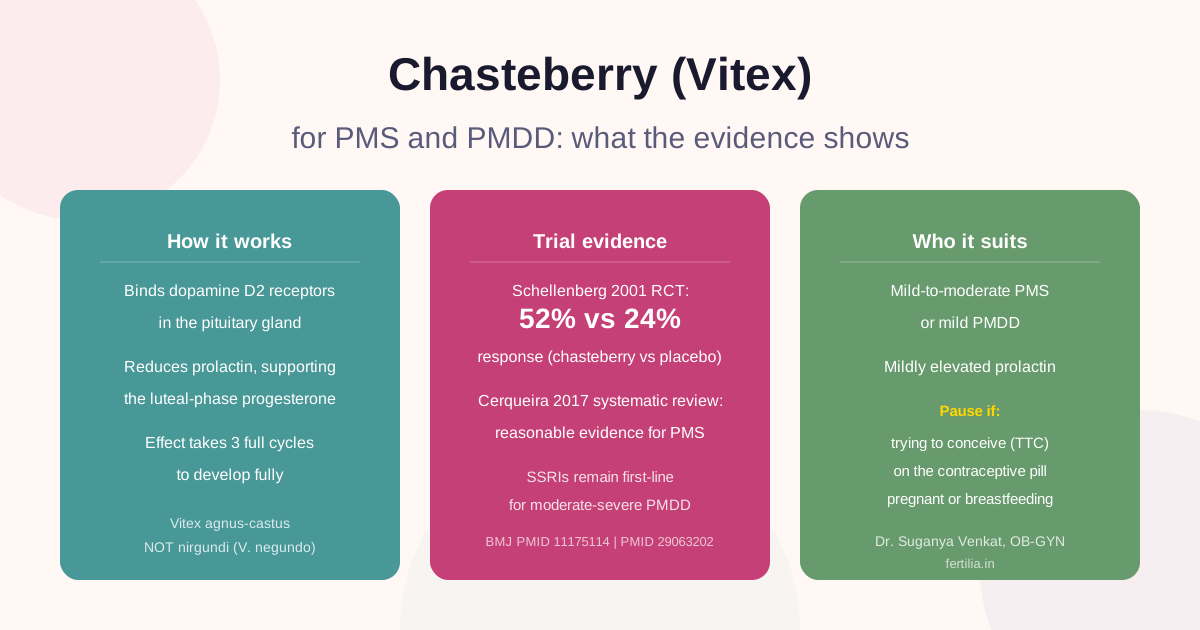
If you are looking for chasteberry, always check that the product specifies Vitex agnus-castus, not just Vitex.
How chasteberry works
The mechanism is reasonably well understood, which is part of why the evidence is plausible rather than just anecdotal.
Chasteberry extracts contain compounds that bind to dopamine D2 receptors in the pituitary gland. Dopamine normally suppresses prolactin release from the pituitary. By acting as a mild dopamine agonist, chasteberry reduces prolactin secretion.
Why does prolactin matter for PMS?
In women with premenstrual symptoms, mildly elevated prolactin is common. When prolactin is even slightly elevated, it can suppress the corpus luteum, which is the structure that forms after ovulation and produces progesterone during the second half of the cycle, the luteal phase. Lower progesterone in the luteal phase is associated with more severe PMS symptoms: mood changes, breast tenderness, bloating, and fluid retention.
By reducing prolactin, chasteberry may support a more robust luteal phase. This is the mechanism, and it is consistent with what women in trials report noticing most: improvement in breast fullness, bloating, and some aspects of mood.
The effect takes time. Because you are supporting a hormonal process that unfolds over an entire menstrual cycle, you will not notice a change in the first month. Three full cycles is the minimum before drawing any meaningful conclusions.
What the clinical trials show
The most cited randomised controlled trial was published in the British Medical Journal in 2001 by Schellenberg and colleagues (PMID 11159568). The study enrolled 178 women and compared Ze 440, a standardised chasteberry extract at 20mg per day, against placebo. The results were clear: 52% of women in the chasteberry group had a meaningful reduction in PMS symptoms, compared to 24% in the placebo group. The symptoms that improved most were irritability, mood alteration, anger, headache, and breast fullness.
A 2017 systematic review by Cerqueira and colleagues in Archives of Women’s Mental Health (PMID 29063202) assessed the available randomised trials and concluded that chasteberry is a reasonably safe and effective option for premenstrual symptoms. The reviewers noted that standardisation of extracts matters, and that the evidence is stronger for PMS than for full PMDD.
For more on this, read our guide on PMDD vs PMS. To put those numbers in context: SSRIs achieve response rates of around 65-70% in PMDD trials. Chasteberry at 52% is a real effect, but it is not as strong as the first-line prescription option. It occupies a different position in the treatment ladder, which I will come back to.
What it does for PMDD, and where it falls short
Most chasteberry trials enrolled women with PMS rather than formal PMDD. PMDD requires five or more emotional or physical symptoms in the luteal phase, with those symptoms causing real functional impairment, and with a relatively symptom-free week after menstruation. The diagnostic bar is higher.
The Schellenberg trial used criteria that overlap with mild-to-moderate PMDD, so there is reason to think chasteberry has some role there too. But for severe PMDD, the kind where you cannot work in the days before your period, where relationships are damaged each month, or where you experience thoughts of self-harm or rage that feels impossible to contain, the evidence supports moving directly to SSRIs or the drospirenone pill rather than trialling chasteberry first.
Our colleague Dr. Sandhiya Loganathan, the psychiatrist at Fertilia, covers the full treatment ladder for PMDD in her guide to PMDD treatment in India. That post explains when each level of intervention makes sense. Chasteberry belongs at the milder end of that ladder.
💬 Not sure where your symptoms fall? A consultation helps clarify the picture and match the right approach to what you are experiencing. Dr. Suganya sees patients online, pan-India, over video call at ₹399. Message us on WhatsApp
Who is a good candidate for chasteberry
Based on the clinical evidence and what I see in practice, chasteberry is most appropriate for women who:
Have consistent premenstrual symptoms that are clearly linked to the luteal phase and that resolve within a day or two of menstruation starting. Mood changes, breast tenderness, bloating, and headaches that repeat each cycle in the same pattern.
Want to try a non-prescription approach before considering SSRIs or hormonal options. This is a reasonable preference, and chasteberry is a legitimate place to start when symptoms are mild to moderate.
Have mildly elevated prolactin. If a blood test has shown that your prolactin is in the upper-normal or mildly elevated range, the dopamine mechanism is a particularly good fit. This is something your doctor can check with a simple blood test. For more on what elevated prolactin means for hormonal health, see our post on high prolactin in women.
Are not currently trying to conceive and are not on hormonal contraceptives. Both of these are important contraindications, which I explain below.
Who should not use chasteberry
If you are trying to conceive: Chasteberry influences hormonal signalling through the hypothalamic-pituitary-ovarian axis. There are no adequate safety data in women actively trying to conceive, and the hormonal effects that make it useful for PMS are also the reason it should not be used during a TTC window. If you have PMS and are trying to conceive, discuss management strategies with your doctor.
If you are on hormonal contraceptives: The dopamine-prolactin pathway that chasteberry acts on overlaps with the hormonal architecture that combined oral contraceptives also modulate. There is a theoretical risk of reduced contraceptive effectiveness, and the interaction is not well characterised. Do not add chasteberry to the pill without discussing it with your doctor.
If you are on dopamine-modulating medication: This includes antipsychotics and some medications for nausea or gastroparesis, such as metoclopramide, which are used commonly in India under brand names like Perinorm. These act on the same dopamine receptors as chasteberry. Combining them is not recommended without medical advice.
If you have a hormone-sensitive condition: A personal or family history of hormone-receptor-positive breast cancer, known uterine fibroids, or other hormone-sensitive conditions are reasons to avoid chasteberry and to discuss options with your doctor.
If you are pregnant or breastfeeding: Do not use chasteberry in either state. There are no safety data.
Dosing and sourcing in India
The most studied preparation is the Ze 440 extract at 20mg per day, taken as a single morning dose. Most India-available products do not use this specific standardisation. Instead, they contain 400-800mg of dried chasteberry fruit, which is roughly equivalent to 20-40mg of dry extract.
If you are sourcing chasteberry in India:
Look for products that specify Vitex agnus-castus on the label. This avoids the nirgundi confusion. The label should include the Latin name, not just the common name.
Choose products from established supplement manufacturers that list the extract ratio or standardisation. A label that says something like “Vitex agnus-castus 400mg (4:1 extract)” or “standardised chasteberry extract” gives you more confidence in what you are taking than a product that says only “chasteberry 500mg” with no further specification.
Chasteberry is available on Amazon India, HealthKart, and international supplement retailers that ship to India. The approximate cost is Rs 800-1500 for 60 capsules, which covers one to two months of supply.
Take it in the morning with water, at the same time each day. Give it three full cycles. If you see no meaningful improvement after the third cycle, it is unlikely to improve further, and that is the point to discuss next steps with a doctor.
Building on the foundations
Chasteberry works best alongside the basic foundations for PMS management, not as a replacement for them.
The dietary supplement with the next-strongest evidence for premenstrual symptoms is calcium. Calcium carbonate at roughly 1200mg per day reduced symptoms by around 48% versus 30% on placebo in a well-conducted trial (Thys-Jacobs et al., 1998, American Journal of Obstetrics and Gynecology, PMID 9731851). Good calcium sources in an Indian diet include ragi, black til, dahi, rajma, and moringa. If your dietary intake is already reasonable, supplementation may not add much, but making sure the foundation is solid is a low-cost first step.
Consistent sleep, moderate exercise, and reducing caffeine in the two weeks before your period also reduce symptom severity. These are not new information, but they are not optional if you want any treatment to work as well as it can. For more on managing the daily experience of premenstrual mood symptoms, see our post on premenstrual mood changes and what helps.
When chasteberry is not enough
If you have tried three cycles of chasteberry alongside the lifestyle foundations and symptoms are still disrupting your life, it is time to escalate.
At that point, the right path depends on whether you also want contraception, whether you are trying to conceive, and the severity of your symptoms:
For moderate-to-severe PMDD, SSRIs taken in the luteal phase or continuously are the most effective pharmacological option available. A 2024 Cochrane review confirms this (Jespersen et al., 2024, PMID 39140320). You do not need to be depressed to benefit from SSRIs in PMDD: they act through a distinct mechanism here.
The drospirenone-containing pill (Yasmin or YAZ) is an option if contraception is also a goal. Drospirenone has anti-mineralocorticoid and mild anti-androgenic properties that address the bloating and mood components of PMDD. Dr. Sandhiya covers this option in the full PMDD treatment guide.
If you are experiencing thoughts of self-harm or suicidal thoughts at any point in your cycle, please call the KIRAN helpline at 1800-599-0019. It is free, available 24 hours, and staffed by trained mental health professionals. These thoughts are a medical symptom, not a personal failing.
💬 If symptoms are affecting your work or relationships and you want a clear plan, a consultation is the right next step. Dr. Suganya sees patients online across India at ₹399 per video consultation. Message us on WhatsApp
Frequently asked questions
Does chasteberry help with PCOS?
The evidence for chasteberry in PCOS is limited and weak. Some small studies have looked at whether it helps regulate cycles or reduce androgen levels, but the results are inconsistent and the quality is not high enough to recommend it specifically for PCOS management. In PCOS, the hormonal picture is more complex than in simple PMS: insulin resistance, LH/FSH ratio changes, and androgen excess are the primary drivers for most women, not the prolactin-luteal phase mechanism that chasteberry acts on. Evidence-based approaches to PCOS are covered in our PCOS program page.
Is chasteberry the same as nirgundi?
No. Chasteberry is Vitex agnus-castus, a Mediterranean plant studied in clinical trials for PMS. Nirgundi is Vitex negundo, an Indian plant used in Ayurveda for joint pain and fever. They share the genus name but are different species with different chemistry and different uses. Always check that any product you buy specifies Vitex agnus-castus.
How long does chasteberry take to work for PMS?
Allow three full menstrual cycles before deciding whether it is working. The mechanism involves supporting hormonal balance across a whole cycle, so improvement in the first month is unlikely. If you see no meaningful benefit by the end of cycle three, that is the point to reassess with a doctor.
Can I take chasteberry while trying to conceive?
No. Chasteberry modulates hormonal signalling through the hypothalamic-pituitary-ovarian axis, and there are no safety data for use when actively trying to conceive. Its effects on the hormonal system make it unsuitable during a TTC window. If you have PMS and are trying to conceive, speak with your doctor about appropriate management strategies.
Can I take chasteberry with the contraceptive pill?
This is not recommended without medical advice. Chasteberry acts on the dopamine-prolactin pathway, which overlaps with the mechanisms the combined OCP also modulates. There is a theoretical risk of reduced contraceptive effectiveness. Speak with your doctor before combining them.
What is the correct dose of chasteberry for PMS?
The most studied dose is 20mg per day of standardised Ze 440 extract, taken as a single morning dose. Many India-available products contain 400-800mg of dried fruit, roughly equivalent to 20-40mg extract. Look for a product that specifies the standardisation and take it consistently at the same time each morning. Three cycles is the minimum trial period.
Is chasteberry safe to use long-term?
The clinical trials have used chasteberry for up to three months with a good safety profile. Long-term use beyond six months is not well studied. It is not designed as a permanent solution. If you find it helpful and want to continue beyond three months, review the plan with your doctor, particularly if anything about your health or medication situation has changed.