One of the most common messages I receive from women with PCOS is some version of this: “My doctor gave me tablets, my periods came for a few months, and now everything is back. What did I do wrong?”
The answer is almost always: nothing. You did not fail, and your treatment did not fail. PCOS is a long-term condition, and like every long-term condition, it responds to ongoing care rather than a single visit. Managed well, it stops running your life. But “managed well” looks different from a one-time fix, and understanding that difference changes how you approach the whole journey.
This post explains why PCOS needs ongoing care, what the different layers of that care actually are, how often you really need to see a doctor, and what to do when symptoms return.
PCOS Is a Syndrome, Not a One-Time Problem
PCOS is a syndrome, which means it is a cluster of features that tend to occur together rather than a single fault that can be corrected once. The diagnosis is made using the Rotterdam Criteria, and the features it captures (irregular ovulation, signs of excess androgens, and the ultrasound appearance of the ovaries) sit on top of underlying drivers that vary from woman to woman.
For most women in India, the main driver is insulin resistance, which is present in a large majority of PCOS cases including many women who are not overweight. For others, low-grade inflammation or a stress-and-cortisol pattern plays a larger role. In some women, what looks like PCOS after stopping the contraceptive pill is a temporary hormonal rebound that may not be true PCOS at all and is often transient. We work with PCOS drivers rather than fixed “types”, because the same woman can have more than one driver, and the balance can shift over the years.
The reason this matters is simple. A driver like insulin resistance is something you manage continuously through how you eat, move, and sleep. It is not a one-time repair. That is why a single prescription, however appropriate, cannot be the whole plan. To understand the underlying mechanism in more detail, our guide on insulin resistance and PCOS walks through the signs and what to do about them.
The Three Layers of PCOS Care, and Who Does What
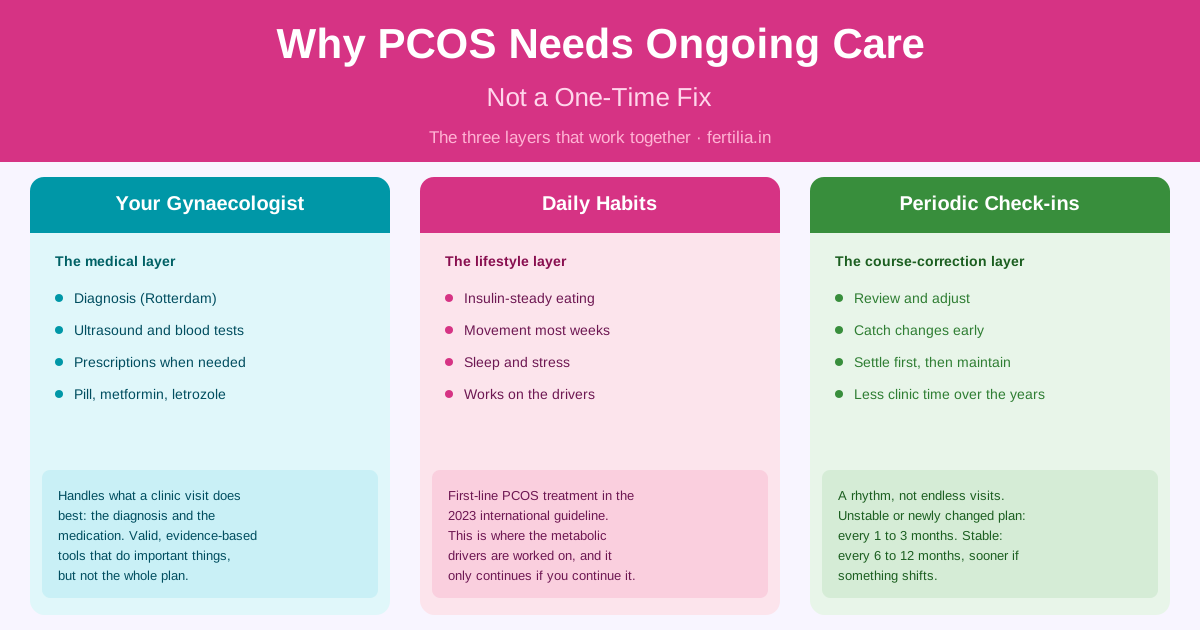
When women feel let down by PCOS treatment, it is usually because they were expecting one layer of care to do the work of three. Here is how the layers fit together.
Your gynaecologist handles the medical layer. This is diagnosis, ultrasound, blood tests, and prescriptions when they are needed. The contraceptive pill to regulate cycles and protect the endometrium, metformin for insulin resistance, letrozole when you are trying to conceive: these are valid, evidence-based tools, and they do important things. Our post on metformin for PCOS explains what that medication does and does not address.
Daily habits handle the lifestyle layer. This is the food on your plate, the movement in your week, your sleep, and your stress. The 2023 International Evidence-Based PCOS Guideline (Teede et al., PMID 37580861) places lifestyle as the first-line treatment for PCOS, with medication added for specific indications. This layer is where the metabolic drivers are actually worked on, and it is the part that only continues if you continue it.
Periodic check-ins handle the course-correction layer. Your body and your life change. The plan that suited you while you were studying may not suit you after a job change, a pregnancy, or your mid-thirties. Check-ins are where you adjust.
Your gynaecologist handles the medical side: diagnosis, scans, and prescriptions when you need them. What ongoing care adds is the daily layer, the food, movement, and stress habits that work alongside that, not instead of it. The two are partners, not alternatives.
What Ongoing Care Means in Practice
A lot of women hear “ongoing care” and picture a lifetime of monthly clinic visits. That is not what it means, and it is not what good PCOS care looks like.
Ongoing care is a rhythm, not a constant. In practice it tends to follow a pattern. First, you settle the basics: get the right diagnosis, identify your main drivers, and build a daily routine you can actually sustain. This first phase is the most hands-on, and it is where a structured programme helps most. Once your cycles, energy, and symptoms are more stable, the intensity drops. You move into maintenance, where you are mostly managing things yourself with periodic reviews.
So how often should you see a doctor for PCOS? When things are unstable or you have just changed treatment, more often, perhaps every one to three months, so the plan can be adjusted to how you respond. When you are stable, a review every six to twelve months is usually enough, plus a visit sooner if something shifts (periods stopping for three months or more, rapid weight change, or new symptoms). If you are trying to conceive, the cadence changes again and is guided by your cycle and your fertility plan.
The goal of ongoing care is not to keep you in the clinic. It is to get you to the point where you need it less.
Message Dr. Suganya on WhatsApp if you would like ongoing support to manage your PCOS rather than starting over every few months. The ₹399 consultation is online, pan-India, and reviews your reports and history in detail.
Why Symptoms Come Back When Care Stops
This is the part that confuses women most, so it is worth saying plainly. When your periods return on a treatment and then stop again after you stop, that is not a relapse caused by something you did wrong. It is the drivers re-emerging because the thing that was holding them in check was withdrawn.
Think of insulin resistance. When you eat in a way that keeps your blood sugar and insulin steady, move regularly, and sleep well, your ovaries get a clearer hormonal signal and ovulation improves. When those inputs stop, insulin creeps back up, and the same chain of effects follows. The body has not broken. It is responding exactly as it did before, to the inputs it is now getting.
This is also why “PCOS reversal” is better understood as symptom reversal. The syndrome has a genetic basis and does not disappear, but the symptoms (irregular cycles, weight that will not move, acne, excess hair, difficulty conceiving) genuinely improve when the drivers are addressed, and they hold as long as the care holds. Our honest explainer on what PCOS reversal actually means covers this in full.
The encouraging part is that holding your gains gets easier over time. The early months take the most effort. Once new habits are built and your body has settled into a better pattern, maintenance is lighter than the initial work. The aim is a sustainable routine, not constant restriction.
What This Looks Like Day to Day
Ongoing care does not mean your whole life revolves around PCOS. For most women, a workable version looks like this:
A way of eating that keeps insulin steady, built around the Indian foods you already cook, not an imported diet. A movement routine you can keep up most weeks. Enough sleep, and some attention to stress, because cortisol is a real driver. A simple way of noticing how your body is doing between appointments, so you can catch a change early and bring it to your doctor. And a point of contact for the questions that come up in between, which is where day-to-day support makes the difference between staying on track and quietly drifting off it.
That last piece, knowing what to watch and what to bring to your next visit, is worth getting right. Our companion guide on what to track between doctor visits for PCOS shows you exactly what to monitor and how to keep it simple.
For the bigger picture of PCOS, its drivers, and how it is treated, our main PCOS guide is the place to start.
How Fertilia Fits In
Women come to Fertilia for the continuity layer. Not to replace their gynaecologist, but to add the daily, ongoing piece that a busy clinic appointment cannot provide. Dr. Suganya and the team build a personalised plan around your specific PCOS drivers, your kitchen, and your routine, and stay in touch through the months when consistency is what counts.
We work alongside your treating doctor. If you are on metformin or the pill, that continues as your gynaecologist advises, and the lifestyle layer is built around it. The consultation is ₹399, online, and available pan-India and to NRI women. Message Dr. Suganya on WhatsApp to ask about an ongoing plan, and the PCOS symptom reversal program is there if you decide to take the next step.
Frequently Asked Questions
Is PCOS a lifelong condition? PCOS is a long-term condition with a genetic basis, so it does not simply go away. What that does not mean is a lifetime of symptoms. When the underlying drivers (most often insulin resistance) are managed consistently, periods regularise, weight becomes easier to manage, and many women feel well for years. The condition stays, but the symptoms can be kept quiet with ongoing care.
Can one appointment or one prescription fix PCOS? A single appointment can diagnose PCOS, start the right medication, and set a direction, all of which are valuable. What it cannot do is manage a chronic, driver-based condition on its own, because the metabolic drivers are worked on day to day, not in one visit. The appointment is the start of the plan, not the whole of it.
How often should I see a doctor for PCOS? When your PCOS is unstable or you have just changed treatment, every one to three months is reasonable so the plan can be adjusted to how you respond. When you are stable, a review every six to twelve months is usually enough, with a visit sooner if your periods stop for three months or more, your weight changes rapidly, or new symptoms appear. If you are trying to conceive, the timing is guided by your cycle and fertility plan.
Do I have to be on medication for PCOS forever? Not necessarily. Some women use medication for a defined period or for a specific goal (such as letrozole while trying to conceive), and some use it longer term. Whether you stay on a medication is a decision for you and your gynaecologist, based on your symptoms and goals. The lifestyle layer works alongside medication and, for some women, reduces how much medication they need over time.
Why do my PCOS symptoms come back after they improve? Usually because the inputs that were keeping the drivers in check have stopped. Insulin resistance, inflammation, and hormonal patterns respond to how you eat, move, sleep, and manage stress. When those inputs are steady, symptoms stay quiet. When they stop, the drivers re-emerge. This is not a failure on your part, it is the condition behaving predictably, and it is exactly why ongoing care matters.
Is PCOS reversal the same as a cure? No. PCOS has a genetic basis and the syndrome itself is not curable. What is genuinely reversible are the symptoms (irregular cycles, weight gain, acne, excess hair, anovulatory infertility) when the underlying drivers are addressed. We use the phrase “symptom reversal” because it is accurate. Calling it a permanent cure would not be.
What does ongoing PCOS care cost? This varies with how much support you want and whether you are seeing a gynaecologist, a lifestyle programme, or both. The first phase, when you are settling the diagnosis and building a routine, is the most hands-on. Maintenance is lighter. At Fertilia, the consultation is ₹399 and online, and the 90-day programme is structured to do the intensive early work and then leave you with habits you can sustain on your own.
For more before you decide on a plan, see our PCOS guide, the honest take on PCOS reversal, and the companion post on what to track between visits.