The most useful thing you can bring to your next PCOS appointment is not a long list of questions. It is a record. When a woman walks in and can tell me, “My last three cycles were 38, 45, and 41 days, my acne flared in week two, and my energy has been better since I started walking,” we get straight to the useful part of the conversation. When the reply to “how have your periods been?” is “I am not sure,” we spend the appointment reconstructing the picture instead of acting on it.
PCOS is managed between visits, not just during them. A few minutes of simple tracking turns a vague “things have been up and down” into clear information your doctor can act on. This post covers the five things worth tracking, how to do it without it taking over your life, and exactly what to bring to your next appointment.
For why this ongoing layer matters at all, our companion post on why PCOS needs ongoing care rather than a one-time fix sets the context.
Why Tracking Makes Your Appointments Better
A clinic appointment is a snapshot. Your doctor sees you on one day, often for fifteen or twenty minutes, and has to make sense of months of your life from what you can remember in that moment. Memory is unreliable, especially for things like cycle length that are easy to lose track of when periods are irregular.
Tracking fills that gap. It gives your gynaecologist real data instead of best guesses, which means faster decisions and fewer “let us wait and see how the next few months go” appointments that could have been avoided. It also helps you. Patterns that are invisible day to day (a flare that always follows a stretch of poor sleep, periods that lengthen when work gets stressful) become obvious when they are written down.
This is something you do alongside your medical care, not instead of it. Your tracking does not replace your doctor’s judgment. It makes that judgment better informed.
The 5 Things to Track
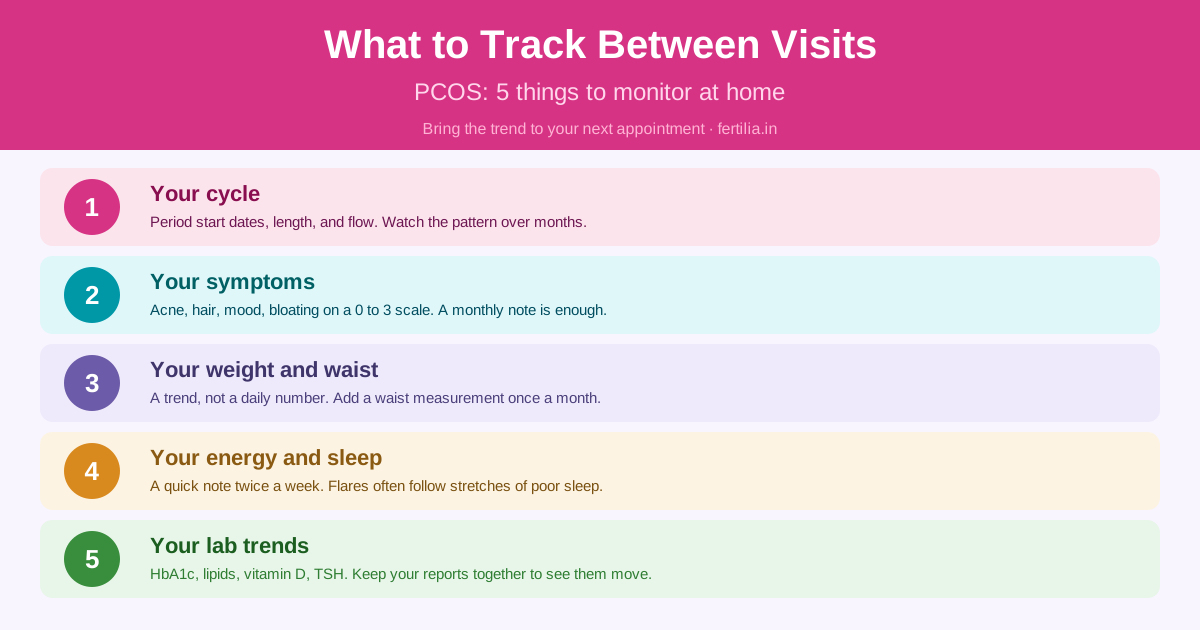
You do not need to track everything. These five cover what actually changes management.
1. Your cycle
This is the single most useful thing to record, and the one women most often lose track of. Note the date each period starts, how many days it lasts, and roughly how heavy it is. From the start dates you get your cycle length (the gap from the first day of one period to the first day of the next), which is the number your doctor cares about most.
With PCOS, irregular cycles are common, so do not worry about hitting a textbook 28 days. What matters is the pattern over time: are your cycles getting shorter and more regular, which usually means things are improving, or are the gaps stretching out? If your period stops for three months or more, that is worth a call to your doctor. Our guide on why PCOS periods go missing and how to get them back explains what those gaps mean.
2. Your symptoms
Track the symptoms that matter to you, on a simple scale of zero to three (none, mild, moderate, marked). The usual ones are acne, hair (both scalp thinning and unwanted facial or body hair), mood, and bloating. You are not trying to measure these precisely. You are looking for direction over weeks: better, worse, or about the same.
A monthly note is enough. Skin and hair changes are slow, so checking in once a cycle shows the trend without you fixating on a bad skin day. If you notice darkening of the skin around your neck or underarms, note that too, since it can be a sign of insulin resistance worth flagging. Our post on dark neck and acanthosis nigricans covers what that means.
3. Your weight and waist
Weight is useful as a trend, not a daily number. Weighing yourself every morning tells you more about water and salt than about PCOS, and it tends to feed anxiety without adding information. Once a week, or even once a fortnight, at the same time of day is plenty.
Your waist measurement matters as much as the scale, sometimes more, because central weight is closely tied to insulin resistance. A tape measure around the narrowest part of your midsection, taken once a month, tracks something the scale can miss. If you are eating and moving in a way that helps your insulin, the waist often moves before the weight does.
4. Your energy and sleep
These two are easy to dismiss, but they are real signals. Stress and poor sleep raise cortisol, which is one of the drivers that can keep PCOS symptoms active. A rough note (slept well or badly, energy good or flat) a couple of times a week is enough to show a pattern. Many women find that their symptom flares line up with stretches of bad sleep, and seeing that on paper is often what finally motivates a change.
5. Your lab trends
You do not run your own tests, but you can keep your results in one place and watch them move. The numbers worth keeping for PCOS are HbA1c or a fasting glucose and insulin (these track insulin resistance), a lipid profile, vitamin D, and thyroid (TSH), since thyroid problems are common in Indian women and can mimic or worsen PCOS symptoms.
How often these are repeated depends on your situation, and your doctor will guide it. For many women with PCOS, the international guideline suggests metabolic screening every one to three years when results are normal, and more often if they are not or if your weight changes. Keeping your old reports together (a folder on your phone works) means that at each visit you and your doctor can see the direction of travel, not just one isolated value. To understand what the insulin numbers mean, see our guide on insulin resistance and PCOS.
Message Dr. Suganya on WhatsApp if you have been tracking your symptoms and want help making sense of the pattern. The ₹399 consultation is online, pan-India, and reviews your history in detail.
How to Track Without It Taking Over Your Life
The biggest mistake is trying to track too much, too precisely, and burning out within a fortnight. Keep it light.
A notes app on your phone, a small diary, or a free period-tracking app all work. The method does not matter. What matters is that it is quick enough that you will actually keep doing it. A realistic routine looks like this: log your period start date when it happens, do a one-minute symptom and sleep check once a week, and take your weight and waist once a month. That is the whole system.
A word on period-tracking apps and PCOS: they are useful for recording your dates, but their predictions are often wrong when cycles are irregular, because the maths assumes a regular cycle. Use the app to store the data, not to tell you when you will ovulate. If you are trying to conceive and need to pin down ovulation, our guide to tracking ovulation covers methods that work better than app predictions.
One thing to hold on to: tracking helps you notice patterns and have a more useful conversation with your doctor. It is not a way to diagnose yourself, and it does not replace a check-up. If something worries you, the tracking is what you bring to your appointment, not a substitute for going.
What to Bring to Your Next Appointment
When it is time for your review, you do not need to bring your whole log. Spend two minutes turning it into a short summary your doctor can use:
Your cycle lengths over the past few months (for example: 34, 40, 36 days). Which symptoms have improved, worsened, or stayed the same. Your weight and waist trend (down, up, or steady). Anything new or anything that worried you. And your folder of lab reports, so any repeat tests can be compared with the last set.
A tidy sixty-second summary like this lets your doctor spend the appointment on decisions rather than on detective work. It is the difference between “let us see how things go” and “here is what we will adjust.”
When a Tracked Change Means Book Sooner
Most of what you track is for your routine review. A few changes are worth a sooner appointment, and knowing them keeps you calm rather than anxious between visits. Book sooner if your period stops for three months or more, if your weight changes quickly without a clear reason, if a symptom becomes severe or new, or if a repeat lab result moves in a worrying direction and you want to understand it.
None of these are emergencies. They are simply signals that the plan may need adjusting, and you have caught them early because you were paying attention. That is tracking doing exactly what it is meant to do.
How Fertilia Uses Your Tracking
When women join Fertilia, this tracking becomes part of how we work together. Dr. Suganya and the team help you set up a simple routine, then use what you record to adjust your nutrition, movement, and plan over the 90 days, alongside the care of your own gynaecologist. Instead of guessing between appointments, we are responding to your actual cycle, symptoms, and trends.
The consultation is ₹399, online, and available pan-India and to NRI women. Message Dr. Suganya on WhatsApp to ask about building a tracking routine and a plan around it, and the PCOS symptom reversal program is there if you want ongoing support.
Frequently Asked Questions
What should I track if I have PCOS? Five things cover what actually changes your management: your cycle (period start dates, length, and flow), your symptoms (acne, hair, mood, bloating on a simple zero-to-three scale), your weight and waist as a trend, your energy and sleep, and your lab results kept together so you can see them move over time. You do not need to track more than this.
How do I track my cycle when my periods are irregular? Record the date each period starts. Even with irregular cycles, those start dates give you your cycle length over time, which is what your doctor wants to see. Do not aim for a regular 28 days. Look at the pattern instead: cycles getting shorter and more regular usually means things are improving, while lengthening gaps are worth flagging. If your period stops for three months or more, contact your doctor.
Which PCOS blood tests should I repeat, and how often? The ones worth keeping an eye on are HbA1c or fasting glucose and insulin (for insulin resistance), a lipid profile, vitamin D, and thyroid (TSH). How often they are repeated depends on your results and your situation; the international PCOS guideline suggests metabolic screening every one to three years when results are normal, and more often if they are abnormal or your weight changes. Your gynaecologist will set the timing. Your job is to keep the old reports together so the trend is visible.
Is weighing myself every day a good idea with PCOS? No. Daily weight mostly reflects water and salt, and for many women it adds anxiety without adding information. Weigh yourself once a week or once a fortnight at the same time of day, and add a monthly waist measurement, which tracks insulin-related central weight that the scale can miss.
What should I tell my gynaecologist at a PCOS appointment? Bring a sixty-second summary: your cycle lengths over the past few months, which symptoms have improved or worsened, your weight and waist trend, anything new or worrying, and your folder of lab reports. This lets the appointment focus on decisions rather than reconstructing your history from memory.
Are period-tracking apps accurate for PCOS? They are good for storing your dates and useful as a record. Their predictions, though, are often wrong when cycles are irregular, because the maths assumes a regular cycle. Use the app to log data, not to predict ovulation. If you are trying to conceive, more reliable ovulation-tracking methods are worth learning.
When should I see my doctor sooner rather than waiting for my next review? Book sooner if your period stops for three months or more, if your weight changes quickly without a clear reason, if a symptom becomes severe or new, or if a lab result moves in a direction you want explained. These are not emergencies. They are signals that the plan may need adjusting, and catching them early is exactly what tracking is for.
For the bigger picture, see our PCOS guide, the companion post on ongoing PCOS care, and the guide to insulin resistance and PCOS.