Women with hormonal conditions often describe the same tiring loop. The gynaecologist looks at the cycle, a physician looks at the thyroid, someone else mentions the weight, and no one seems to be looking at the whole picture at once. You leave each appointment with one more piece of advice and no sense of how they fit together.
The reason this happens is simple, and it is not anyone’s fault. Hormonal conditions do not stay in one lane. A single problem shows up in your periods, your skin, your weight, your energy and your mood all at the same time. Care that treats those as separate problems will always feel scattered. Care that treats them as one connected picture is what most women are actually looking for.
This is what “multidisciplinary care” means for women’s hormonal health, and this guide explains what it involves, why these conditions specifically need it, and how to choose care that genuinely coordinates rather than just adding more appointments.
What hormonal health covers
Hormonal health is a wide umbrella. When women search for it, they are usually somewhere inside one of these:
- PCOS (now also called PMOS), the most common hormonal condition in Indian women. Start with our guide to PCOS symptoms, root causes and treatment.
- Insulin resistance, the metabolic driver behind a lot of PCOS. See insulin resistance and PCOS.
- Thyroid problems, which overlap with PCOS far more often than most women are told. See PCOS and thyroid, when they come together.
- PMS and PMDD, the cyclical mood conditions. See our PMS or PMDD guide for India.
- Irregular or missing periods, often the first visible sign something is off. See irregular periods, causes and what helps.
- Trouble conceiving, where hormones and fertility meet.
- Perimenopause and menopause, the hormonal shift of the 40s and 50s, which we cover in depth on our sister brand Menolia.
The important thing to notice is how much these overlap. A woman with PCOS very often also has insulin resistance, sometimes a thyroid issue, frequently premenstrual mood changes, and a fertility question underneath all of it. They are not five separate problems. They are one hormonal picture showing up in five places.
Why hormonal conditions need more than one kind of care
The clearest example is PCOS, which is now understood as a whole-body endocrine and metabolic condition, not just an ovarian one (Escobar-Morreale, 2018). Insulin resistance is present in up to 70% of women with PCOS, low-grade inflammation is common (González, 2012), and the psychological impact, including anxiety and low mood, is well documented. One prescription cannot address all of that, because the condition is not living in one system.
The same is true across the board. Thyroid problems change your metabolism, your cycle and your mood together. PMDD is driven by how the brain responds to normal hormone shifts, so it needs a mental-health lens as well as a hormonal one. This is why a single specialist, however good, is working on one corner of a picture that spans several.
Multidisciplinary care exists because the condition itself is multidisciplinary. Matching the care to the shape of the problem is simply good medicine.
What each part of the team does
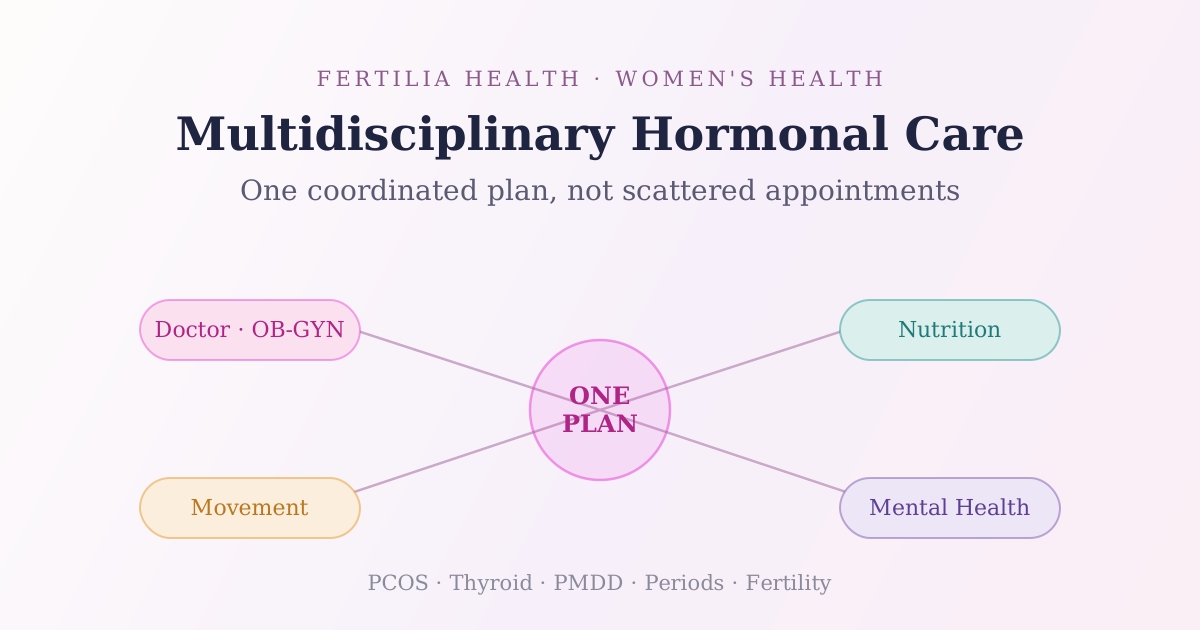
At Fertilia, a hormonal-health plan is doctor-led, and then it brings in the specific support each woman needs. In practice that looks like this:
- The doctor (OB-GYN). Diagnosis, the medical plan, and safety sit with a qualified doctor. This is where the Rotterdam criteria for PCOS, thyroid values, and any medication decisions are made, and where the whole plan is held together.
- Nutrition. A nutritionist translates the medical picture into food that fits your body and your kitchen, built around ragi, dal, dahi and the meals you actually eat, not an imported diet. Nutrition is central because insulin and inflammation respond strongly to how you eat.
- Movement and lifestyle. A wellness coach helps build sustainable movement and daily habits, the part that keeps a plan going after the first burst of motivation fades.
- Mental health. For cyclical mood conditions like PMDD, or the anxiety that so often rides along with a hormonal diagnosis, a psychiatrist brings the piece that a purely hormonal plan misses.
- Pelvic floor physiotherapy, where it is relevant, for the physical symptoms that some women carry alongside their hormonal picture.
The point is not to hand you five more people to see. It is that one plan draws on the right expertise, so nothing important is left out and nothing contradicts anything else.
💜 Have a hormonal concern that touches several things at once? Message Dr. Suganya’s team on WhatsApp and we will help you see the whole picture, not just one piece of it.
Coordinated care, working alongside your own doctor
Here is what makes the real difference. Even with several specialists, you can end up as the only person carrying information between them, translating one appointment’s advice for the next and reconciling plans that were never designed to fit together. Coordinated care removes that burden: one team, one plan, talking to each other.
Coordinated care means one plan, held by a team that talks to each other, so the nutrition supports the medical plan and the movement supports both. That coordination is the thing that is genuinely hard to find, and it is what turns scattered advice into steady progress.
None of this replaces your own gynaecologist. A good multidisciplinary program works alongside the doctor you already see, adding the layers that a short clinic visit rarely has time for: the food, the daily habits, the mood, and the day-to-day support between appointments. Your existing care stays; this fills in around it.
What to look for when you are choosing
If you are comparing options for hormonal-health support, these are the things worth checking:
- It is doctor-led. Hormonal conditions involve diagnosis, medication and safety. That belongs with a qualified doctor, not an app or a generic coach following a template.
- It genuinely coordinates. Several disciplines working from one plan, not a list of separate people you have to join up yourself.
- It is evidence-based. Guidance grounded in clinical evidence and the Rotterdam criteria, not detoxes or unproven cures.
- It fits Indian life. Food, labs and advice built for how you actually live, and priced honestly.
- It is personalised. Your plan should be built around your specific drivers, because two women with the same diagnosis can need quite different things.
Where to start
The right first step is almost always a clear diagnosis, because the plan depends entirely on which drivers are at play. If you are not sure where you fall, these are good starting points:
- If your main issue is irregular cycles, weight or skin, begin with PCOS symptoms and root causes and insulin resistance.
- If your mood shifts hard before your period, start with the PMS or PMDD guide.
- If you suspect a thyroid issue alongside everything else, read PCOS and thyroid.
- If you want a simple daily foundation while you work things out, our hormone-balancing morning routine is a gentle place to begin.
Fertilia’s programs bring this together as one coordinated, doctor-led plan. You can read about the PCOS symptom reversal program and the fertility program, both online across India and for Indian women abroad, with daily WhatsApp support so you are never carrying the plan alone.
💜 Want a plan that looks at the whole picture? Message Dr. Suganya’s team on WhatsApp and we will talk through what is going on and what coordinated care could look like for you.
Frequently Asked Questions
What does multidisciplinary care for hormonal health mean?
It means one coordinated plan that brings together the different kinds of support a hormonal condition needs: medical diagnosis and treatment from a doctor, nutrition, movement and lifestyle, and mental-health support where mood is involved. Because conditions like PCOS, thyroid problems and PMDD affect several systems at once, care that combines these usually works better than any single discipline alone. The key word is coordinated: one plan, not several disconnected appointments.
Why can’t one doctor handle my hormonal problem?
Your doctor absolutely leads the medical side, and that is essential. But hormonal conditions also involve food, daily habits, weight, and mood, which a short clinic visit rarely has time to work on in depth. Multidisciplinary care adds those layers around your doctor’s plan. It works alongside your gynaecologist, never instead of her.
Which conditions count as hormonal health?
The common ones are PCOS (also called PMOS), insulin resistance, thyroid disorders, PMS and PMDD, irregular or absent periods, fertility difficulties, and the perimenopause and menopause transition. Many women have more than one at the same time, which is exactly why a joined-up approach helps.
Is this the same as seeing many different specialists?
No, and that difference is the whole point. Seeing several specialists separately leaves you to carry information between them and reconcile conflicting advice. Coordinated multidisciplinary care means the team works from one shared plan, so the pieces support each other rather than pulling in different directions.
Do I have to leave my current gynaecologist?
Not at all. Good multidisciplinary care is designed to work alongside your existing doctor. She continues to manage your medical care; the program adds the nutrition, lifestyle, mood and day-to-day support that fills in around it.
How do I know which kind of care I need?
Start with a clear diagnosis, because the plan depends on your specific drivers. If you are unsure, a short conversation usually makes it clear. You are welcome to message Dr. Suganya’s team on WhatsApp and we will help you find your starting point, with no pressure either way.