A woman came to me last year with a lab report that had been sitting in her inbox for three weeks. Anti-TPO: 520 IU/mL. Her TSH was 3.1 mIU/L, which her previous doctor had described as “normal.” She had had two early miscarriages in the past eighteen months, and no one had connected the two pieces of paper.
That situation comes up more often than it should. Hashimoto’s thyroiditis is the most common autoimmune thyroid condition in the world, and its relationship with conception is more nuanced than “your thyroid levels are normal, you’re fine.” The antibodies matter. What to do about them is a question worth answering carefully.
This post covers what anti-TPO antibodies mean for conception, why a normal TSH does not always close the conversation, what the treatment evidence looks like, what selenium can and cannot do, and what monitoring makes sense when you are trying to conceive with Hashimoto’s.
What Hashimoto’s Thyroiditis Is
Hashimoto’s thyroiditis is an autoimmune condition in which the immune system produces antibodies against the thyroid gland, most commonly anti-thyroid peroxidase (anti-TPO) antibodies and sometimes anti-thyroglobulin (anti-TG) antibodies. These antibodies damage thyroid tissue gradually over years.
In the early stages, the thyroid compensates and keeps producing enough hormone. TSH and T4 levels remain within the normal range. This stage is called euthyroid Hashimoto’s: the thyroid is still functioning normally even though the antibodies are present.
Over time, as more tissue is damaged, the gland can no longer keep pace. TSH starts to rise and the person moves into subclinical or overt hypothyroidism. This progression is what doctors watch for with regular monitoring.
Hashimoto’s affects women at roughly four to eight times the rate it affects men. It is the leading cause of hypothyroidism in populations with adequate iodine intake, and it is most commonly diagnosed in women between 30 and 50.
In India, the condition is often recorded on lab reports simply as “anti-TPO positive.” The test is anti-thyroid peroxidase, with a normal threshold typically below 35 IU/mL in most Indian labs, though reference ranges differ between laboratories. Values significantly above this threshold, particularly above 100 IU/mL, indicate meaningful antibody activity.
If you are only being told your TSH is normal without anyone looking at the antibody level, ask specifically for anti-TPO to be checked.
Anti-TPO Antibodies and Miscarriage Risk
The link between anti-TPO antibodies and miscarriage has been studied for more than three decades, and the finding has been replicated across multiple independent datasets. Women who are antibody-positive face a higher risk of miscarriage even when their TSH and T4 are completely normal.
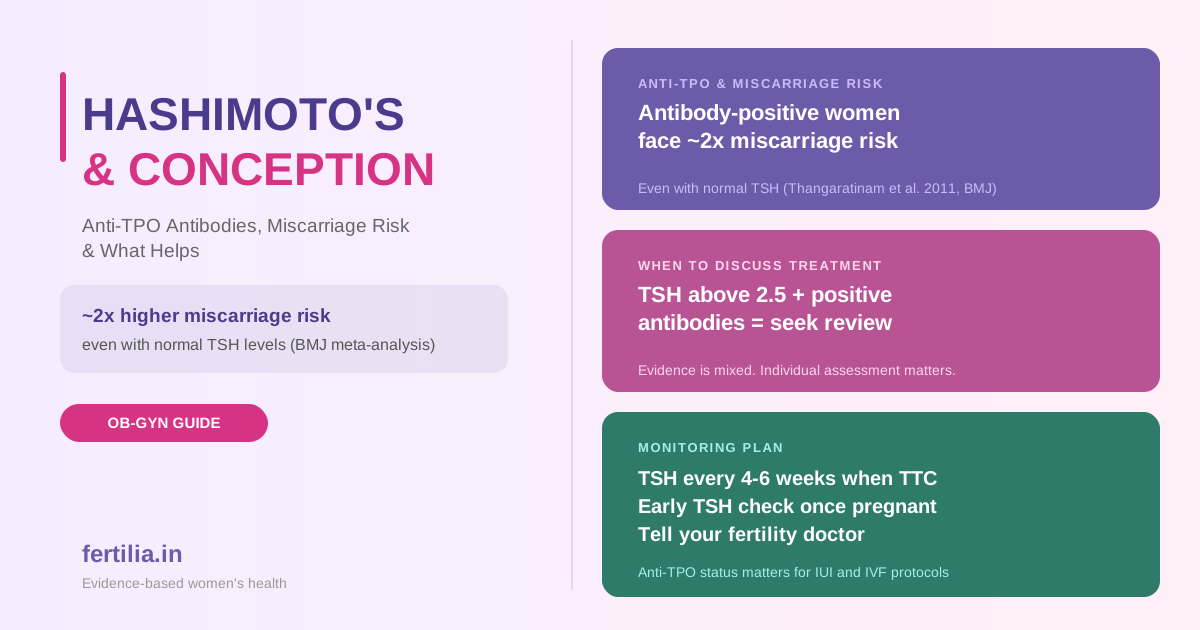
A meta-analysis by Thangaratinam and colleagues, published in the BMJ in 2011 (PMID 21558126), pooled data across multiple studies and found that thyroid antibody positivity was associated with approximately a twofold increase in the risk of miscarriage. The same analysis found an increased risk of preterm birth.
This is a consistent signal, not an outlier finding.
Why does this happen? The mechanism is not fully established, but the most widely discussed explanations are: subtle thyroid function changes in very early pregnancy that standard TSH testing misses (the placenta places significant demands on the thyroid in the first eight weeks, before fetal thyroid function begins); and a more broadly activated immune state that may create a less favourable environment for implantation and early placental development.
What this does not mean: a positive anti-TPO result is not a prediction of what will happen to you. Many women with positive antibodies conceive without difficulty and carry to term without any intervention. The elevated risk is a statistical association at the population level. Knowing about it lets you monitor and respond, not just brace for the worst.
Euthyroid Hashimoto’s: When TSH Is Normal but Antibodies Are Positive
This is the situation that causes the most confusion, and the most under-investigation.
When TSH is within the laboratory reference range and T4 is normal, many reports and many consultations will tell a woman her thyroid is fine. At that moment, her thyroid is functioning within normal limits. But if her anti-TPO is significantly elevated, she carries a higher miscarriage risk that a normal TSH alone does not capture.
The picture becomes more nuanced when you consider where in the normal TSH range the result sits. For women trying to conceive, most fertility specialists and obstetricians now treat TSH values above 2.5 mIU/L as higher-end borderline, even when within the standard laboratory range. For an antibody-positive woman with a TSH between 2.5 and 4.0 mIU/L, the question of whether to treat is a clinical one that requires individual assessment, not a simple yes-or-no based on a lab printout.
The practical message: if you have been told your TSH is “normal” but your anti-TPO is positive and you have had a miscarriage, it is worth asking specifically where your TSH sits within the range, and whether your antibody level has been factored into that assessment.
For the broader context of how thyroid function affects conception, the post on thyroid and fertility covers the foundational connections. If you are already pregnant with thyroid concerns, subclinical hypothyroidism in pregnancy has the trimester-specific TSH targets.
If you have Hashimoto’s and are trying to conceive, a conversation with a doctor who understands this specific evidence will give you more than any general post can. Dr. Suganya offers video consultations for women across India:
The Treatment Question: Levothyroxine for Euthyroid Antibody-Positive Women
This is where the evidence becomes genuinely mixed, and where a clear answer is not possible without knowing the individual woman.
A 2006 randomised trial by Negro and colleagues, published in the Journal of Clinical Endocrinology and Metabolism, found that giving levothyroxine to euthyroid antibody-positive pregnant women significantly reduced their rate of miscarriage and preterm delivery compared to an untreated control group. That result shifted clinical practice toward treating this group.
In 2019, a much larger randomised controlled trial changed the picture. The TABLET trial, published in the New England Journal of Medicine by Dhillon-Smith and colleagues (PMID 30907987), enrolled antibody-positive euthyroid women trying to conceive and randomised them to levothyroxine or placebo. The primary outcome was live birth rate. The trial found no statistically significant difference between the two groups.
Two well-designed trials, one smaller and showing benefit, one larger and showing none. This is genuinely uncertain territory, and the current approach at most centres is to make the decision individually rather than routinely prescribing levothyroxine to every antibody-positive euthyroid woman.
In practice, factors that shift the decision toward treatment include: TSH at the higher end of the normal range (above 2.5 mIU/L, particularly approaching 4.0), a history of recurrent miscarriage, other coexisting autoimmune conditions, or a plan to undergo IVF (where some data supports treatment in the cycle before transfer).
If your TSH is clearly in the low-to-mid normal range, below 2.5 mIU/L, and your anti-TPO is mildly elevated with no history of pregnancy loss, the evidence does not clearly support starting levothyroxine. Your doctor will make this call based on your full clinical picture, not on antibody level alone.
The collaborative approach: this is a decision made with your OB-GYN or reproductive specialist, weighing your TSH, antibody level, pregnancy history, and any other relevant factors. It is not a decision that should be made from a lab report alone, in either direction.
What Selenium Can Do (and What It Cannot)
Selenium is a trace mineral involved in thyroid hormone metabolism. The thyroid has one of the highest selenium concentrations of any tissue in the body, and selenoproteins protect it from oxidative damage. This biological connection has driven interest in selenium supplementation for Hashimoto’s.
Several randomised trials have found that selenium supplementation, typically 200 mcg/day of selenomethionine, can reduce anti-TPO antibody levels. A 2003 trial by Duntas and colleagues (PMID 12656658) showed significant antibody reductions after six months of selenomethionine supplementation. The result has been replicated in subsequent small trials.
Two important caveats apply.
The first is that reducing antibody titers is not the same as improving pregnancy outcomes. No large trial has demonstrated that selenium supplementation reduces miscarriage risk or improves live birth rate in antibody-positive women. The antibody reduction is a biochemical change. Whether it translates into clinical benefit for conception is still not established.
The second is the narrow therapeutic window. Selenium has a ceiling above which toxicity occurs. Doses above 400 mcg/day can cause selenosis (hair loss, brittle nails, neurological symptoms). The commonly studied dose of 200 mcg/day of selenomethionine is within the safe range for most adults, but selenium status varies across India by soil region, and some women may already be taking selenium in a prenatal supplement. Self-supplementing on top of an unknown baseline is not advisable.
In an Indian dietary context, selenium comes primarily from seafood (rohu, katla, bangda), eggs, and mushrooms. Brazil nuts are very high in selenium but are not a regular part of most Indian diets.
The practical position: selenium supplementation is not a standard-of-care recommendation for antibody-positive women trying to conceive. It is something some women discuss with their doctor based on the antibody-reduction data, with a clear-eyed understanding that the fertility benefit is unproven.
What to Monitor When You’re Trying to Conceive with Hashimoto’s
These are the steps that matter in practice.
Know your TSH number, not just the category. A TSH between 1.0 and 2.5 mIU/L is the target range when actively trying to conceive, regardless of antibody status. If your TSH is above 2.5 and your antibodies are positive, discuss this with your doctor before continuing to try.
Test TSH every four to six weeks. Hashimoto’s can cause gradual TSH drift over months. A result that was acceptable last year may be different now. Get a current reading before a new TTC cycle, not one from six months ago.
Retest TSH as soon as pregnancy is confirmed. The fetal thyroid does not become active until around 12 weeks. In the entire first trimester, everything the developing nervous system needs comes from the mother’s thyroid. An antibody-positive woman whose TSH was borderline at conception may become hypothyroid for the first time in early pregnancy, often before she would have a routine antenatal blood panel. Testing early, ideally before 8 weeks, catches this when it can still be addressed.
Tell your fertility doctor about your antibody status. If you are planning an IUI or IVF cycle, your reproductive endocrinologist needs to know your anti-TPO result. Some protocols adjust thyroid monitoring or consider treatment before transfer based on antibody positivity.
Check anti-TG antibodies too. Anti-thyroglobulin is the second antibody type associated with Hashimoto’s and is not always included in a basic thyroid panel. If anti-TPO was checked, ask whether anti-TG was also measured.
Address other modifiable factors alongside thyroid care. For women with both PCOS and Hashimoto’s, which is a recognised overlap, the combined inflammatory burden is relevant to both conditions. The post on PCOS and thyroid together covers what managing both looks like. An anti-inflammatory dietary approach, adequate sleep, and stress management are reasonable adjuncts to any medical management, though they are not replacements for it.
For women who have had two or more early miscarriages with Hashimoto’s, a broader investigation is appropriate: recurrent miscarriage testing covers what is typically assessed after repeated pregnancy losses.
Monitoring Through Pregnancy
If you conceive with Hashimoto’s, the monitoring does not stop after the positive test.
TSH should be checked as soon as pregnancy is confirmed and again at 4 to 6 week intervals through the first and second trimesters. Antibody-positive women are at higher risk of thyroid function changes during pregnancy even if they were stable beforehand.
The pregnancy-specific TSH targets differ from the standard lab reference ranges. In the first trimester, the upper target is 2.5 mIU/L; in the second and third trimesters, 3.0 mIU/L. Most Indian lab reports print general adult ranges and will not flag a TSH of 3.5 mIU/L as abnormal, even though it exceeds the pregnancy-specific target. Ask your obstetrician to interpret your results against pregnancy-specific norms, not the lab’s printed range.
At each antenatal visit, remind your obstetrician that you have Hashimoto’s and confirm whether a TSH check is due. Thyroid function can shift across trimesters.
What Hashimoto’s Is Called in Tamil and Hindi
Because Hashimoto’s is known primarily by its Japanese surname (named after Dr. Hakaru Hashimoto, who first described it in 1912), searches in Indian languages often come in differently. Common Hindi searches include “anti TPO positive matlab kya hai” (what does anti-TPO positive mean), “thyroid antibody positive kya hota hai” (what is thyroid antibody positive), and “hashimoto disease in hindi.” In Tamil, the condition is described in clinical settings as “thairoid etirpu nilamai” (thyroid immune condition) or simply “anti-TPO positive.”
If you have received a report with high anti-TPO and are unsure what it means for trying to conceive, the conversation your doctor has with you about that result matters more than the number alone.
Frequently Asked Questions
Can I get pregnant if I have Hashimoto’s?
Yes. Many women with Hashimoto’s conceive naturally and carry healthy pregnancies without any intervention beyond thyroid monitoring. The elevated miscarriage risk associated with anti-TPO antibodies is real but not absolute, and knowing about it allows for the monitoring that reduces the chance of an undetected problem.
My TSH is 2.8 mIU/L and my anti-TPO is 480 IU/mL. Is this a problem?
A TSH of 2.8 is within most labs’ reference range but is above the 2.5 mIU/L threshold that most fertility specialists now treat as the upper target when trying to conceive, particularly in a woman with positive antibodies. Whether this needs treatment is a clinical decision that depends on your full picture: history of pregnancy loss, how long you have been trying, other factors. This is worth discussing specifically with your OB-GYN, not something to resolve from a lab report alone.
Does Hashimoto’s go away on its own?
Hashimoto’s is a chronic autoimmune condition. In most cases it does not reverse without intervention. Antibody levels can fluctuate over time in some women, and a small proportion of women do see antibodies decline with lifestyle changes, but this is not the expected trajectory. What matters practically is how thyroid function is affected over time, which is what regular TSH monitoring tracks.
Is selenium safe during pregnancy?
The evidence base for selenium supplementation in pregnancy with Hashimoto’s is limited. The doses studied in Hashimoto’s trials (200 mcg/day of selenomethionine) fall below the upper tolerable intake level for pregnancy (400 mcg/day). However, starting any supplement during pregnancy should be discussed with your doctor, particularly if you are already taking a prenatal supplement containing selenium. Dietary sources are always preferable to supplementation when intake from food is adequate.
How often should TSH be checked in pregnancy with Hashimoto’s?
Most guidelines recommend checking TSH as soon as pregnancy is confirmed (ideally before 8 weeks) and then every 4 to 6 weeks through at least the first and second trimesters. For antibody-positive women this monitoring is more important than for those with no thyroid condition, because function can shift during pregnancy even in women who were previously stable.
I had a miscarriage and was just told my anti-TPO is 360 IU/mL. Is the antibody the reason it happened?
Thyroid antibody positivity is one of several factors that can contribute to early pregnancy loss, but it is not possible to attribute any single miscarriage to antibodies with certainty. A thorough evaluation after pregnancy loss typically includes thyroid antibodies alongside a number of other investigations. The post on recurrent miscarriage investigations outlines what is typically assessed after two or more losses.
Can I try to conceive without any treatment if anti-TPO is positive?
Yes, many women do, and many have successful pregnancies. The decision about whether to treat depends on your TSH level, antibody level, pregnancy history, and other clinical factors. It is not a straightforward blanket yes or no. Having the conversation with your OB-GYN before each TTC cycle, rather than assuming last year’s assessment still applies, is the most practical approach.
Hashimoto’s and conception is a topic where neither dismissal (“your thyroid is fine”) nor alarm (“your antibodies are elevated”) serves a woman well. What matters is understanding what the numbers mean for your specific situation, monitoring closely, and acting on what the monitoring shows.
If you have Hashimoto’s and are trying to conceive, or if you have had unexplained early miscarriages and want your thyroid properly assessed, Dr. Suganya is available for video consultations across India:
You can also read the complete fertility guide at Fertilia for a broader overview of what to address before trying to conceive.