Three months after your surgery, you are getting dressed when your hand brushes across the scar. It is a thin, slightly raised line, still a little darker than the surrounding skin, and the patch of skin just above it has almost no feeling at all. You press gently and feel the skin, but not much else. You are not sure if this is how it is supposed to look. You are not sure whether the numbness means something is wrong. And nobody told you there would be anything to do about the scar once you left the hospital.
This is where most women find themselves at the three-month mark, and the questions they bring to consultations are almost always the same: when does it fade? Can I do anything to help it? And what should I be watching for?
I am Dr. Suganya Venkat, an OB-GYN at Fertilia with fifteen years of practice, and this guide answers those questions in the same order I go through them with women in my online consultations.
What the C-Section Scar Involves
A caesarean section involves more than one cut. The surgeon opens the skin, the subcutaneous fat, the fascial sheath over the abdominal muscles, the peritoneum (the lining of the abdominal cavity), and then the uterus itself. Each layer is sutured separately when the surgery closes, and each heals on its own timeline.
The scar you see on your skin is the outermost part of this. The layers beneath it, including the fascial sheath and the uterine wall, are healing silently underneath, and they take considerably longer than the skin. This is why the visible scar tells you some things about your healing, but not everything.
The wound healing process occurs in three overlapping phases. The inflammatory phase runs from the day of surgery through roughly the first five days: blood flow increases, the area is tender and swollen, and the body is assembling its repair response. The proliferative phase follows, from about day three through to six weeks: new blood vessels grow into the wound and fibroblasts lay down fresh collagen. That collagen is initially disorganised and relatively fragile, which is why the scar looks raised and firm in this phase. The remodelling phase is the longest, running from six weeks to eighteen months or more: the disorganised collagen is gradually replaced by a stronger, better-aligned form, the scar softens, and the colour fades (Singer and Clark, N Engl J Med, 1999, PMID: 10471461).
The Scar Healing Timeline
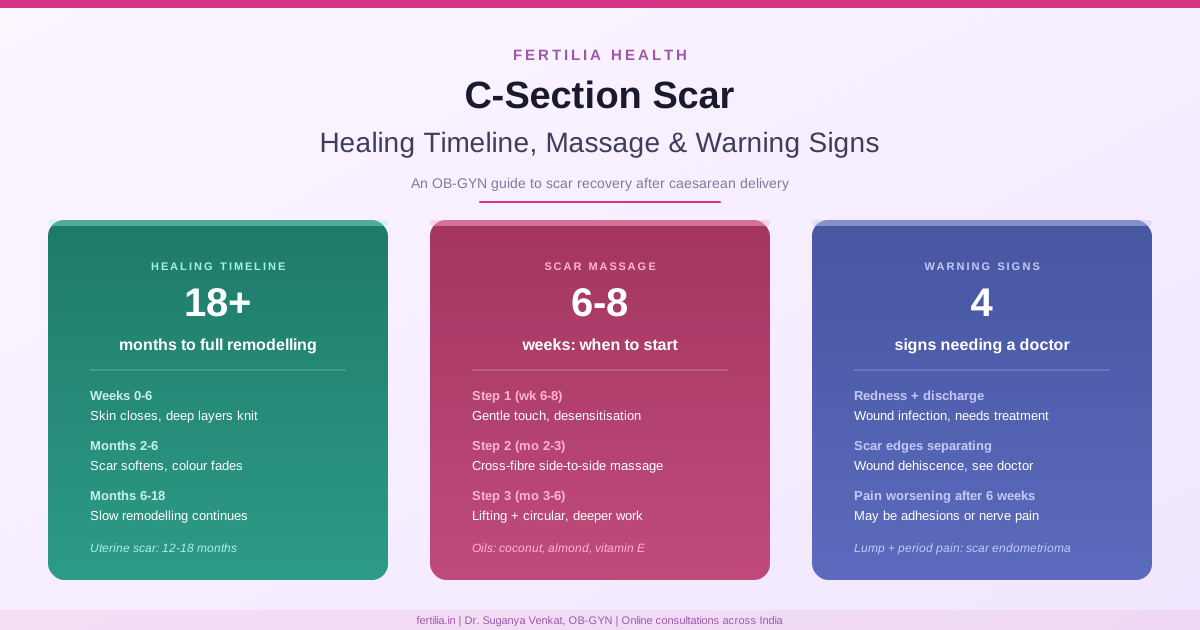
Weeks 0 to 2: The skin closure is holding, but the deeper layers are still in active repair. The scar line looks red or dark, and the surrounding area feels tender. Mild swelling above the scar is normal. Do not apply any pressure to the scar at this stage.
Weeks 2 to 6: The scar is closing on the surface, but the tissue underneath is forming scar collagen. During this time the scar may feel firm and slightly raised when you run a finger along it. A strip of skin above the scar line, usually one to two centimetres wide, often goes numb. This happens because small sensory nerves were cut during the incision and are regenerating slowly, at roughly one millimetre per day. The numbness is expected and does not indicate a problem. It may persist for six months to a year in some women.
Months 2 to 6: This is the most active period of scar remodelling. The scar begins to soften and flatten, and the colour starts to shift from red or dark pink toward a lighter pink or mauve. The internal adhesions (the tissue connections between the scar and the layers underneath) are also maturing during this period. This is the phase when scar massage does its most useful work, and the window when starting it makes the most difference.
Months 6 to 18: Remodelling continues more slowly. The scar continues to fade, moving toward pink, then silver or white over time. Most women see the scar at roughly its final appearance by the end of this period.
Two years onwards: The mature scar. For most women this is a thin, pale, flat or slightly raised line, sitting just above the pubic hairline. The final result varies with genetics, skin tone, and how the early weeks of healing were managed.
Scar Massage: When to Start and How to Do It
Scar massage improves the flexibility of the scar tissue, reduces the adhesion between the scar and the tissue underneath, and can reduce the pulling sensation some women feel when they stand up straight or exercise. The evidence for scar massage in improving scar mobility and reducing related discomfort is well-established in post-surgical care.
When to start: Wait until the skin surface is fully closed, completely dry, and no longer tender to direct touch. For most women this is around six to eight weeks after surgery. If you had any wound complication (delayed healing, reopening, infection), wait until your doctor confirms the wound is fully closed before starting.
Step 1, weeks 6 to 8: Desensitisation. Begin by simply touching the scar. Use a clean fingertip with a small amount of coconut oil or almond oil, and run it gently along the scar line without pressing. This re-establishes the nerve-skin connection in an area that has been handled very little since surgery. One to two minutes, a few times per week.
Step 2, months 2 to 3: Cross-fibre movement. Place two fingers flat on the scar and move them slowly from side to side, perpendicular to the scar line. The goal is to feel the skin moving slightly independently of the tissue underneath. Use enough pressure to move the skin without causing pain. Two to three minutes, three to four times per week.
Step 3, months 3 to 6: Lifting and circular massage. Place three fingers on the scar, press gently, and try to lift the skin away from the body, holding for a few seconds before releasing. Follow this with small circular movements at the scar line. This is the phase that works on deeper adhesions where the scar tissue has attached to the fascial layer. Four to five minutes, three to four times per week.
Oils to use: Coconut oil, almond oil, or a plain vitamin E oil all work well. These are widely available and non-irritating. The oil softens the scar and reduces friction. The benefit comes from the mechanical movement, not from any chemical action of the oil itself.
Silicone gel sheeting: For scars that are thickening or hardening more than expected, silicone gel sheeting has good evidence behind it: a Cochrane systematic review of randomised trials found that silicone gel sheeting reduces scar thickness and improves colour and pliability in hypertrophic scars (O’Brien and Jones, Cochrane Database Syst Rev). In India, silicone sheets are available from larger pharmacies and online under brand names including Kelo-Cote and Dermatix. They are applied over the dry, closed scar for several hours each day. Not every woman needs them, but they are worth considering if your scar is forming more prominently than expected.
If you have questions about where you are in your scar healing or whether you are doing the massage correctly, a video consultation with me at Fertilia is a straightforward option. Many women find it helpful to check in at the six-week or three-month mark.
Contact Dr. Suganya Venkat on WhatsApp to discuss your postpartum recovery
What Is Normal and What Is Not
Normal sensations and appearances at the scar:
Itching along the scar line, particularly in weeks two to six, is common and reflects nerve regeneration activity. Numbness above the scar is expected and can last six to twelve months. Occasional sharp twinges at three to six months are usually nerves reconnecting, not a sign of a problem. A small shelf or ridge of tissue above the scar (sometimes called the scar ledge or CS shelf) in the first six months is caused by fluid shifting and fat redistribution during healing; it softens as remodelling progresses. Tightness in the scar when you stretch, bend, or exercise in the first six months is related to internal adhesions and typically improves with massage and gentle movement.
Appearances that are worth watching:
A scar that stays raised and firm beyond six months, particularly if it is also itchy or tender, may be forming a hypertrophic scar. This is more common in women with darker skin tones. It does not mean anything has gone wrong, but it benefits from silicone sheeting and consistent massage, and it is worth mentioning to your doctor.
A scar that grows beyond the edges of the original incision, spreading into the surrounding skin, is a keloid. Keloids are more common in darker skin tones and have a genetic component. They need specific treatment, including silicone gel, steroid injections, or in some cases laser therapy. A dermatologist or plastic surgeon is the right referral.
Warning Signs That Need Medical Attention
Signs of wound infection: Redness and warmth that is spreading beyond the scar edges, any discharge (pus or cloudy fluid) from the scar, or fever, particularly in the first six weeks. These need assessment and usually antibiotics. Contact your doctor promptly.
Wound dehiscence: If the scar edges separate or if you notice any opening along the scar line, do not try to manage this at home. Even a small separation needs medical assessment. How it is managed depends on how much has opened, how recently the surgery was performed, and whether there are signs of infection.
A lump that worsens before your period: A hard, painful lump within or just above the scar, particularly if it is predictably more painful in the days before and during your period, may be a scar endometrioma. This is a rare complication where endometrial tissue embeds in the scar during surgery. It does not resolve without treatment, and the standard approach is surgical removal. Most women notice it as a lump that cycles with their menstrual cycle, not a constant feature.
Pain that is increasing rather than decreasing: Some discomfort is expected in the first weeks, but scar pain should be on a gradual downward trend. If pain at the scar is getting worse rather than better after the first six weeks, that is worth discussing with your doctor. Persistent scar pain beyond six months is sometimes related to deeper adhesions or nerve involvement, and a pelvic physiotherapist experienced in caesarean scar rehabilitation can help assess whether targeted physiotherapy would reduce it.
India-Specific Notes on Scar Care
Tight petticoat waistbands and saree folds resting on a healing scar are a common source of irritation in the first three months. Soft cotton underwear sitting above or well below the scar line is more comfortable during this period.
Haldi paste applied to healing wounds has a long tradition in Indian households. Haldi has real antibacterial properties, but applying it to a fresh surgical scar in the first weeks is not recommended. Once the scar is fully closed and dry, applying a small amount of haldi paste externally is not harmful, but it will not significantly change the final scar appearance.
Squat toilets place considerable strain on the abdominal muscles and the scar area. In the first six weeks, using a Western toilet or a commode seat converter if one is available reduces this strain. After six weeks, most women can manage squatting without difficulty.
For women considering a pregnancy after a caesarean, the standard guidance is to wait at least eighteen months to two years before conceiving, to allow the uterine scar adequate time to reach its strongest point. You can read more about this in the VBAC guide on this site.
For the broader recovery timeline including activity, driving, lifting, and the six-week review, the week-by-week C-section recovery guide covers those stages in detail.
For guidance on when exercise is safe after a caesarean, including the return to core work, see the postpartum exercise timeline.
The postpartum warning signs guide lists all the symptoms that need prompt medical attention in the first six weeks.
For women navigating scar management alongside breastfeeding and early postpartum, the postpartum recovery resource guide is a useful reference.
Frequently Asked Questions
How long does a c-section scar take to fully heal? The skin surface closes within two to three weeks. The full wound, including the deeper fascial and uterine layers, continues to remodel for twelve to eighteen months. The scar’s final appearance, in terms of colour and texture, is usually established by eighteen months to two years. The uterine scar specifically takes a minimum of twelve months to reach its strongest point, which is why waiting before the next pregnancy matters.
When can I start c-section scar massage? Most women can start gentle desensitisation at around six to eight weeks, once the scar is fully closed and no longer tender to touch. If you had any wound complications, check with your doctor before starting. The most effective window for deeper cross-fibre massage is months two to six.
Why is the skin above my c-section scar numb? Small sensory nerve fibres were cut during the incision and take time to regenerate. Nerve fibres grow at roughly one millimetre per day, which is why significant numbness in the patch above the scar can persist for six months to a year. This is expected and does not indicate a complication. Sensation gradually returns over time.
My scar looks raised and firm. Is that normal? In the first three months, yes. The scar is filled with early collagen that is disorganised and forms a raised, firm texture. As the remodelling phase continues, this collagen reorganises, and the scar softens and flattens. If the scar is still raised and firm at six months, and is also itchy or tender, mention it to your doctor, as it may be forming a hypertrophic scar that benefits from silicone sheeting.
Kaisarean ke nishan ko theek hone mein kitna samay lagta hai? (How long does a c-section scar take to heal?) Kai saal lagta hai poori tarah theek hone mein. Twak ki satah (skin) do se teen hafte mein band ho jaati hai. Andar ki parten, jaise fascia aur uterus, twelve se eighteen mahine mein theek hoti hain. Nishan ka rang pehle laal ya gahra hota hai, phir dheere dheere halka hota jaata hai. Malish (massage) do mahine baad shuru ki ja sakti hai.
Can I use coconut oil on my c-section scar? Yes. Coconut oil is a good choice for scar massage, available in every Indian kitchen and gentle on healing skin. It softens the scar and reduces friction during massage. Use it once the scar is fully closed and dry, from six to eight weeks onwards. The mechanical movement of the massage is what benefits the scar; the oil itself is a carrier, not a treatment.
What is a scar endometrioma, and how do I know if I have one? A scar endometrioma is a rare complication where endometrial tissue (the tissue that lines the uterus) embeds in the caesarean scar during surgery. The typical presentation is a firm, tender lump in or just above the scar that becomes predictably more painful in the days before and during your period, and then eases slightly after. It does not resolve on its own. If you notice a lump that follows this monthly pattern, arrange an ultrasound assessment with your doctor.