In Rajasthan, dinner is bajra roti thick with ghee, eaten with lasun chutney and kadhi. In Gujarat, bajra rotla feeds families through the cold months. In Tamil Nadu, kambu koozh, a fermented bajra porridge, is a summer staple in rural communities. In Andhra Pradesh, sajjalu roti is made the same way as wheat roti but sits denser and more filling on the plate.
Bajra has been feeding Indian families for centuries. It grows in dry, low-rainfall conditions where wheat and rice struggle. It costs less, stores longer, and among all the grains commonly eaten in Indian kitchens, it contains one of the highest amounts of iron.
This post covers what bajra contains, how to bring it into your daily meals through five recipes, and how much to eat at each life stage.
For more on this, read our guide on Toor Dal Benefits.
What Does Bajra Contain?
Bajra is a whole grain. The values below are from the Indian Council of Medical Research, National Institute of Nutrition (ICMR-NIN), Nutritive Value of Indian Foods (2017 edition), one of the most authoritative references for Indian food composition.
| Nutrient | Amount per 100g (raw bajra grain) |
|---|---|
| Energy | 361 kcal |
| Protein | 11.6 g |
| Fat | 5.0 g |
| Carbohydrate | 67.5 g |
| Dietary Fibre | approx. 8 g |
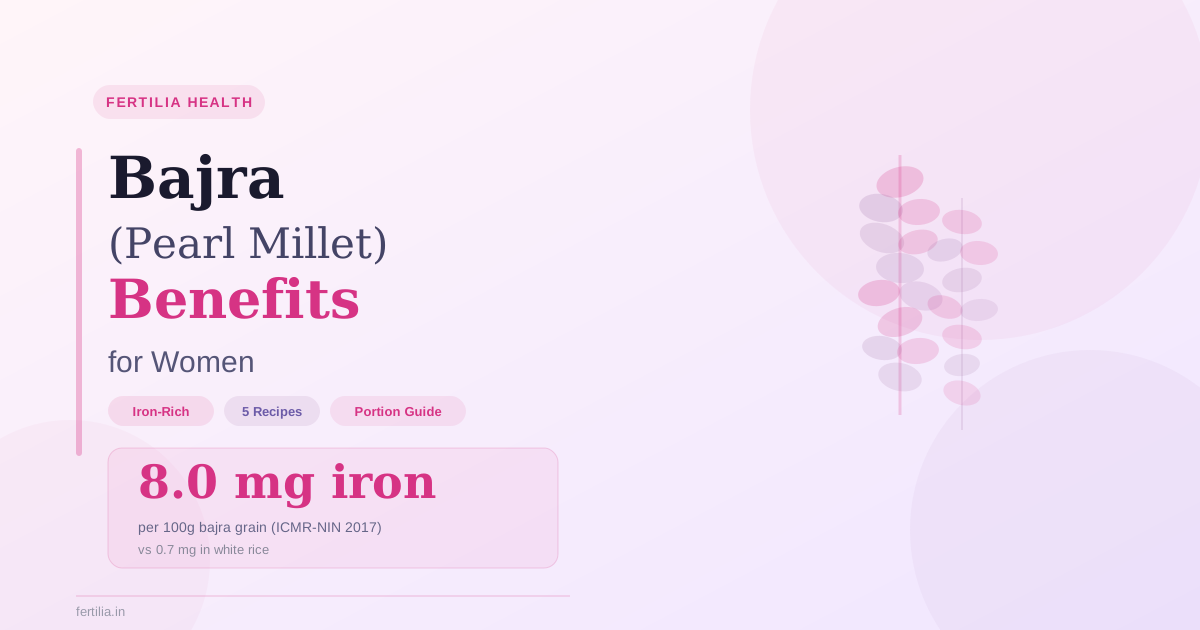
| Iron | 8.0 mg |
| Calcium | 42 mg |
| Phosphorus | 296 mg |
| Zinc | 3.1 mg |
| Magnesium | 137 mg |
The iron figure is worth pausing on. White rice contains 0.7 mg of iron per 100g. Whole wheat flour contains about 3.5 mg. Bajra contains 8.0 mg, more than double wheat and more than eleven times that of rice. For women who rely on food to maintain iron levels, bajra is one of the most practical options in the Indian kitchen.
The protein content, at 11.6g per 100g, is comparable to some dals. For a grain, this is notably high.
Bajra also contains a meaningful amount of zinc (important for immunity), magnesium, and phosphorus. It is naturally gluten-free, which makes it a useful grain for women who cannot tolerate wheat.
Bajra at Different Life Stages
For Women Managing PCOS
Bajra fits well into a whole-food, iron-rich daily eating pattern for women with PCOS, particularly those who experience heavy periods and low iron stores. For the clinical picture of how diet supports PCOS management, read our guide to insulin resistance and PCOS.
During Pregnancy
Iron-deficiency anaemia is common in Indian pregnancies. One medium bajra roti made from 40g of flour provides approximately 3.2 mg of iron, which contributes meaningfully toward daily iron needs alongside other iron-rich foods. Bajra also contains folate (approximately 85 mcg per 100g raw grain), B vitamins, and magnesium, making it a nourishing grain across all three trimesters. For a full list of iron-rich foods to include during pregnancy, see our iron-rich foods guide for Indian mothers.
After Delivery
Bajra raab, a warm drink made from bajra flour, ghee, and jaggery, has been given to new mothers across Rajasthan and Gujarat for generations. Traditional postpartum diets in many Indian communities included bajra as a warming, iron-replenishing food that is easy to digest in the early weeks after delivery. For a full postpartum food guide, see our after-delivery food guide for Indian mothers.
For Everyday Use
You do not need a specific health concern to eat bajra. It is a good everyday grain, affordable, widely available across India, and adaptable to both North and South Indian cooking styles.
Want help building a meal plan that includes iron-rich foods like bajra? Our team can put together a personalised food plan for your stage of life. Chat with us on WhatsApp
Bajra by Region: Indian Names and Varieties
Bajra is known by different names across India:
| Language or Region | Local Name |
|---|---|
| Hindi, Punjabi | Bajra, Bajri |
| Tamil | Kambu |
| Telugu | Sajjalu |
| Kannada | Sajje |
| Marathi, Gujarati | Bajri |
| Malayalam | Kambam / Cambu |
| Botanical name | Pennisetum glaucum |
Pearl millet is the most widely grown variety in India. It is available as whole grain, flour (bajra atta), and flakes. The flour is most commonly used for rotis and rotlas; whole grain is used for porridge and khichdi.
5 Bajra Recipes
1. Bajra Roti (Bhakri)
Ingredients: 1 cup bajra atta, warm water as needed, a pinch of salt
Method: Mix bajra flour with a pinch of salt. Add warm water gradually and knead into a soft dough. Note that bajra dough is stickier than wheat dough and does not bind as easily. Divide into balls. Pat each ball by hand on a damp surface or between two sheets of plastic to press it into a round about 5 mm thick. Cook on a hot tawa, pressing lightly, for 2 to 3 minutes per side until cooked through. Finish directly on the flame for 15 to 20 seconds if you want char marks.
Serve with: Ghee and garlic chutney, kadhi, or any vegetable sabzi.
Portion: 2 medium rotis per meal, made from approximately 80g of flour.
Tip: Bajra roti stiffens quickly as it cools. Eat it fresh off the tawa for the best texture.
2. Bajra Khichdi
Ingredients: 1/2 cup whole bajra grain, 1/4 cup yellow moong dal, 1 tsp ghee, 1/2 tsp jeera, 1 small onion (finely chopped), 1/4 tsp haldi, salt to taste, 2.5 cups water
Method: Soak bajra grain overnight or for at least 4 hours. Drain. In a pressure cooker, heat ghee and add jeera. Add onion and cook until translucent. Add haldi, then the soaked bajra and moong dal. Add water and salt. Pressure cook for 4 to 5 whistles. The khichdi should be soft and slightly soupy. Adjust water and cook further if the grain is still firm.
Serve with: A bowl of dahi or plain kadhi.
Portion: 1 medium bowl (approximately 150g cooked) per meal.
3. Bajra Raab (Traditional Postpartum Warm Drink)
Bajra raab is a thin, warm porridge traditionally given to new mothers in Rajasthani and Gujarati homes. It is warming, easy to digest, and delivers iron and energy in liquid form.
Ingredients: 2 tbsp bajra atta, 1 tsp ghee, 1 tbsp jaggery (or to taste), 1.5 cups water, a pinch of ajwain (carom seeds), a pinch of dried ginger (saunth) powder
Method: Dry roast bajra flour on a low flame for 2 to 3 minutes, stirring continuously, until it turns slightly golden and fragrant. In a small pot, bring water to a boil. Add the roasted flour in a slow stream while stirring to avoid lumps. Add ghee, ajwain, and saunth. Cook on low heat for 5 to 7 minutes, stirring often, until it reaches a thin, pourable consistency. Add jaggery and stir until dissolved. Serve warm.
When to have: As a morning warm drink in the early postpartum weeks. One cup per day.
4. Kambu Koozh (Bajra Fermented Porridge)
Kambu koozh is a traditional Tamil Nadu preparation. Bajra is cooked into a porridge, fermented overnight, and eaten as a cooling meal in summer. It is one of the oldest forms of naturally fermented food in South Indian cooking.
Ingredients: 1/2 cup bajra atta, 1.5 cups water (for cooking), additional cold water, 1 small cup dahi, salt to taste, one small shallot, green chilli (optional)
Method: Cook bajra flour with water into a thick porridge, stirring continuously for 8 to 10 minutes on medium heat until fully cooked and smooth. Allow to cool to room temperature. Add a spoonful of dahi and enough cold water to make it pourable. Cover loosely and leave overnight at room temperature for at least 8 hours. The next morning, it will have fermented slightly with a mild sour smell. Serve in a bowl with fresh dahi, salt, a raw shallot, and green chilli if preferred. Eat cold or at room temperature.
Portion: 1 medium bowl. Best as a morning or midday meal on hot days.
5. Bajra Jaggery Laddoo
Ingredients: 1 cup bajra atta, 1/2 cup grated jaggery, 3 to 4 tbsp ghee, 2 tbsp sesame seeds (til), a pinch of cardamom powder
Method: Dry roast bajra flour on low heat, stirring continuously, until fragrant and lightly golden (5 to 7 minutes). Remove from heat and allow to cool slightly. Roast sesame seeds in the same pan until they begin to pop. Melt jaggery with 1 tbsp of water in a small pan until it forms a thick syrup. Combine roasted bajra flour, sesame seeds, and cardamom. Pour the jaggery syrup over the mixture. Add ghee and mix well until it comes together like a dough. Shape into laddoos while still warm.
Store: In an airtight container for up to 5 days.
Portion: 2 medium laddoos (approximately 40g total) as a snack.
Portion Guide by Life Stage
| Life Stage | Daily Bajra Amount | Best Form |
|---|---|---|
| PCOS | 2 to 3 bajra rotis or 1 bowl khichdi daily | Roti, khichdi |
| First trimester | 1 to 2 bajra rotis per day, easy to digest | Roti or soft khichdi |
| Second and third trimester | 2 to 3 bajra rotis or 1 bowl khichdi daily | Roti, khichdi |
| First 2 weeks postpartum | 1 cup bajra raab daily (warm, easy on digestion) | Raab |
| Weeks 3 to 6 postpartum | 1 to 2 bajra rotis plus 1 cup raab | Roti and raab |
| General and everyday | 1 to 2 bajra rotis or equivalent per day | Roti, khichdi, koozh |
If you are managing gestational diabetes or anaemia during pregnancy, discuss your daily grain and iron plan with your doctor or dietitian.
How to Buy and Store Bajra
Bajra atta (flour): Available in most Indian grocery stores, supermarkets, and kirana shops. Look for flour made from whole bajra grain. Buy in quantities you will use within 4 to 6 weeks, as bajra flour has a shorter shelf life than wheat flour because of its higher fat content.
Whole bajra grain: Available in grocery stores and larger supermarkets. Stores well for up to a year in a dry, airtight container.
Storage: Keep bajra flour in an airtight container in a cool, dry place. In warm climates, refrigerate after opening to prevent it from going rancid. Fresh bajra flour has a mild, slightly nutty smell. Rancid flour smells sharp or bitter. If in doubt, taste a small pinch raw: it should be bland to mildly nutty, not unpleasant.
Frequently Asked Questions
Can I eat bajra every day?
Yes. Bajra has been a daily staple grain across Rajasthan, Gujarat, and Tamil Nadu for centuries. It is safe and nutritious as a regular part of your diet. Rotating it with other millets and grains through the week adds variety and nutritional balance.
Is bajra good during pregnancy?
Bajra is a nourishing grain to include during pregnancy. It provides iron, folate, magnesium, and protein. Two to three bajra rotis or a bowl of bajra khichdi can be part of a balanced pregnancy diet. If you are managing gestational diabetes or are on iron supplementation, discuss your full diet with your doctor.
Is bajra good for women with PCOS?
Bajra is a practical grain for women managing PCOS. It is iron-rich, high in fibre, and fits into a whole-food daily diet. For a full PCOS-friendly meal plan, see our PCOS weight loss and diet guide.
Is kambu and bajra the same thing?
Yes. Kambu is the Tamil name for bajra, which is pearl millet (Pennisetum glaucum). It is also called sajjalu in Telugu, sajje in Kannada, and bajri in Marathi and Gujarati. The grain, nutritional content, and cooking methods are all the same regardless of the regional name.
How is bajra different from jowar and ragi?
All three are traditional Indian millets. Bajra has the highest iron content of the three at 8.0 mg per 100g. Ragi has the highest calcium content. Jowar is lighter and slightly easier to digest for most people. They complement each other well and can be rotated through the week. For more on ragi, see our ragi benefits guide. For jowar, see our jowar roti benefits post.
Why does bajra roti become hard when it cools?
Bajra flour has no gluten, which means it cannot trap steam the way wheat dough does. As it cools, the moisture escapes quickly and the roti stiffens. The solution is to eat bajra roti fresh, within a few minutes of coming off the tawa. Some families store rotis in a cloth-lined container with a thin smear of ghee to slow this slightly.
Can I give bajra to my baby or toddler?
For young children, bajra porridge (thin bajra kanji) is introduced as a complementary food in many Indian households. It is a good source of iron for growing children. Introduce it after 6 months of age alongside other solid foods, starting with a thin porridge consistency. Always follow your paediatrician’s guidance on introducing new foods.
Have questions about how to include bajra and other millets in your daily meals? Our nutritionist team can help you put together a practical food plan. Connect with us on WhatsApp. If you are expecting, an iron-rich millet like bajra is the kind of everyday food our 90-day Pregnancy Care program leans on to keep your iron up.