White discharge in the days before your period. You notice it on your underwear or when you go to the bathroom, and the first thing you do is reach for your phone. A few minutes of searching later, you have read that it is completely normal and also that it might be an infection, and you are no clearer than when you started.
Women message me about this all the time. So let me start where I start with them: white discharge before your period is one of the most common things a woman notices, and in the large majority of cases it is completely normal. It even has a clinical name, leukorrhea, and it is a sign that your body and your hormones are doing exactly what they are meant to do.
That does not mean it is always nothing. There are a few specific patterns that are worth a simple check with your doctor. This guide walks you through both: what healthy white discharge looks like and why it turns up right before your period, and the handful of signs that mean it is worth getting looked at.
What this guide covers
We will go through what white discharge actually is, why it tends to increase in the days before your period, the common “is this my period coming or am I pregnant?” question, and the specific signs that tell you it is worth a conversation with a gynaecologist.
What white discharge before a period is
The clinical term for the white or milky vaginal discharge many women notice is leukorrhea (also spelled leucorrhoea). In Hindi it is commonly called safed paani.
For more on this, read our guide on Cervical Erosion (Ectropion).
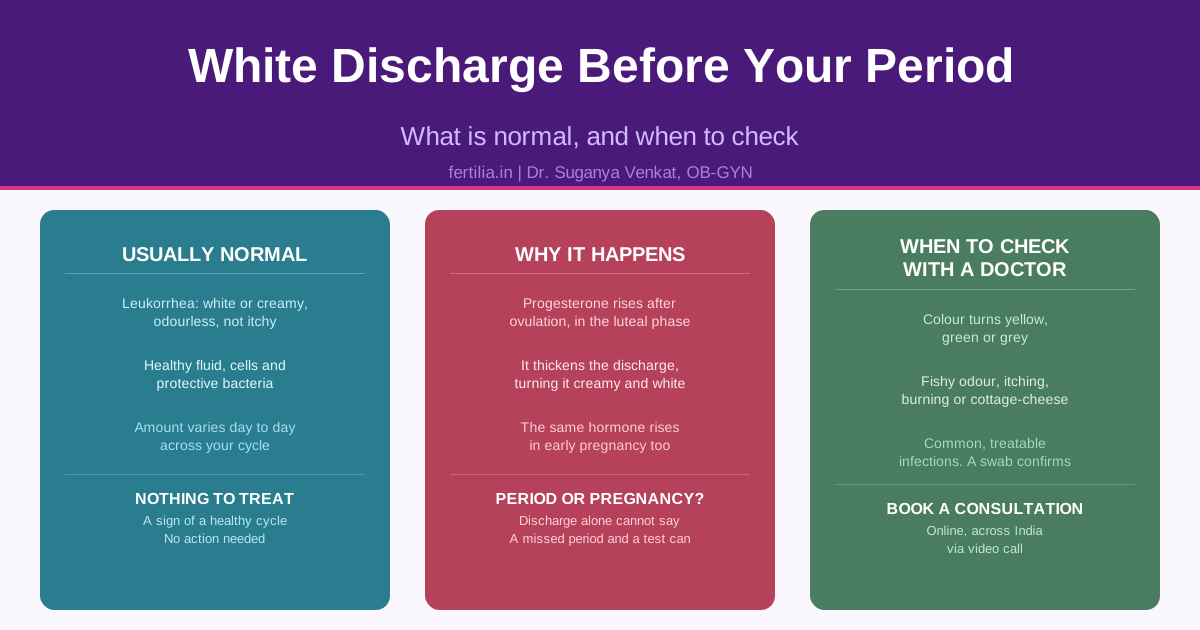
For more on this, read our guide on Vaginal Discharge. Leukorrhea is made of three ordinary things: fluid, cells shed from the vaginal wall, and the healthy bacteria (mostly Lactobacillus) that keep the vagina slightly acidic and protected from infection. It is your body’s own cleaning and protection system. A small to moderate amount of white or clear discharge, changing across the month, is a sign of a healthy reproductive system, not a problem with it.
The amount and texture change through your cycle because your hormones change. Around ovulation, when oestrogen peaks, discharge is usually clear, stretchy, and slippery, like raw egg white. In the second half of the cycle, after ovulation, discharge often turns thicker, creamier, and whiter. That second-half discharge is what most women mean when they search for “white discharge before period.”
For a full picture of how discharge changes across the month and what each type signals, read our cervical mucus guide. If instead you are noticing brown discharge before your period, that is old blood rather than leukorrhea, and we cover it separately in brown discharge before your period.
Why it increases right before your period
The change is driven by progesterone.
After you ovulate, your ovary produces progesterone during the second half of the cycle (the luteal phase). Progesterone thickens the cervical mucus and gives discharge its cloudier, creamier, whiter appearance. So in the roughly one to two weeks before your period, it is completely expected for discharge to look white or milky rather than clear.
A few other everyday things can increase white discharge too, all of them normal:
- Hormonal contraceptives. Starting the pill, or being on it, can change the amount and thickness of discharge.
- Sexual arousal. The body naturally produces more clear or white fluid.
- Early pregnancy. Progesterone stays high if you conceive, so discharge can increase (more on this below).
What healthy white discharge looks like is fairly consistent from woman to woman:
- White, milky, or slightly off-white in colour
- Creamy or thick in the days before a period, thinner and clearer at other times
- Odourless, or with a very mild scent that is not unpleasant
- Not itchy, not burning, not sore
- Varies in amount from day to day
If your discharge fits this picture, there is nothing to treat and nothing to worry about. It is simply your cycle.
If you have been noticing a change and you are not sure whether it is normal for you, a short conversation often settles it faster than weeks of searching. Dr. Suganya Venkat consults online, across India, over video call and phone.
Send a message on WhatsApp and she will get back to you personally.
Is white discharge a sign my period is coming, or that I am pregnant?
This is the question I get most, especially from women who are trying to conceive. Here is the honest position: white discharge on its own cannot tell you either way.
The reason is simple. In the second half of a normal cycle, progesterone is high and discharge turns creamy and white. In early pregnancy, progesterone is also high, and discharge is also often creamy and white. The two look very similar because the same hormone is driving both. So creamy white discharge before an expected period is equally consistent with “my period is about to arrive” and with “I might be pregnant.” It is not a reliable pregnancy sign by itself.
What actually tells you apart is straightforward: a missed period followed by a pregnancy test. If your period is late and you might be pregnant, wait until the day your period is due (or a couple of days after) and take a home test with your first-morning urine.
- For when and how to test accurately, see our guide on taking a home pregnancy test.
- If you tested and saw a faint second line, our guide on what a faint line means explains whether it counts.
- If you also had light spotting a week or so after ovulation, read implantation bleeding versus a period to tell the two apart.
The short version: notice the discharge, but do not read too much into it as a pregnancy sign. Let a missed period and a test do the answering.
When white discharge is worth checking
Most white discharge is healthy. The times it is worth a check are when the discharge changes in a specific way or comes with other symptoms. The good news is that the common causes are all treatable, usually with a simple course of medication, once your doctor knows what she is dealing with.
There are three common reasons discharge changes, and they tend to look different from each other.
A yeast infection (candidiasis)
The classic pattern is thick, white discharge like cottage cheese, with itching, and often burning or soreness around the vaginal opening. There is usually no strong smell. Yeast infections are extremely common and nothing to feel embarrassed about: an estimated three in four women have at least one in their lifetime (Sobel JD, Lancet, 2007, PMID 17560449). They are easily treated with antifungal medication your doctor can prescribe.
Bacterial vaginosis
Here the discharge is usually thin and greyish-white, with a fishy odour that is often more noticeable after sex. Itching is less prominent than with yeast. Bacterial vaginosis happens when the balance of vaginal bacteria shifts, and it is actually the most common cause of abnormal discharge in women of reproductive age (Koumans EH et al., Sexually Transmitted Diseases, 2007, PMID 17621244). That characteristic fishy, amine-like smell is one of the signs doctors use to identify it (Amsel R et al., American Journal of Medicine, 1983, PMID 6600371). It clears with the right antibiotic.
For more on this, read our guide on Bacterial Vaginosis.
A sexually transmitted infection
Some infections such as trichomoniasis can cause a frothy yellow-green discharge, an unusual smell, and soreness. Candidiasis, bacterial vaginosis, and trichomoniasis are the three most common causes of a change in discharge that a doctor checks for (Paladine HL, Desai UA, American Family Physician, 2018, PMID 29671516). All are treatable, and testing is quick.
So the signs that make discharge worth a check are:
- A change in colour to yellow, green, or grey
- A fishy, foul, or otherwise unusual smell
- Itching, burning, or soreness around the vagina
- A thick, cottage-cheese texture
- Pain during sex or when passing urine alongside the discharge
- A sudden, marked change from what is normal for you
None of these mean something is seriously wrong. They simply mean the cause is worth identifying so it can be treated. This is where your gynaecologist adds real value: a brief examination, and sometimes a simple swab, usually gives a clear answer in one visit. That is far more reliable than guessing from an internet search or treating yourself repeatedly with over-the-counter creams that may not match the actual cause.
What you can do
For everyday comfort and vaginal health, a few gentle habits help, and one common instinct actively hurts:
- Do not douche or use scented washes inside the vagina. The vagina cleans itself. Washing it out disturbs the healthy bacteria that keep infections away, and it is one of the more common triggers for bacterial vaginosis. Warm water on the outside is all that is needed.
- Choose breathable cotton underwear and avoid staying in damp or very tight clothing for long stretches, which encourages yeast.
- Wipe front to back after using the toilet.
- Notice your own pattern. Knowing what is normal for you across your cycle makes it easy to spot a genuine change early.
If a change does appear, you do not need to wait and wonder. It is always reasonable to get discharge checked, and a doctor would far rather see you for something that turns out to be normal than have you sit with worry.
A note on terms in Hindi and Tamil
If you searched for this in your own language, the reassurance is the same. In Hindi, white discharge is commonly called safed paani, and period se pehle safed paani (white discharge before the period) is usually the normal, progesterone-driven leukorrhea described above. In Tamil, it is often called vellai padudhal or vellai neer. Whatever you call it, healthy white discharge is odourless, not itchy, and part of a normal cycle. Discharge that changes colour or smell, or comes with itching, is what is worth showing a doctor.
Frequently asked questions
Is white discharge before my period normal?
Yes, in the large majority of cases. White or creamy discharge in the second half of your cycle is called leukorrhea and is driven by progesterone, the hormone that rises after ovulation. As long as it is white or milky, odourless or mildly scented, and not itchy or burning, it is a normal, healthy sign. It only needs attention if the colour, smell, or texture changes or if it comes with itching or soreness.
Does white discharge mean my period is coming?
It often appears in the days before a period, because progesterone thickens the discharge in the second half of the cycle. So it can be a rough signal that your period is on its way. But it is not a precise predictor, since discharge varies from woman to woman and from cycle to cycle. Track your actual cycle dates if you want to know when your period is due.
White discharge before my period, could I be pregnant?
You cannot tell from the discharge alone. Both the second half of a normal cycle and early pregnancy raise progesterone, so both produce creamy white discharge that looks very similar. The only reliable way to know is a missed period followed by a home pregnancy test taken from the day your period is due. See our home pregnancy test guide for the accurate timing.
Period se pehle safed paani kyun aata hai?
Period se pehle safed paani aana zyaadatar bilkul normal hota hai. Isse medical bhasha mein leukorrhea kehte hain. Ovulation ke baad cycle ke doosre hisse mein progesterone hormone badhta hai, jiski wajah se discharge gaadha aur safed ho jaata hai. Agar safed paani ka koi badbu nahi hai aur khujli ya jalan nahi ho rahi, toh yeh normal hai. Doctor ko tabhi dikhayein jab rang badle (peela, hara, grey), badbu aaye, ya khujli, jalan ya cottage-cheese jaisa gaadha discharge ho.
When is white discharge NOT normal?
When it changes in a specific way or comes with symptoms: a colour change to yellow, green, or grey; a fishy or foul smell; itching, burning, or soreness; a thick cottage-cheese texture; or pain during sex or urination. These usually point to a common, treatable infection such as a yeast infection or bacterial vaginosis. A quick check with your gynaecologist identifies the cause so it can be treated properly.
Is thick white discharge always a yeast infection?
No. Thick, creamy white discharge in the second half of your cycle is usually normal leukorrhea. It only suggests a yeast infection when it looks like cottage cheese and comes with itching, burning, or soreness. Texture alone is not enough to diagnose one. If you have the itching and cottage-cheese texture together, it is worth confirming with a doctor rather than repeatedly self-treating, especially if it keeps coming back.
Should I see a doctor for white discharge?
Not for normal white discharge. See a doctor if the discharge changes colour or smell, becomes itchy, burning, or sore, turns thick and cottage-cheese-like, or suddenly changes from what is usual for you. Recurrent infections, or discharge alongside pelvic pain or bleeding between periods, are also worth reviewing. A simple examination and swab usually give a clear answer in one visit.
If you have been noticing white discharge before your period and you want a clear answer on whether it is normal for you, Dr. Suganya Venkat consults across India online via video call and phone. Whether it is reassurance that your cycle is healthy or a treatable infection that needs the right medication, you will leave with a plan.
Message Dr. Suganya on WhatsApp for a ₹399 consultation. No waiting room, no commute.