The most common thing women say to me after getting a positive pregnancy test when they have PCOS is some version of: “I thought the hard part was over.”
In a way, it was. Getting pregnant with PCOS takes real effort: tracking ovulation that does not always cooperate, managing insulin resistance, sometimes working through medication protocols. The positive test is a genuine milestone.
But being pregnant with PCOS brings a specific set of things to watch for, and most women have not been told what those are in any useful detail. That is the gap this post closes.
I’m Dr. Suganya Venkat, an OB-GYN with over fifteen years of experience looking after pregnancies in women with PCOS. This post covers the risks that are genuinely elevated in PCOS pregnancies, the tests your antenatal care should include, and what you can do day to day to stay on the right side of the numbers.
Why PCOS Changes the Pregnancy Risk Profile
PCOS is more than a hormonal condition affecting the ovaries. The insulin resistance that underpins most cases (present in roughly 70% of women with the syndrome) does not resolve when you become pregnant. Pregnancy itself is already an insulin-resistant state, because the placenta produces hormones that partially suppress insulin sensitivity to ensure the growing baby has a steady glucose supply.
In a woman without PCOS, the body adjusts without significant disruption. In a woman who already carries baseline insulin resistance, the two effects compound, which is why the risk of gestational diabetes is substantially higher. The same underlying inflammation and altered blood vessel function associated with PCOS are also linked to higher rates of gestational hypertension and preeclampsia.
Understanding this makes the monitoring feel less like caution and more like logic. These checks are targeted at the specific pathways PCOS affects.
Gestational Diabetes: The Risk to Prioritise
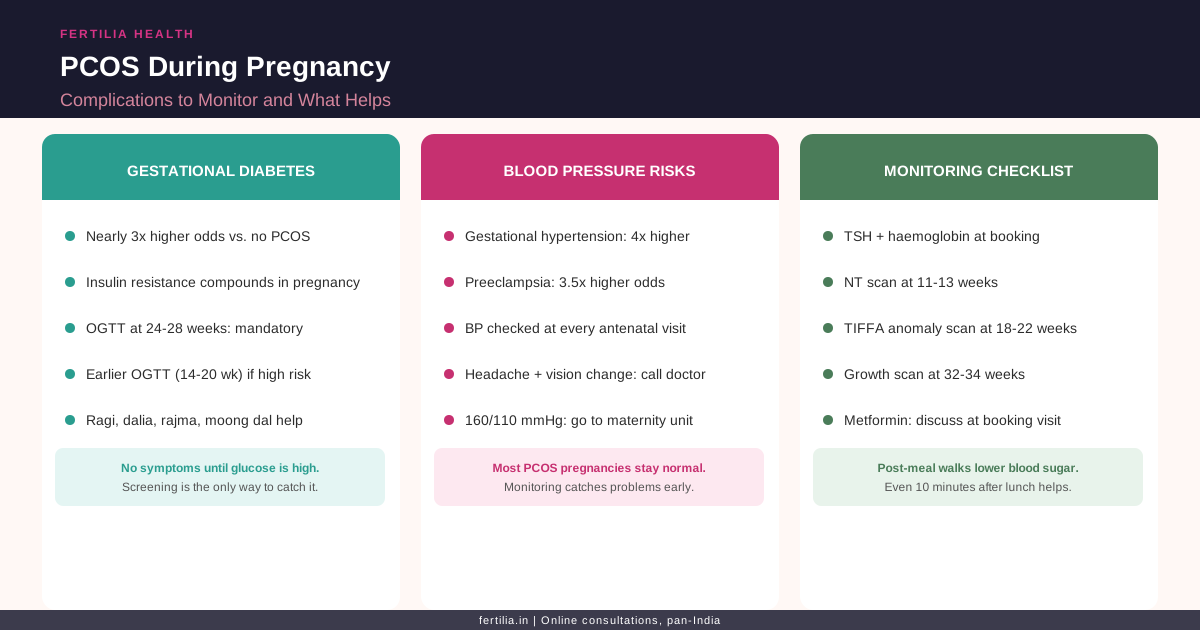
A 2006 meta-analysis by Boomsma and colleagues (Human Reproduction Update, PMID 16891296), pooling data from over 700 pregnancies in women with PCOS, found that the odds of developing gestational diabetes were nearly three times higher than in women without PCOS (odds ratio 2.94, 95% CI 1.70 to 5.08). Indian women already have higher baseline rates of gestational diabetes than Western populations, driven by differences in insulin sensitivity and body composition, so the combination makes this the complication to take most seriously.
The condition usually develops in the second trimester, when the placenta is producing the most insulin-opposing hormones. Most women have no symptoms until blood glucose is already elevated, which is exactly why the glucose tolerance test exists.
What screening looks like for PCOS pregnancies
An oral glucose tolerance test (OGTT) at 24 to 28 weeks is part of standard antenatal care for all pregnant women. If you have PCOS plus additional risk factors (pre-pregnancy BMI above 25, a family history of type 2 diabetes, a prior gestational diabetes diagnosis, or age above 35), many obstetricians will screen earlier, at 14 to 20 weeks, and repeat the OGTT at 24 to 28 weeks if the first result is normal. Raise this with your OB-GYN at your booking appointment.
In India, the three-point OGTT using WHO 2013 criteria is now standard: fasting glucose below 92 mg/dL, one-hour below 180 mg/dL, and two-hour below 153 mg/dL. Any single value at or above these thresholds confirms gestational diabetes.
If GDM is diagnosed, it is highly manageable with the right dietary approach, blood sugar monitoring, and when needed, medication. Our guide on gestational diabetes in Indian pregnancies covers the full diet framework, blood sugar targets, and when your doctor may add insulin or oral medication.
Gestational Hypertension and Preeclampsia
The same Boomsma meta-analysis found that women with PCOS have odds of pregnancy-induced hypertension nearly four times higher than the comparison group (OR 3.67, 95% CI 1.98 to 6.81) and odds of preeclampsia roughly three and a half times higher (OR 3.47, 95% CI 1.95 to 6.17).
Gestational hypertension is a blood pressure reading at or above 140/90 mmHg on two checks taken four or more hours apart after 20 weeks, without protein in the urine. Preeclampsia adds proteinuria or signs of organ involvement to that blood pressure threshold.
For most PCOS pregnancies, blood pressure stays within the normal range. These elevated figures should not be read as a prediction that yours will not. What they do justify is more frequent blood pressure checks than a standard lower-risk pregnancy would receive. If your OB-GYN is monitoring your BP at every visit, this is why.
Symptoms to call your doctor about the same day include a persistent headache that does not respond to paracetamol (Crocin or Dolo), blurred or spotty vision, pain under the ribs on the right side, and sudden swelling of the face or hands. If any reading is 160/110 mmHg or above, go directly to your maternity unit without waiting.
More detail on both conditions is in our posts on gestational hypertension and preeclampsia: warning signs and hospital management.
Miscarriage Risk in the First Trimester
The same meta-analysis found modestly higher odds of miscarriage in PCOS pregnancies compared to those without PCOS (OR 1.51, 95% CI 1.29 to 1.76). The elevated risk is most relevant in the first eight weeks, when the embryo is establishing its connection to the uterus.
The mechanisms are partly related to the LH surges and insulin resistance that characterise PCOS, which can affect the hormonal environment around implantation. These factors are also partially addressed by the metabolic and lifestyle work many women do before conceiving.
What this does not mean is that a PCOS pregnancy is likely to end in miscarriage. The odds ratio of 1.51 means the risk is modestly higher relative to women without PCOS, not that loss is the probable outcome. The majority of PCOS pregnancies, once a fetal heartbeat is confirmed on scan, continue without loss.
If you have had a prior miscarriage and would like to understand the broader picture, our post on miscarriage: causes, signs, and what comes next covers what investigations are appropriate after a loss and what the evidence shows for subsequent pregnancies.
Other Things Worth Watching
Beyond gestational diabetes, blood pressure, and miscarriage, two additional outcomes are modestly elevated in PCOS pregnancies. Preterm birth (delivery before 37 weeks) has an odds ratio of approximately 1.75 in the same Boomsma meta-analysis. Caesarean section rates are also higher (OR 1.79), driven largely by the associated complications (GDM, preeclampsia, macrosomia) rather than PCOS being a direct indication for surgery.
Macrosomia, where the baby grows larger than expected for gestational age, is more common when gestational diabetes is not well controlled. This is another reason why managing blood sugar from the second trimester matters. Growth scans in the third trimester are standard practice when GDM is confirmed and are often recommended for PCOS pregnancies more broadly.
If you are managing a PCOS pregnancy and want to talk through your monitoring plan, what tests to request, or what your blood glucose targets should be at each stage, Dr. Suganya Venkat and the Fertilia team are available online across India. Start the conversation on WhatsApp.
Metformin During Pregnancy: What the Evidence Shows
Many women with PCOS are taking metformin when they conceive, either for insulin resistance management or as part of an ovulation induction protocol. The question of whether to continue it in pregnancy comes up at almost every booking appointment.
The evidence is genuinely mixed. Some studies have found that continuing metformin through the first trimester is associated with lower miscarriage rates in PCOS, but systematic reviews examining whether it improves live birth rates or prevents gestational diabetes later in pregnancy have found the evidence inconclusive (PMID 26060920). The PregMet studies and several smaller randomised trials have reached differing conclusions depending on the primary outcome measured.
Metformin is generally considered safe for the developing baby based on current data, but it is not a medication to continue or stop on your own. This is a conversation to have with the OB-GYN who knows your specific history, blood glucose levels, and the stage of your pregnancy.
If you want to understand how metformin works in the context of PCOS more broadly, our post on metformin for PCOS: when you need it covers the mechanisms and clinical indications.
Your Antenatal Monitoring Checklist with PCOS
Here is what a well-monitored PCOS pregnancy typically includes:
First trimester (weeks 1 to 13)
- Dating scan at 6 to 8 weeks to confirm viability and gestational age
- NT scan at 11 to 13 weeks for chromosomal screening
- Booking bloods: blood group, haemoglobin, thyroid function (TSH), rubella immunity, HBsAg, and STI screen
- Discussion with your OB-GYN about metformin if you are taking it
- Blood pressure check at every visit from the start
Second trimester (weeks 14 to 27)
- Early OGTT at 14 to 20 weeks if you have additional risk factors alongside PCOS
- Anomaly scan (TIFFA) at 18 to 22 weeks
- Standard OGTT at 24 to 28 weeks (for all PCOS pregnancies)
- Blood pressure at every visit; more frequently if any reading is elevated
- Haemoglobin recheck if GDM is diagnosed or if you are on metformin
Third trimester (weeks 28 to 40)
- Growth scan at 32 to 34 weeks (standard for PCOS, especially if GDM is present)
- Fetal wellbeing monitoring (CTG or kick counts) if BP or blood sugar concerns arise
- Delivery planning discussion, including mode of delivery if complications are present
What Helps Day to Day
Managing the modifiable risks begins with food and movement, the same framework that helps with PCOS outside of pregnancy, adapted for the different nutritional needs of each trimester.
Low-glycaemic eating: Spreading meals across five to six smaller portions a day is more effective than three large meals at keeping blood glucose steady. Grains that work well include ragi, dalia, oats, and small portions of brown rice. Rajma, moong dal, chana, and masoor dal are excellent protein and fibre sources with a lower glycaemic impact than refined carbohydrates. The dietary approach used in the gestational diabetes guide applies directly to PCOS pregnancies even before GDM is formally diagnosed, as a preventive measure.
Movement after meals: A ten to fifteen minute walk after lunch and dinner has solid evidence behind it for lowering post-meal blood glucose. It does not need to be a brisk walk. Gentle pacing, even indoors, is enough to have a measurable effect on the glucose curve after a meal.
Blood pressure management: Staying well hydrated, reducing processed salt, and including potassium-rich foods (banana, coconut water, dal) support blood pressure. If your reading creeps above 130/80 mmHg at any visit, mention it rather than waiting for the next scheduled check.
Iron support: Women with PCOS who develop GDM are at higher risk of anaemia in the third trimester. Take your prescribed iron supplement consistently, pair it with a source of vitamin C (one small amla, nimbu pani, or orange), and avoid tea within an hour of meals as tannins significantly reduce iron absorption.
Managing PCOS through pregnancy is not a separate effort from managing PCOS before it. The same metabolic foundations, addressed consistently, give the pregnancy the environment it needs.
If you are currently in a pregnancy support program through Fertilia, your monitoring protocol is built into the trimester-wise plan. If you have not yet connected, you can learn about the pregnancy program and reach out to discuss whether it fits your specific situation.
Frequently Asked Questions
Does having PCOS mean my pregnancy will have complications?
Not necessarily. Elevated odds ratios mean the risk is higher relative to women without PCOS, not that complications are inevitable. The majority of PCOS pregnancies, particularly when gestational diabetes and blood pressure are monitored carefully, result in healthy deliveries without significant problems. What the data justify is closer monitoring so that complications are caught early if they do develop.
When should I have my GDM test if I have PCOS?
An OGTT at 24 to 28 weeks is standard for all pregnant women. If you have PCOS plus additional risk factors (BMI above 25, family history of type 2 diabetes, age above 35), ask your OB-GYN about earlier testing at 14 to 20 weeks. For PCOS specifically, the case for earlier screening is strong because the window for dietary intervention is wider before second-trimester insulin resistance reaches its peak.
Will I need a caesarean section because I have PCOS?
PCOS is not a direct indication for caesarean section. The higher caesarean rate in PCOS pregnancies is driven by the associated complications (gestational diabetes, preeclampsia, macrosomia) rather than PCOS itself being a reason for surgery. If your pregnancy is uncomplicated and managed well, your mode of delivery will be decided on the same criteria as any other pregnancy.
Should I continue metformin during pregnancy?
This decision belongs with your prescribing OB-GYN and depends on your individual situation: whether you have uncontrolled insulin resistance, your blood glucose levels on stopping, and the trimester you are in. Some doctors continue metformin through the first trimester in PCOS and reassess at 12 to 14 weeks. Others prefer to stop at confirmation of pregnancy. The evidence on whether continuing it beyond the first trimester prevents GDM is mixed. Do not stop or restart metformin without a conversation with your doctor.
Will my PCOS affect my baby?
PCOS has a genetic component, and there is some evidence of increased risk of PCOS-related traits in daughters of mothers with the condition. However, this is not a certainty, and even in families where PCOS runs strongly, the metabolic environment during pregnancy has some influence on how those tendencies express. Managing blood sugar well during pregnancy matters for your long-term health and has the secondary benefit of giving your baby a lower-glucose intrauterine environment.
I had a miscarriage before this pregnancy. How does PCOS affect my risk this time?
A prior miscarriage combined with PCOS warrants closer first-trimester monitoring. Many OB-GYNs will arrange earlier and more frequent scans, check progesterone levels in the first weeks, and consider whether additional support (low-dose aspirin for preeclampsia prevention, progesterone supplementation) applies. If you have had two or more losses, a recurrent miscarriage workup before your next conception attempt is worth discussing if you have not already had one.
गर्भावस्था में PCOS होने से क्या दिक्कत हो सकती है?
PCOS वाली महिलाओं में gestational diabetes (गर्भावधि मधुमेह) का खतरा लगभग तीन गुना अधिक होता है। Blood pressure का बढ़ना भी अधिक संभव है। इसीलिए regular antenatal checkups में OGTT test और blood pressure monitoring बेहद ज़रूरी है। सही diet, छोटे-छोटे meals, और खाने के बाद कुछ मिनट की walk से blood sugar को control में रखने में काफी मदद मिलती है।
If you have PCOS and are pregnant or planning a pregnancy, a video consultation covers your specific monitoring plan, what tests to ask for at each visit, and what your antenatal care should include based on your PCOS and metabolic history. Consultations are available online across India.