She had been sitting in the metro, on a perfectly ordinary Tuesday afternoon, when it hit. Her heart started racing. Her chest got tight. She could not get enough air, even though she was breathing. Her hands went numb, and she felt, with complete certainty, that something was terribly wrong. She got off at the next station and stood on the platform, convinced she was about to collapse.
It passed in about fifteen minutes. She went to her GP the next day, had an ECG, had her blood pressure checked. Everything was normal. “Probably stress,” the doctor said, and sent her home.
I am a psychiatrist at Fertilia, and this is one of the presentations I see more often than most people would expect. A woman who had a genuinely frightening physical experience, got a clean cardiac workup, and was sent away with no explanation for what actually happened. What she had was almost certainly a panic attack. And the most useful thing I can tell her, and you, is this: panic attacks are not dangerous, they are not a sign of heart disease, and they are among the most treatable conditions in psychiatry.
This post covers what panic attacks actually are, what your body is doing during one, how to get through the moment, and when it is worth talking to someone.
What a panic attack is
A panic attack is a sudden, intense surge of fear or physical discomfort that reaches its peak within minutes and then gradually passes. That is both its most frightening feature and one of the most reassuring facts about it: it is always time-limited. It has not gone on forever before, and it will not this time.
Clinically, a panic attack is defined by four or more of the following symptoms occurring together and coming on abruptly:
- Pounding or racing heart (palpitations)
- Sweating
- Trembling or shaking
- Shortness of breath, or a sense of being smothered
- Chest tightness or discomfort
- Nausea or an unsettled stomach
- Dizziness, lightheadedness, or feeling faint
- Hot flushes or chills
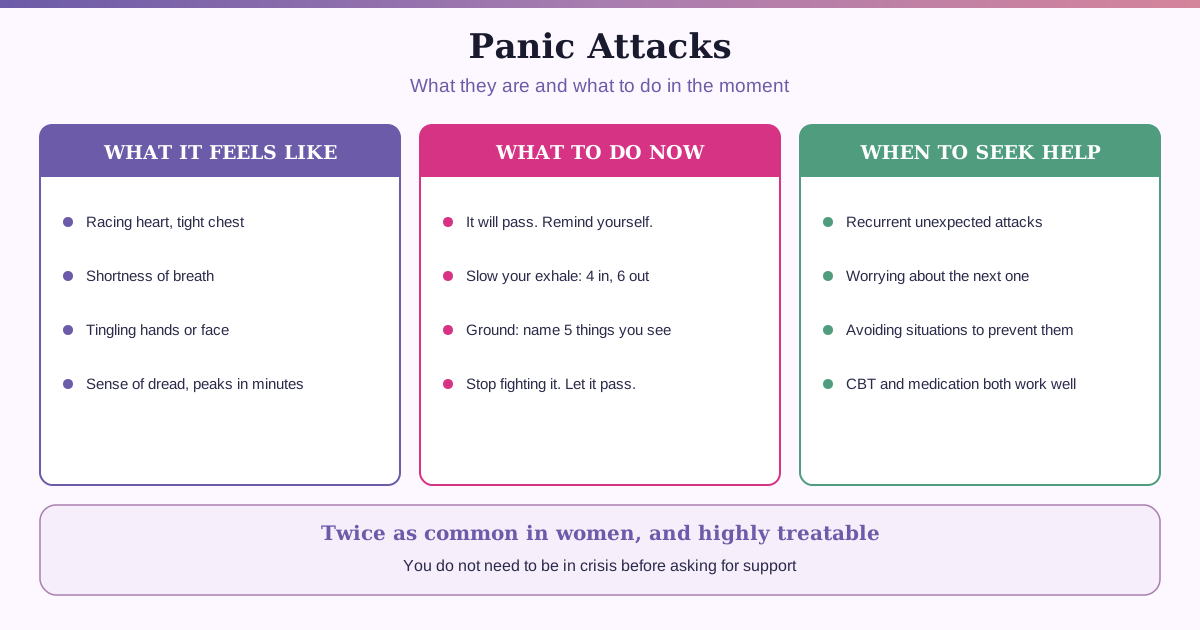
- Numbness or tingling, especially in the hands, feet, or face
- A feeling of unreality, or of being detached from yourself
- Fear of losing control or “going mad”
- Fear of dying
Not every attack involves all of these. Some are predominantly physical: the pounding heart, the tight chest, the breathlessness. Others are more psychological: an overwhelming sense of dread with no story attached to it, or a strange feeling of being outside your own body. Many involve both at once.
What makes panic attacks particularly confusing is how physical they feel. The tight chest, the rapid heartbeat, the difficulty breathing, all of this can feel exactly like a cardiac event. This is why so many women end up in emergency rooms or getting ECGs after their first attack, only to be told their heart is perfectly fine. It is. The symptoms are real, but they are being generated by the nervous system, not the heart.
What is happening in your body
The mechanism is the fight-or-flight response, the same alarm system your nervous system uses when it perceives genuine danger. When the brain registers a threat (or misregisters something as threatening), it triggers the sympathetic nervous system. Adrenaline floods into the bloodstream. The heart beats faster to push blood to the muscles. Breathing quickens to bring in oxygen. Chest muscles tighten. Digestion slows.
In an actual threatening situation, all of this is useful. In a panic attack, the same cascade happens in the absence of any real threat, and the physical sensations themselves can become alarming, which intensifies the response further.
This is the loop that drives a panic attack: a physical sensation, a slightly faster heartbeat, say, gets noticed. The mind interprets it as dangerous. The nervous system activates further. The symptoms get more intense. The symptoms feel more alarming. The cycle peaks, and then, as the nervous system runs out of fuel and starts returning to baseline, it fades.
This loop is important to understand, because it tells you two useful things. First, the panic attack is not evidence that something is physically wrong with you. Second, anything you do to break the loop, even slightly, helps the attack subside sooner.
Panic attack or anxiety attack: what is the difference?
These terms are often used interchangeably, but they describe different experiences.
A panic attack comes on suddenly, peaks within minutes, and is distinguished by intense physical symptoms alongside the sense of dread. It can happen in a calm situation, during sleep, or at complete rest, with no obvious trigger. This is what makes it so disorienting: there is often nothing to point to.
Anxiety, by contrast, tends to build more gradually. It is usually tied to something: a worry about a health result, a difficult conversation coming up, financial pressure, the two-week wait during a fertility treatment cycle. It rises, sustains for a period, and then eases as the situation resolves or passes.
Panic attacks can happen within the context of an anxiety disorder, and they can also happen in people who have no ongoing anxiety between episodes. They can occur once, a few times across a lifetime, or frequently enough to constitute panic disorder.
Understanding the distinction matters because what helps you get through a panic attack in the moment is somewhat different from what helps you manage ongoing anxiety. For a full picture of general anxiety in women, its symptoms and what to do about it, the post on anxiety in women covers this in more detail.
What to do in the moment
This is the section most people are looking for. Here is what actually works.
Remind yourself it will pass. This is the single most useful thing you can do. A panic attack always ends. Saying this to yourself is not denial or wishful thinking. It is accurate information, and accurate information gives the nervous system something to work with. “This is a panic attack. It is uncomfortable, and it will pass.”
Stop trying to fight the symptoms. Resisting the sensations, demanding your heart stop pounding, getting more alarmed that you are still breathless, tends to feed the loop. What helps more is to observe the sensations without adding alarm to them: “My heart is racing. I am noticing that. I am going to breathe.” The panic attack cannot sustain itself indefinitely. If you stop adding fuel, it winds down.
Slow your exhale. When panic comes, breathing tends to become fast and shallow. This causes carbon dioxide levels in the blood to drop, which by itself produces dizziness, tingling, and the feeling of not getting enough air. These sensations then feed back into the panic. The way to interrupt this is to breathe out more slowly than you breathe in. A simple pattern: breathe in for four counts, hold for two, breathe out for six. The longer exhale stimulates the vagus nerve and starts activating the parasympathetic, calming system.
Use grounding. Grounding brings your attention back to the present moment and away from the inward spiral of sensations and thoughts. One approach: name five things you can see, four things you can physically feel (the seat beneath you, the ground under your feet, the texture of your sleeve, the air on your face), three things you can hear, two you can smell, one you can taste. You do not have to complete all five senses. Even looking around the room and naming a few objects interrupts the loop and tells your nervous system: I am here, I am safe, I am not in danger.
Stay in the situation if you can. This is the hardest one to hear in the middle of an attack, but it matters for the longer term. Leaving every situation where a panic attack starts teaches your nervous system that those situations are dangerous, which makes the next encounter more likely to trigger another attack. If it is physically safe to stay, staying, even while breathing and grounding, is more effective for recovery than leaving. A therapist can walk you through this gradually if avoidance has already become a pattern.
Move gently, if you can. Walking slowly, or simply standing and shifting your weight, can help process some of the circulating adrenaline. Not vigorous exercise in the middle of an attack, but some gentle movement.
If you are going through this during a period of significant stress or hormonal change and are not sure what you are experiencing, speaking to Dr. Sandhiya on WhatsApp for a ₹399 online consultation is a good starting point. You can describe what happened in your own words.
Why panic attacks are more common in women
Panic disorder is roughly twice as common in women as in men. Data from the National Comorbidity Survey Replication by Kessler and colleagues (2005, PMID 15939837), a large US population study, found a lifetime prevalence of panic disorder of around 5% in women, compared with approximately 2% in men.
Several overlapping factors contribute. Women are more likely to develop anxiety disorders in general (McLean et al., 2011, PMID 21439576), and panic sits within that broader pattern. Oestrogen interacts with the serotonin and norepinephrine systems that regulate the brain’s fear response, which is why some women notice that panic attacks cluster around hormonal transitions: the late luteal phase before a period, the weeks after delivery, or the perimenopause transition.
If you are postpartum and experiencing what feel like panic attacks, the post on postpartum anxiety explains what is typical in that period and when to get support. If the experience you are having seems to shift with your cycle, general anxiety in women covers the hormonal overlap in more detail.
Stress load, caregiving responsibilities, and the ongoing pressure on women to manage both emotional and practical labour also play a role. These are not reasons to normalise panic attacks and carry on. They are reasons to understand that what you are experiencing has identifiable causes, and that asking for help is both appropriate and effective.
When one attack becomes a pattern: panic disorder
A single panic attack, or a handful across years, does not constitute panic disorder. Panic disorder is diagnosed when there are recurrent, unexpected panic attacks AND, in the month following at least one of them, either persistent worry about having more attacks, concern about what they mean (fear of a physical illness, fear of losing control), or a noticeable change in behaviour to avoid situations that might trigger one.
This avoidance is where the real restriction tends to happen. The attacks themselves are uncomfortable but brief. What narrows a woman’s life is the adjustment around them: stopping exercise because it makes the heart race, avoiding public transport, skipping crowded spaces, or pulling back from activities she used to find straightforward. Over time, the avoidance builds its own logic and its own limitations.
Some women also develop agoraphobia alongside panic disorder, avoiding any situation where help might not be immediately available. This can be mild or more significant, and it is worth naming, because treatment addresses it directly.
What treatment involves
Panic disorder responds well to treatment. The two main evidence-based approaches are cognitive behavioural therapy (CBT) and medication, and they can be used together.
CBT for panic focuses on the loop described earlier: identifying the catastrophic interpretations of physical sensations, practising the breathing and grounding tools above in a structured way, and, when appropriate, gradually facing the sensations and situations that have been avoided. A 2018 meta-analysis by Carpenter and colleagues (PMID 29451967) found large, durable effect sizes for CBT across anxiety disorders including panic.
Medication, typically SSRIs or SNRIs, works by reducing the overall reactivity of the fear response over several weeks. These are not sedatives and are not addictive. A 2021 treatment review by Ziffra (PMID 33529291) outlines the evidence and also covers the place of benzodiazepines, which can help acutely but are not appropriate for long-term management due to dependence risk.
A psychiatrist can assess your pattern, confirm the diagnosis, and help you choose the approach that fits your situation. If you are unsure whether what you experienced was a panic attack, or whether it has become a disorder, that assessment is where to start.
Not sure which kind of professional to see? The post on psychiatrist, psychologist, and counsellor in India walks through who does what, and when each is the right fit.
For a broader picture of depression as it relates to anxiety (the two frequently overlap), the post on depression in women is worth reading if you are experiencing both low mood and episodes of panic.
WhatsApp Dr. Sandhiya to book a ₹399 online psychiatry consultation. You can describe what you are going through in your own words, and she will help you understand what it is and what to do about it.
Frequently asked questions
Panic attack ke lakshan kya hain? (What are the symptoms of a panic attack?)
Panic attack ke mukhya lakshan hain: dil ka tej dhadakna, seene mein kasav, saans lene mein takleef, haath-pair mein sujhan ya sunnapan, chakkar aana, aur yeh dar ki kuch bura hone wala hai. Ye symptoms 10 se 30 minute mein apne aap khatam ho jaate hain.
In English: the main symptoms are a pounding or racing heart, chest tightness, shortness of breath, tingling or numbness in the hands or face, dizziness, and an intense sense of dread. They peak within minutes and pass on their own, usually within 10 to 30 minutes.
How long does a panic attack last?
Most panic attacks peak within 5 to 10 minutes and pass within 20 to 30 minutes. Some feel longer because the residual shakiness and tiredness can linger for an hour or two after the attack itself has ended. The attack itself, at its most intense, is brief.
Can a panic attack happen while sleeping?
Yes. Nocturnal panic attacks are well recognised. They typically wake a person abruptly from sleep, often in the first half of the night, with the full physical symptoms: racing heart, breathlessness, and intense fear. They are not the same as nightmares. The person is fully awake when the attack occurs. They respond to the same management as daytime attacks, and the same treatment approaches apply.
How is a panic attack different from a heart attack?
The symptoms overlap significantly, which is why the distinction is confusing. A few clinical differences: a heart attack is usually associated with sustained chest pain that may radiate to the jaw, left arm, or back, and does not resolve within 30 minutes. A panic attack’s chest discomfort is usually tightness rather than pain, does not radiate, and clears as the attack subsides. A panic attack also tends to occur in younger women without cardiac risk factors, and the ECG and blood tests come back normal. That said, if there is any doubt, a cardiac assessment is always appropriate, particularly in women over 40 or with existing risk factors. Rule it out once, and then treat what remains.
Can PCOS or hormonal changes trigger panic attacks?
Hormonal fluctuations can increase the likelihood of panic attacks in women who are already susceptible. Oestrogen modulates the serotonin and norepinephrine systems involved in fear regulation. Women may notice that attacks cluster premenstrually, in the early postpartum period, or during perimenopause, all phases where oestrogen is shifting. PCOS itself does not cause panic attacks directly, but the anxiety that often accompanies a chronic hormonal condition can contribute. If this is your pattern, it is worth discussing with a psychiatrist who can see the hormonal context alongside the psychological one.
What is the difference between panic disorder and generalised anxiety disorder?
Generalised anxiety disorder (GAD) involves persistent, wide-ranging worry that is hard to control, present most days, and attached to multiple areas of life. It is an ongoing, background experience. Panic disorder involves discrete episodes, the attacks themselves, alongside fear of having more attacks or changing behaviour to avoid triggers. The two can co-occur, and many women experience elements of both. The distinction matters for treatment, because the CBT techniques used for panic (focusing on the loop of sensations and catastrophic interpretation) are somewhat different from those used for generalised worry.
Will panic attacks go away on their own?
For some women, a single panic attack, or a brief cluster during a particularly stressful period, resolves without formal treatment as the triggering stress eases. For others, especially when avoidance has begun to build in around the attacks, they do not go away on their own and tend to broaden over time. The clearest signal that treatment is warranted is when the attacks are recurrent, when worry about having more is ongoing, or when you have started changing what you do to avoid triggering one. At that point, waiting is not the most effective strategy. CBT and medication both work well, and earlier intervention is generally easier than later.