Names have been changed to protect patient privacy. Clinical details, reports and messages are shared with each patient’s consent.
IVF is medicine at its most precise. Hormone doses calculated to the unit, eggs retrieved under ultrasound guidance, embryos graded under a microscope, transfer timed to the day.
And yet every one of those precise steps lands in something no protocol fully controls: the body of the woman going through it. Her eggs finished maturing over the three months before retrieval. Her blood sugar, her vitamin status, her sleep and her stress all shape the environment an embryo meets. The procedure can be flawless and the ground still unready.
That is the gap Fertilia’s IVF support program exists to close. Not by changing the medicine, which belongs to your IVF specialist, but by preparing the body the medicine works in.
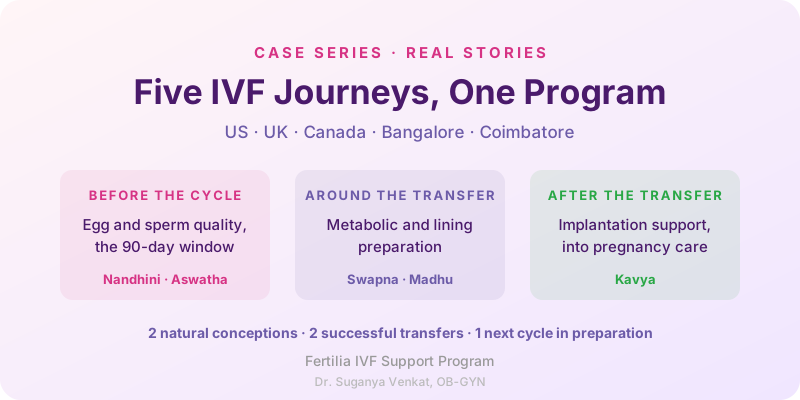
This case series follows five women at five different points of that journey, living in five different places: the US, the UK, Canada, Bangalore, and Coimbatore. Three of their stories have appeared on this site before, so we will summarise and link them. Two are being told here for the first time.
The Three Windows Where Support Matters
Before the stories, the structure. Fertilia supports IVF journeys at three windows:
1. Before the cycle: egg and sperm quality. Eggs spend roughly three months maturing before ovulation or retrieval, and sperm take around 70 to 75 days to form. That means the quality of what an IVF lab receives reflects the months before the cycle, which is exactly the window where nutrition, metabolic health, sleep and targeted supplementation can contribute. Research supports this: a 2020 review in Human Reproduction Update found that lifestyle interventions before IVF improve clinical pregnancy rates (Lim et al., 2020).
2. After retrieval, before transfer: preparing the ground. A frozen embryo transfer gives a woman something rare in fertility treatment: time. Time to correct a B12 deficiency, settle blood sugar, bring weight into a safer range, and build the routines that support a receptive endometrium.
3. After the transfer: implantation and a steady pregnancy. The two-week wait and the first trimester are where anxiety peaks and guidance often drops away. Structured nutrition, gentle movement, and a team that answers the small questions keep this window calm, and when the result is positive, the same team carries the woman into pregnancy support.
Five women. Here is where each of them stood in that arc, and what happened next.
Kavya · From Coimbatore to the US · The Transfer She Never Needed
Kavya grew up in Coimbatore and now lives in the US. She came to us deep into her journey: secondary infertility, three failed IUI cycles, a hysteroscopy for endometrial polyps, then a full IVF cycle that ended in a negative result, with frozen embryos still in storage for a future transfer.
Her reports told the quieter story underneath: weight gathered around the abdomen, prediabetes, raised LDL, a B12 deficiency, skipped breakfasts. None of these alone stops a pregnancy. Together they make the body a harder place for one to begin.
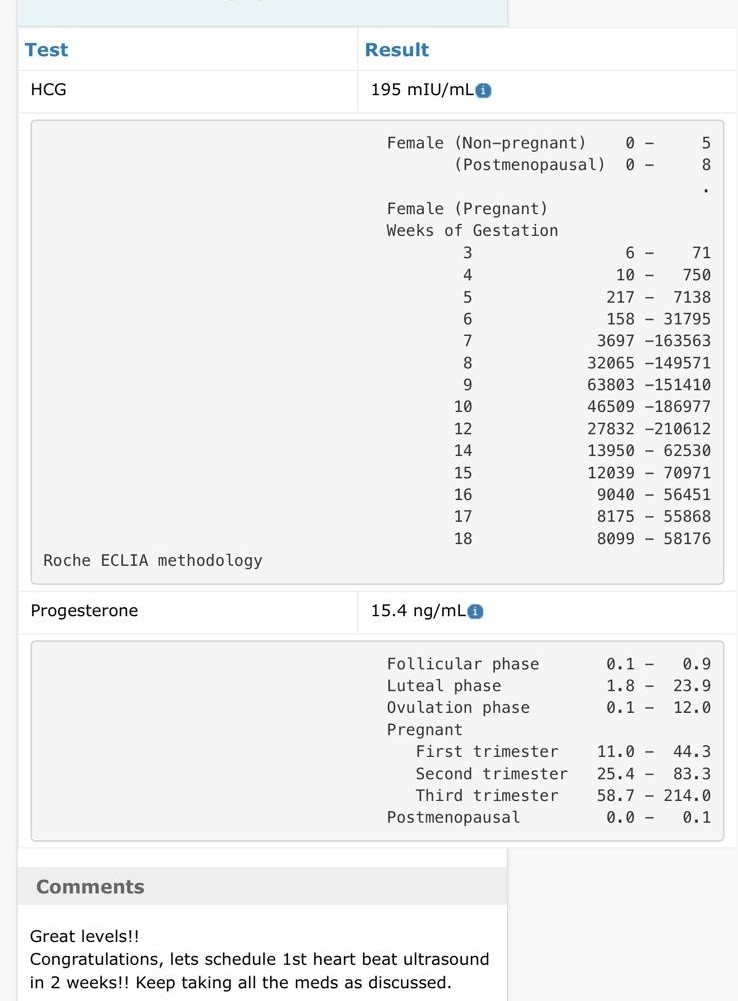
So before her next transfer, we worked on the ground first. Structured nutrition in her own food pattern, consistent daily movement, fertile-window guidance, and implantation-supportive yoga. One month in, with her frozen embryos still waiting, she conceived naturally.
Her message to the team afterwards is the kind that stays with you:
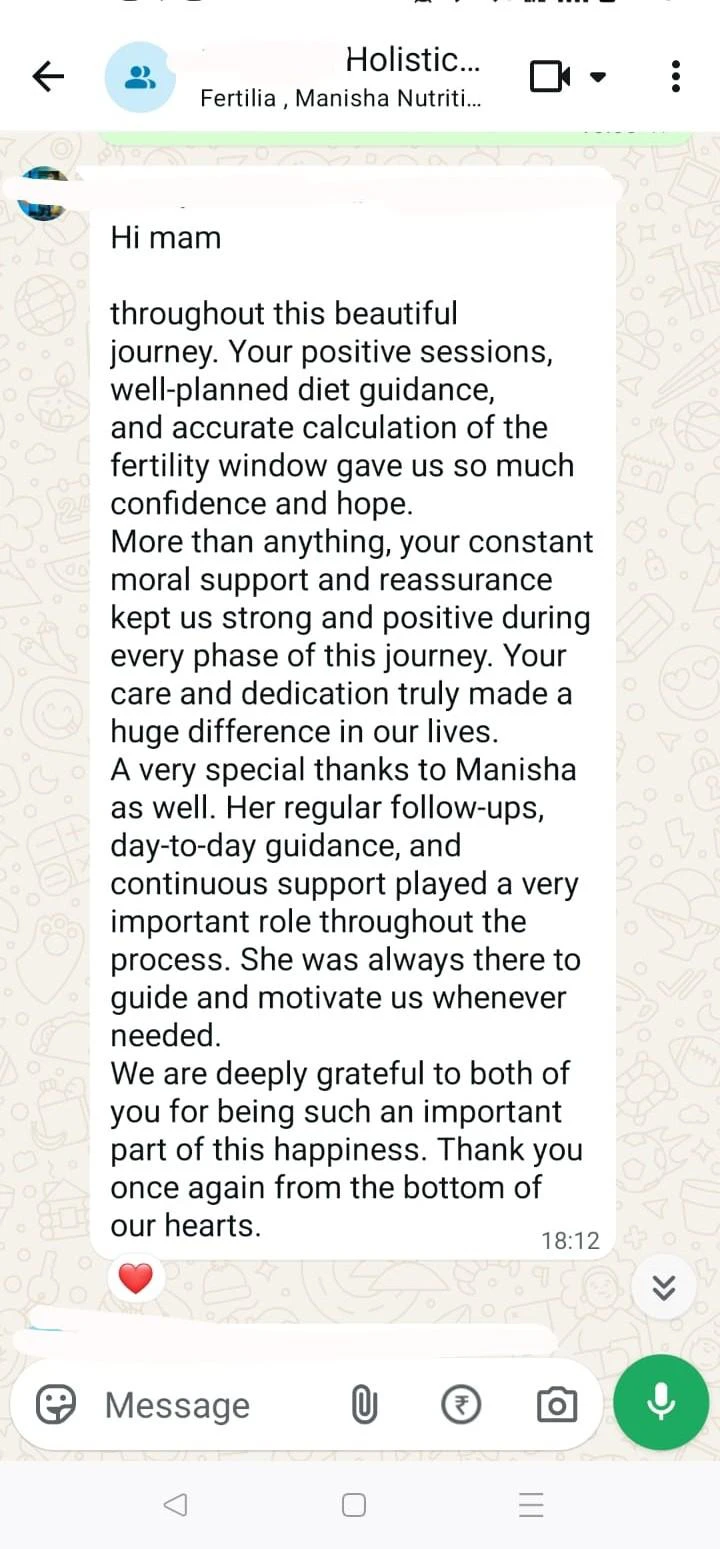
“Your positive sessions, well-planned diet guidance, and accurate calculation of the fertility window gave us so much confidence and hope.”
Her full story is in our Stories from May at Fertilia roundup. She is now in our pregnancy support program.
Swapna · United Kingdom · A Failed Transfer, Then a Different Preparation
Swapna, a Bengali woman living in the UK, had low and declining AMH, a small fibroid, a uterine polyp, and mildly reduced sperm motility on her husband’s side. Her first IVF cycle and embryo transfer ended in a negative result.
Instead of rolling straight into the next attempt, she stepped back and prepared. Her nutrition was rebuilt around her usual Bengali eating pattern with what was available in the UK, a hidden B12 deficiency was corrected, her exercise moved from sporadic intense sessions to a steady fertility-friendly plan, and implantation-supportive yoga was placed around her transfer window.
A few months later she went ahead with her next cycle and transfer. This time it was positive.
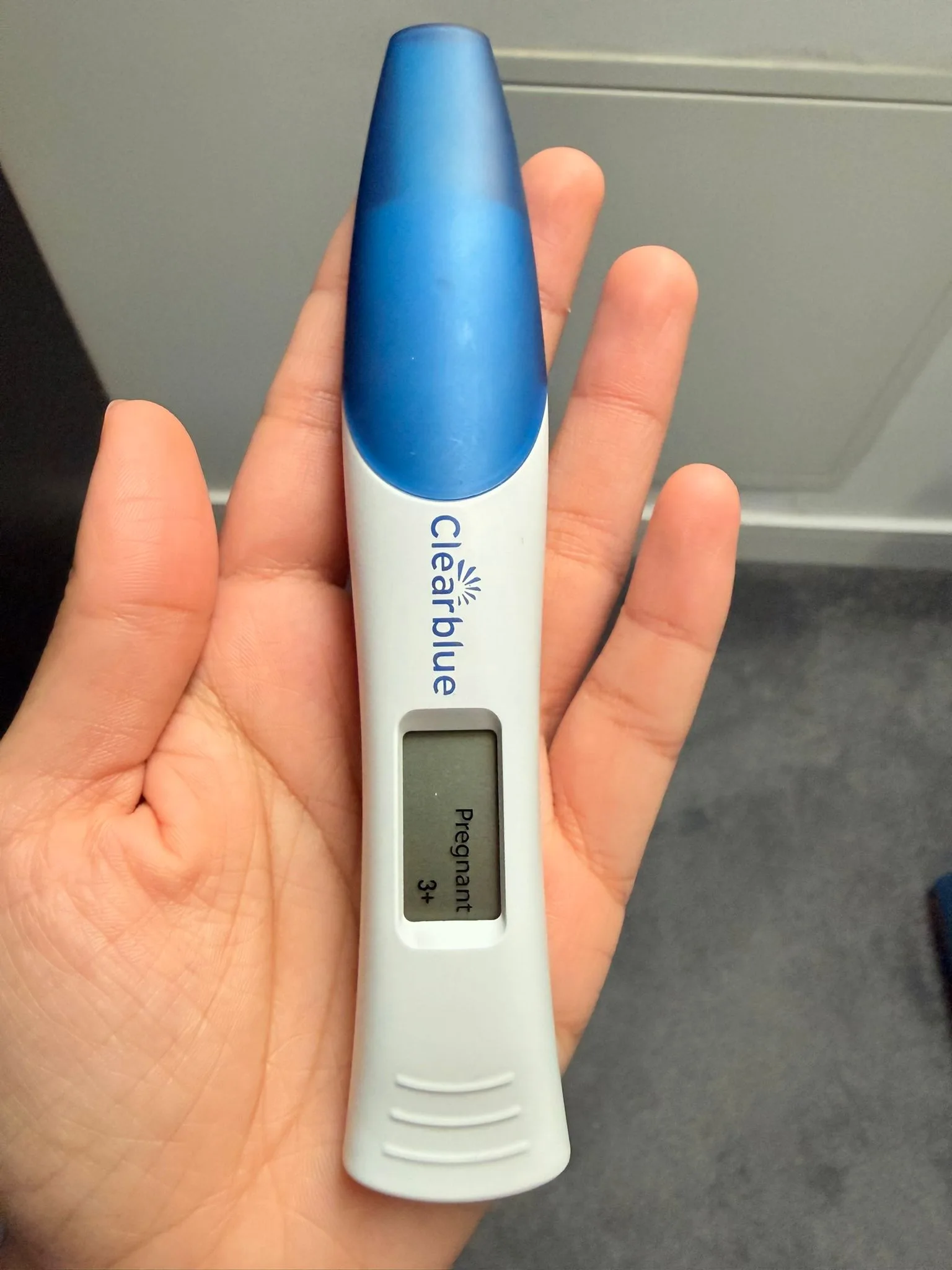
On her scheduled test day she wrote to the team: “Today was my scheduled test day post frozen embryo transfer and I am happy to share it’s a positive outcome. Thank you so much for all the great wishes, support and guidance!”
Her full story is in Stories from April at Fertilia.
Madhu · A One-Month Window Before Her Second Transfer
Madhu, 36, came to us after a failed embryo transfer, with her next transfer already scheduled one month away. Her baseline made the challenge clear: HbA1c of 6.3, post-meal glucose of 160 mg/dL, a BMI of 32, and elevated cholesterol.
One month is short. It is also enough, if every day counts. Her program centred on daily sugar monitoring, balanced Indian meals, and consistent walking. In 30 days she lost 6 kg and brought her post-meal sugar from 160 to 96 mg/dL.
Her second embryo transfer succeeded. At the time of writing she is 12 weeks pregnant, and her message to the team captures what mattered most to her: “This progress came naturally, simply by balancing my food choices and walking regularly, without any medicines.”
We documented her month in detail, with every report, in her full case study.
💜 Preparing for IVF, or recovering from a cycle that did not work? The months between cycles are not waiting time. They are working time. Message Dr. Suganya on WhatsApp. She reads every message herself.
Aswatha · Bangalore · After a Failed IVF and Fibroid Surgery, a Natural Conception
Aswatha’s story is told here for the first time.
By the time she reached us from Bangalore, she had been through more than most: a fibroid large enough to need a myomectomy, the recovery that follows uterine surgery, and an IVF cycle that did not succeed. A failed cycle after surgery is a particular kind of discouragement. It can feel like the body has been repaired and still refuses to cooperate.
Her program addressed what the procedures could not: post-myomectomy recovery support, nutritional adequacy, metabolic health, and the daily lifestyle factors that quietly shape fertility. No dramatic interventions. Structure, food, movement, and time.
Then, before any next cycle was planned, she conceived on her own.
Her 12-week scan tells the rest:

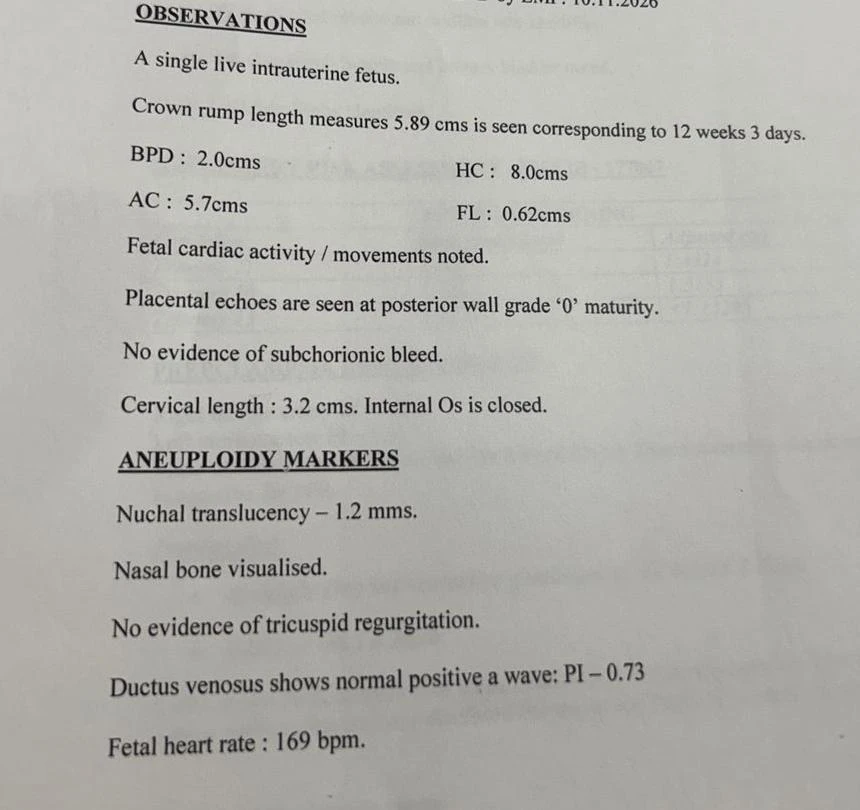
A single live intrauterine fetus at 12 weeks 3 days. Cardiac activity normal, cervix closed, nuchal translucency 1.2 mm, nasal bone visualised.
She is now in her first pregnancy and continues with us in pregnancy support. Women with fibroids often carry the worry that surgery is where their fertility story gets harder. Aswatha’s journey shows the other possibility: with deliberate recovery and preparation, the body can do the rest.
Nandhini · Canada · A Story Still Being Written
Nandhini’s journey is the longest in this series, and it does not yet have its ending. We are sharing it anyway, because the middle of a journey is where most women actually live, and almost nobody shows them what support looks like there.
Eight years of infertility. An AMH of 0.8. Three IUI cycles and five IVF cycles, across India and Canada, with poor embryo development and no successful pregnancy so far. Anyone who has been through even one failed cycle knows what five must weigh.
After her most recent cycle, she enrolled in our post-IVF support program. Her work-up showed elevated cholesterol and excess weight, both part of the metabolic environment her next cycle’s eggs will mature in. So that became the project: targeted nutrition, lipid improvement, weight management, and IVF-focused lifestyle changes.
Within a month, her lipid profile had measurably moved:
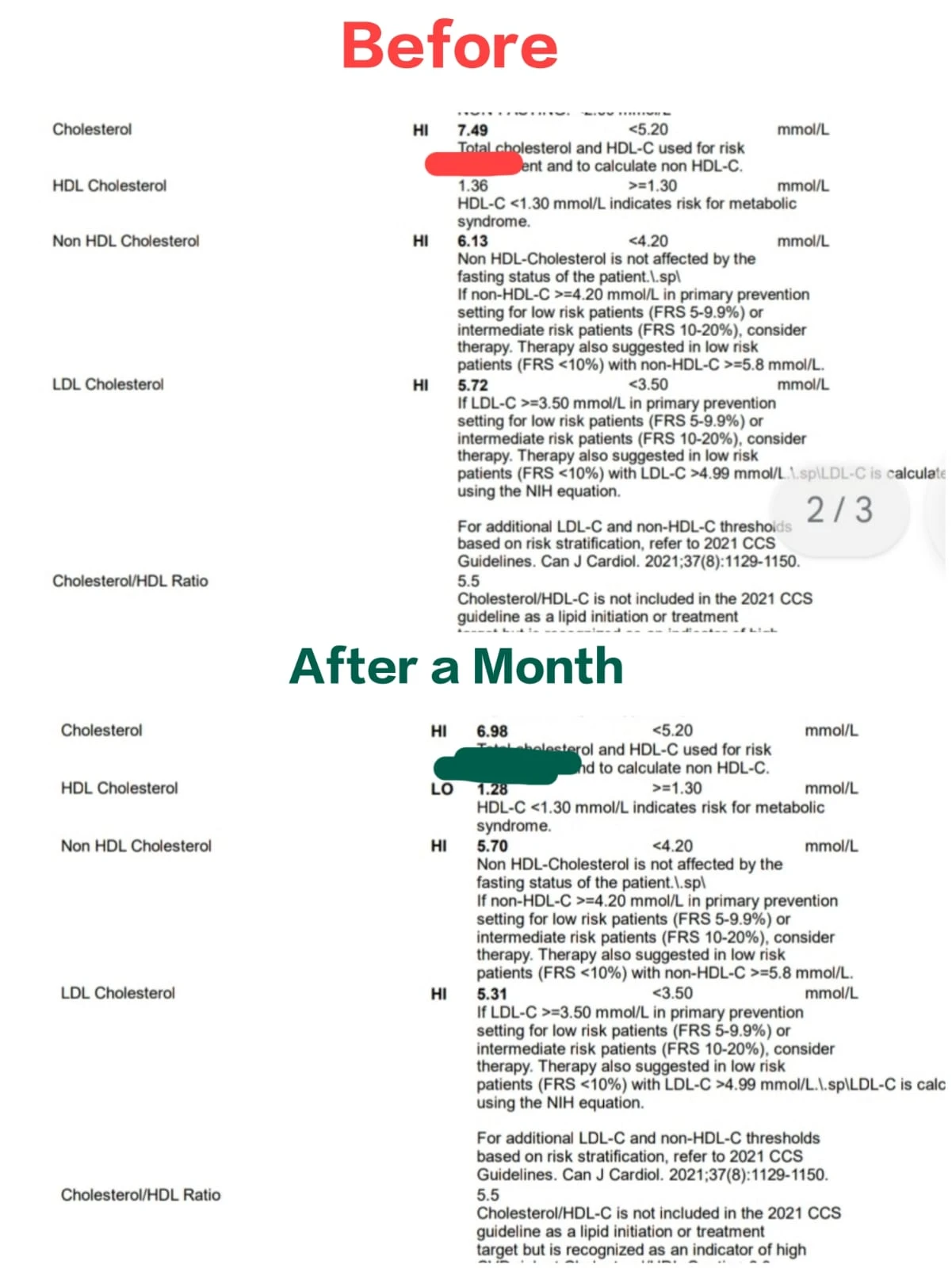
One month apart, on her Canadian lab’s reports: total cholesterol 7.49 to 6.98 mmol/L, LDL 5.72 to 5.31, non-HDL 6.13 to 5.70. Direction matters, and every marker moved the right way.
Her own update says more than the numbers:
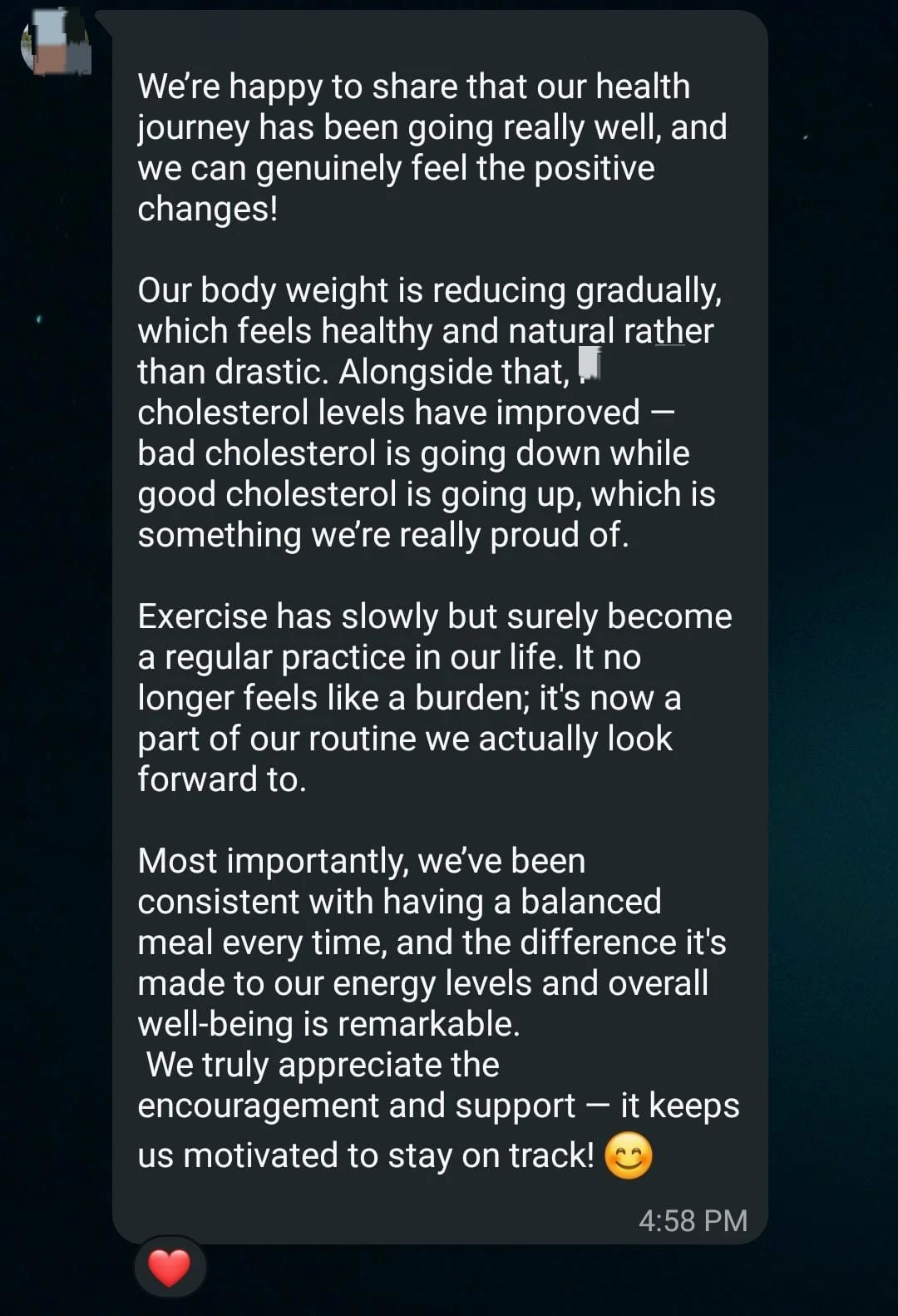
“Exercise has slowly but surely become a regular practice in our life. It no longer feels like a burden; it’s now a part of our routine we actually look forward to.”
She is preparing for her next IVF cycle now, with continued nutrition and lifestyle support. Whatever that cycle brings, she will walk into it with a body in better condition than any of her previous five, and with a team beside her. That is what IVF support means in the middle of the story, before anyone knows the ending.
What These Five Journeys Share
Different countries, different diagnoses, different stages. The same pattern underneath:
Every one of them had already done the medical part. IUIs, IVF cycles, surgery, transfers. The medicine was not missing. What was missing was the months of groundwork around it, and that is the layer we add. Your IVF specialist manages the cycle. We prepare the body that goes into it.
The “in between” time did the work. For Kavya and Aswatha, preparation went far enough that conception happened naturally before the next procedure. For Swapna and Madhu, it changed what their next transfer landed on. For Nandhini, it is changing the condition she enters her next cycle in. The window between cycles is the most underused resource in fertility treatment.
Nothing exotic was involved. Balanced meals in each woman’s own food culture, from Bengali patterns in the UK to South Indian plates in Bangalore. Walking. Sleep. Supplement corrections guided by actual reports. Yoga timed to the cycle. The ordinariness is the point: this is repeatable.
💜 Wherever you are in the world, and wherever you are in your IVF journey, before your first cycle, between cycles, or holding a result you did not want, our program runs entirely online, over video calls and WhatsApp. That is how women in the US, UK and Canada work with us. Start with one message to Dr. Suganya. A conversation costs nothing and often changes the plan.
Frequently Asked Questions
Can lifestyle and nutrition support improve IVF outcomes?
The evidence supports preparation. A 2020 review in Human Reproduction Update (Lim et al.) found that lifestyle interventions before IVF were associated with improved clinical pregnancy rates. Egg quality reflects the roughly three months of maturation before retrieval, and sperm form over 70 to 75 days, so the window before a cycle is biologically meaningful. What no program can do is guarantee an outcome for an individual cycle. What preparation does is make sure the cycle gets your body’s best version.
When should I start preparing before an IVF cycle?
Ideally about 90 days before retrieval, which covers the full maturation window of the eggs that cycle will collect, and a complete spermatogenesis cycle on the male side. If you have less time, preparation still helps: Madhu had exactly one month between enrolling and her transfer, and used it to bring her post-meal sugar from 160 to 96 mg/dL. Start where you are, with the time you have.
Is natural conception possible after a failed IVF cycle?
Yes, for some couples. Two women in this series, Kavya and Aswatha, conceived naturally after failed IVF cycles, while preparing for their next procedure. A failed cycle means that cycle did not succeed; it does not always mean natural conception is impossible. That said, every situation is different, and whether to keep trying naturally, prepare for another cycle, or do both at once is a decision to make with your fertility specialist. Our IVF decision framework walks through how to think about it.
Do weight, blood sugar and cholesterol affect embryo transfer outcomes?
Metabolic health shapes the environment an embryo meets. Elevated blood sugar and insulin resistance affect endometrial receptivity, and excess weight is associated with lower IVF success rates, which is why many IVF clinics themselves advise weight and sugar optimisation before a transfer. This is the logic of Madhu’s and Nandhini’s programs: bring the metabolic ground into the best achievable range before the procedure that needs it.
My AMH is very low. Is preparation still worth it?
AMH reflects the size of the remaining egg pool, not the quality of the eggs your next cycle will mature. Preparation cannot raise the count, but the quality window still applies, which matters most precisely when eggs are few. Nandhini is preparing for her next cycle with an AMH of 0.8. For more on what low AMH does and does not mean, read Low AMH and Pregnancy: Can You Still Conceive?
Does Fertilia replace my IVF clinic?
No. Your IVF specialist manages stimulation, retrieval, the lab, and the transfer. That is their medicine and we never interfere with it. Fertilia adds the layer around it: nutrition built for your food culture, metabolic correction, supplement guidance from your actual reports, movement, sleep, and steady emotional support through the waits. The two layers work best together, and the women in this series stayed under their IVF clinics’ care throughout.
I live outside India. How does the program work?
Entirely online. Consultations happen over video call, day-to-day support runs on WhatsApp, and meal plans are built around what is available where you live, as Swapna’s UK-adapted Bengali plan and Nandhini’s Canada-based program show. Time zones are workable; several of our IVF support patients are in the US, UK and Canada.
Related Reading
- How to Prepare Your Body for IUI or IVF
- IVF Support: How Madhu’s Embryo Transfer Succeeded
- How to Improve Egg Quality: Diet, Supplements & Lifestyle
- Do You Need IVF? An OB-GYN’s Decision Framework
- IVF Cost India 2026: What You’ll Actually Pay
- Stories from May at Fertilia
This is part of a series of patient case studies from our clinic. Every story is real, verified, and shared with the patient’s explicit consent. Names and identifying details are changed to protect privacy.
Dr. Suganya Venkat is an OB-GYN with 15+ years of experience. She holds an MBBS (SRMC, 5 Gold Medals), MD in Pathology (CMC Vellore), and DNB in OB-GYN (GKNM Hospital, Coimbatore).