Every feed pulls at the same raw spot, and you find yourself bracing before your baby even latches. Cracked nipples are one of the most common reasons new mothers say breastfeeding hurts far more than they expected, and by the time the skin has actually split, most women are also frightened that they are doing something wrong.
Pain at this level is common in the first days of breastfeeding. A 2025 Brazilian study following 102 first-time mothers found nipple pain was frequent and moderate to intense at the start, described as a pulling sensation, and it fell significantly by two weeks postpartum in most women (Ruiz MT et al., Maternal and Child Health Journal, 2025, PMID 40650843). Pain that was still present at two weeks was linked to lower rates of exclusive breastfeeding, which is exactly why getting the cause and the care right early matters.
I’m Dr. Suganya Venkat, an OB-GYN with more than 15 years of clinical experience, and at Fertilia we see this in almost every new mother we support through the postpartum period. This guide covers why nipples crack, what genuinely helps versus what the evidence does not support, when a nipple shield is a reasonable temporary aid, and the specific signs that mean you need a lactation consultant or doctor rather than another cream.
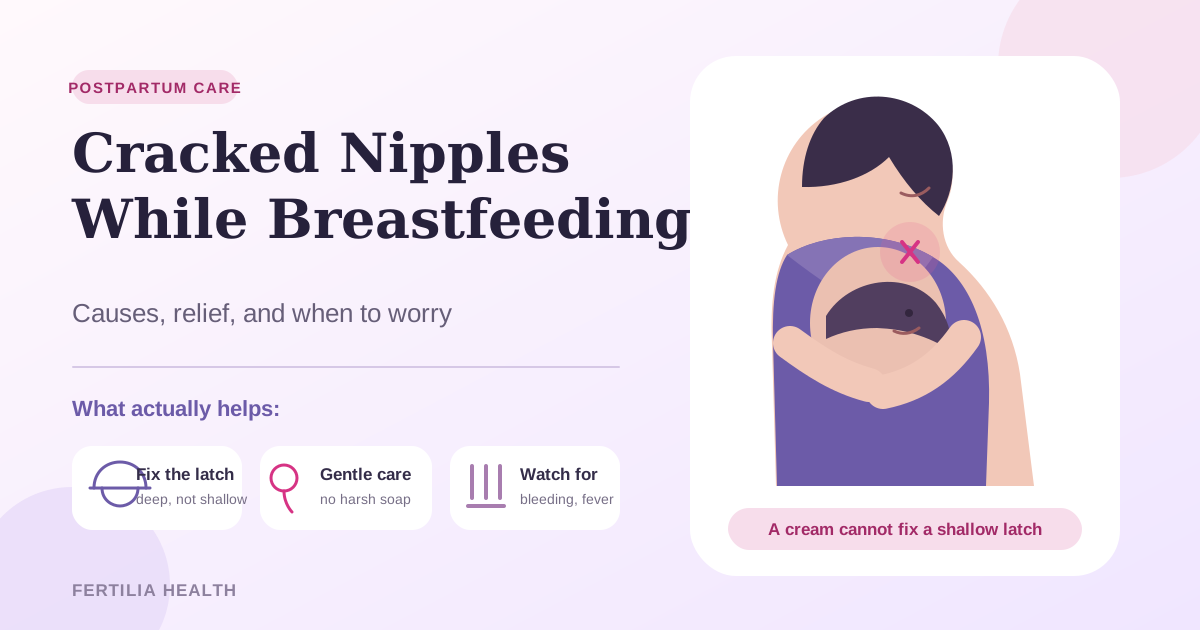
For now: keep feeding on the affected side if you can tolerate it, correct the latch at the start of each feed rather than pulling your baby off mid-feed, and avoid harsh soap, alcohol wipes, or air-drying with a hairdryer. If the crack is bleeding heavily, shows pus, or you develop fever, see a doctor promptly; the warning-signs section below explains what to look for.
What Causes Cracked Nipples
The single most common cause of nipple pain and trauma in breastfeeding is a shallow or poorly positioned latch, not fragile skin or a low pain threshold. A 2014 Cochrane review of interventions for painful nipples notes plainly that research has identified poor infant positioning or latch as the leading cause, and that every trial in the review included latch correction as standard care for both treatment and comparison groups (Dennis CL et al., Cochrane Database of Systematic Reviews, 2014, PMID 25506813).
When a baby latches onto only the nipple instead of drawing in a good mouthful of breast tissue, the nipple gets compressed and dragged with every suck. Over dozens of feeds a day, that friction is enough to blister and then crack the skin, usually at the tip or where the nipple meets the areola.
Other contributors worth checking for:
- Tongue or lip tie in the baby. A tight lingual or labial frenulum can prevent a deep latch even when positioning looks correct. If pain persists despite correct technique, this is worth an assessment.
- Pump flange that’s the wrong size. A flange that’s too small or too large can rub or drag the nipple with every cycle, producing the same friction injury as a shallow latch. Our pumping and storing breast milk guide covers how the flange should fit.
- Dry, cracked skin from harsh cleaning. Soap, alcohol-based wipes, and vigorous drying strip the nipple’s natural oils and make the skin more likely to split.
- Thrush or dermatitis, in a minority of persistent cases. Persistent nipple pain that hasn’t responded to correcting latch and basic care is often assumed to be a yeast infection. A US breastfeeding-medicine practice reviewed 25 women referred for “yeast” that had failed antifungal treatment. None were confirmed to have candida; the actual diagnoses included dermatitis, nipple bleb, vasospasm, and subacute mastitis, and all resolved once the diagnosis and treatment were corrected (Betts RC et al., Breastfeeding Medicine, 2021, PMID 33305975). This doesn’t mean thrush never happens, only that it shouldn’t be the automatic first assumption for pain that isn’t improving.
If your baby seems to be clicking, sliding off the breast, or gaining weight slowly alongside persistent nipple pain despite a technically correct latch, that combination is worth a feeding assessment rather than repeated trial-and-error with creams.
This guide focuses specifically on the cracked, split skin pattern. If what you’re feeling is a deep burning ache between feeds, colour changes in the nipple tip after a feed, or a small painful white dot rather than a visible split, our broader breastfeeding pain and nipple soreness guide covers thrush, blebs, and vasospasm as separate patterns.
Correcting the Latch Is the One Intervention With Real Support
Before reaching for any product, the highest-value step is getting the latch itself deeper and more symmetric. A baby who is well latched takes in a large mouthful of breast tissue, not just the nipple, and the nipple should come out rounded, not flattened or creased, after a feed.
Signs the latch needs adjusting:
- pain that is sharp only at the start of a feed and eases once milk is flowing (this is normal and different from pain that continues throughout the feed)
- the nipple looks flattened, ridged, or has a white stripe across the tip after unlatching
- you can hear clicking or smacking sounds during feeding
- your baby’s chin isn’t buried into the breast and their lips are tucked in rather than flanged outward
Break the latch gently with a clean finger in the corner of the baby’s mouth before repositioning, rather than pulling straight off. Our breastfeeding positions guide walks through positioning options that can make a deep latch easier to achieve and hold, and a live feeding assessment can catch details a diagram cannot.
What the Evidence Shows About Creams and Dressings
This is where expectations usually need adjusting. The same 2014 Cochrane review that identified latch as the leading cause also looked directly at whether lanolin, glycerine gel dressings, breast shells, or expressed breast milk speed up healing. Its conclusion, based on four good-quality trials in 656 women, was that there was insufficient evidence that any of these interventions significantly improved nipple pain over doing nothing, and one trial found that applying nothing or using expressed breast milk performed as well as lanolin in the short term (Dennis CL et al., Cochrane Database of Systematic Reviews, 2014, PMID 25506813). Regardless of what was applied, most women’s pain fell to mild levels by 7 to 10 days postpartum.
A more recent, better-designed Brazilian trial found a different result for lanolin specifically: 180 women were randomised to purified lanolin or their own expressed breast milk, and by day 7 the lanolin group had greater improvement in both pain and the depth of nipple trauma (Mariani Neto C et al., Revista Brasileira de Ginecologia e Obstetricia, 2018, PMID 30372779).
In practice, the evidence on topical treatments is mixed, not strongly negative or strongly positive. Purified lanolin (look for medical-grade, highly purified anhydrous lanolin rather than a generic version) is a reasonable, low-risk option many women find soothing, and expressed breastmilk dabbed on and left to air-dry is a free option some prefer. Neither is a substitute for fixing the latch, and neither will heal a crack that’s being re-injured at every feed.
If nipple pain is making you dread every feed, or you’re not sure whether what you’re seeing is normal, message Dr. Suganya Venkat on WhatsApp for an online video consultation. Fertilia’s postpartum support includes a feeding assessment, not just a product recommendation.
Nipple Shields: A Reasonable Temporary Aid, Not a Long-Term Fix
Many women are told nipple shields will reduce their milk supply or interfere with their baby’s feeding, and that concern has kept plenty of mothers suffering through pain rather than trying one. Recent research gives a more precise answer. A study comparing sucking dynamics with and without a shield in mothers who had chronic nipple pain found that shield use did not reduce milk transfer or sucking strength in that group, and it meaningfully reduced pain scores (Coentro VS et al., European Journal of Pediatrics, 2021, PMID 33443588). In babies without any feeding difficulty, the same study did find reduced milk transfer with a shield, which is the likely source of the older blanket caution.
In practice, this means a nipple shield can be a genuinely useful bridge while a cracked nipple heals and the latch is being corrected, particularly if a baby is otherwise feeding well and gaining weight. It works best used with guidance on sizing and weaning off it gradually, since the goal is to resolve the underlying latch issue, not to feed with a shield indefinitely.
Practical Relief Steps for the Next Few Days
- Start feeds on the less painful side when possible; your baby’s suck is often strongest at the start of a feed.
- Reposition rather than push through sharp pain. Break the latch and try again if it’s painful throughout, not just at the start.
- Let milk air-dry on the nipple after a feed instead of rubbing dry with a towel.
- Avoid soap, antiseptic washes, and alcohol-based wipes on the nipple; plain water is enough.
- Use breathable breast pads and change them when damp; trapped moisture slows healing.
- A hydrogel pad or purified lanolin between feeds can improve comfort even where the evidence on healing speed is mixed.
- Paracetamol at the standard adult dose is generally considered compatible with breastfeeding for pain relief; check with your doctor or pharmacist if you have other conditions or medicines.
When Cracked Nipples Need Medical Attention
Most cracked nipples improve within a week to ten days once the latch is corrected, but arrange a same-day assessment if you notice:
- bleeding that is more than a few spots, or blood visibly mixed into pumped milk that doesn’t settle after a day or two
- pus, a foul smell, or increasing redness spreading from the crack
- fever, chills, or flu-like symptoms alongside breast pain, which can point toward mastitis rather than a simple crack
- pain that is not improving at all after a week of correcting the latch and using gentle care
- a deep, burning pain that continues well after the feed ends and is not eased by warmth, which can suggest vasospasm rather than a mechanical crack
- your baby is feeding fewer than 8 times in 24 hours, seems unsatisfied after feeds, or isn’t gaining weight as expected, because that changes the urgency of getting a feeding assessment
None of these signs mean you have done anything wrong. They mean it’s time for a clinician or lactation professional to look at both the nipple and the feed itself, because a cream cannot fix a latch problem or treat an infection. The Academy of Breastfeeding Medicine’s clinical protocol on persistent breastfeeding pain recommends exactly this: a full assessment of positioning, latch, and the infant’s oral anatomy before assuming a single cause (Berens P et al., Breastfeeding Medicine, 2016, PMID 26881962).
Fertilia’s Postpartum Recovery program includes online lactation support with Dr. Manjari, a Lactation Professional, alongside medical oversight from Dr. Suganya Venkat. You can also download our free breastfeeding guide for latch, positioning, and everyday feeding care.
Frequently Asked Questions
How long do cracked nipples take to heal?
Most women see meaningful improvement within a week once the latch is corrected and the nipple isn’t being re-injured at every feed. Research following breastfeeding pain found levels typically fall to mild by 7 to 10 days postpartum regardless of the topical treatment used, though a deep or infected crack can take longer.
Should I stop breastfeeding on the cracked side until it heals?
Usually no. Continuing to feed, with the latch corrected, keeps milk moving and helps the crack heal in a functioning position rather than a stretched one after a break. If the pain is genuinely unbearable, expressing on that side for a feed or two while you fix positioning is reasonable, but a full stop is rarely necessary or advised.
Is it normal to see a little blood in my breast milk?
A few streaks of blood from a cracked nipple are common and not harmful to your baby. Persistent blood, blood that doesn’t reduce over a couple of days, or blood mixed uniformly through the milk rather than just around a visible crack deserves a check.
Do I need to sterilise or wash the nipple after every feed?
No. Plain water is enough. Breast milk itself has some antibacterial properties, and washing with soap or antiseptic after every feed strips natural oils and can make cracking worse, not better.
Is nipple cream necessary, or can I just use nothing?
Neither is clearly superior for healing speed according to the trial evidence, but a purified lanolin or hydrogel pad often improves comfort between feeds, which matters even if it doesn’t change the healing timeline. What matters most is fixing the latch.
Could my baby’s tongue tie be the reason my nipples keep cracking?
It’s possible. If pain and cracking continue despite what looks like a correct latch and position, a tongue or lip tie assessment is a reasonable next step, since a baby cannot compensate for a restricted tongue by trying harder.
When should I see a lactation consultant instead of waiting it out?
If pain persists through an entire feed (not just at the start), if the crack isn’t improving after a week of correct positioning, or if your baby isn’t gaining weight well, a feeding assessment is worth arranging rather than continuing to guess at home.
Still in pain despite trying the steps above? WhatsApp Dr. Suganya’s team for an online video consultation. If you notice fever, spreading redness, or pus, see a local doctor in person first.
Sources checked
- Dennis CL, Jackson K, Watson J. Interventions for treating painful nipples among breastfeeding women. Cochrane Database of Systematic Reviews. 2014. PMID 25506813.
- Mariani Neto C et al. Comparative Study of the Use of HPA Lanolin and Breast Milk for Treating Pain Associated with Nipple Trauma. Revista Brasileira de Ginecologia e Obstetricia. 2018. PMID 30372779.
- Coentro VS et al. Nipple shield use does not impact sucking dynamics in breastfeeding infants of mothers with nipple pain. European Journal of Pediatrics. 2021. PMID 33443588.
- Betts RC et al. It’s Not Yeast: Retrospective Cohort Study of Lactating Women with Persistent Nipple and Breast Pain. Breastfeeding Medicine. 2021. PMID 33305975.
- Ruiz MT et al. Nipple Pain and its Characteristics During the Breastfeeding Process: A Longitudinal Brazilian Study. Maternal and Child Health Journal. 2025. PMID 40650843.
- Berens P, Eglash A, Malloy M, Steube AM. ABM Clinical Protocol #26: Persistent Pain with Breastfeeding. Breastfeeding Medicine. 2016. PMID 26881962.
This article provides general education and cannot examine your nipple or assess a feed online. A lactation professional or doctor should assess persistent, worsening, or infected symptoms in person.