Kaju is the nut that shows up in everything from a South Indian biryani to a tin of Diwali sweets. Most Indian kitchens keep a small container of cashews tucked away, used sparingly for tempering rice, garnishing kheer, or making the occasional barfi. But kaju is more than a cooking garnish. It is one of the more nutrient-dense nuts available in India, with meaningful amounts of protein, magnesium, iron, and zinc in each serving.
This guide covers the verified nutrition data (USDA FDC 170162), what kaju is called across different Indian languages, how to choose between raw, roasted, and salted varieties, how much to eat at each life stage, a buying and storage guide, and four Indian recipes where cashews genuinely shine.
What Is in Kaju? Verified Nutrition Data
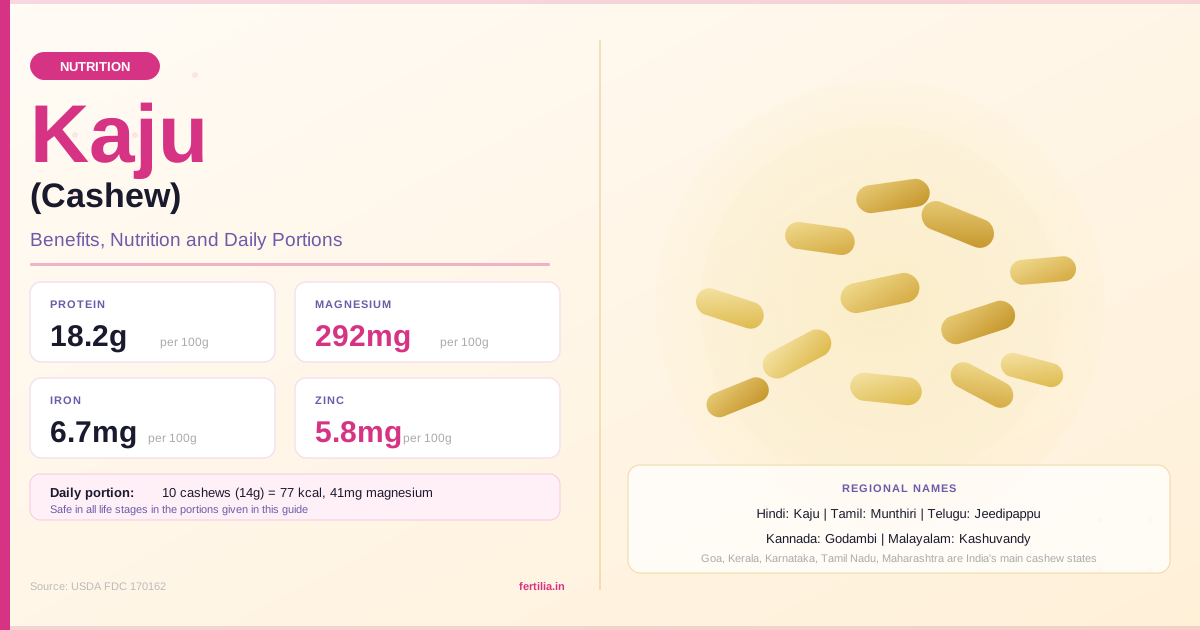
The numbers below are from USDA FDC 170162 (Nuts, cashew nuts, raw), cross-referenced with standard food composition tables.
| Nutrient | Per 100g raw | Per 10 cashews (~14g) |
|---|---|---|
| Calories | 553 kcal | 77 kcal |
| Protein | 18.2g | 2.5g |
| Total fat | 43.8g | 6.1g |
| Monounsaturated fat | 23.8g | 3.3g |
| Dietary fibre | 3.3g | 0.5g |
| Iron | 6.7mg | 0.9mg |
| Magnesium | 292mg | 41mg |
| Zinc | 5.8mg | 0.8mg |
| Calcium | 37mg | 5mg |
| Phosphorus | 593mg | 83mg |
| Potassium | 660mg | 92mg |
Cashews are one of the better nut sources of magnesium among commonly eaten Indian nuts. They also provide meaningful protein and iron, making them a useful addition to a plant-forward Indian diet.
A 14g serving (10 cashews) sits at 77 kcal, comparable to roughly 8 almonds or 3 walnut halves in energy terms. More than half the fat in cashews is monounsaturated fat (MUFA). For the broader picture on how nuts fit into a fertility-supportive or PCOS-friendly diet, see our fertility foods guide for Indian women.
What Kaju Is Called Across India
The word “kaju” (or a close variation of it) is used across much of India, though regional names vary. Knowing the local name helps when shopping at a market or asking for it by name.
| Language | Local Name | Script |
|---|---|---|
| Hindi | Kaju | काजू |
| Tamil | Munthiri | முந்திரி |
| Telugu | Jeedipappu | జీడి పప్పు |
| Kannada | Godambi | ಗೋಡಂಬಿ |
| Malayalam | Kashuvandy | കശുവണ്ടി |
| Marathi | Kaju | काजू |
| Bengali | Kaju Badam | কাজু বাদাম |
| Gujarati | Kaju | કાજુ |
The cashew tree (Anacardium occidentale) was introduced to India by Portuguese traders in the 16th century. Today, Goa, Kerala, Karnataka, Tamil Nadu, and Maharashtra are the main cashew-producing states. Goa in particular is associated with the plump, flavourful raw cashew that is used in traditional kaju feni and kaju curry recipes.
Raw, Roasted, or Salted: Which Type to Buy?
Three forms of kaju are commonly sold in Indian grocery stores and online.
Raw cashews: No heat treatment, no salt. These have a mild, slightly creamy taste and are the best option for cooking: kaju paste for gravies, kaju barfi, and any recipe where you want full control over salt and fat. Nutritionally, raw cashews have the data shown in the table above.
Dry-roasted unsalted cashews: Roasted with dry heat, no added oil. The roasting deepens the flavour slightly. Nutritionally, dry-roasted cashews are similar to raw. This is a good option if you prefer a snack with more flavour without added fat. Look specifically for “no salt added” on the label.
Salted and masala cashews: Roasted in oil, with added salt, chilli, or other coatings. These are fine to eat occasionally. However, a single serving of salted cashews can contain 120 to 180mg of sodium, which adds up if you are eating them every day. For women including cashews as a regular part of their diet, plain varieties are a better choice.
One practical tip on appearance: natural cashews are a cream to light ivory colour. Very white cashews may have been bleached. Very dark or discoloured cashews may have been stored in poor conditions. Look for an even, natural cream tone.
How Many Cashews Per Day? Life-Stage Portion Guide
Ten cashews (about 14g) is the standard daily portion for most adult women. This provides 77 kcal, 2.5g protein, and 41mg magnesium without significantly adding to the day’s total calorie load.
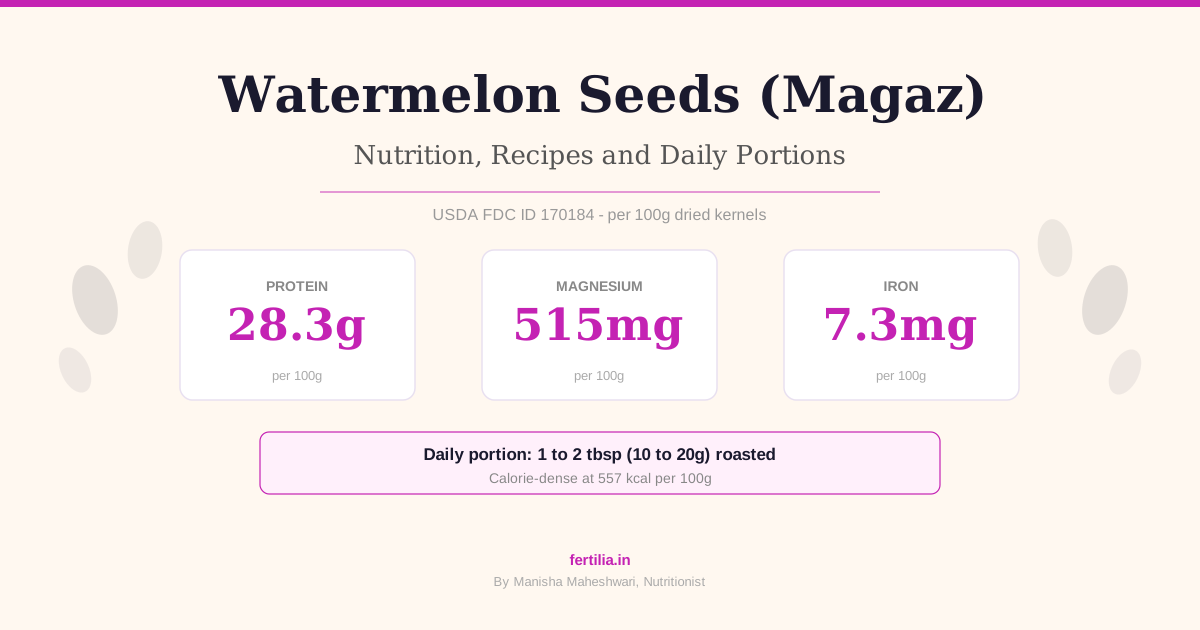
For more on this, read our guide on Watermelon Seeds (Magaz) Benefits.
| Life Stage | Daily Portion | Notes |
|---|---|---|
| General (adult women) | 10 cashews (~14g) | As a snack or added to cooking |
| PCOS | 8-10 cashews | Fits into a PCOS-friendly diet; see the PCOS diet chart for Indian women for the full framework |
| Pregnancy T1 | 8-10 cashews | Safe from the first trimester; buy plain, unsalted |
| Pregnancy T2 | 10-12 cashews | Energy needs rise in the second trimester |
| Pregnancy T3 | 10-12 cashews | Protein and iron from cashews complement a third-trimester diet |
| Postpartum weeks 1-2 | 8-10 cashews | Soft, easy to digest, well tolerated in the early recovery period |
| Postpartum weeks 3+ | 10-15 cashews | Can increase as appetite and energy recover |
| GDM | 6-8 cashews | Cashews have a moderate glycaemic load; check with your care team for individual guidance |
For women managing gestational diabetes, check with your obstetrician or care team before adjusting nut intake. For a broader overview of how nuts fit into a pregnancy diet, the dry fruits during pregnancy guide covers cashews alongside almonds, walnuts, and other commonly eaten Indian dry fruits.
Personalised nutrition guidance for PCOS, pregnancy, or postpartum recovery? Dr. Suganya’s team at Fertilia works with women across India through video and phone consultations, building meal plans based on your actual situation and food preferences.
WhatsApp Dr. Suganya: wa.me/919940270499
Buying and Storing Kaju
What to look for when buying:
- Colour: Natural cream to light ivory. Avoid very white (possibly bleached) or very dark, discoloured cashews.
- Whole vs broken pieces: Whole cashews store slightly better. Broken pieces (W pieces in the grading system) are cheaper and work perfectly for cashew paste, energy balls, and cooking. There is no nutritional difference.
- Grade: Indian cashews are graded by size. W240 and W320 are commonly available medium-large grades good for general use. W180 is the largest and priciest grade.
- Packaging: Vacuum-sealed packs hold freshness much better than open containers. At the market, smell before you buy: stale cashews have an off, musty odour.
Storage guide:
| Storage method | How long kaju stays fresh |
|---|---|
| Airtight container, room temperature | 2-3 weeks |
| Refrigerator (airtight container) | 3-4 months |
| Freezer (ziplock bag) | Up to 6 months |
Cashews have a higher fat content than many other nuts, which means they go rancid faster than almonds or walnuts in warm or humid conditions. A dedicated dry container away from the stove or humidity works best. If cashews smell oily, sour, or off in any way, they are rancid and should be discarded.
Four Indian Recipes with Kaju
1. Kaju Curry (South Indian Style)
A classic main course from Karnataka and Goa. Cashews are the star here, not a garnish.
Ingredients (serves 3-4):
- 200g raw cashews, soaked in water for 30 minutes
- 2 onions, finely sliced
- 2 tomatoes, chopped
- 1 tsp ginger-garlic paste
- 1 tsp cumin seeds
- 1/2 tsp turmeric
- 1 tsp coriander powder
- 1/2 tsp red chilli powder (adjust to taste)
- 1/2 cup coconut milk or thick dahi
- Salt to taste
- 2 tsp oil
Method:
- Drain the soaked cashews and set aside.
- Heat oil in a heavy pan. Add cumin seeds and let them splutter.
- Add sliced onions and cook until golden, stirring regularly.
- Add ginger-garlic paste and stir for 2 minutes.
- Add tomatoes and cook until the oil separates from the masala.
- Add turmeric, coriander powder, and red chilli. Stir well.
- Add cashews and 1/2 cup water. Simmer on medium heat for 10 minutes.
- Pour in coconut milk, stir gently, and cook on low heat for another 5 minutes.
- Adjust salt and serve with rice or chapati.
2. Kaju Barfi
The traditional Indian sweet made almost entirely from cashews. This is a clean, homemade version without stabilisers or artificial colour.
Ingredients (makes 20-24 pieces):
- 200g raw cashews
- 150g sugar (or 130g powdered jaggery for a less refined version)
- 1/3 cup water
- 1 tsp ghee
- 1/4 tsp cardamom powder
- A few saffron strands soaked in 1 tsp warm milk (optional)
Method:
- Grind raw cashews to a fine, dry powder in a mixer. Work in short pulses so the nut oil does not separate. Set aside.
- In a heavy-bottomed pan, combine sugar and water over medium heat. Stir until the sugar dissolves completely, then stop stirring and bring to a single-thread consistency (a drop pressed between two fingers forms one thread when pulled apart).
- Lower the heat. Add the cashew powder and stir continuously to prevent lumps.
- Add cardamom powder and saffron milk. Mix well.
- The mixture will thicken and pull away from the sides of the pan. Add ghee and stir for one more minute.
- Transfer onto a greased plate or butter paper. Flatten to about 1cm thickness with a spatula.
- While still warm, cut into diamond or square shapes. Let cool fully before removing.
Store at room temperature in an airtight container for 4-5 days, or in the refrigerator for up to 10 days.
3. Kaju Masala Paste (for Gravies)
Cashew paste is the base for many rich, creamy gravies in North Indian cooking. Making it at home takes 10 minutes and gives you a clean version with no added starch or preservatives.
Ingredients (makes enough for 2-3 gravies):
- 40g raw cashews (about 28 whole cashews)
- 1/4 cup warm water
Method:
- Soak cashews in warm water for 20-30 minutes.
- Drain and blend with 3-4 tablespoons of fresh water until completely smooth. Add water gradually to get a thick, creamy paste. If needed, scrape down the sides of the blender jar and blend again.
- Use 2-3 tablespoons of this paste per serving as a thickener and enricher in paneer makhani, dal makhani, navratan korma, or any cream-based gravy.
This paste stores in the refrigerator for 3-4 days in a covered container. It is a practical replacement for cream in gravies when you want a denser nutritional profile alongside the richness.
4. Kaju-Date Energy Balls (Kaju Khajoor Laddoo)
A no-cook recipe that takes about 10 minutes. A practical snack option for pregnancy, postpartum, or any time you need something nourishing and portable.
Ingredients (makes 12-14 balls):
- 100g raw cashews
- 150g soft pitted dates (Medjool or Safawi work well)
- 1 tbsp desiccated coconut
- 1/4 tsp cardamom powder
- 1 tbsp roasted sesame seeds (til), for coating
Method:
- Pulse cashews in a mixer until you get a coarse, crumbly powder. Stop before the mixture turns into nut butter.
- Add pitted dates, cardamom powder, and desiccated coconut. Blend together until the mix forms a rough, sticky dough. If the dough is too dry, add 1-2 more dates. If it is sticking badly to the jar, a teaspoon of warm water helps.
- Remove and roll into balls of about 25g each (roughly the size of a small lime).
- Roll each ball in roasted til as a coating.
- Store in an airtight container in the refrigerator for up to 7 days.
Each ball (including dates) provides approximately 110-125 kcal and 2g protein. Women managing gestational diabetes should limit to one per day and monitor blood sugar response.
Kaju on Your Indian Plate: A Weekly Fit
Cashews work both as a snack and as a cooking ingredient. Here is one practical way to include them across the week without having to plan too carefully:
| Day | Simple way to include kaju |
|---|---|
| Monday | 10 raw or dry-roasted cashews as a mid-morning snack |
| Tuesday | Add 6-8 cashews to your biryani or pulao tadka |
| Wednesday | Kaju in a mixed-nut handful (5 cashews + 5 almonds + 2 walnut halves) |
| Thursday | 2 tablespoons of kaju paste stirred into evening dal or paneer gravy |
| Friday | 5-6 cashews crushed and added to kheer or payasam |
| Saturday | Kaju-date energy ball as a post-activity snack |
| Sunday | Kaju curry as a main course with rice and rasam |
Cashews complement other nuts well. A practical habit for many Indian women is a daily mixed-nut portion rather than relying on one nut alone. For a dedicated guide to almonds, see badam during pregnancy: how many a day and why. For walnuts, see aakhrot for women: PCOS, pregnancy and recipes. For iron-rich foods to pair with cashews, the iron-rich foods guide for pregnancy has a complete Indian food list.
Frequently Asked Questions
Q: Is it safe to eat kaju during pregnancy? Yes. Cashews are safe to eat across all three trimesters in the portions given in the table above (10-12 cashews per day in the second and third trimesters). Buy plain, unsalted varieties. Women with a known tree nut allergy should check with their obstetrician before including cashews.
For more on this, read our guide on Palak (Spinach) in Pregnancy. Q: Kaju khana chahiye pregnancy mein? (Can I eat cashews during pregnancy?) Yes, kaju is safe in pregnancy. Plain unsalted cashews, 10-12 per day, are fine from the first trimester onward. Avoid salted or masala varieties. The portions table above gives trimester-wise guidance. For a broader pregnancy diet overview, see our dry fruits during pregnancy guide.
Q: Can I eat cashews if I have PCOS? Yes. Cashews are a practical snack for women managing PCOS. A portion of 8-10 per day fits into a PCOS-friendly diet. For a full guide on what to eat and avoid across all meals for PCOS, read our PCOS diet chart for Indian women.
Q: Is raw kaju better than roasted kaju? Both raw and dry-roasted unsalted cashews are good choices. The key distinction is whether salt or oil has been added. Plain raw cashews and plain dry-roasted cashews are nutritionally similar. Avoid oil-roasted, salted, or masala-coated varieties if you are eating cashews regularly as part of a health-focused diet.
Q: What is the difference between whole cashews and broken cashew pieces (W pieces)? There is no nutritional difference between whole cashews and broken pieces. Whole cashews store slightly better because less surface area is exposed to air. Broken pieces are less expensive and are perfectly suited for cashew paste, energy balls, and any recipe where appearance does not matter.
Q: How many cashews can I eat while breastfeeding or in the postpartum period? The postpartum portions in the table above (10-15 cashews per day from week 3 onwards) apply to breastfeeding women as well. Cashews are safe to eat while breastfeeding. If you notice any unusual reaction in your baby after eating tree nuts, check with your lactation consultant. For a full guide to postpartum eating, see our after delivery food guide for Indian mothers.
Q: What is the best time of day to eat cashews? Cashews work well as a mid-morning snack (around 10-11 AM, between breakfast and lunch), as an afternoon snack (around 4 PM), or as part of a meal. Eating them alongside a meal or with a source of vitamin C (lemon water, amla, or a citrus fruit) can help with iron absorption from the cashews.
For a personalised plan that factors in your specific nutritional needs across PCOS, pregnancy, or postpartum recovery, download our free Foods for Egg Health guide or connect directly with the Fertilia team.
Start a conversation on WhatsApp
If you are managing PCOS, cashews and other everyday foods fit into Dr. Suganya’s 90-day PCOS Symptom Reversal program.