This is one of the most common presentations I see in a week: a woman in her late twenties finds a smooth, slightly mobile lump in her breast. She spends the night reading about it, and by morning she is convinced it is something dangerous. A clinical examination and an ultrasound later, the lump turns out to be a fibroadenoma: a benign, firm, non-cancerous growth that is extremely common in women her age. She has not slept properly in 24 hours because of something that needs no treatment at all.
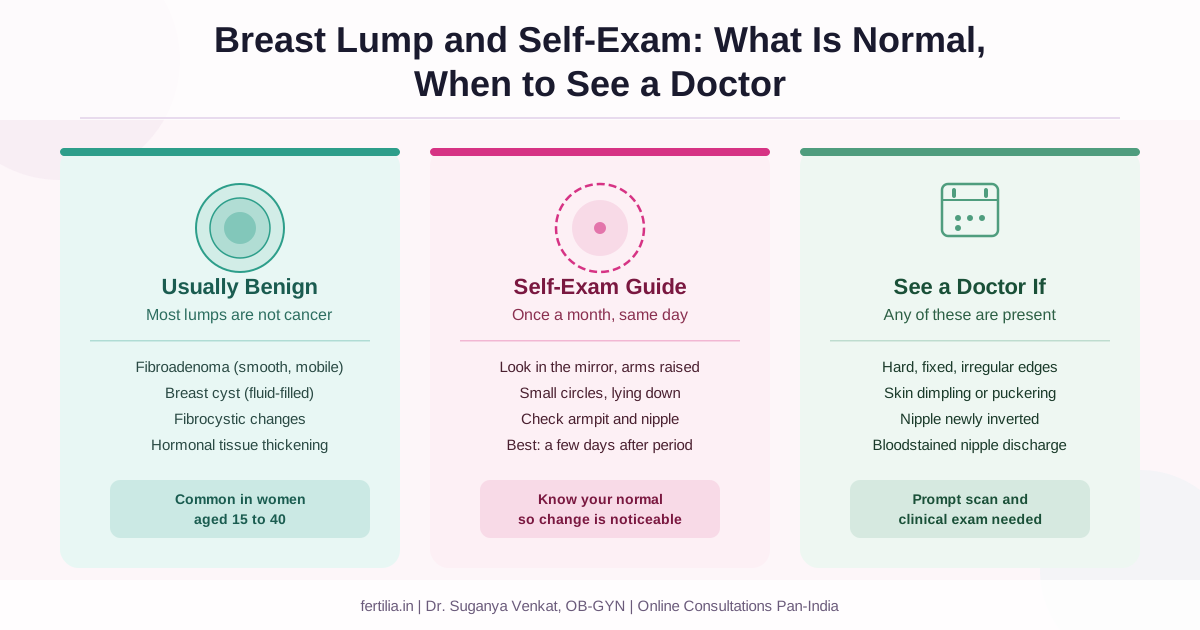
This kind of situation is very common. Most breast lumps found by women during self-examination are not cancer. The majority are benign conditions: fibroadenomas, cysts, fibrocystic changes, or normal hormonal tissue changes. That does not mean every lump should be ignored. There are specific features that do warrant prompt evaluation. Knowing which features matter, and which ones are typically harmless, is what this guide is about.
What this post covers:
- Why most breast lumps are benign, with the most common causes
- How to do a proper breast self-examination
- The difference between cyclical and non-cyclical breast pain
- The specific signs that mean you should book an appointment promptly
- What happens at a clinical evaluation
Why the majority of breast lumps are not cancer
In women under 40, the overwhelming majority of discrete breast lumps are benign. A review of common breast problems published in the American Family Physician (Salzman et al., 2012, PMID 22963023) found that fibroadenoma and fibrocystic changes account for the bulk of palpable lumps in women of reproductive age, with malignancy being uncommon. Breast cancer risk increases with age, but even in the over-40 group, a new lump has a good chance of being something non-cancerous.
The reason this matters is not to dismiss a finding you have noticed. It is to prevent the assumption that a lump always means the worst, because that fear stops many women from examining themselves in the first place. A woman who checks her breasts regularly will find things early, both the benign things that need no action and the occasional thing that does. The earlier any finding is evaluated, the better the range of options.
The most common causes of breast lumps
Fibroadenoma
This is the most common breast lump in women between 15 and 35. A fibroadenoma is a solid, benign growth made up of glandular and fibrous tissue. It typically feels smooth, round or oval, firm, and moves easily when you press it. That mobility is a useful characteristic: a lump that slides away from your finger is unlikely to be something serious.
Fibroadenomas do not always need removal. Small ones that have been confirmed on ultrasound can often be monitored rather than excised, especially in young women. They may shrink after the menopause or remain stable for years.
Breast cysts
Cysts are fluid-filled sacs within the breast tissue. They are more common in women in their 30s and 40s and tend to fluctuate with the menstrual cycle. A cyst often feels smooth and round, and may be slightly tender in the days before a period. Cysts are entirely benign. If a cyst causes discomfort, it can be drained with a fine needle during a clinic visit. If left alone, many resolve on their own.
Fibrocystic breast changes
This is not a single finding but a pattern: multiple small lumps or a generally lumpy texture in the breast, combined with breast tenderness that tracks the menstrual cycle. It is thought to reflect the normal hormonal fluctuation of oestrogen and progesterone on breast tissue. It is not a precancerous condition and does not increase cancer risk. Breast tenderness in the week before a period that settles after the period is almost always this pattern.
Lipoma and fat necrosis
A lipoma is a soft, fatty lump that sits just under the skin. It is completely benign. Fat necrosis can occur after an injury to the breast (a knock, a fall, or surgery), leaving a firm area of scar tissue. This sometimes feels alarming because it can be irregular in shape, but it is also benign.
Infection-related lumps
A breast abscess or mastitis (usually associated with breastfeeding but possible at other times) can produce a painful, warm, swollen area. This needs antibiotic treatment and, if an abscess has formed, drainage. See a doctor promptly for this one because of the infection component, not because of cancer concern.
For more on this, read our guide on UTI in Women.
How to do a breast self-examination
A breast self-examination is most useful done regularly, so you know what is normal for you. The best time is a few days after your period ends, when hormonal breast swelling has settled. If you are not having periods, choose a fixed date each month.
Step 1: In front of a mirror, look at both breasts with your arms at your sides. Note the shape, size, and skin texture. Look for any dimpling, puckering, or changes in the nipple direction.
Step 2: Raise your arms above your head. Check again for any skin changes, swelling, or nipple change.
Step 3: Lie down. Place your right arm behind your head. Use the three middle fingers of your left hand and move in small circular motions, covering the entire breast from the armpit to the sternum and from the collarbone down to the lower bra line. Use light, medium, and firm pressure in each spot. Repeat on the left side using your right hand.
Step 4: Check the nipple. Gently squeeze each nipple and note whether any fluid comes out.
Step 5: Check the armpit. The lymph nodes in the axilla (armpit) drain the breast. Use your fingers to feel the armpit area for any swollen or hard glands.
The goal is not to find lumps. The goal is to know your own tissue well enough that a change would be noticeable to you.
[Book a consultation with Dr. Suganya to discuss any breast finding that is worrying you: WhatsApp +91 99402 70499.]
Cyclical versus non-cyclical breast pain
Breast pain (mastalgia) has two patterns, and distinguishing them is useful.
Cyclical mastalgia tracks the menstrual cycle. Breast tenderness or heaviness begins in the second half of the cycle and improves once the period arrives. Both breasts are usually involved. This is the fibrocystic pattern described above. It is very common, entirely benign, and often settles with simple measures: a well-fitting bra, reducing caffeine (some women find this helpful), and evening primrose oil (evidence is modest but it is a reasonable first step that carries no risk).
Non-cyclical mastalgia does not follow the cycle pattern. It may be in one spot, one breast, and present at any time. This type warrants a clinical assessment to rule out a structural cause. It does not automatically mean something serious, but it is a different pattern that should not be attributed to hormones without an examination.
Breast pain alone, without a lump, is very rarely the presentation of breast cancer. However, any non-cyclical pain that is localised to one area and persistent for more than a few weeks should be assessed.
Signs that mean: see a doctor soon
These are the features that warrant a prompt appointment. They do not mean cancer, but they mean the lump needs proper evaluation rather than watchful waiting at home.
See a doctor within a few days if:
- You feel a new lump that is hard, fixed in position (does not move), or has irregular edges
- The skin over the breast is dimpling, puckering, or looking like orange peel (peau d’orange)
- The nipple has recently changed direction or appears retracted when it was not before
- You notice a spontaneous nipple discharge that is bloodstained, brown, or coming from one duct only
- There is redness, warmth, and swelling in the breast without the context of breastfeeding
- You find a lump in your armpit that is hard or growing
- Any lump that is growing noticeably over a few weeks
A lump that is smooth, mobile, and has been the same size for years in a young woman is very likely benign. A hard, fixed lump in any age group that has appeared recently needs assessment.
For guidance on what scan to have once you have seen a doctor, the paired post on breast ultrasound versus mammogram explains why ultrasound is usually the first choice for women under 40 and how to read the BI-RADS score on your report.
What a clinical breast evaluation involves
When you visit a gynaecologist or general physician for a breast lump, the visit typically involves:
History: When did you notice it? Has it changed? Is it related to your cycle? Any pain? Any nipple discharge? Family history of breast or ovarian cancer?
Clinical breast examination (CBE): A proper physical examination of both breasts and both armpits with you lying down. The doctor assesses the lump’s size, consistency, mobility, skin changes, and lymph node status.
Imaging request (if needed): For women under 40, an ultrasound is the usual first scan. For women over 40, a mammogram is recommended. Sometimes both are requested together. The breast ultrasound vs mammogram guide explains each in detail, including the BI-RADS report categories.
Fine needle aspiration cytology (FNAC) or biopsy (if indicated): For lumps that are solid and cannot be confirmed as benign on imaging alone, a small tissue sample may be taken. This is a minor procedure done under local anaesthesia and gives a definitive answer.
Most women who go through this process come out the other end with a confirmed benign finding, clear instructions, and significantly less worry than they had when they came in.
Breast health as part of regular women’s health screening
A clinical breast examination can be done alongside your routine gynaecological visits. It should be part of any well-woman check, especially for women over 35. If you are already overdue for a cervical screening test, that visit is a good time to ask for a CBE as well. For context on the cervical screening tests that should sit alongside this, see the Pap smear and HPV test guide.
For women with a first-degree relative (mother, sister, daughter) who had breast cancer before the age of 50, or a relative with bilateral breast cancer at any age, a genetic counselling conversation is worth having. This does not mean you will develop cancer. It means the screening schedule may be brought forward and done more frequently.
Our preconception checkup resource covers the full panel of tests worth reviewing before pregnancy, including breast health: Preconception Health Checkup Guide.
[If you have found a lump and want to talk through what it might mean before deciding your next step, I am available for a video consultation: WhatsApp +91 99402 70499.]
Frequently asked questions
Can a breast lump appear and then disappear on its own?
Yes, cysts do this regularly, particularly in the week before a period when they fill with fluid and become palpable, then partially shrink after the period. Fibrocystic tissue can feel lumpier at certain points in the cycle and smoother at others. If you feel something that then disappears within a few days of your period, it is most likely a benign cystic change. If a lump is consistently present for more than one full cycle, it should be assessed.
How is a fibroadenoma different from cancer?
A fibroadenoma is smooth, firm, and moves easily when you press it. Cancer typically presents as a hard, irregular lump that does not move freely under the skin. However, no self-examination can reliably distinguish the two, which is why imaging and, in some cases, tissue sampling are done. The characteristic mobility of a fibroadenoma is reassuring but it is still worth confirming on ultrasound.
I am in my twenties. Do I need a mammogram?
For most women under 40, a breast ultrasound is the preferred first imaging tool. This is because younger women tend to have denser breast tissue, which makes mammograms harder to interpret and potentially less sensitive. A mammogram becomes the standard recommendation from age 40 onwards. If your doctor requests a mammogram at a younger age, there will be a specific clinical reason.
What does breast pain before my period mean?
Cyclical breast tenderness in the second half of the cycle is extremely common and is related to hormonal changes, particularly rising progesterone. It is not a sign of cancer and does not indicate any structural problem. If the pain is severe enough to disrupt daily life, it is worth mentioning at your next appointment. Measures that sometimes help include a good supportive bra, reducing caffeine, and evening primrose oil.
Can fibroids cause breast lumps?
No. Uterine fibroids are in the uterus and do not affect breast tissue. If you have been told you have both fibroids and a breast finding, they are two separate issues. For irregular periods and pelvic heaviness that may be related to fibroids, see the heavy periods guide, which explains how fibroids are evaluated and managed.
Is it possible to have breast cancer without any lump?
Yes. Some breast cancers present with skin changes (dimpling, redness, nipple inversion), nipple discharge, or a change in breast shape rather than a palpable lump. This is a reason to look as well as feel during a self-examination, and why a clinical breast examination by a doctor covers skin, shape, and lymph nodes, not only palpable lumps.
How often should I do a breast self-examination?
Once a month is the recommendation, done at the same point in your cycle so that normal variation does not create false alarm. Familiarity with your own tissue over several months is what makes self-examination genuinely useful.