You may be ready to ask for help with vaginismus and still hesitate over the word therapy. Will someone ask you to undress? Will you have to use a dilator at the first appointment? Will the conversation turn into an explanation of why you should be less anxious?
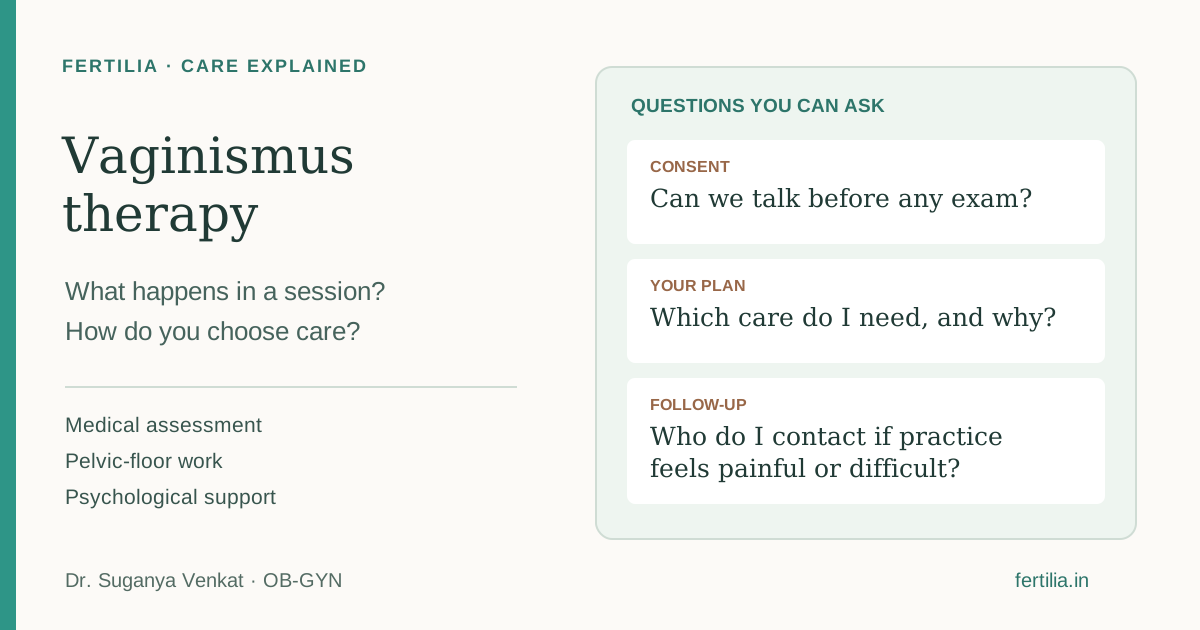
You can ask what an appointment involves before you book it. In particular, ask who you will meet and whether the appointment includes an examination. A talking-therapy appointment, a medical assessment and a pelvic-floor physiotherapy session involve different things.
Vaginismus therapy is care for difficulties with vaginal penetration that may involve involuntary muscle tightening, pain and fear. It can combine education, pelvic-floor relaxation, gradual practice with vaginal trainers or fingers, and psychological support. The combination should follow your assessment and goals, rather than a fixed package of exercises for everyone. This approach is described in Chalmers’ 2024 clinical review in the Australian Journal of General Practice (PMID 38316477).
I’m Dr. Suganya Venkat, an OB-GYN with more than 15 years of clinical experience and the clinical lead at Fertilia. Here I explain the appointments and decisions involved in therapy. For symptoms, possible causes and the wider treatment options, start with our vaginismus overview.
This guide covers:
- What the first assessment and different therapy sessions may involve
- How consent applies to examinations and home practice
- What an online appointment can do, and what needs local care
- How to agree and review your between-session plan
What happens at the first vaginismus appointment?
The first step is understanding what you are experiencing. A clinician may ask when penetration became difficult, where pain occurs, what you have already tried and whether there are other symptoms. You might find intercourse painful but tolerate a tampon, or find every attempt at vaginal entry difficult. Describe your experience without worrying about which diagnostic label fits.
It helps to write down:
- Whether the difficulty has always been there or began after a period of comfortable penetration
- Whether pain is at the entrance, deeper inside, or both
- Whether there is also itching, discharge, bleeding, dryness, or bladder or bowel discomfort
- Previous examinations, treatments and what made them comfortable or difficult
- What you would like help with, such as a necessary examination, tampon use or comfortable intimacy
These questions reflect the assessment described in Chalmers’ clinical review. Their purpose is to guide care, including identifying other causes of pain. An infection, skin condition or another pelvic-pain problem may need its own treatment; a description of tightening does not rule those out.
You can also mention circumstances that affect appointments or practice. Perhaps you share a room, have little privacy at home or would prefer to speak without your partner present. You do not need to disclose a difficult personal experience in detail before you feel able to discuss it.
Will there be an internal examination?
A clinician may recommend an examination to help distinguish causes of pain and assess the pelvic floor. Ask what information it would provide and how it would affect treatment. Agree on how you will signal a pause or stop before anyone begins.
The examination should be explained and paced to your consent. It may begin with looking at the external skin. An internal examination, if appropriate and tolerated, is a separate step. Chalmers’ review advises stopping when someone shows distress and avoiding a speculum examination until symptoms have been addressed when it cannot be tolerated.
You can decline or stop an examination. The clinician should explain what remains uncertain and discuss how to continue the assessment, rather than asking you to endure penetration to prove the diagnosis. A video consultation cannot carry out this physical examination; your doctor may recommend seeing a clinician locally for that part.
What are the different kinds of vaginismus therapy?
The word therapist does not tell you the person’s underlying profession or what they will do. Ask about their qualifications, registration where applicable, and experience with penetration pain. You may work with one clinician and a referral pathway, or a coordinated team. Not everyone needs every component.
| Component | What a session may involve | What to clarify |
|---|---|---|
| Medical care | Reviewing symptoms, considering other causes of pain and deciding whether examination or tests are needed | Who will assess symptoms that need local examination? |
| Pelvic-floor physiotherapy | Learning about the muscles, relaxation and coordination; an individual practice plan; physical assessment where appropriate | Does this session involve examination or manual treatment, and what are the alternatives? |
| Psychological support | Exploring fear, avoidance, distress or relationship pressure when these contribute; developing manageable steps toward your goals | Does the clinician have experience with vaginismus or penetration pain? |
| Guided practice | Learning to approach touch or vaginal entry gradually, sometimes using trainers or fingers | What should you practise, when should you stop, and how will it be reviewed? |
This is an overview of components discussed in the NHS vaginismus guidance, reviewed May 2024, and Chalmers’ clinical review. It is not a requirement to book four separate services.
Pelvic-floor therapy: learning what your muscles are doing
Pelvic-floor work for vaginismus can focus on relaxation and coordination. It should not automatically mean a generic strengthening routine. Ask the physiotherapist to explain the purpose of each exercise and how it fits your assessment.
Some physical assessment or treatment can involve internal touch, with your consent. Other parts involve education, breathing, movement and guided home practice. Before booking an online session, ask which parts can be taught over video and whether the physiotherapist anticipates a need for in-person care.
Psychological support: addressing the difficulties you identify
Psychological work may help with fear of penetration, avoidance after painful experiences, shame or pressure around sex. Cognitive behavioural therapy can include examining expectations about pain and taking agreed, gradual steps toward activities you have been avoiding. These approaches are described in Chalmers’ 2024 review.
A referral for psychological support does not establish that your pain has no physical cause. Ask how this work will fit alongside medical or pelvic-floor care. You should not have to choose between having pain investigated and receiving help with the distress surrounding it.
Trainers and home practice: no fixed deadline
Vaginal trainers, also called dilators, come in different sizes and may be used as part of gradual practice. Your clinician should explain whether they are appropriate, how to use them and what would make it sensible to pause or change the plan. The NHS guidance describes therapist-guided treatment followed by practice at home.
There is no requirement to insert a trainer at your first appointment. Do not push through painful practice to reach the next size. Tell your clinician what happened so they can consider the technique, the pace and whether pain needs further assessment. This article does not prescribe a daily duration or progression schedule: those instructions need to fit your assessment.
Not sure which appointment to book? You can message Fertilia on WhatsApp to ask about an online assessment with Dr. Suganya. You can describe your question without sending intimate photographs or making a program commitment.
Can vaginismus therapy be done online?
Some components can be delivered remotely, including education, psychological work and guidance on home practice. But a video consultation cannot replace a direct physical examination, palpate pelvic-floor muscles or provide hands-on treatment. Ask how the service handles the need for local assessment before choosing it. You do not need to send intimate photographs to make an initial enquiry.
The research supports considering internet-based care, with important limits. A randomized trial by Zarski, Berking and Ebert (2021, Journal of Consulting and Clinical Psychology, PMID 34843312) compared a guided internet intervention for genito-pelvic pain/penetration disorder with a waitlist. More participants in the intervention group reported intercourse at the end of treatment. At six months, the groups no longer differed significantly on that outcome, although several symptom measures still favoured the intervention.
That study did not compare online treatment with face-to-face physiotherapy. It also did not test Fertilia’s program. It cannot establish that every online service works equally well, or that an examination is unnecessary. The PubMed record and abstract describe the intervention, comparator and follow-up findings.
For someone in India, online care may be a practical way to begin a conversation while arranging local examination if needed. If you are in another country, give the provider your current location and ask whether they can offer the proposed care there. Confirm appointment time zones, language, payment arrangements and the local referral pathway rather than assuming these from the website.
What Fertilia offers
Fertilia’s online vaginismus treatment program is led by Dr. Suganya Venkat. Dr. Sandhiya Loganathan, psychiatrist, provides the psychosexual component, and Dr. Maitri Daga, pelvic-floor physiotherapist, supports the physical component within the coordinated plan. Partner involvement is optional.
The program page explains the current 12-week structure, follow-up and pricing. Those describe the service offered; they are not a prediction that every person will recover within that time. Ask the team what care is appropriate for you and what would happen if you needed local assessment or further support.
What should you leave a session knowing?
Before an appointment ends, check that the next step is clear. You can ask the clinician to write down:
- What you have agreed to try: the purpose of the activity and how it relates to your goals.
- What you have not agreed to yet: an examination, insertion practice or partner involvement can need a separate discussion.
- What to do if there is pain or distress: who to contact and how the plan will be reconsidered.
- What needs another appointment or local assessment: including who arranges it and any separate costs.
- When you will review progress: what observations would help the clinician adjust care.
This is an appointment checklist, not a prescribed treatment schedule. If instructions are unclear, ask for clarification before practising. You can say that you did not feel ready for an exercise or could not find privacy at home; the plan needs to account for that.
Progress also needs a definition you agree with. The goal could include less distress around an examination, more comfortable touch or penetration you want. Intercourse alone may not capture the improvement that matters to you. A systematic review by Maseroli and colleagues (2018, Journal of Sexual Medicine, PMID 30446469) found that treatment studies relied heavily on intercourse as their outcome and called for better outcome measures and stronger trials. Its PubMed abstract also explains why the available results need cautious interpretation.
At follow-up, tell your clinician what has become easier, what still hurts and whether the practice plan fits your life. If you are avoiding practice because you are frightened, or an exercise repeatedly causes pain, that is useful information for revising care. It is not something you need to hide until you have a better result.
Frequently Asked Questions
Is vaginismus therapy the same as pelvic-floor physiotherapy?
Pelvic-floor physiotherapy is one possible component. Vaginismus care may also include medical assessment, education and psychological support, depending on your symptoms and goals. Ask which components your proposed plan includes and why.
Will I have to undress or use a dilator in my first session?
Not automatically. Ask whether the appointment is a conversation, an examination or a treatment session. Any examination or guided practice should be explained and based on your consent. You can decline or stop; the clinician can then discuss alternatives and any limits to the assessment.
Does referral for psychological therapy mean the pain is imaginary?
No. Psychological support can address fear, distress and avoidance around penetration while physical causes of pain are also assessed. Ask how the clinicians involved will coordinate those parts of your care.
How many sessions of vaginismus therapy will I need?
There is no single session count that applies to everyone. The assessment, selected treatment, response and access to care all matter. Ask for the proposed appointment schedule, review points and costs of further care, rather than treating a package length as a guaranteed recovery date.
Can online vaginismus therapy replace an in-person assessment?
It can support some parts of care, but cannot perform a physical examination or hands-on treatment. Published internet-treatment evidence includes comparisons with waitlist controls, not proof of equivalence to face-to-face care. Your clinician should explain when local assessment is needed.
Does my partner need to attend therapy?
No. Partner involvement is your choice. If you want to include them, ask which sessions might help them understand your goals and how to avoid pressure around progress. You can also ask to speak to the clinician privately.
Asking about care
If you are considering care, your first message can simply be: “I would like to understand what an assessment involves.” Ask Fertilia about an online vaginismus consultation. You do not need to arrive with a diagnosis or a treatment plan already worked out.