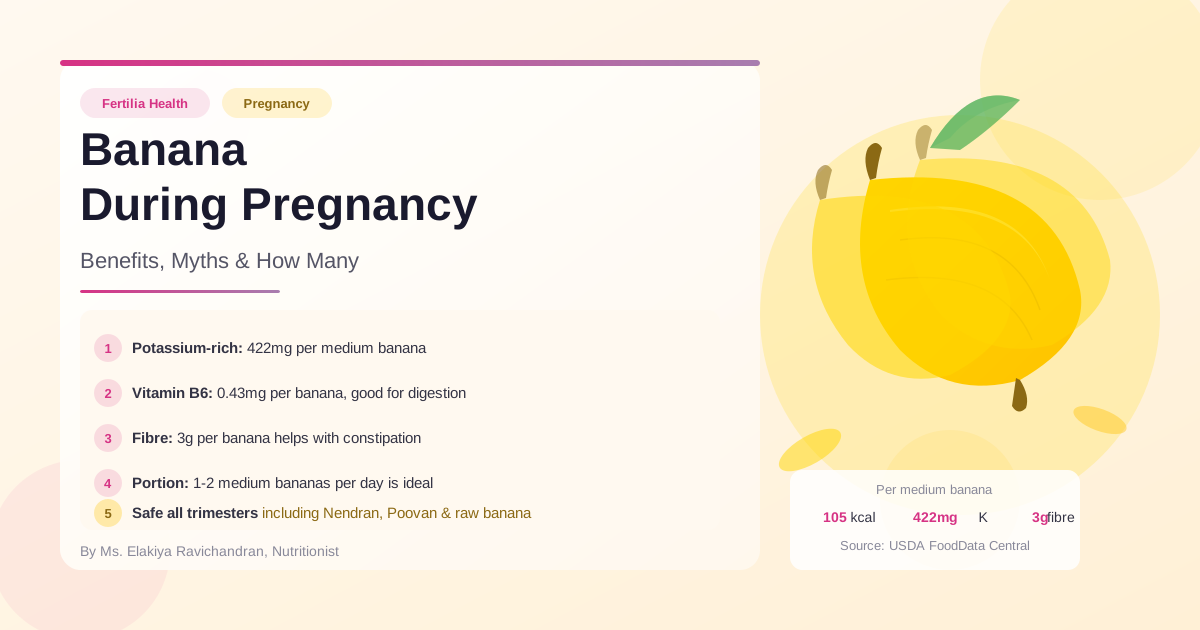
Banana is safe during pregnancy: 1 to 2 per day is ideal. Ripe bananas are safe in all three trimesters. One to two medium bananas a day (about 120 to 240g) delivers 422 to 844mg of potassium, 0.4 to 0.9mg of vitamin B6, and 3 to 6g of dietary fibre. If you have gestational diabetes, limit to one banana per day as part of a controlled carbohydrate plan.
Banana in Pregnancy: Quick Reference
| Guidance | |
|---|---|
| Safe in pregnancy? | Yes, all three trimesters |
| Daily amount | 1 to 2 medium bananas (120 to 240g) |
| If gestational diabetes | Limit to 1 per day, count toward carb plan |
| Key nutrients | Potassium, vitamin B6, fibre, magnesium |
| For nausea (T1) | Bland and easy to eat, a practical option |
| Raw banana (kacha kela) | Safe as a cooked vegetable, separate from ripe count |
Jump to: How many per day | Varieties in India | Common myths | Recipes
For more on this, read our guide on Apple in Pregnancy. Walk into any fruit shop in South India and the first thing you see is a bunch of bananas. Nendran, Poovan, Robusta, Elaichi, Karpooravalli: each variety has its own texture, sweetness, and traditional use. And almost every Indian mother, grandmother, and nutritionist will tell a pregnant woman to eat a banana every day.
The advice is good. Bananas are one of the most practical fruits for pregnancy: affordable, available year-round, easy to eat without any preparation, and genuinely nutritious. This guide covers what is actually in a banana, how many to eat per day, the common myths, and practical ways to include them in an Indian pregnancy diet.
For more on this, read our guide on Custard Apple (Sitaphal) in Pregnancy. For more on this, read our guides on Badam (Almonds) During Pregnancy and Dry Fruits During Pregnancy.
Is Banana Safe During Pregnancy?
Yes. Banana is safe during pregnancy in all three trimesters. For most women, one to two medium bananas a day poses no concern; they are a whole fruit with no known risks to fetal development. Potassium supports the expanded blood volume of pregnancy, and vitamin B6 is particularly useful in the first trimester when nausea is common. If you have gestational diabetes, a medium banana contains about 14g of natural sugars, so daily intake should fit within your carbohydrate plan.
How Much Banana Can I Eat During Pregnancy?
One to two medium bananas a day (approximately 120 to 240g) is a practical amount for most pregnant women. Eat them ripe as a snack with no preparation needed. Raw banana (kacha kela / vazhakkai) can be eaten as a cooked vegetable in curries, separate from your daily ripe banana count. In the first trimester, one banana works well when nausea limits appetite; in the second and third trimesters, two bananas across the day fits comfortably into most daily meal plans.
What Is in a Banana? Nutritional Profile
The numbers below are for a medium ripe banana (approximately 120g, a common size in Indian markets). Source: USDA FoodData Central.
| Nutrient | Per medium banana (~120g) | Per 100g |
|---|---|---|
| Calories | 105 kcal | 89 kcal |
| Carbohydrates | 27 g | 23 g |
| Natural sugars | 14 g | 12 g |
| Dietary fibre | 3.1 g | 2.6 g |
| Potassium | 422 mg | 358 mg |
| Vitamin B6 | 0.43 mg | 0.37 mg |
| Vitamin C | 10.3 mg | 8.7 mg |
| Folate | 23.6 mcg | 20 mcg |
| Magnesium | 31.9 mg | 27 mg |
| Calcium | 5.9 mg | 5 mg |
Potassium is the standout mineral in bananas. A single medium banana provides about 422mg, making bananas one of the richest everyday potassium sources in the Indian diet. Potassium supports normal muscle function and fluid balance, both of which matter during pregnancy when the body is expanding its blood volume significantly.
For more on this, read our guide on Calcium in Pregnancy. Vitamin B6 is present at meaningful levels. One medium banana contributes about 0.43mg toward a daily intake target of roughly 1.9mg during pregnancy. B6 is involved in protein processing and is found in many foods including dal, poultry, and fish. Including bananas as part of a varied diet is an easy way to contribute toward this.
For more on this, read our guide on Kiwi During Pregnancy.
For more on this, read our guide on Chia Seeds for Women. Dietary fibre helps with digestion. Constipation is common during pregnancy, and adding fiber-rich foods throughout the day rather than relying on one large serving at dinner makes a practical difference. One banana gives you about 3g, roughly 10% of a typical daily target.
For more on this, read our guide on Iron-Rich Indian Foods for Pregnancy. Folate in bananas is modest (about 24 mcg per banana), but it contributes to your overall daily intake alongside folate from green vegetables, dal, and fortified foods. For the full picture on folic acid and folate during pregnancy, our Folic Acid in Pregnancy guide covers what to eat, when to start, and how much.
Natural sugars in a ripe banana (about 14g per medium banana) come packaged with fiber and water, which means they digest more gradually than the same amount of sugar in a biscuit or sweet. A banana is a better snack choice than a refined-sugar option for most pregnant women.
For more on this, read our guide on Coconut Water & Malai in Pregnancy.
How Many Bananas Per Day During Pregnancy?
One to two medium bananas per day is a practical amount for most pregnant women.
One banana gives you 105 calories, 3g of fiber, and meaningful amounts of potassium, B6, and folate. Two bananas give you roughly twice those amounts, which fits comfortably into most daily calorie and carbohydrate targets during pregnancy.
More than two bananas per day is not harmful for most women, but because bananas are moderately high in natural sugars and calories, eating three or more regularly means those calories are coming largely from one food, which leaves less room for other nutritious foods.
One banana as a mid-morning snack and one as an afternoon snack is a natural split for women who want to eat two a day. Spreading fruit intake across the day works better than eating it all at once.
If you have been diagnosed with gestational diabetes, check with your doctor or nutritionist about your daily fruit portions before adding bananas to your regular routine. Our Gestational Diabetes guide covers carbohydrate management, safe foods, and what to expect in the Indian context.
Want a nutritionist to look at your pregnancy snack plan and suggest practical, Indian-friendly adjustments?
Chat with Dr. Suganya’s team on WhatsApp and tell us where you are in your pregnancy. Our nutritionist will help you build a daily eating plan that works with Indian foods and your daily routine.
When in Pregnancy to Eat Bananas
Bananas are safe in all three trimesters. Here is how they are most useful at each stage.
First trimester: This is when many women find bananas most helpful. Nausea and food aversions can make cooking and eating full meals difficult. A banana requires no preparation, has a mild sweet taste that most people find easy to tolerate, and provides quick energy when a full meal is not possible. The B6 content is an added benefit for women experiencing nausea, as B6 is one of the nutrients sometimes low in early pregnancy.
Second trimester: Appetite usually improves in the second trimester. Bananas work well as a quick between-meal snack when hunger strikes and a cooked option is not available.
Third trimester: Leg cramps become more common in the third trimester. While bananas alone are not a treatment for cramps, their potassium and magnesium content makes them a useful part of a mineral-rich diet. They also continue to be useful for the fiber and quick energy they provide.
Banana Varieties Available in India: A Quick Guide
India produces and sells several banana varieties, and they are not all the same.
Nendran (Kerala banana / plantain): Large, starchy, used in cooking. Raw Nendran is used in Kerala and Tamil Nadu cooking (raw banana curry, vazhakkai kootu). Ripe Nendran is sweet and nutritious. Both forms are safe during pregnancy in normal food portions.
For more on this, read our guide on Dates in Pregnancy. Poovan (Mysore banana): Small, firm, mildly sweet. Very commonly eaten as a snack banana in Tamil Nadu. One Poovan is smaller than a standard medium banana, so nutritional values per piece are lower, but they are proportional.
Robusta / Cavendish: The large, yellow banana most commonly found in supermarkets and the variety closest to the USDA nutritional data above.
Elaichi banana (Karpooravalli): Small, sweet, aromatic. Commonly eaten during festivals and as a devotional offering. Nutritionally similar to other small banana varieties.
Raw banana (Kacha kela / Vazhakkai): A different eating experience from ripe bananas. Used in curries, chips, and dry sabzis. Contains resistant starch, which is a type of dietary fiber that feeds beneficial gut bacteria. Safe to eat during pregnancy as part of your normal diet.
All of these are safe during pregnancy. The nutritional differences between varieties are relatively small in the context of a full day’s diet.
Common Myths About Bananas in Pregnancy
“Bananas are too cold and will harm the baby.”
Bananas do not have a clinically meaningful effect on body temperature or on the baby. This belief comes from traditional food classification systems that categorise foods as heating or cooling. It has no nutritional basis. Bananas are safe to eat in all seasons.
“Bananas cause weight gain during pregnancy.”
One medium banana is 105 calories. Weight during pregnancy is expected to increase. Bananas eaten as part of a balanced diet do not cause excess weight gain. They are a nutrient-dense snack that is significantly better than many alternatives (biscuits, sweets, fried snacks). The key is portion: one to two bananas a day is not a significant calorie load.
“Eating too many bananas will make the baby yellow.”
This is a myth with no scientific basis. The yellow colour of bananas has nothing to do with how the baby develops. Banana pigments are not transferred to the baby through the mother’s diet.
“Eating many bananas will delay the baby’s navel from drying after birth.”
This is a myth with no medical basis. How and when a newborn’s umbilical stump dries and falls off is a normal part of newborn healing. It has nothing to do with how many bananas the mother ate during pregnancy.
“Raw banana is unsafe in pregnancy.”
Raw banana (kacha kela) is safe to eat during pregnancy as part of your regular diet. It is commonly used in Indian cooking and is a traditional part of the South Indian diet. Eating raw banana as a vegetable in curries or as chips in normal portion sizes is not a concern.
Practical Indian Ways to Include Bananas
As a quick snack: Eat one banana with a small handful of almonds or walnuts as a mid-morning snack. Takes no preparation and gives you potassium, B6, fiber, and protein in one small meal.
Banana and milk: A glass of warm full-fat milk with one ripe banana is a traditional South Indian combination. Blend them together for a quick smoothie, or eat them separately. Simple, filling, and nutritious.
In ragi kanji or porridge: Mash half a ripe banana and stir it into warm ragi kanji or wheat porridge. The banana sweetens the porridge naturally, removing the need for sugar or jaggery. One of the easiest ways to build more fruit into your morning meal.
Banana-based energy mix: Slice one banana and serve it with 4-5 soaked almonds, 2-3 walnuts, and a few raisins. Practical as an afternoon snack between lunch and dinner, especially in the second and third trimesters when hunger increases between meals.
Banana pancakes (Kela cheela): Mash one ripe banana and mix it with one egg, two tablespoons of wheat flour or oats flour, and a pinch of cardamom. Cook on a tawa with a small amount of ghee. Makes two to three small pancakes. Quick, soft, and nutritious for a light breakfast.
Banana stem (Vazhai thandu): Banana stem is a traditional South Indian vegetable used in poriyal, kootu, and raita. It is rich in fiber and has a mild taste. Completely safe during pregnancy and genuinely useful for its fiber content. If you have access to fresh banana stem, including it in your cooking two to three times a week is a practical way to add variety.
A Sample Day With Bananas Included
Here is one way bananas fit into a typical Indian pregnancy day:
| Time | Meal or Snack | Banana Included |
|---|---|---|
| 7:00 AM | Ragi kanji with mashed half banana | Half banana stirred in |
| 10:30 AM | One banana with 5 soaked almonds | One banana |
| 1:00 PM | Rice, dal, sabzi, curd | None |
| 4:30 PM | Poha with vegetables | None |
| 8:00 PM | Roti, sabzi, dal | None |
Total: 1.5 bananas across the day. This is a comfortable, well-distributed intake. If you want to add a second banana, replacing the afternoon poha with a banana-almond snack is a simple swap.
For a complete trimester-by-trimester food plan, our Indian Pregnancy Diet Chart has meal-by-meal guidance built around Indian foods.
FAQ: Bananas During Pregnancy
How many bananas can I eat per day during pregnancy?
One to two medium bananas per day is a practical amount for most pregnant women. One banana gives you about 105 calories, 3g of fiber, and meaningful amounts of potassium and B6. Two bananas a day fits comfortably into most daily calorie ranges. If you have gestational diabetes, check with your doctor or nutritionist before eating bananas regularly.
Is banana safe during pregnancy?
Yes. Banana is safe during pregnancy throughout all three trimesters. One to two medium bananas a day (about 120 to 240g) is well within a healthy pregnancy diet. If you have gestational diabetes, check how bananas fit into your daily carbohydrate plan with your doctor or nutritionist.
Can eating bananas cause miscarriage? No. There is no scientific evidence that eating bananas causes miscarriage. This is a myth with no medical basis. Bananas are a whole fruit, safe throughout pregnancy, and commonly recommended by nutritionists as a practical daily snack.
Do bananas help with pregnancy nausea?
Some women find that bland, easily digestible foods like banana help settle mild nausea. A banana is soft, easy to eat, and provides quick energy when a full meal is not possible. It is not a specific remedy for nausea, but it is one of the easier foods to eat when nausea makes other options unappealing.
Which banana is best during pregnancy: ripe or unripe?
Both are safe. Ripe bananas are sweeter, softer, and easier to eat as a snack. They have slightly more natural sugars than unripe bananas. Unripe bananas and raw bananas (kacha kela) contain more resistant starch, which acts like fiber in the digestive system. Both forms have a place in a pregnancy diet. For snacking, ripe bananas are the most practical choice.
Can I eat Nendran banana during pregnancy?
Yes. Nendran bananas, both raw (as a vegetable in curries) and ripe (as a snack), are safe to eat during pregnancy. They are commonly eaten in Kerala and Tamil Nadu and are a traditional part of the pregnancy diet in these regions.
Does eating banana during pregnancy cause gestational diabetes?
No. Bananas do not cause gestational diabetes. Gestational diabetes is a condition related to how the body manages blood sugar during pregnancy overall, not to eating any single food. If you already have gestational diabetes, check with your doctor about how many bananas fit into your specific daily carbohydrate plan.
Is banana stem (vazhai thandu) safe during pregnancy?
Yes. Banana stem is safe to eat during pregnancy in normal food quantities. It is a high-fiber vegetable used in South Indian cooking and is a traditional part of the diet. There is no restriction on eating banana stem during pregnancy.
Can I eat banana on an empty stomach during pregnancy?
Yes. There is no problem eating a banana on an empty stomach during pregnancy. Some women find a banana first thing in the morning easy to digest and settling on a queasy stomach. Others prefer to pair it with a handful of nuts, curd, or a glass of milk so it feels more filling. Both are fine. Eat it whichever way sits well with you.
Is banana shake safe during pregnancy?
Yes. A banana shake made with milk is a safe and filling pregnancy snack, and an easy way to combine fruit and dairy in one glass. Make it with fresh, boiled or pasteurised milk, and go easy on added sugar since the banana already makes it sweet. One glass works well as a mid-morning or evening option.
Is raw or green banana (kacha kela) safe in pregnancy?
Yes. Raw or green banana, cooked as a vegetable in curries, poriyal, or as chips in normal portions, is safe during pregnancy. Green banana has more resistant starch, which behaves like fiber, while ripe banana is sweeter and easier to eat as a snack. Both have a place in a pregnancy diet.
Bananas are one of the most practical fruits to include during pregnancy: affordable, available year-round in every part of India, gentle on the stomach, and genuinely nutritious. One to two a day, eaten as part of a varied diet, gives you potassium, B6, fiber, and easy energy without any complicated preparation.
If you would like a nutritionist to review your full pregnancy diet and suggest practical, Indian-food-friendly adjustments, Dr. Suganya’s team at Fertilia is here to help through the 90-day Pregnancy Care program.
Chat with us on WhatsApp and tell us which trimester you are in. We will take it from there.
Written by Dr. Suganya Venkat, OB-GYN · 15+ years experience.